
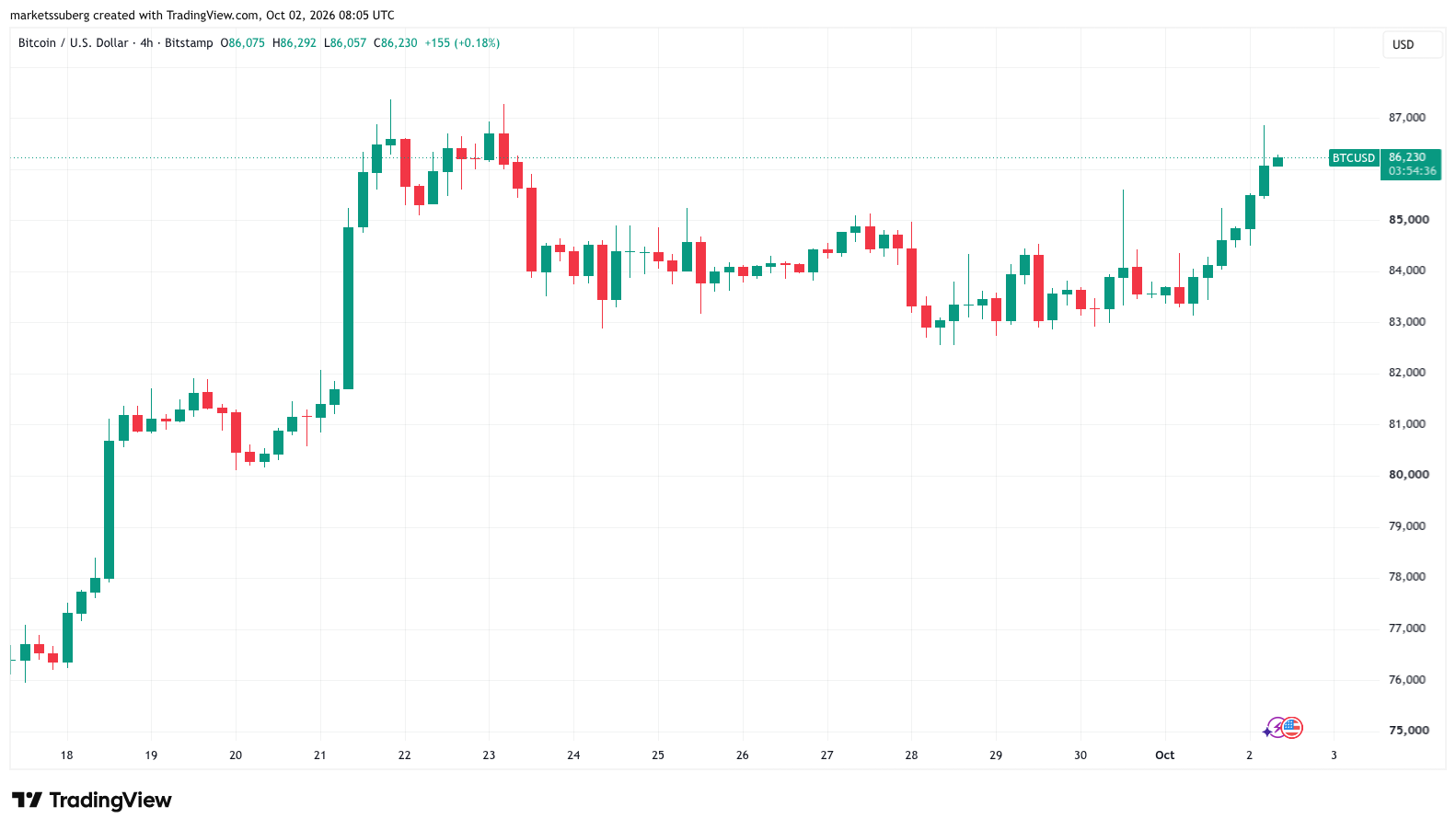
Bitcoin advanced aggressively toward the $87,000 threshold on Friday, sparking a wave of market volatility that saw short liquidations surge past $120 million over a single 24-hour window. The leading cryptocurrency climbed as high as $86,857 on the Bitstamp exchange, marking its strongest price performance since late September. Although the digital asset subsequently pulled back below the $86,000 mark, the rapid ascent underscored a notable shift in market structure as bullish traders successfully punched through stubborn liquidity barriers that had suppressed price action for much of the week.
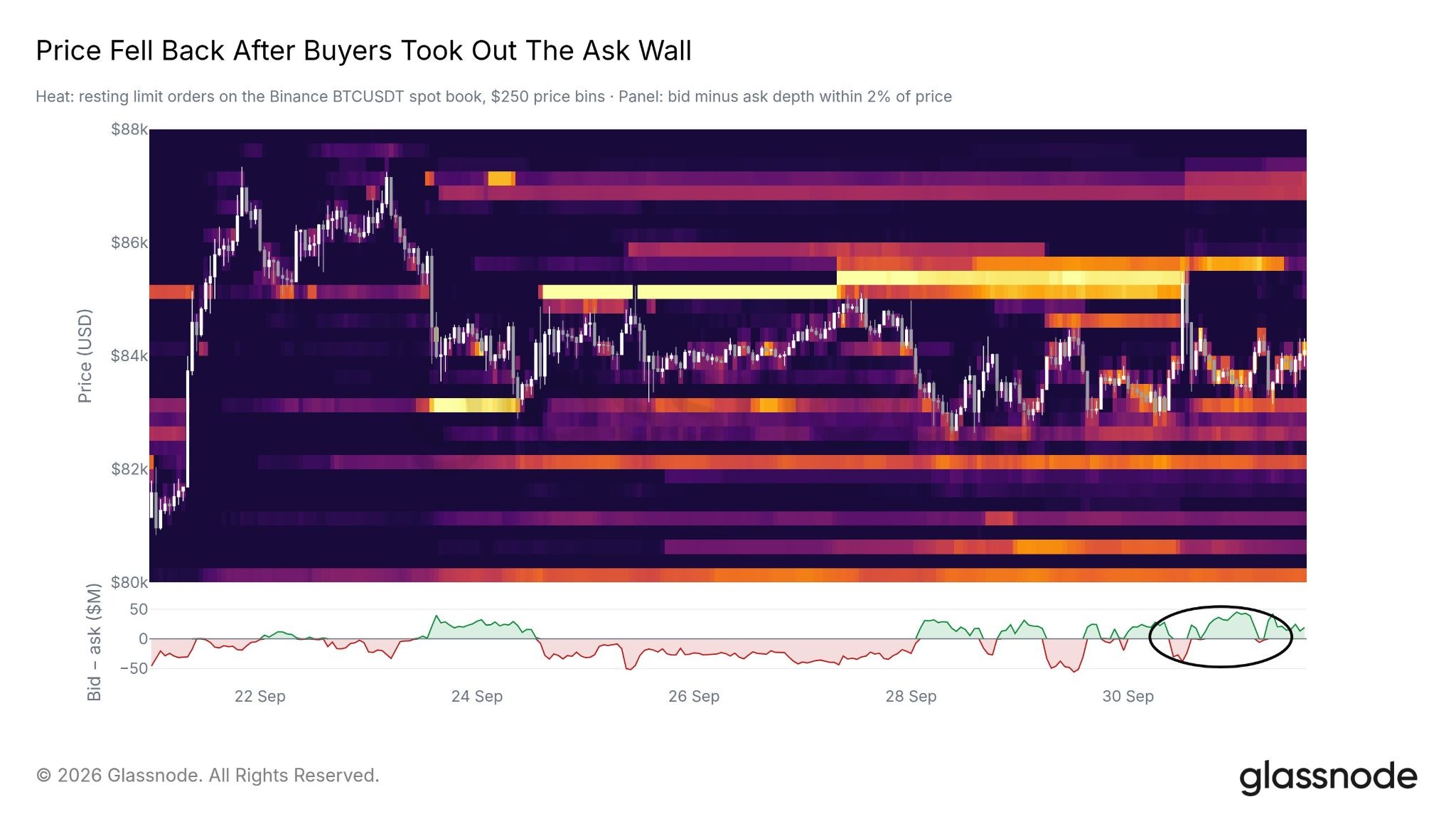
The recent market movement highlights a dynamic tug-of-war between buyers and sellers across major cryptocurrency exchanges. According to market data from TradingView, Bitcoin’s push toward the $87,000 level represented a decisive breakout from a tight trading range that had characterized the market days prior. Onchain analytics platform Glassnode reported that a heavy concentration of sell orders had previously clustered around the $85,000 mark, acting as a formidable ceiling. However, aggressive buying pressure effectively neutralized this resistance, allowing spot prices to test higher valuation tiers.

Market intelligence indicates that the thinning of sell-side liquidity played a crucial role in facilitating the upward surge. In a market update shared on social media platform X, Glassnode analysts observed that with reduced ask liquidity lingering above current price levels, the market environment became increasingly conducive to faster upward movement, especially as remaining sell orders appeared to be actively pulled from order books.
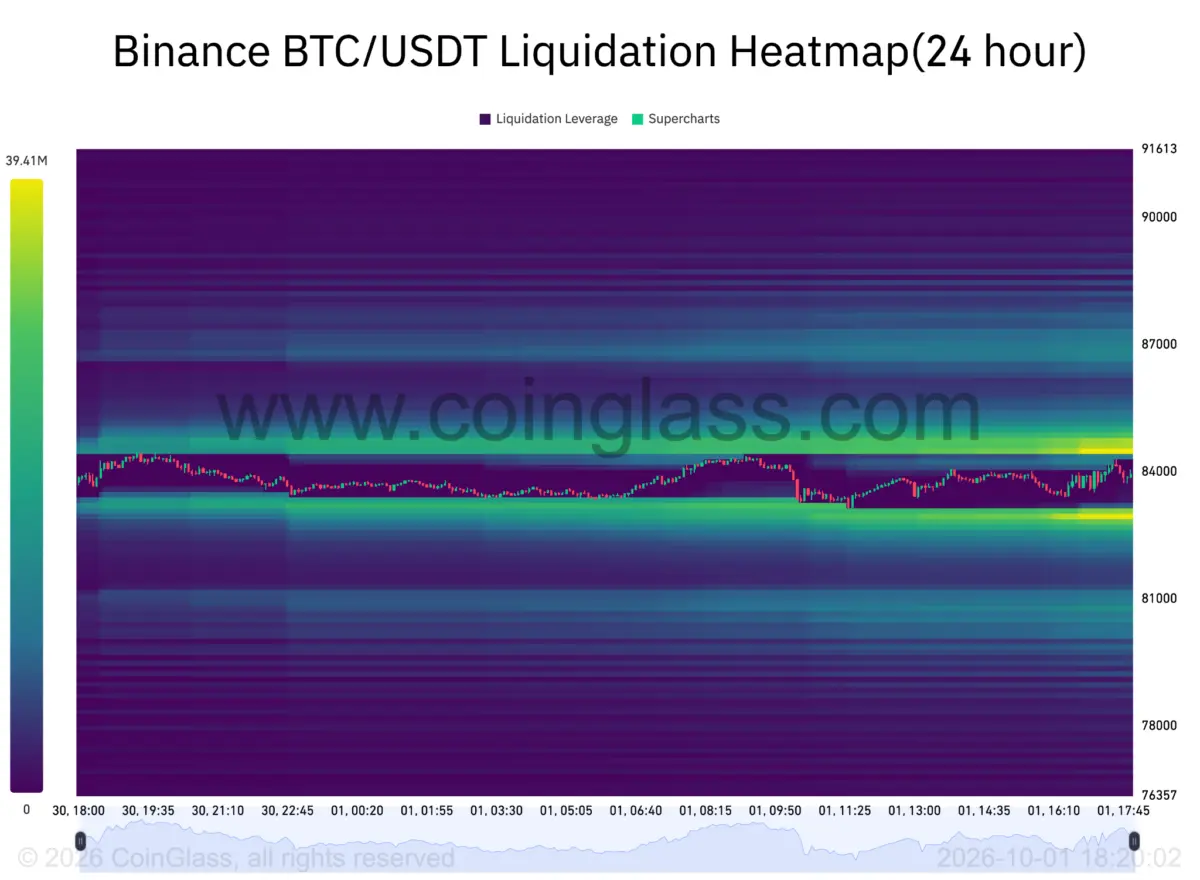
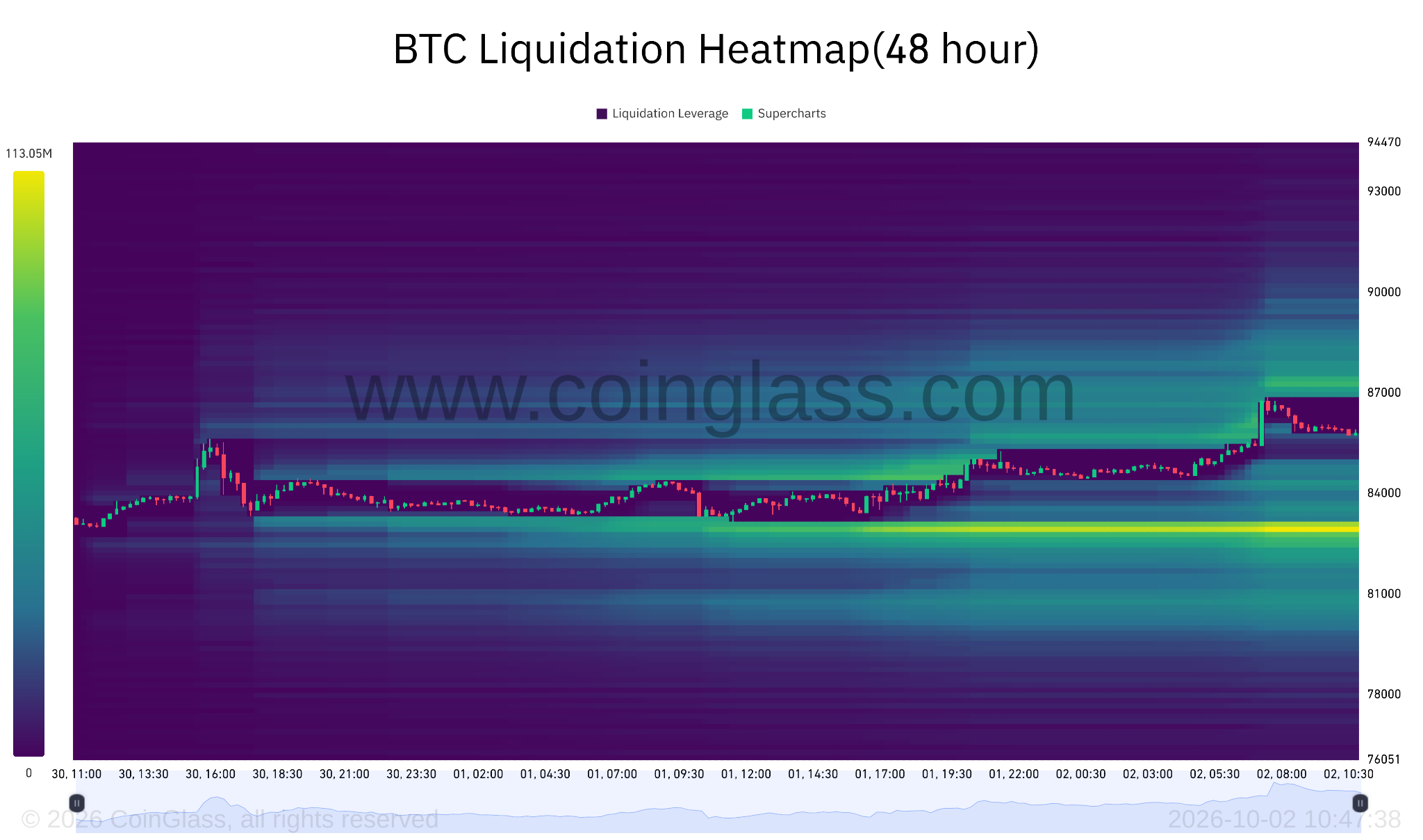
This liquidity clearance follows earlier observations highlighting heavy sell-side pressure in the market. Earlier in the week, trading data revealed that more than $30 million in sell orders had materialized near the $85,700 level, boxing in bullish momentum. As those walls were dismantled, derivative markets reacted swiftly. Data from liquidation tracking platform CoinGlass revealed a dense cluster of potential short liquidation exposure accumulating above the $87,300 mark immediately following the initial breakout.
The cascading impact of these sudden price movements inflicted heavy losses on bearish traders. Over the 24 hours leading up to Friday, Bitcoin short liquidations alone topped $122 million. Across the broader digital asset ecosystem, total cross-crypto liquidations reached approximately $210 million, reflecting widespread market turbulence as leveraged bearish positions were forcibly closed out by surging spot prices.
ETF Inflows Cool Following Record-Breaking Momentum
While price action near $86,000 grabs immediate headlines, the level holds structural significance for the broader institutional market. Analysts point out that the $86,000 region effectively serves as the aggregate breakeven zone for investors who have accumulated exposure through United States spot Bitcoin exchange-traded funds (ETFs). The health and stability of this price band remain critical for maintaining institutional confidence and supporting sustained upward momentum.
In the latest installment of its weekly research newsletter, The Week Onchain, Glassnode emphasized that a durable and lasting breakout will ultimately require more than just short-term liquidations. The analytics firm noted that confirmed confirmation of Bitcoin’s broader uptrend relies heavily on expanding trading volume and a renewed acceleration of net inflows into spot Bitcoin exchange-traded funds.
Daily creation flows into US-based spot Bitcoin products have notably cooled since late September. On September 21, the market experienced a historic surge when daily net inflows reached $999 million, marking the highest single-day accumulation tally in nearly a year. In comparison, subsequent daily inflows have moderated significantly, even though institutional demand has not disappeared entirely.
As Glassnode outlined in its market commentary, the underlying funds continue to experience positive net inflows, albeit at a minor fraction of the extraordinary pace witnessed during those peak days in September. Market observers maintain that a reversion to accumulation volumes closer to those record highs would serve as the most transparent and reliable indicator of revived institutional appetite.
Data compiled by market tracker Farside Investors illustrates the recent moderation in ETF dynamics. On October 1, US spot Bitcoin ETFs collectively recorded net inflows of $102.7 million. Capital distribution across individual products remained concentrated, with BlackRock’s iShares Bitcoin Trust (IBIT) leading the sector by drawing in $195 million in daily inflows. However, concurrent outflows from several competing fund issuers tempered the aggregate net figure, keeping overall daily metrics well below the record highs set earlier in the autumn season.