
Bitcoin’s recent price appreciation does not yet reflect a robust influx of fresh capital entering the digital asset market, according to the latest insights from prominent on-chain analytics platforms. While the world’s leading cryptocurrency has continued to hover near high-value psychological levels, underlying metrics suggest that the bullish momentum is being heavily sustained by existing market participants rather than a tidal wave of new money.
Bitcoin Capital Inflows Not Responsible for Realized Cap Growth
In the latest edition of its weekly analytical newsletter, The Week Onchain, crypto research platform Glassnode revealed that long-time investors and existing holders are driving the vast majority of Bitcoin’s recent upside.
To quantify the market dynamics, Glassnode evaluated "new money" inflows into Bitcoin—encompassing major purchasing avenues such as corporate treasury allocations, stablecoin supply growth, and net inflows into United States-based spot Bitcoin exchange-traded funds (ETFs). Over the 30-day period leading up to October 5, these fresh capital inflows totaled approximately $4.9 billion.

However, a closer look at the network’s on-chain data reveals a stark contrast. Bitcoin’s realized cap, a metric that values each individual coin in circulation at the exact price it was last moved on the blockchain, grew by a staggering $12.8 billion over the same timeframe. This means the realized cap expanded by more than twice the amount of newly introduced capital.
"New money therefore covers less than two fifths of that rise. The rest is coins changing hands at higher prices among money already in the market," Glassnode explained in its report.
Accompanying historical data shows that recent rallies in the BTC/USD trading pair have exhibited a similar structural divergence ever since US spot Bitcoin ETFs made their debut in January 2024. Despite this familiar pattern, current macroeconomic and market conditions present a unique environment, with overall inflows remaining relatively modest when compared to short-term realized-cap gains.
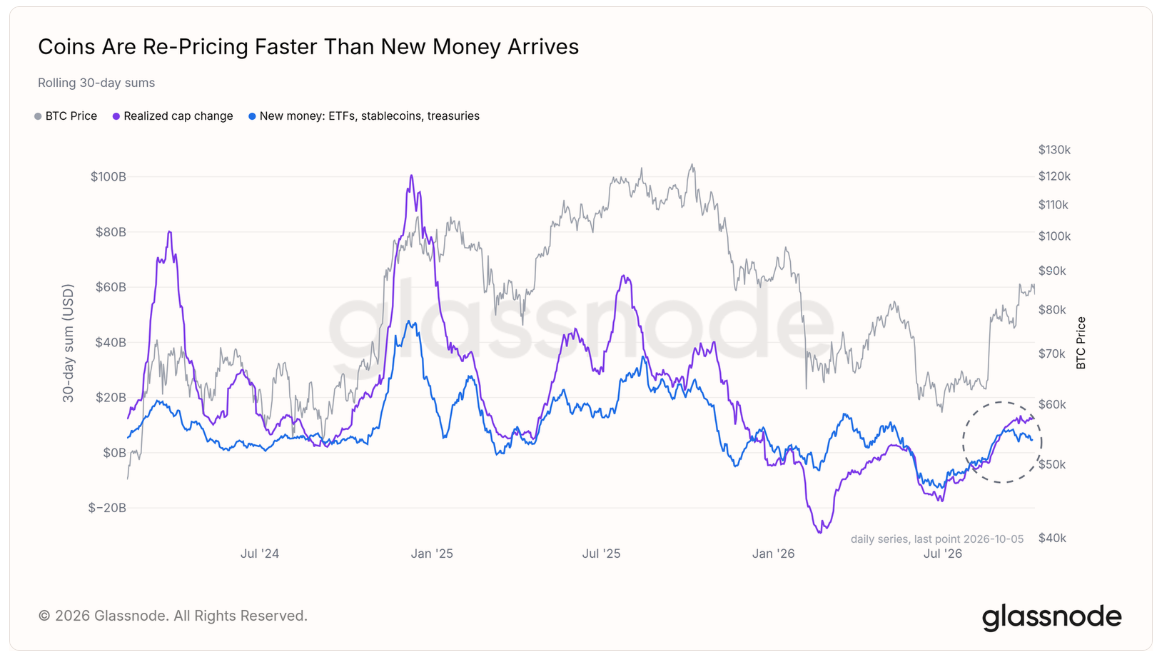
"The rallies of 2024 and 2025 showed a similar mix, but on far larger inflows," Glassnode added, underscoring the shift in market mechanics. "Until those inflows pick up, the move depends on existing holders paying more."
Newer Investor Profit-Taking Surged at $85,000
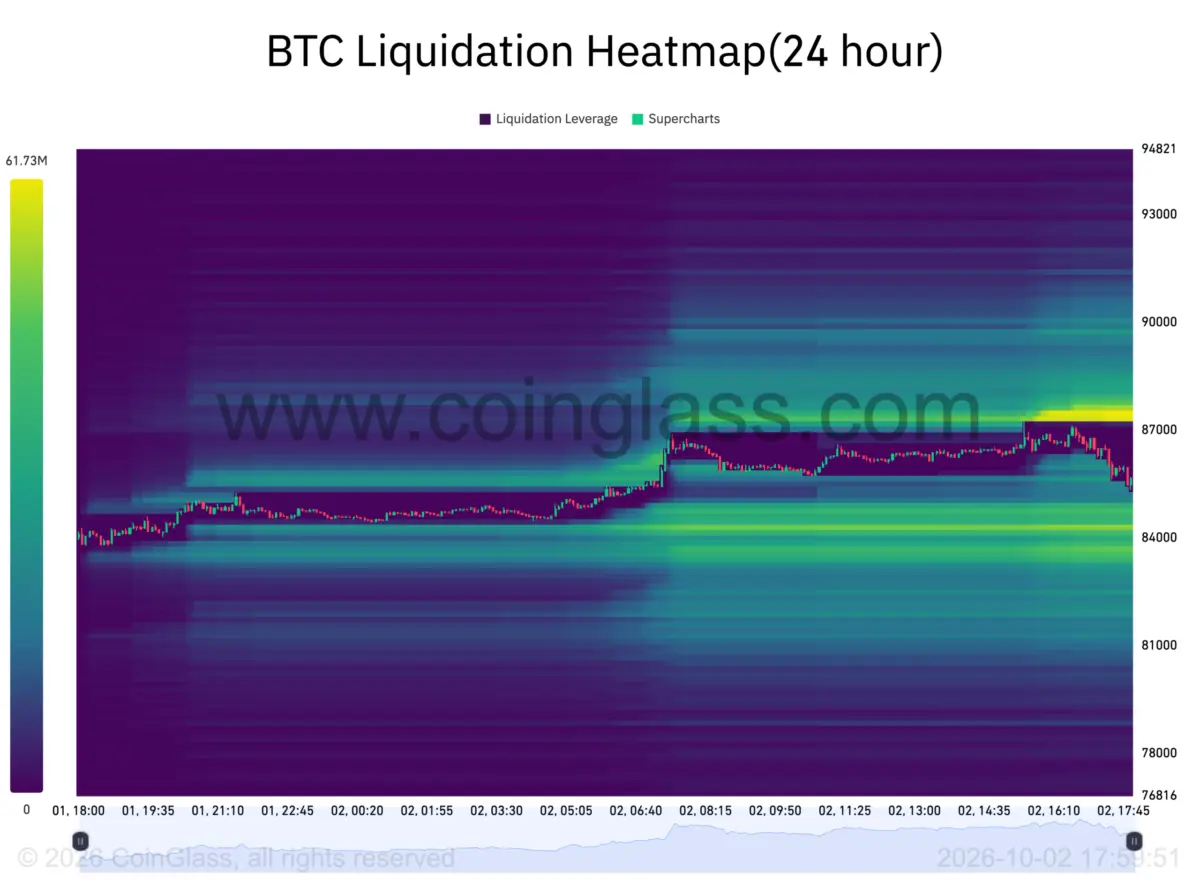
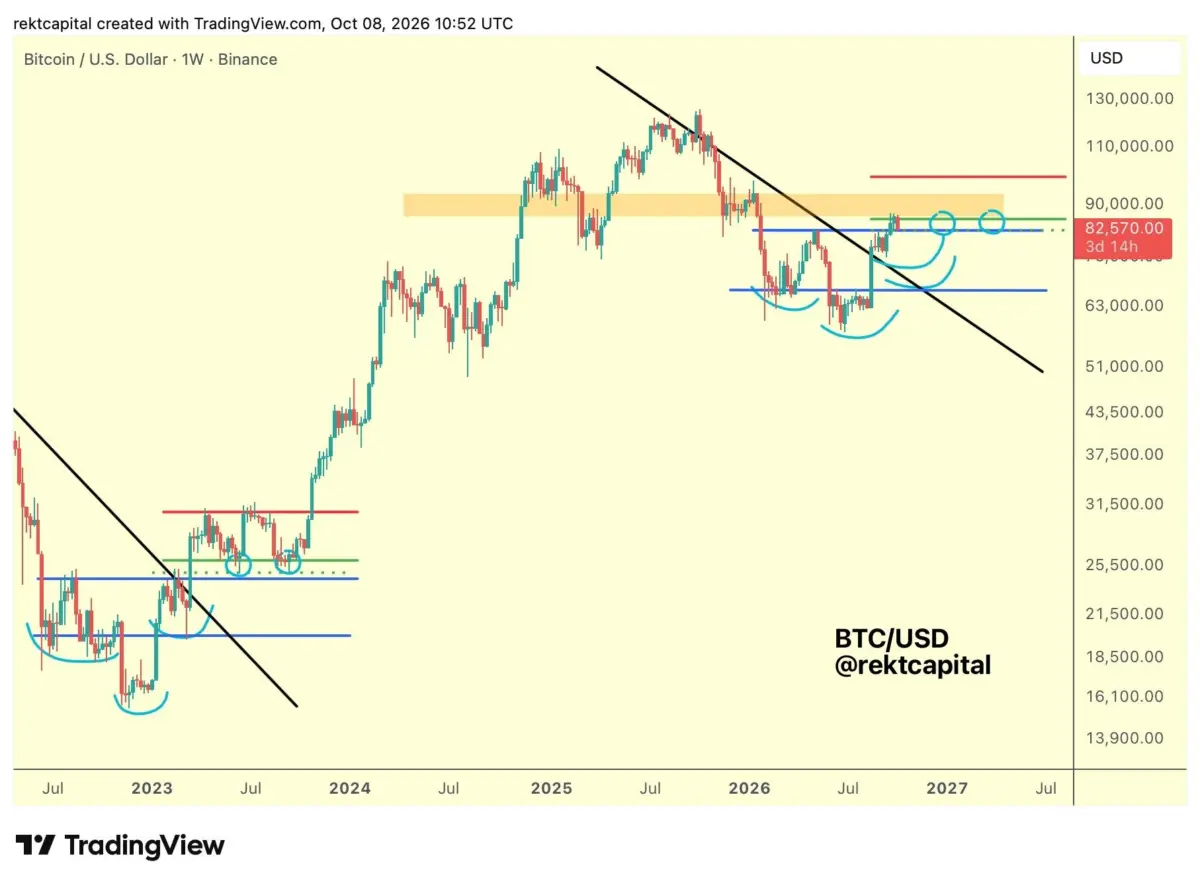
The heavy reliance on internal capital turnover has coincided with stiff resistance at higher price levels. Since September 21, Bitcoin has made four distinct attempts to break out decisively beyond the $87,000 threshold. Each of these breakout attempts ultimately faltered as buyers encountered thickening overhead ask liquidity clustered heavily across major exchange order books. Consequently, BTC/USD was observed trading near the $83,000 region, marking a modest 1% decline on a month-to-date basis.
This price compression has been further complicated by aggressive profit-taking maneuvers executed by newer market participants. Glassnode highlighted a sharp surge in profit-taking activity among recent buyers over the weekend, a period that coincided with Bitcoin securing its first weekly market close above the $85,000 mark since January.
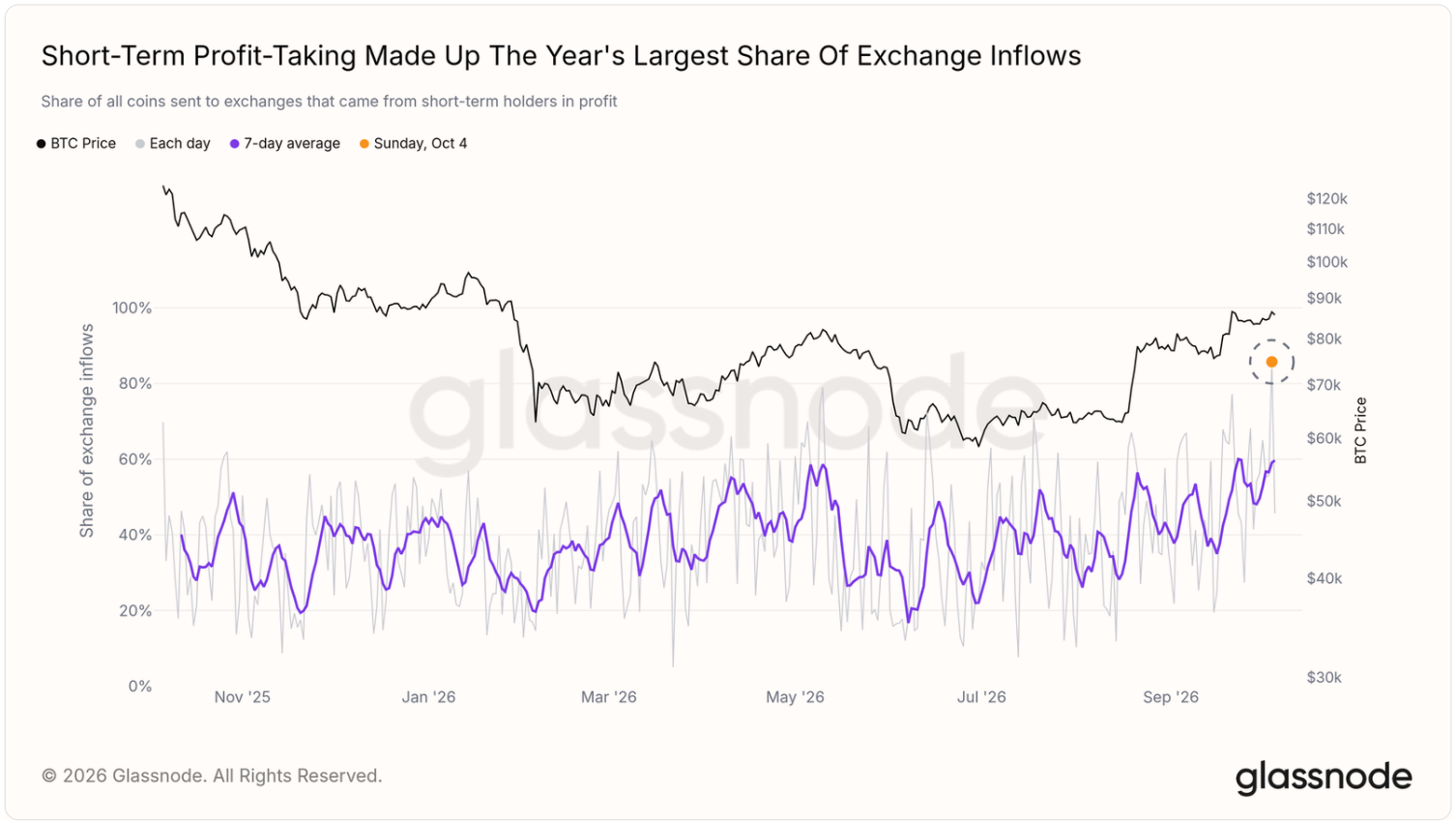
"Of all the coins sent to exchanges that day, about 86% came from short-term holders, those holding for less than 155 days, moving coins at a profit. That is the highest share of any day in the past year; on a typical day it is under two fifths," the research platform noted.
In cryptocurrency market analysis, short-term holders (STHs) are traditionally categorized as investors who acquire their coins within a 155-day window. This specific cohort is widely recognized for exhibiting higher sensitivity to price volatility, often reacting swiftly to sudden market fluctuations by locking in profits or cutting losses.
Despite the heavy wave of profit-taking at higher levels, the short-term holder cohort remains predominantly in a state of net profit. According to supplementary aggregate data provided by analytics firm CryptoQuant, the aggregate cost basis—frequently referred to as the realized price—for short-term holders hovered at approximately $78,250. This healthy buffer suggests that while newer investors are actively capitalizing on recent upside movements to secure gains, the broader foundation of short-term capital remains anchored above the macro support levels established earlier in the cycle.