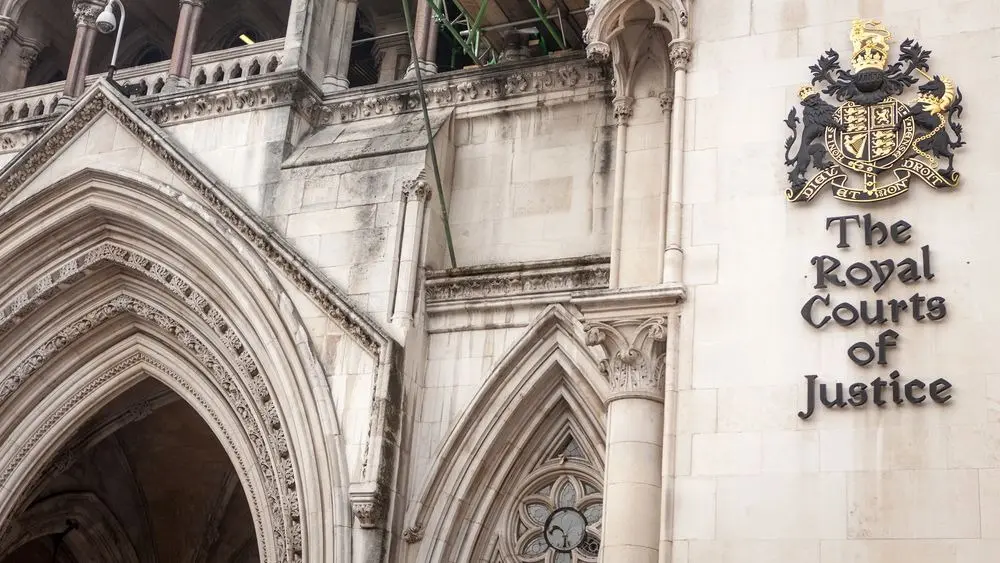
Two investment subsidiaries of prominent digital asset market maker DWF Labs have launched high-stakes legal action against cryptocurrency custodian BitGo, filing a lawsuit in London’s High Court that alleges a significant breach of contract related to a discounted token sale. According to reports published late last week, British Virgin Islands-registered DWF Maas and Panama-registered Falcon Digital claim that BitGo violated the terms governing a private token sale by prematurely transferring and selling digital assets before the expiration of a mandatory three-month lock-up period.
The lawsuit, which seeks a staggering $114 million in damages, thrusts the mechanics of private cryptocurrency funding into the legal spotlight. Private token sales are a ubiquitous mechanism within the digital asset ecosystem, allowing early-stage project developers and issuers to secure vital capital without immediate exposure to the volatile open market. In exchange for purchasing tokens at a steep discount, institutional buyers and investors typically agree to strict lock-up periods, ensuring that large volumes of assets cannot be dumped onto exchanges immediately, thereby safeguarding the nascent market price and protecting retail participants from sudden, artificial crashes.
According to court filings outlined in the legal proceedings, the dispute centers on agreements involving Falcon Finance tokens, trading under the ticker FF, and ESPORTS tokens. DWF Labs’ subsidiaries contend that the heavily discounted rates secured by BitGo were strictly conditional upon the assets remaining locked and immobilized for the agreed-upon duration. However, the plaintiffs allege that these tokens were moved to various trading platforms approximately two months ahead of the first scheduled unlock date, directly precipitating sharp downward pressure on their market valuations.
Market data referenced in connection with the lawsuit illustrates the steep declines experienced by both digital assets following the alleged premature releases. The Falcon Finance token (FF), which traded at approximately 8 cents at the commencement of the lock-up window in early March, steadily retreated to hover around 7 cents by the arrival of late April. The downturn was even more pronounced for ESPORTS tokens, which plummeted from a mid-March valuation of roughly 28 cents down to a mere 7 cents by early June. DWF Maas and Falcon Digital argue that these dramatic depreciations caused direct, quantifiable financial losses to their holdings, leading directly to the massive $114 million damages claim currently before the London court.
The decision to escalate the matter to the judicial system followed months of unheeded warnings and unsuccessful private communications between the involved parties. Representatives for DWF noted that the alleged early movement of the tokens was first flagged and raised with BitGo during the months of April and May. Despite these direct communications and demands for clarity or remediation, the plaintiffs assert that no satisfactory undertaking or resolution was forthcoming from the custodian, leaving court action as the sole viable remedy to protect their commercial interests.
The legal confrontation also unfolds against a backdrop of broader industry scrutiny involving DWF Labs, its leadership, and its expanding portfolio of high-profile investments. Last year, DWF Labs made waves across the cryptocurrency sector by executing a $25 million investment into WLFI tokens, the native digital asset powering World Liberty Financial, a decentralized finance project prominently backed by United States President Donald Trump and members of his family. That high-profile financial commitment quickly attracted intense attention and scrutiny from lawmakers and regulatory observers in Washington, D.C., who raised questions regarding various connections within the digital asset space.
In particular, political and regulatory watchdogs in Washington voiced concerns regarding Andrei Grachev, the founder of DWF Labs, and his historical professional links to Russia. Public records and industry history note that Grachev previously served as the chief executive officer of the Russian arm of cryptocurrency exchange Huobi between 2018 and 2019. In the years following his tenure, Huobi has faced targeted regulatory actions and sanctions across multiple international jurisdictions due to allegations concerning compliance failures and the facilitation of mechanisms allowing Russian entities to evade Western economic sanctions.
As the legal battle in London’s High Court proceeds, representatives for neither DWF Labs nor BitGo have immediately responded to requests for comment regarding the specifics of the $114 million lawsuit or the underlying contract disputes. The outcome of the litigation could carry substantial implications for institutional cryptocurrency custody agreements, particularly regarding the enforcement of lock-up periods and the liability of custodians managing restricted digital assets on behalf of major market participants.