

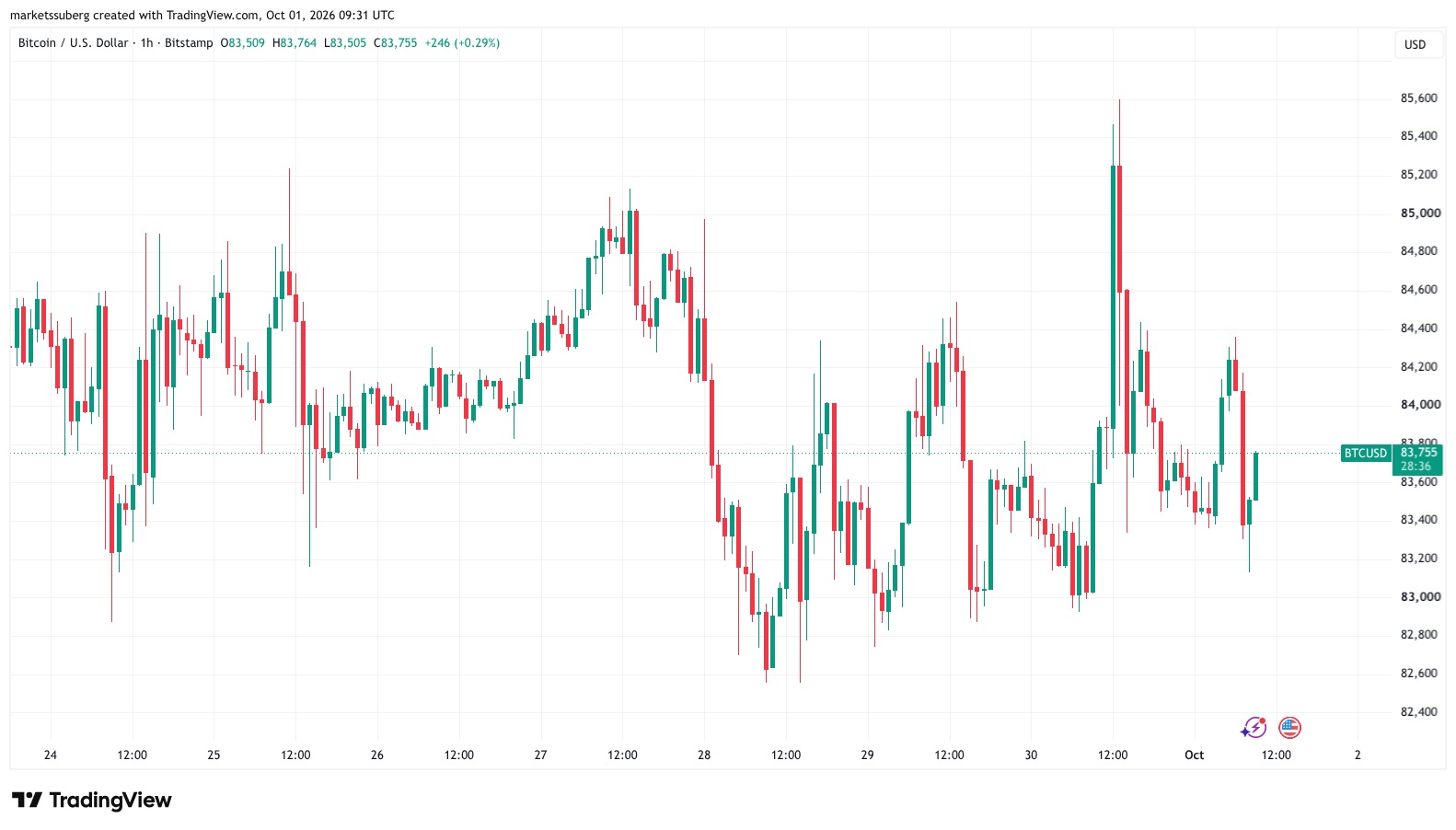
Bitcoin (BTC) held firm above the $83,000 threshold on Thursday, stabilizing after surrendering some of its earlier gains that had been sparked by lower-than-expected United States inflation data. The world’s leading cryptocurrency experienced a brief wave of market volatility leading into the monthly and third-quarter close, but data from Coinbase indicated that BTC/USD remained largely flat on the day as traders assessed the evolving macroeconomic landscape.
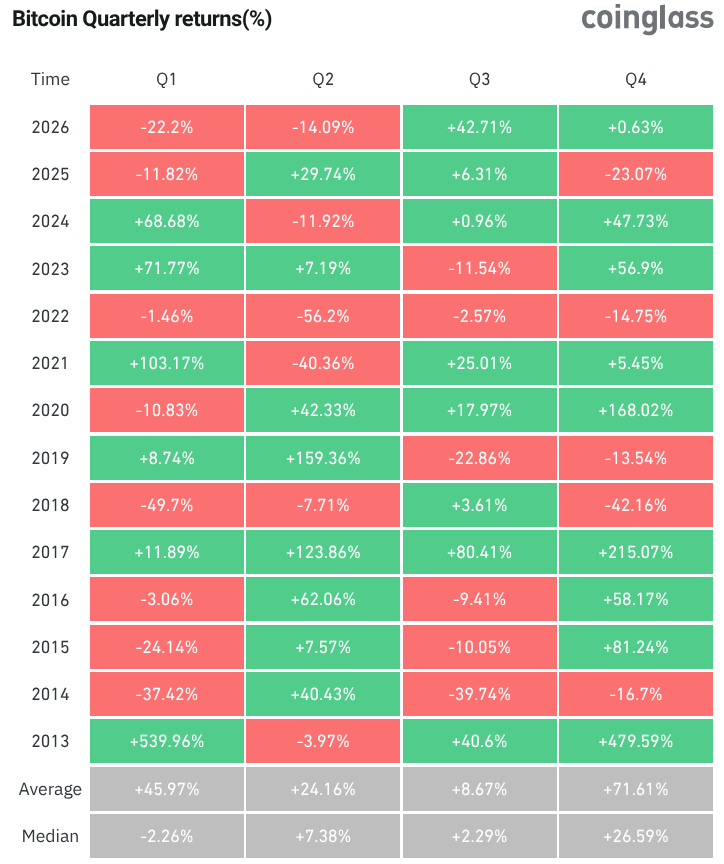
The shift in market dynamics arrived as Bitcoin officially kicked off the fourth quarter—historically recognized as one of its strongest periods of the year—trading at approximately $83,550. This strong seasonal positioning follows an impressive third-quarter performance that saw BTC post gains of 42.7%, according to comprehensive market data compiled by CoinGlass. This notable quarterly advance marks Bitcoin’s strongest Q3 performance since 2017, underscoring a broader resilient phase for the asset following its earlier summer market corrections.

Bitcoin Gives Back Gains After PCE Release
Market momentum faced a brief ceiling earlier in the week when Bitcoin’s latest rally stalled on Wednesday, with BTC/USD reversing its trajectory near the $85,600 mark. The sudden advance had initially been triggered by the release of fresh macroeconomic data showing cooler-than-anticipated US inflation pressures.
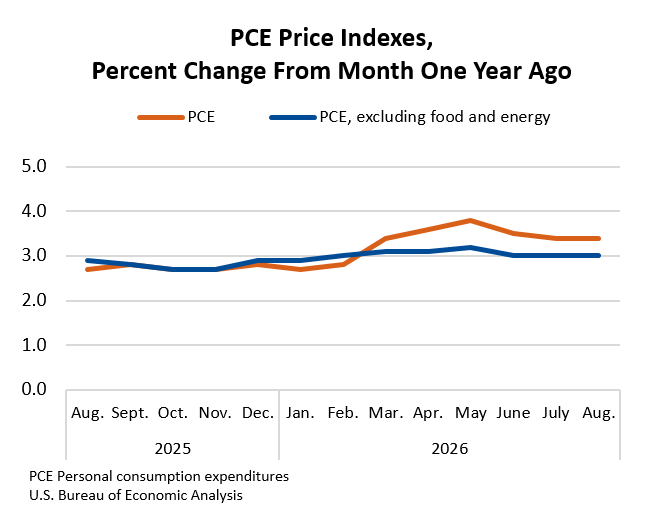
Specifically, the Personal Consumption Expenditures (PCE) price index—widely regarded as the Federal Reserve’s preferred gauge of inflation—came in at 3.4% on a year-on-year basis for the month of August. This figure notably undershot market expectations, which had been positioned closer to 3.7%.
Providing further detail on the breakdown, an official release from the Bureau of Economic Analysis (BEA) stated that core PCE, which strips out volatile food and energy components, increased by 3.0 percent compared to the same period from the previous year.
However, the inflation report also incorporated notable methodology updates implemented by federal statisticians. These technical adjustments affected several sectors, including portfolio management and investment advice, computer software and accessories, and legal services. Market commentary publication The Kobeissi Letter noted on social media platform X that the methodology shift alone could theoretically reduce core PCE inflation readings by up to as much as 20 basis points. Furthermore, the publication highlighted that both headline and core PCE inflation figures for the month of July had also been revised downward by 30 basis points.
Given these statistical adjustments, analysts predicted that financial markets would heavily discount the reported August reading. Traditional equity markets reacted with mild downward pressure; the S&P 500 closed out Wednesday’s session down 0.25% at 7,651 points, while the Dow Jones Industrial Average shed 0.86%.
Concurrently, interest rate expectations shifted slightly. Data derived from the CME FedWatch Tool showed that markets priced the probability of a quarter-percentage-point rate increase at the Federal Reserve’s upcoming October meeting at approximately 37% by Wednesday. This represented little change day-over-day, maintaining a general market consensus favoring an unchanged federal funds target range of 3.75% to 4%.
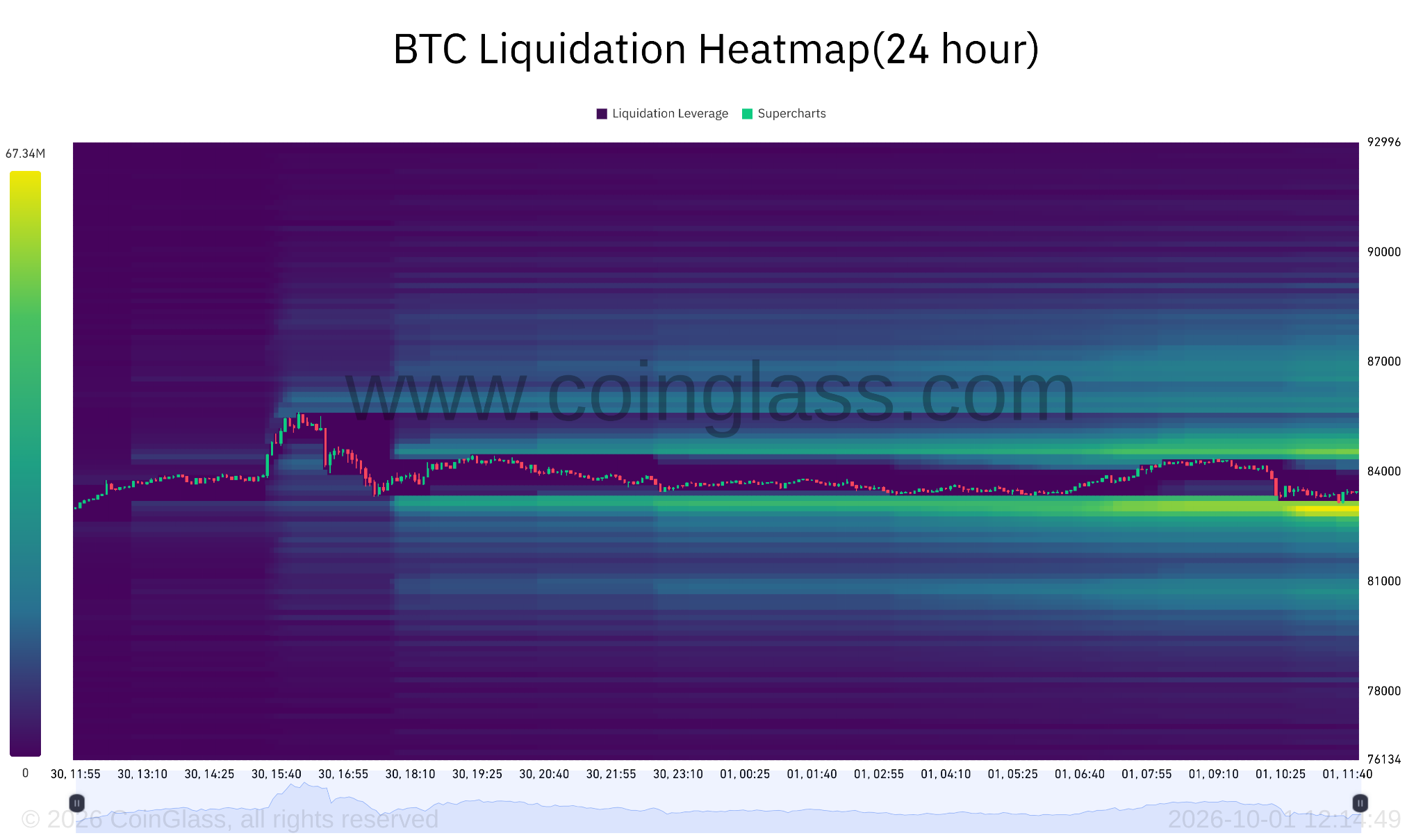
As the market digested these macroeconomic factors, price action around Bitcoin settled into a defined range. CoinGlass liquidation heatmaps highlighted various clusters of potential liquidation exposure situated both above and below Bitcoin’s prevailing market price. On Thursday, a fresh $60 million cluster of estimated liquidation exposure emerged near the $83,000 mark. This concentration sits in close proximity to a critical technical support level at $82,500—a threshold that previous market analyses identified as vital for supporting Bitcoin’s broader rebound from its June lows.
Open Interest Falls to Lowest Since March Despite Bitcoin Gains
Beneath the immediate price action, structural changes within the derivatives market have begun to alter the risk profile of the ongoing rally. According to insights shared by onchain analytics platform Glassnode, falling futures open interest could potentially render Bitcoin’s price appreciation less vulnerable to sudden, forced liquidations driven by excessive leverage.
Glassnode drew attention to a distinct divergence between Bitcoin’s spot price trajectory and coin-denominated open interest, a metric that measures the total volume of outstanding futures positions calculated directly in Bitcoin terms rather than fiat currency. Pointing to the shift on X, Glassnode noted that while the asset’s price had climbed roughly 35% from its August lows, coin-denominated open interest had actually declined by nearly 20%.
This reduction in derivative market participation pushed overall open interest down to its lowest level since March. Analysts suggest that this lower leverage environment reduces the likelihood of severe cascading liquidations, creating a healthier foundational structure for the current market phase.
Nevertheless, immediate overhead hurdles remain apparent. Additional market reporting has pointed out that a concentration of sell orders clustered around the $85,000 level, combined with significant supplies of coins held by long-term holders in the $84,000 to $85,000 range, could continue to reinforce strong resistance zones just above the cryptocurrency’s current trading valuation.