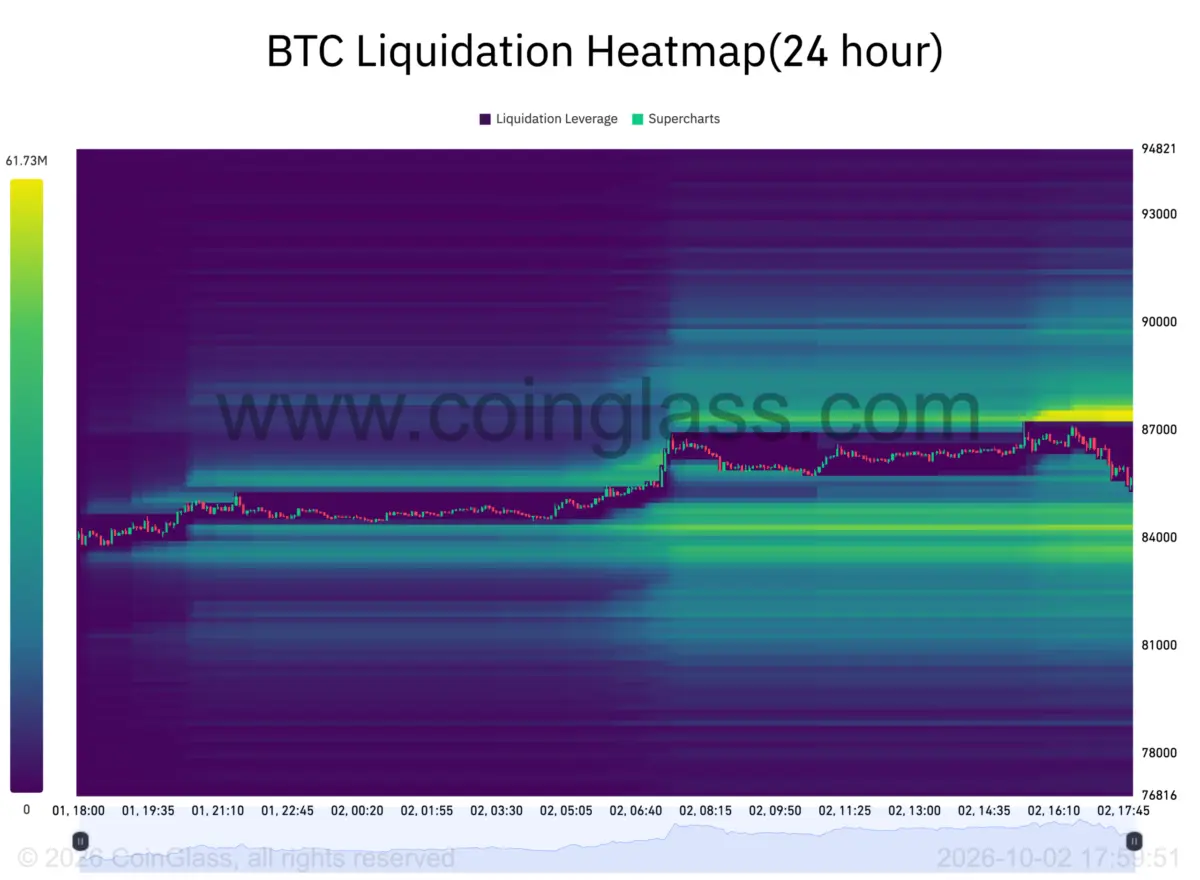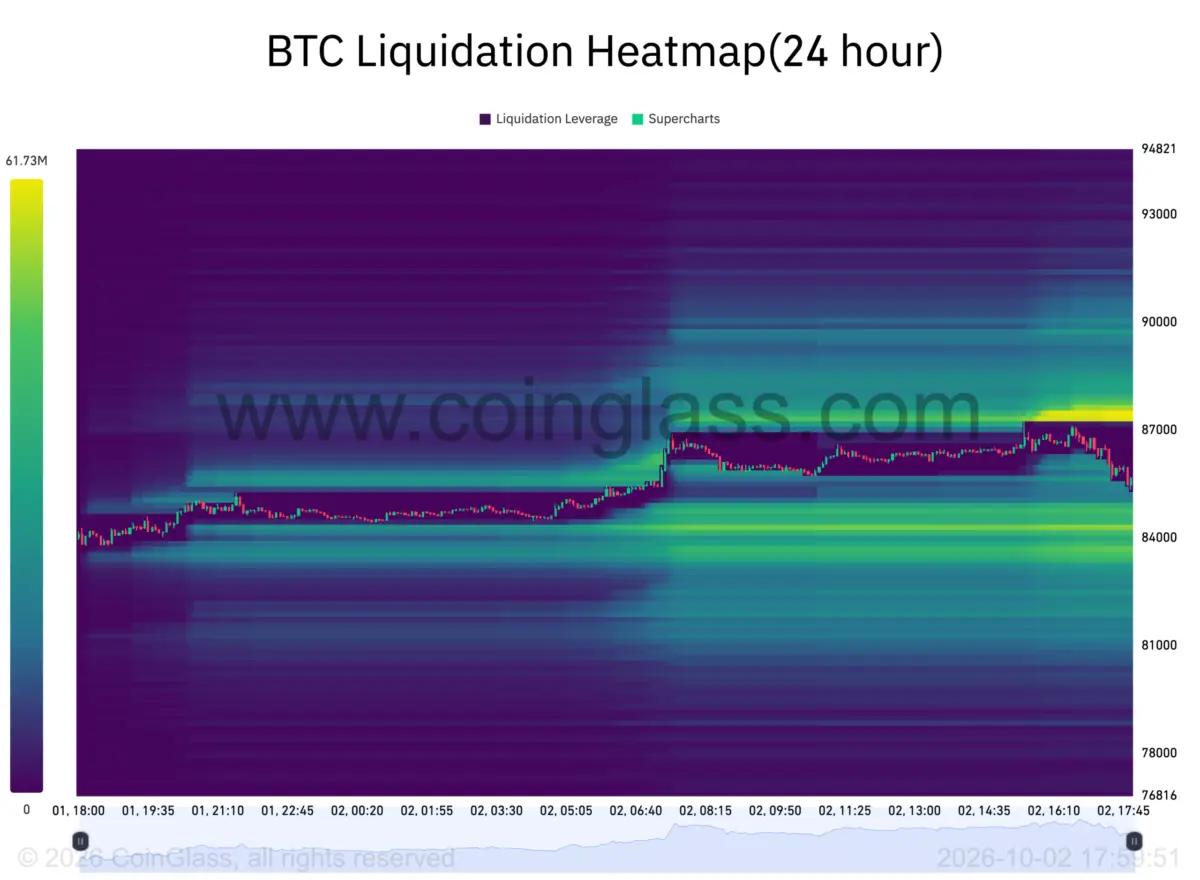
The broader cryptocurrency market experienced a severe wave of volatility as a sharp Bitcoin and altcoin sell-off wiped out leveraged positions and rattled investor confidence. The sudden market downturn triggered more than $1.1 billion in total liquidations over a 24-hour period, marking one of the most turbulent trading sessions in months.
According to market intelligence data, the aggressive downward pressure coincided with nervous behavior from newer market participants, many of whom rushed to move tens of thousands of Bitcoin to centralized exchanges at a steep loss. The convergence of macro-driven fear, massive derivatives liquidations, and heightened onchain capitulation risks has left traders closely watching key technical thresholds to determine whether the correction is merely a temporary shakeout or the start of a deeper macro pullback.
Bitcoin Slide to $80,350 Fuels $1.1 Billion in Liquidations
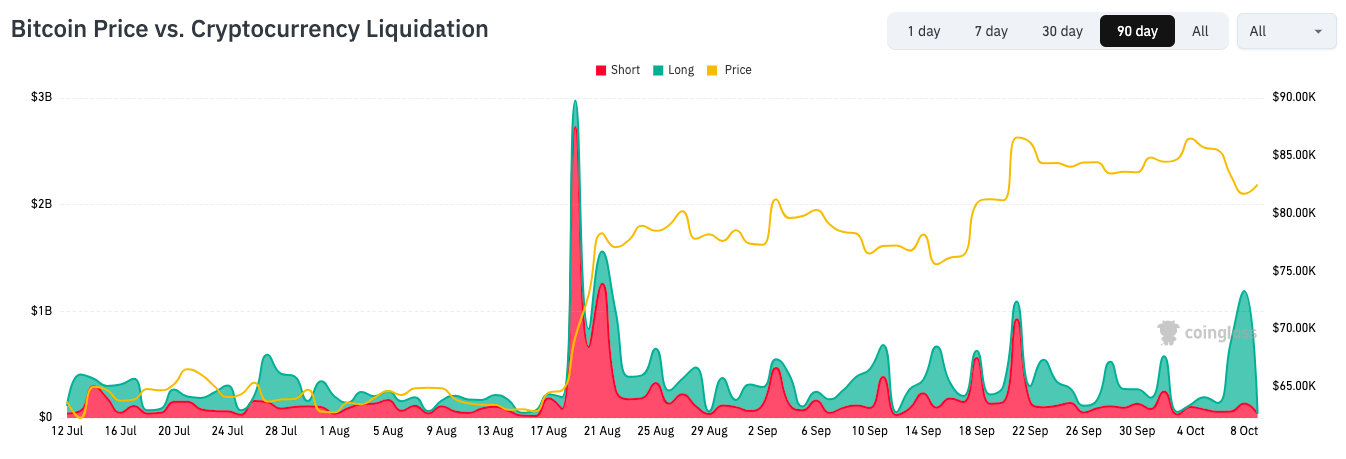
Data from market tracking and analytics platform CoinGlass revealed that total cryptocurrency liquidations surged to $1.09 billion during the 24-hour window leading up to 10 am UTC on Friday. This aggressive flush marked the largest single-day liquidation tally since August 21. During that earlier summer event, the BTC/USD trading pair experienced an explosive rally from $73,000 to $79,500, hitting two-month highs and subsequently triggering $1.3 billion in short position liquidations.
However, the dynamics of Friday’s market purge were starkly different. While the August surge punished bearish traders betting against the market, the latest correction heavily penalized overextended bullish positions. Long positions accounted for $1.05 billion of the staggering $1.1 billion total liquidated over the 24-hour period, demonstrating just how heavily leveraged long traders had become prior to the breakdown.
The market downturn was further catalyzed by external macro headlines, notably reports that the United States government had executed a transfer of more than 12,000 Bitcoin that had been previously confiscated through various legal proceedings. Large-scale movements of government-held digital assets frequently trigger immediate speculation and anxiety across retail and institutional trading desks, as market participants fear that these tokens could eventually find their way onto open order books to be liquidated, thereby increasing active circulating supply and depressing spot prices.
Reflecting this mounting selling pressure, the BTC/USD pair slumped to an intraday low of $80,350 on Bitstamp, marking its weakest price performance since September 18. Following the initial cascade, Bitcoin managed a modest recovery, climbing back to hover around the $82,500 mark by Friday. This specific price level has served as a critical psychological and technical battleground throughout Bitcoin’s broader macro uptrend that began in early July.
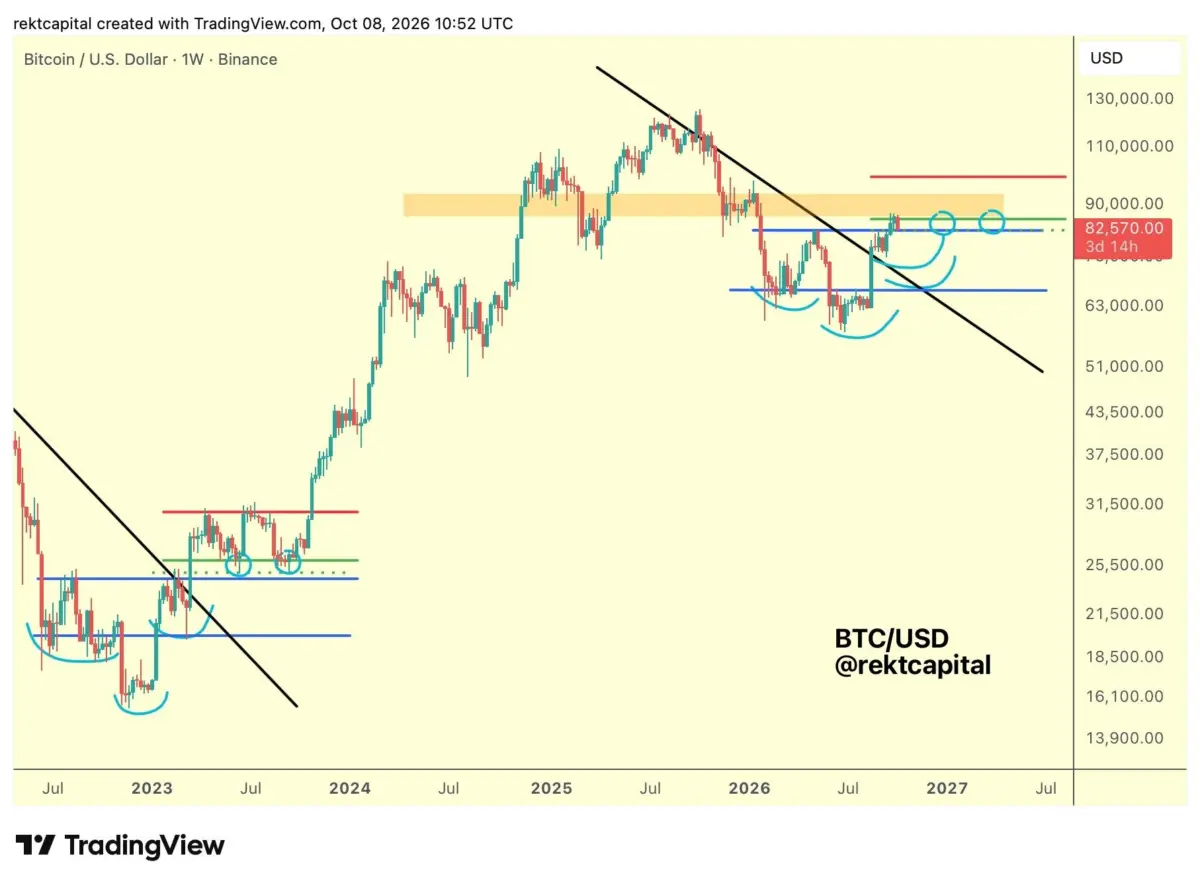
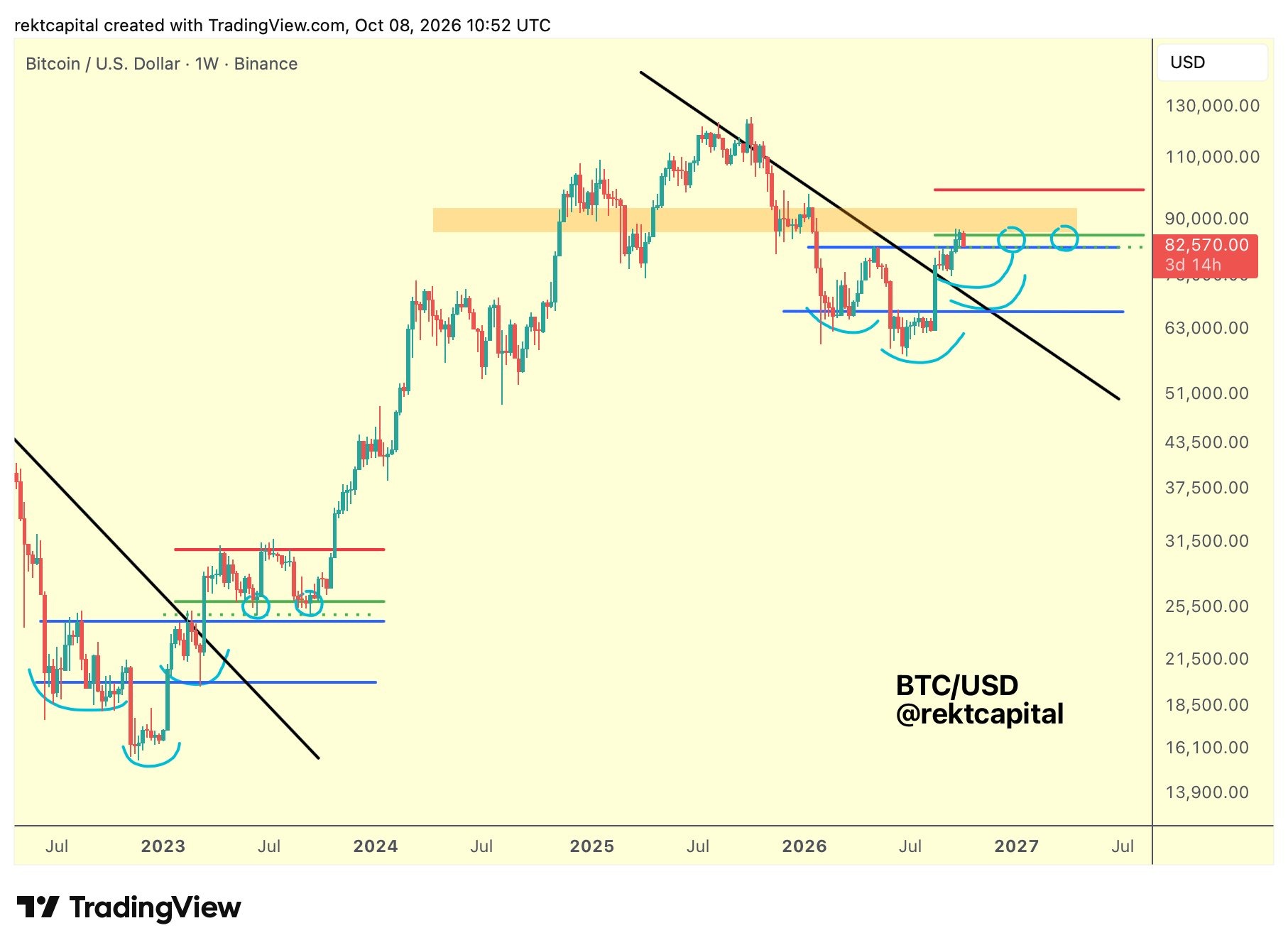
Furthermore, the $82,500 threshold represents the vital breakout point for a classic inverse head-and-shoulders pattern—a technical formation widely monitored by chart analysts as a precursor to sustained bullish reversals. For the broader market structure to remain constructive, proponents of the uptrend argue that Bitcoin must successfully defend this zone and establish it firmly as a reliable floor of support.
Prominent independent trader and market analyst Rekt Capital, who has been closely following the development of this reversal pattern and noting its striking technical similarities to Bitcoin’s historic recovery trajectory in 2023, emphasized the supreme importance of the upcoming weekly candle close.
Sharing his market perspective with followers on social media platform X, Rekt Capital noted that Bitcoin was struggling to maintain its footing above the critical threshold. He cautioned that a decisive weekly close below $82,500, which would successfully flip the former support level into established resistance, would effectively invalidate the immediate bullish thesis and drag Bitcoin back down into its broader macro accumulation range.
Short-Term Holders Send 55,600 BTC to Exchanges at a Loss
Beyond the derivatives market chaos and technical resistance tests, onchain metrics highlighted profound psychological stress among newer entrants to the asset class as prices retreated. Analytics platform CryptoQuant highlighted severe distress among short-term holders, defined broadly as wallet entities that have held their Bitcoin balances for up to six months without moving them.
According to insights published by CryptoQuant contributor Amr Taha, short-term holders collectively transferred an astonishing 55,600 BTC to various cryptocurrency exchanges at a loss on Thursday alone. In onchain analytics terminology, transactions executed at a loss signify that the coins being deposited onto exchange order books are arriving at a lower valuation than when they were involved in their previous onchain transfer. This behavior typically serves as a direct indicator of impulsive capitulation, driven by anxious investors rushing to liquidate their holdings out of fear of enduring even deeper losses if they delay their exit.
To contextualize the severity of Thursday’s onchain movement, CryptoQuant pointed out that the volume of loss-making transactions surpassed the figures recorded on June 26, an occasion when Bitcoin dropped below the $60,000 threshold for the second consecutive day. Observers noted the stark contrast in underlying market valuations between the two events. On Thursday, Bitcoin was still changing hands above the $81,000 mark, compared to the roughly $59,300 price environment observed in June—representing a price difference of more than 36%.
Analysts emphasize that moving coins to an exchange does not automatically mean that every single token deposited was instantly sold into the spot market; however, the sheer volume of capital moving under distressed conditions underscores a growing defensive posture among retail and short-term market participants.
Historically, periods characterized by aggressive, emotion-driven loss selling from short-term participants frequently align with local market capitulation phases. While such events are undeniably painful for those caught on the wrong side of the volatility, they often serve to flush out weaker hands from the ecosystem. This systemic clearing of excessive leverage and impulsive capital can ultimately pave the way for market stabilization and lay the foundational groundwork for a subsequent price recovery once selling exhaustion sets in.