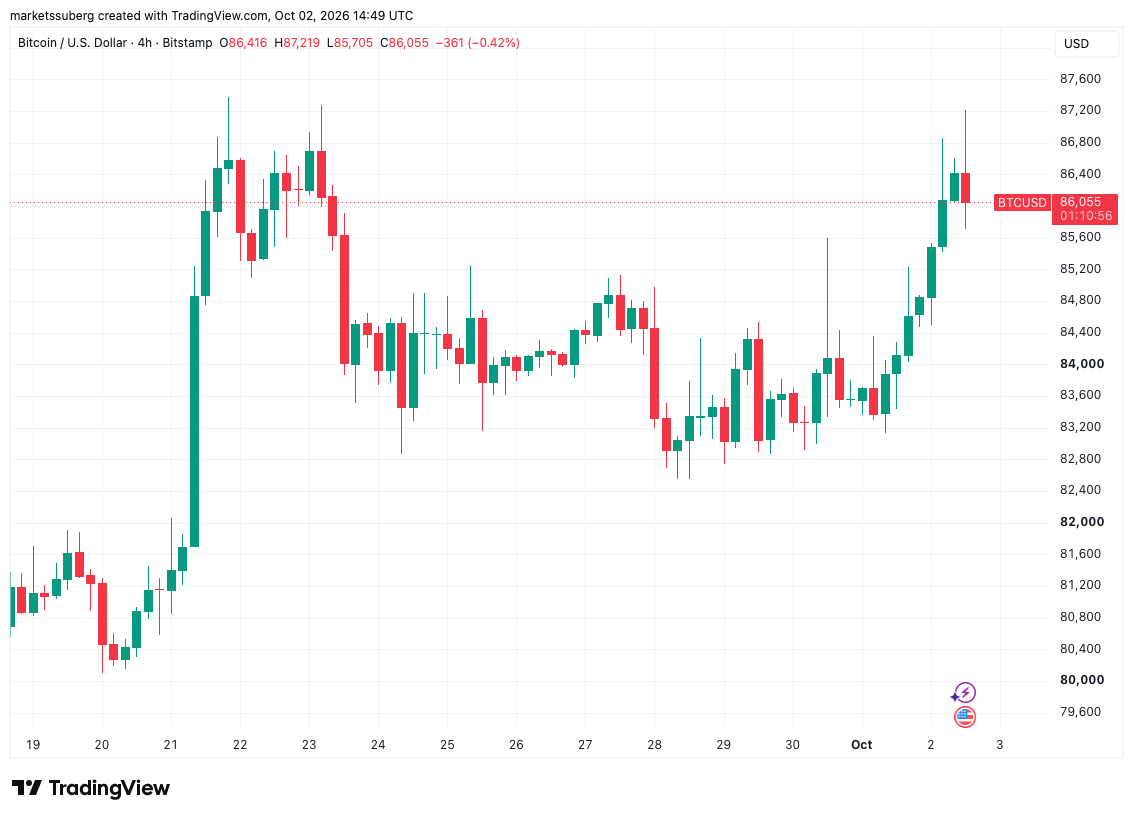
Bitcoin (BTC) surged past the $87,000 threshold on Friday, climbing sharply as a weaker-than-expected US jobs report triggered a broader relief rally across financial markets. The digital asset scaled up to $87,229 on Bitstamp, according to data from TradingView, bringing it just a hair’s breadth away from establishing fresh eight-month highs. The upward momentum materialized almost immediately after the release of crucial macroeconomic data that forced traders to recalibrate their expectations regarding the future trajectory of United States monetary policy.
The catalyst for the market’s enthusiastic reaction was the September nonfarm payrolls report, which significantly missed consensus estimates. Official figures revealed that the US economy added a paltry 29,000 jobs during the month, falling dramatically short of the anticipated 84,000. Compounding the sense of a cooling labor market, the figures for August—which had initially surprised markets on the upside upon release—were subjected to a sharp downward revision, dropping from 162,000 to 133,000.
The soft labor-market prints sent immediate shockwaves through traditional and digital asset markets alike. At the opening bell on Wall Street, US stocks climbed as traders aggressively scaled back their previously hawkish bets on forthcoming Federal Reserve interest rate hikes. The benchmark S&P 500 index posted a solid 1% gain, while the tech-heavy Nasdaq Composite Index outperformed, surging 1.8% in early trading.

Market observers and macroeconomic research outlets were quick to emphasize the significance of the labor data. Prominent trading resource The Cointelegraph Letter noted in a reaction posted on social media platform X that "this marks the third weakest jobs report of 2026," highlighting a persistent underlying cooling trend in the broader US economy.
The immediate shift in market sentiment was vividly reflected in derivative pricing tools. The latest data from CME Group’s widely watched FedWatch Tool revealed a dramatic collapse in market expectations for monetary tightening. The probability of the Federal Reserve enacting a 0.25% interest rate hike at its upcoming October policy meeting plummeted to just 18%, a steep drop from the 64% probability assigned by markets just one week prior. Traders and institutional participants alike began positioning themselves for a more accommodative policy stance moving forward.
Bond Yields Extend Fall on Weak Labor-Market Data
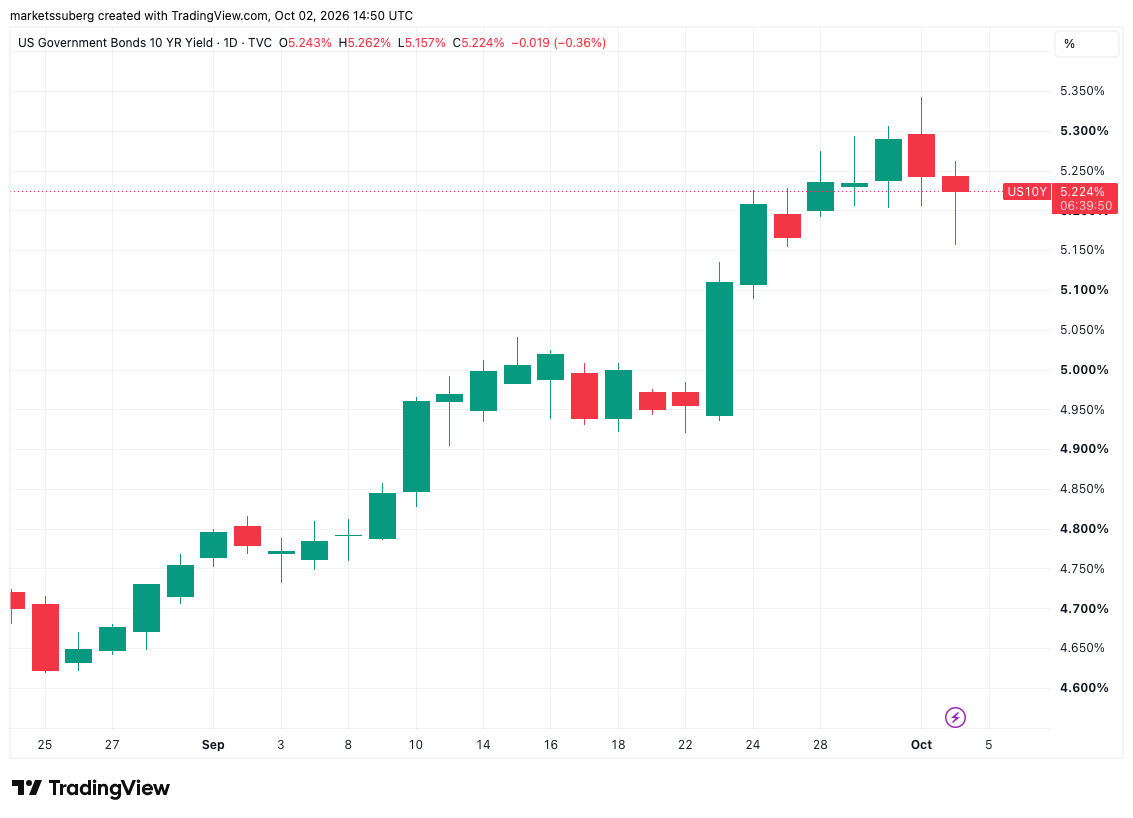
The cooling labor data also accelerated a relief rally in the fixed-income market, sending US Treasury yields tumbling for a second consecutive day. At the time of writing, the benchmark 30-year Treasury yield hovered at 5.573%, while the 10-year yield retreated to 5.2%.
This sharp downward adjustment in yields followed a period of intense pressure earlier in the week. Just days prior, on Wednesday, both the 10-year and 30-year yields had reached staggering new 24-year highs. Those peaks occurred as markets initially looked past softer August Personal Consumption Expenditures (PCE) data—widely known as the Federal Reserve’s preferred gauge of underlying inflation—in favor of lingering hawkish concerns.
The sudden reversal in bond yields provided a hospitable environment for risk-on assets, removing a major macroeconomic headwind that had previously weighed heavily on both equities and cryptocurrencies. By alleviating the immediate pressure of soaring real interest rates, the lower yields offered a powerful tailwind for digital assets seeking to break out of their established local ranges.
Bitcoin Analysis Sees "Cleanest Upside Catalyst" in Yield Drop
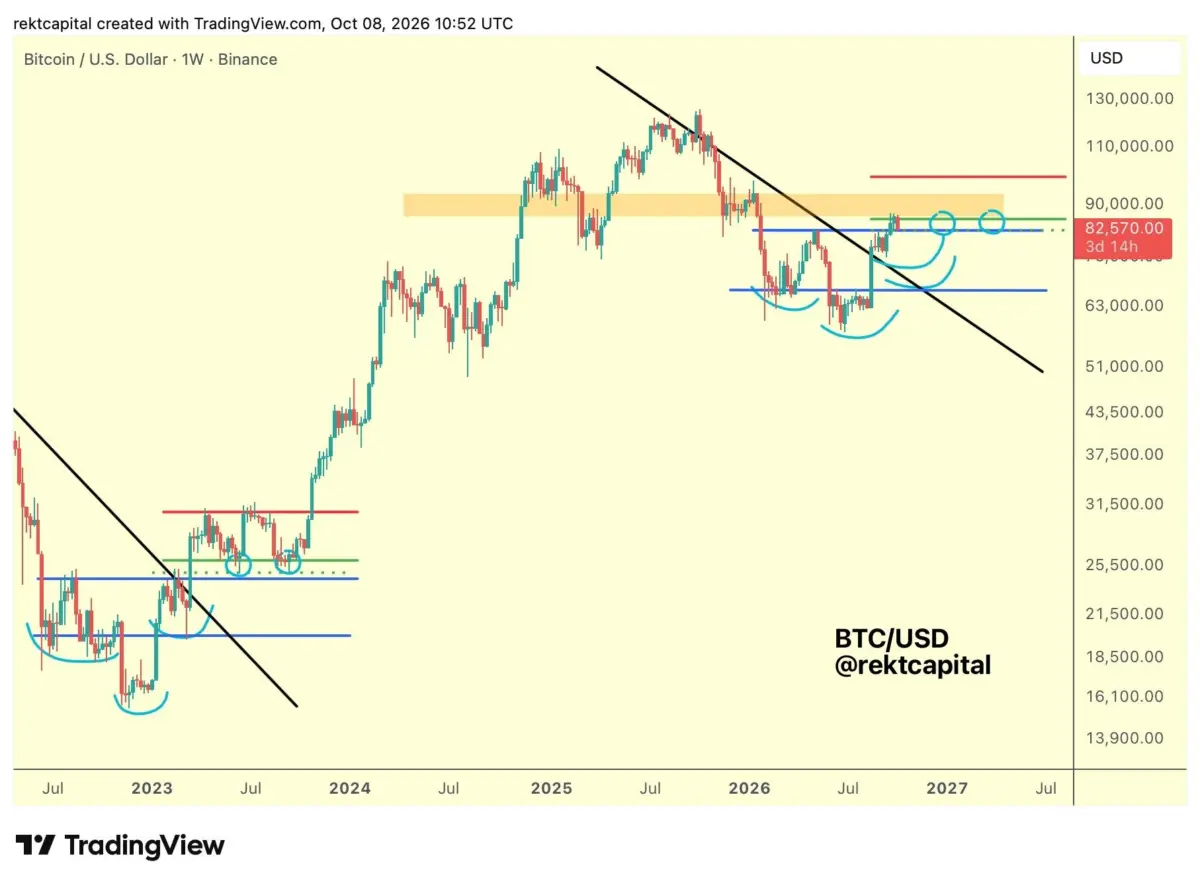
Despite the dramatic intraday spike that pushed Bitcoin past $87,000, the leading cryptocurrency faced persistent overhead friction, failing to cleanly break beyond the multi-month highs established during September. By the time of reporting, the asset had pulled back slightly, trading back below the $86,000 level.
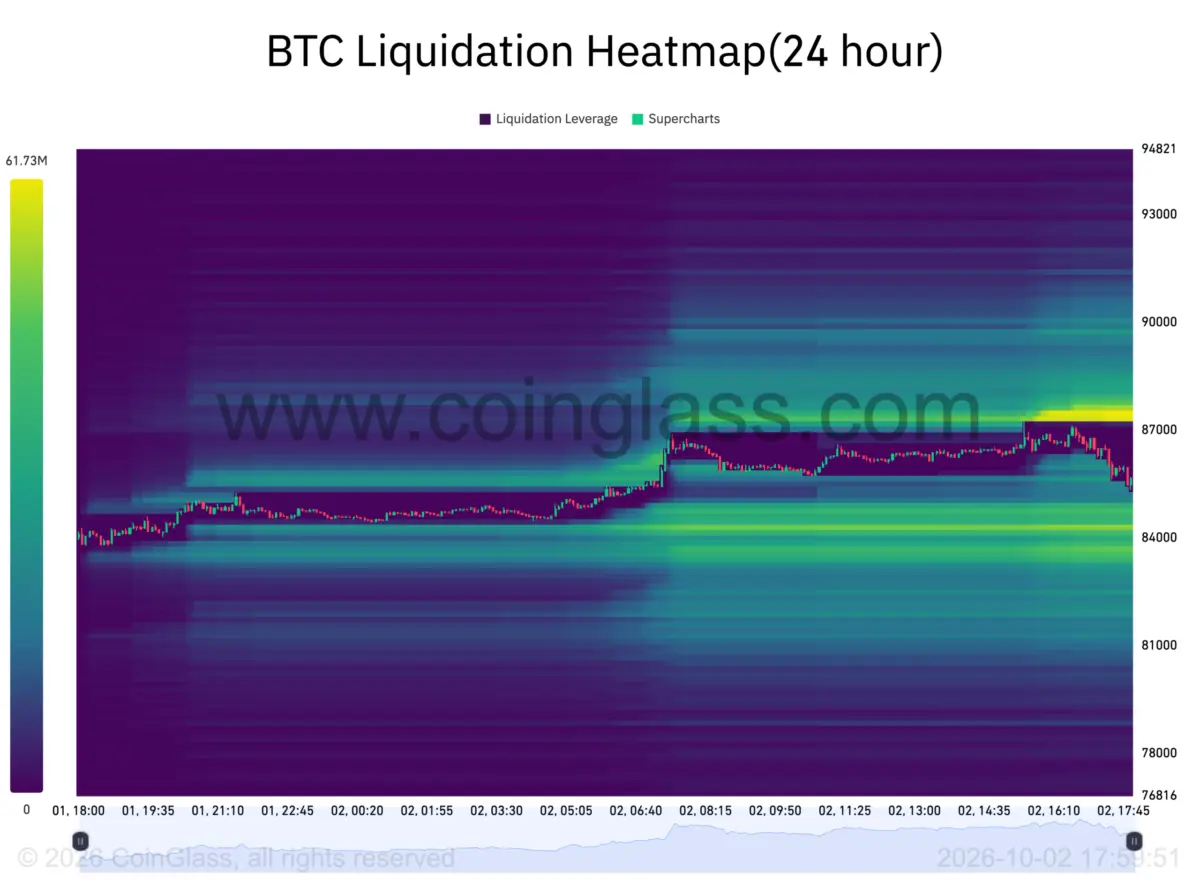
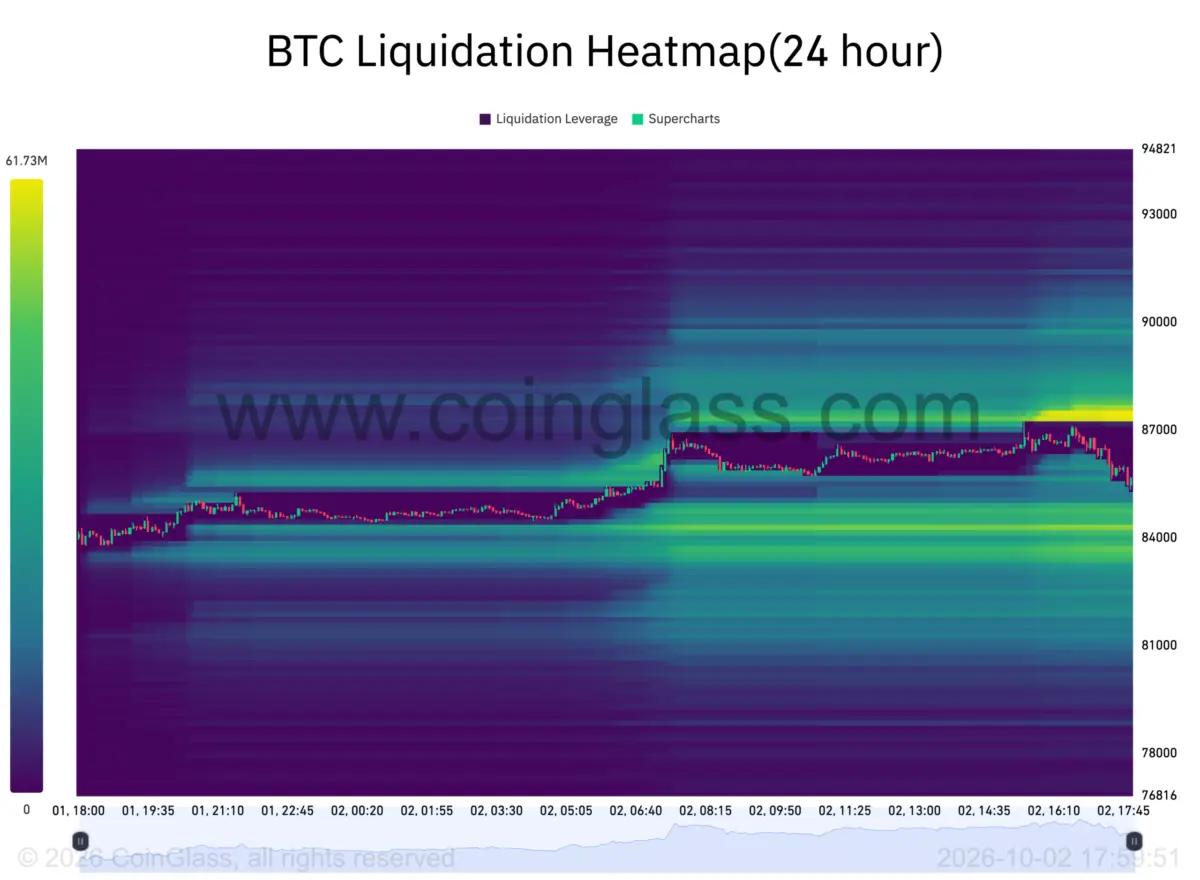
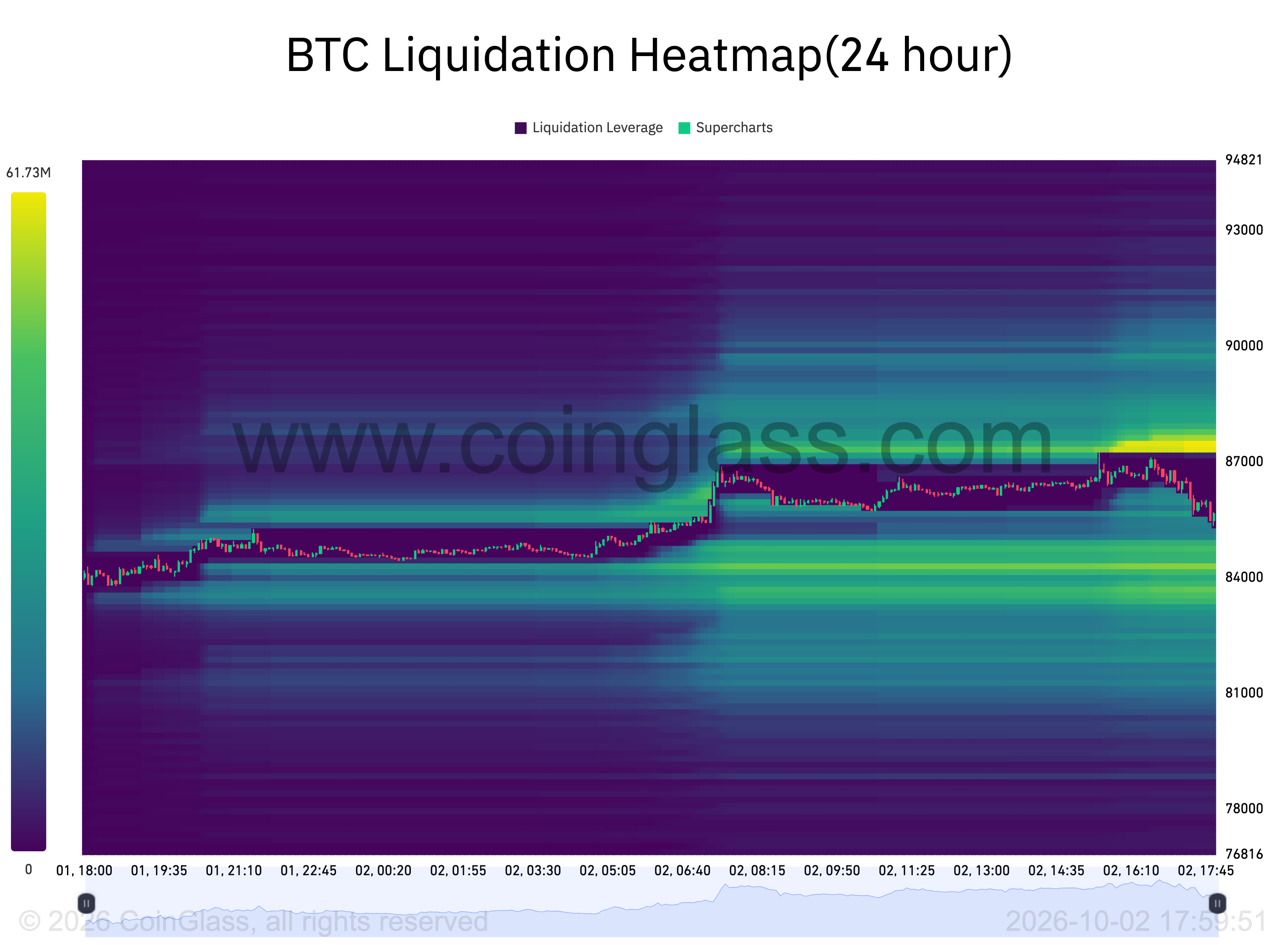
Market microstructure analysis suggested that price action was being actively constrained by structural order book dynamics. Previous market observations highlighted successive walls of ask liquidity clustered on major exchange order books, which continuously checked aggressive upward moves. According to data from CoinGlass, a prominent band of liquidity centered around the $87,300 mark had formed a formidable layer of short-term resistance, halting the advance before it could challenge higher historical thresholds.
Nevertheless, institutional market makers and trading desks remained fundamentally constructive on the macroeconomic setup. In a recent market insight note, trading firm QCP Capital argued that BTC/USD is structurally positioned to benefit from the softer labor-market print as long as Treasury yields continue their descent.
"For Bitcoin, a Treasury relief rally would provide the cleanest upside catalyst," QCP Capital wrote in their analysis. The firm added that the premier cryptocurrency had already demonstrated impressive underlying resilience by navigating a severe real-rate shock that had simultaneously placed heavy downside pressure on traditional safe-haven assets like gold.
Technical analysts also noted encouraging signs beneath the surface of the spot market. Prominent independent trader Aksel Kibar pointed out that a successful support retest at the $82,800 level had already been firmly established on the daily chart, providing a solid technical foundation for any future upward attempts.
As traders continue to parse incoming macroeconomic data and monitor shifts in Federal Reserve expectations, the interplay between falling Treasury yields, labor market health, and exchange-level liquidity walls will likely dictate whether Bitcoin can muster the momentum required to decisively conquer its overhead resistance and carve out new highs for the year.