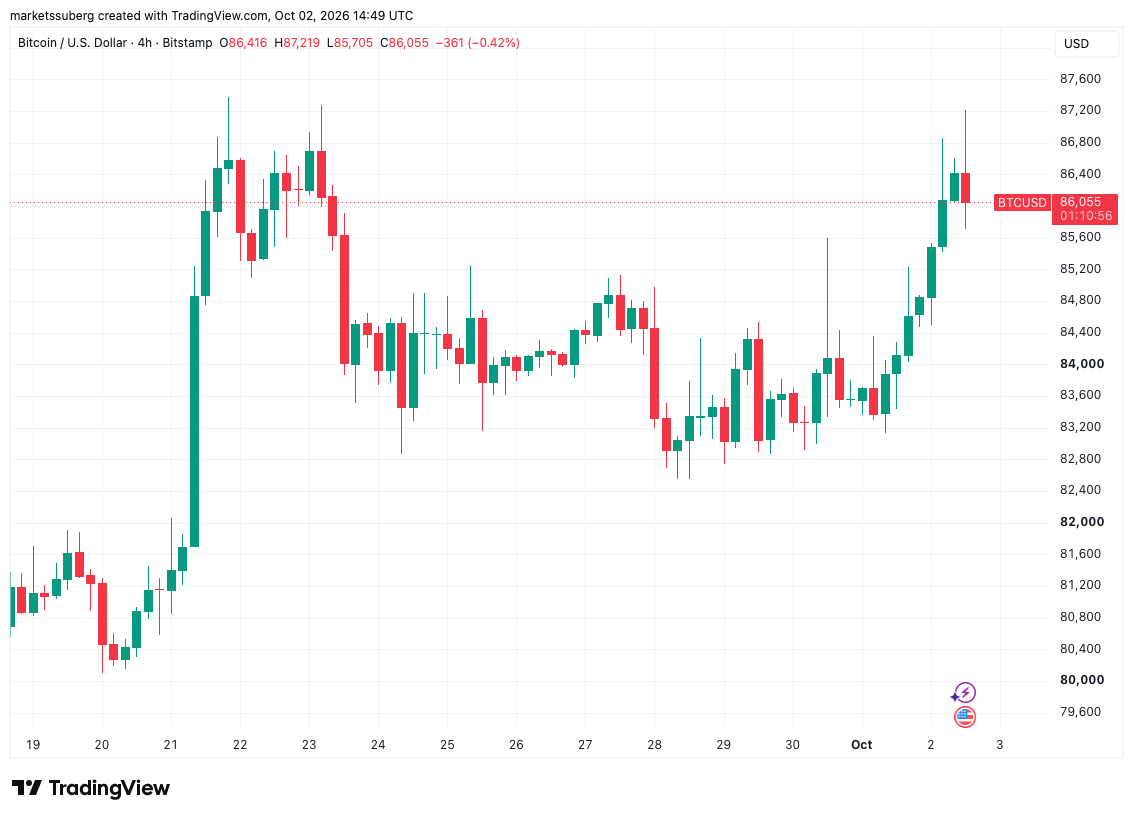
Bitcoin (BTC) surged past the $87,000 threshold on Friday, riding a wave of macroeconomic optimism after United States jobs data fell significantly short of market expectations. The weaker-than-anticipated labor report triggered a broad market reaction, sending Treasury yields downward and prompting Wall Street traders to dial back aggressive expectations for future Federal Reserve interest rate hikes.
Data from TradingView showed the BTC/USD pair climbing to a peak of $87,229 on the Bitstamp exchange, bringing the leading cryptocurrency within striking distance of new eight-month highs. Although the initial price spike faced immediate selling pressure that later brought the asset back below $86,000, the macro backdrop has injected fresh momentum into the digital asset market as traders evaluate the shifting landscape of monetary policy.
Bond Yields Extend Fall on Weak Labor-Market Data
The primary catalyst for Friday’s market movement stemmed from the release of the September nonfarm payrolls report. According to the data, the US economy added a meager 29,000 jobs during the month, falling drastically short of the 84,000 jobs anticipated by economists. Furthermore, the employment figures for August—which initially surprised markets by beating expectations upon their original release—were sharply revised downward from 162,000 to 133,000.

The dismal labor market figures sent immediate shockwaves through traditional financial markets. At the opening bell on Wall Street, US stocks rallied as traders rapidly scaled back hawkish bets regarding potential Federal Reserve interest rate hikes. The broad-market S&P 500 index rose by 1%, while the technology-heavy Nasdaq Composite Index outperformed, gaining 1.8% in early trading.
Market commentators were quick to highlight the significance of the employment report. In a reaction shared on social media platform X, prominent trading resource The Kobeissi Letter noted that the latest figures mark the third weakest jobs report recorded throughout 2026.
The cooling labor market fundamentally altered expectations for the central bank’s upcoming policy decisions. According to the latest data from CME Group’s FedWatch Tool, the probability of the Federal Reserve enacting a 0.25% interest rate hike at its October meeting plummeted to just 18%, a steep drop from the 64% probability assigned by markets just one week prior.
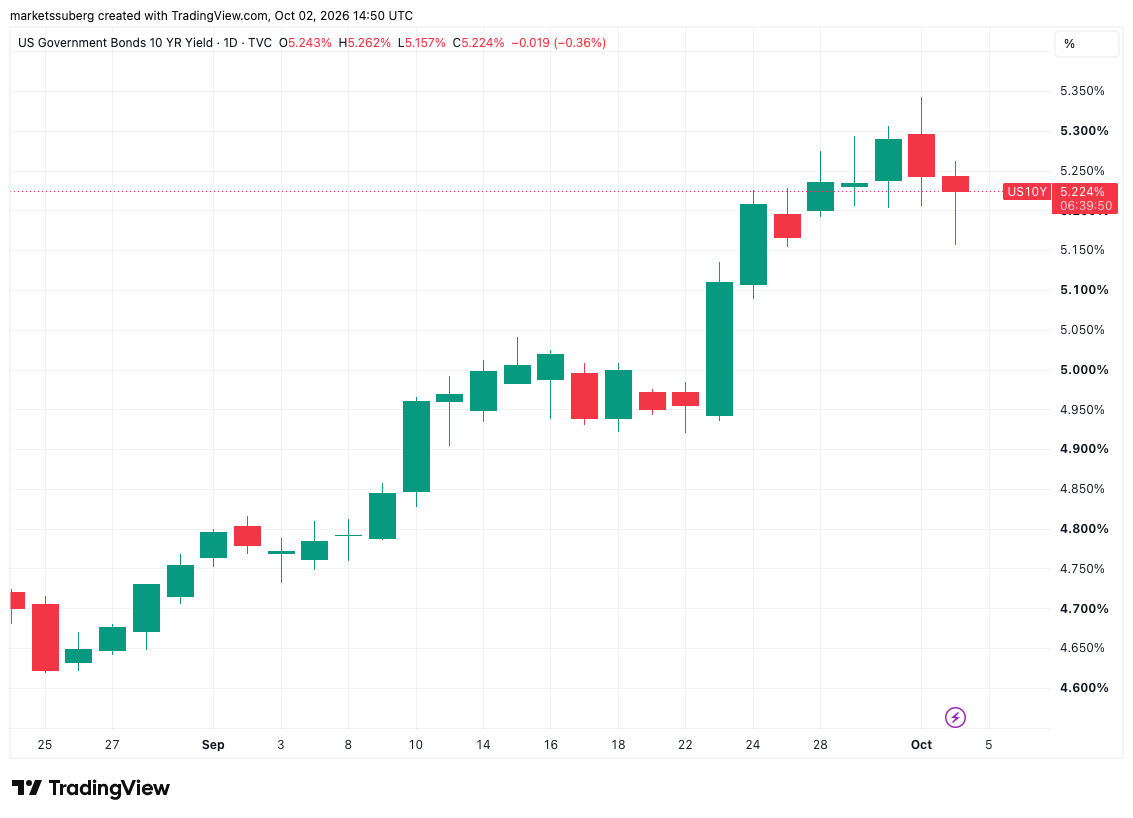
This shift in sentiment also reverberated across the fixed-income market. US bond yields fell for the second consecutive day following the data release. At the time of writing, the 30-year Treasury yield hovered at 5.573%, while the 10-year yield stood at 5.2%. These declines follow a dramatic mid-week session where both yields reached new 24-year highs. Markets had previously looked past softer August Personal Consumption Expenditures (PCE) data—widely regarded as the Federal Reserve’s preferred inflation gauge—to push yields higher, but the deteriorating labor market has finally forced a reevaluation of terminal rates.
Bitcoin Analysis Sees “Cleanest Upside Catalyst” in Yield Drop
Despite the initial enthusiasm that pushed Bitcoin past $87,000, the cryptocurrency’s price action ultimately struggled to decisively break beyond the multi-month highs established during September. As the session progressed, BTC slipped back below the $86,000 mark.
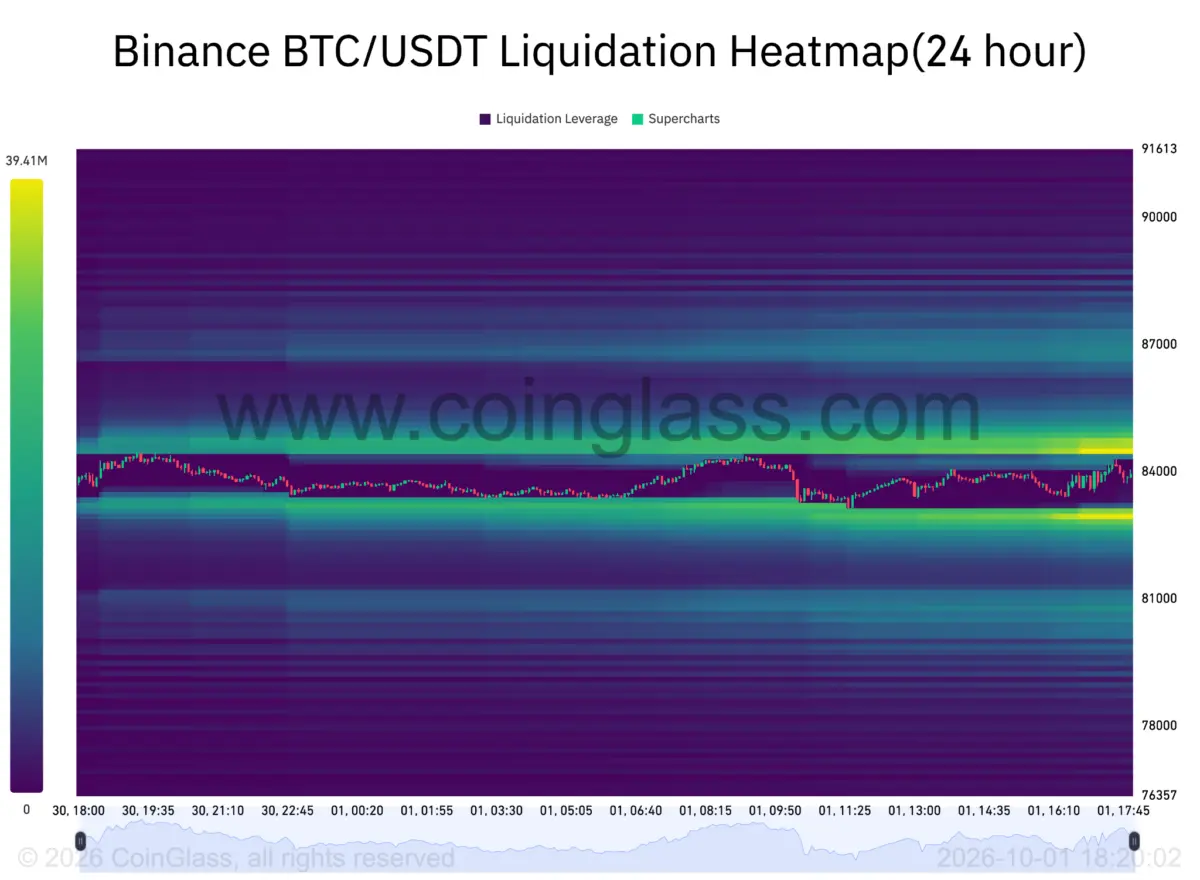
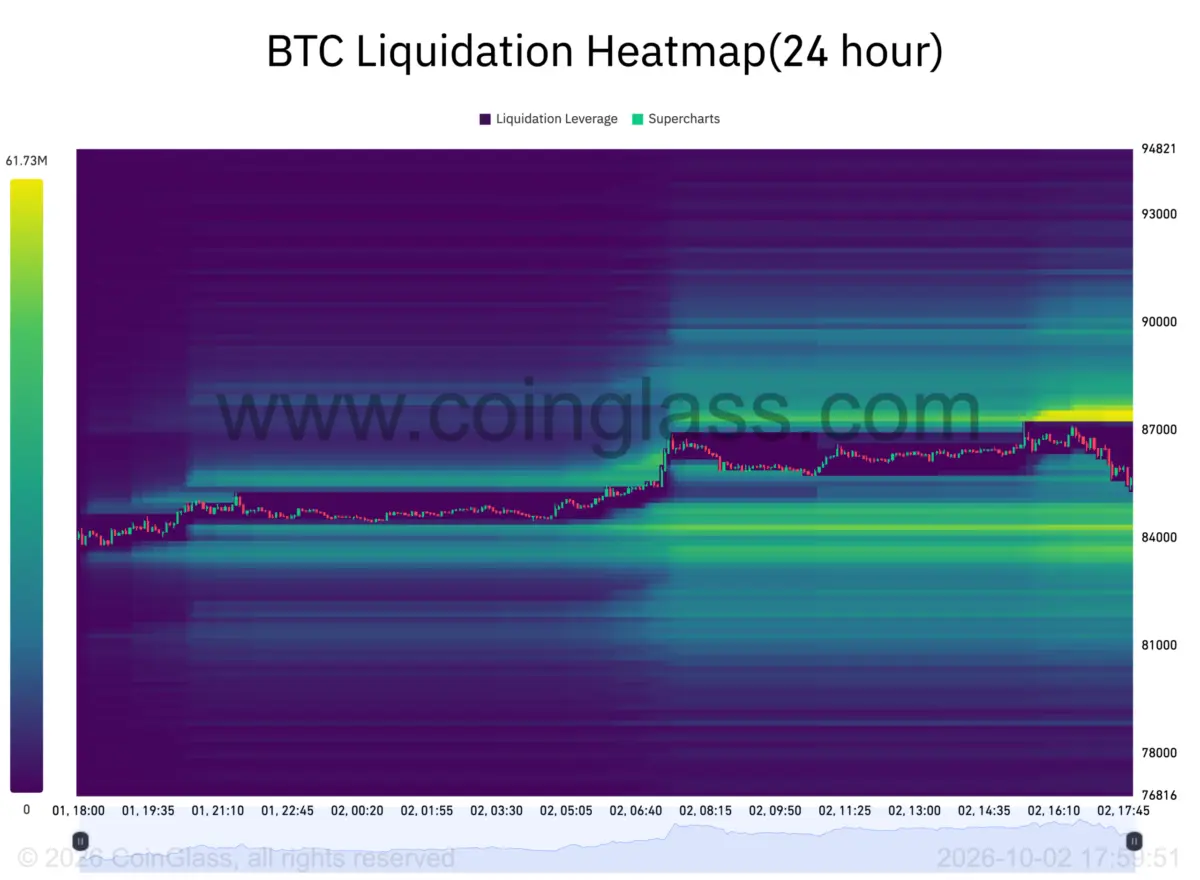
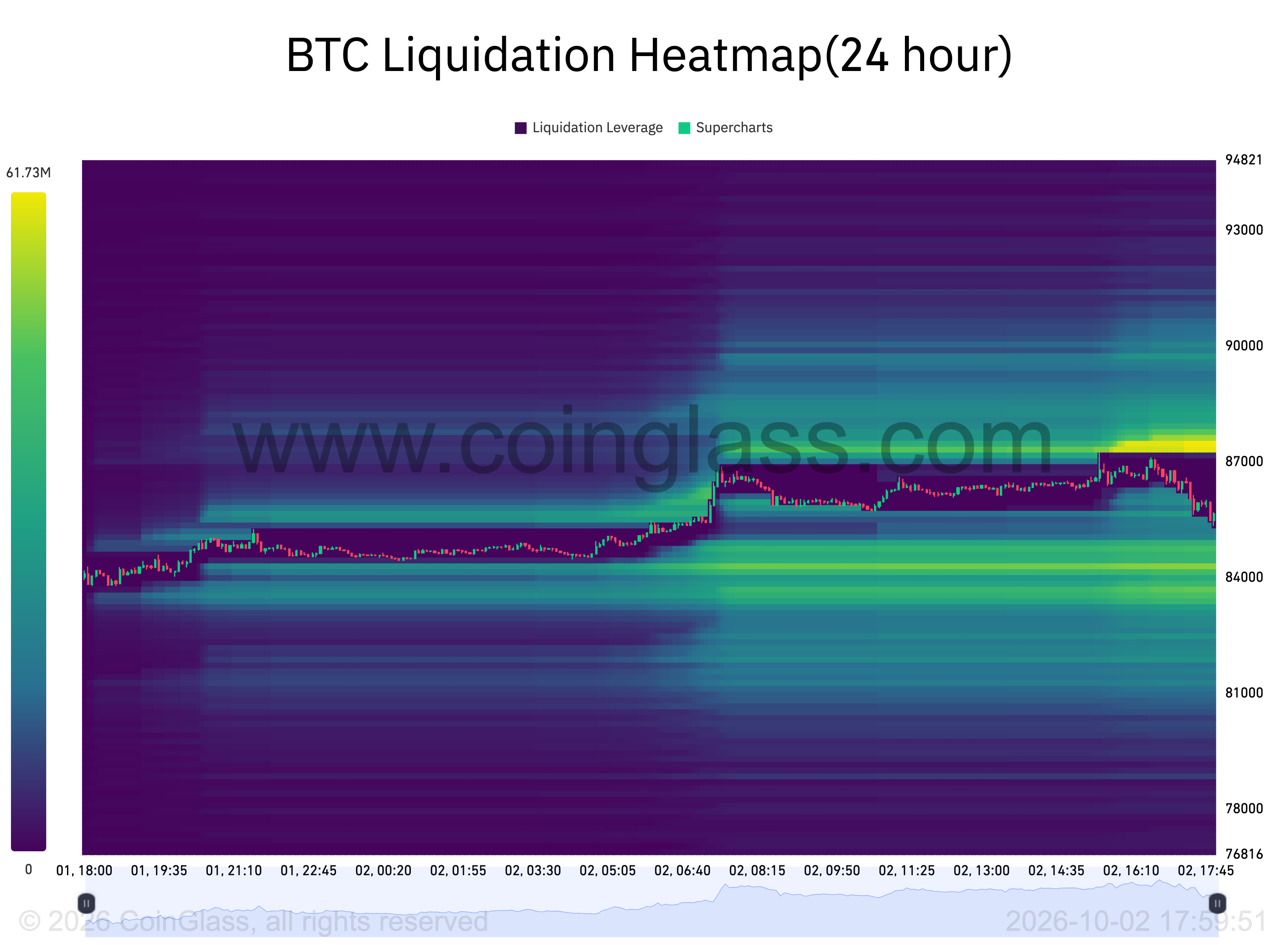
Market observers point to structural market mechanics as a primary reason for the temporary ceiling on prices. Previous reports highlighted successive walls of ask liquidity clustered heavily on exchange order books, which have consistently kept upside price movements in check. Data from liquidation heatmaps indicates that a dense band of resistance has formed around the $87,300 level, acting as a formidable barrier for bullish traders attempting to drive the asset higher.
Nevertheless, institutional market analysts remain optimistic about the broader implications of the macroeconomic shift. In a recent research note, trading firm QCP Capital argued that BTC/USD should continue to benefit from the softer labor-market print as bond yields extend their downward trajectory.
"For Bitcoin, a Treasury relief rally would provide the cleanest upside catalyst," QCP Capital wrote in their market analysis. "The asset has already demonstrated resilience through a real-rate shock that pressured gold."
Technical analysts are also examining the underlying strength of Bitcoin’s price structure following the volatility. Noted trader Aksel Kibar pointed out that the cryptocurrency has successfully established and retested a crucial support level at $82,800 on the daily chart, suggesting that the broader uptrend remains intact despite the short-term resistance encountered near the $87,000 threshold.
As traders continue to parse incoming macroeconomic data and monitor shifting liquidity dynamics across global exchanges, the intersection of monetary policy and digital asset performance remains a central focus for market participants.