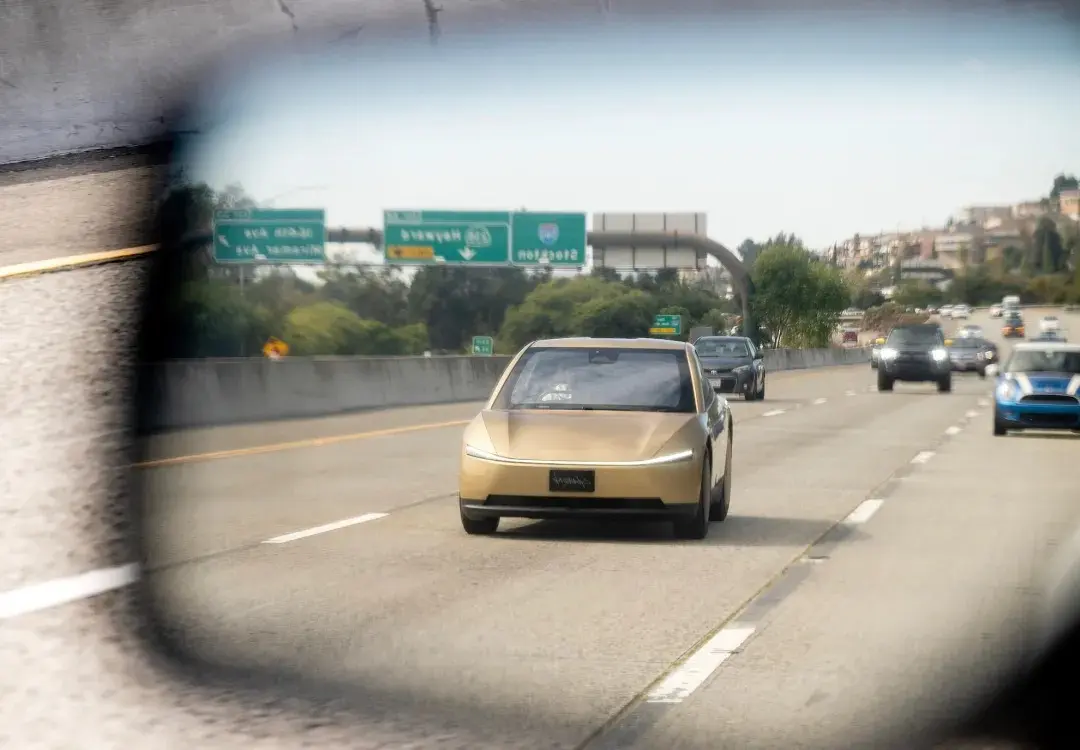
Tesla has officially opened pre-orders for its highly anticipated, fully autonomous golden Cybercab, allowing a select group of customers to purchase the futuristic vehicle for personal use. The announcement, shared by the automaker on Friday evening, marks a significant milestone in Tesla’s ongoing pivot toward autonomous ridesharing and dedicated robotaxi infrastructure. However, early details emerging from the reservation portal reveal distinct operational boundaries, delivery timelines, and pricing structures that define how the first wave of vehicles will be utilized on public roads.
As prospective buyers began evaluating the official order page, tech reviewer Marques Brownlee highlighted critical operational stipulations on social media. According to Brownlee’s findings, buyers must accept vehicle delivery in one of a handful of designated Texas cities, and the Cybercab will initially be restricted to operating within specific geofenced areas. For those willing to navigate these initial constraints, Tesla’s reservation system estimates that vehicle deliveries will begin as early as December 2026.
The financial breakdown for the personal Cybercab reveals a dual-cost structure. While the vehicle carries a base price tag of $29,990—positioning it as a surprisingly affordable option for a dedicated autonomous platform—owners will also face a recurring operating expense. Initial order details indicated that buyers would need to pay $299 per month to operate and maintain the vehicle’s autonomous ecosystem.

The monthly operational fee quickly drew public scrutiny and commentary from tech analysts and consumers alike, prompting a swift response from Tesla leadership. Addressing the concerns raised in Brownlee’s post, Tesla CEO Elon Musk took to social media to clarify the company’s long-term rollout strategy and pricing adjustments. Musk stated that the Cybercab will eventually "be available nationwide, as we receive regulatory approval."
Furthermore, Musk acknowledged that the initially listed monthly fee was "too high," suggesting a substantial downward revision. He clarified that the ongoing operational cost should ultimately align with the pricing of Tesla’s Full Self-Driving (FSD) package and connectivity features offered for other vehicle models, bringing the expected monthly cost closer to approximately $115.
Elaborating on the technical limitations and geographic boundaries of the rollout, Ashok Elluswamy, Tesla’s head of AI software, provided additional context regarding how the vehicles will navigate their designated zones. Elluswamy explained that the Cybercab will operate "unsupervised inside all the same geo locations as @robotaxi, just serving the owners’ needs." This means private owners will leverage the same underlying autonomy stack developed for Tesla’s broader commercial robotaxi fleet, ensuring that the personal vehicles benefit from the company’s most advanced self-driving capabilities while remaining tethered to approved urban mapping zones.
The commercialization of the Cybercab comes at a pivotal operational and strategic crossroads for Tesla. The company has faced pressure to recalibrate its manufacturing priorities following lower-than-projected sales figures across certain segments of its existing vehicle lineup. In response to shifting market demands and production realignment, Tesla recently announced a major structural change to its manufacturing roadmap: the company will officially cease production of the polarizing Cybertruck next year. By winding down Cybertruck manufacturing in 2027, Tesla intends to reallocate that factory capacity to aggressively scale up the production of Cybercabs, signaling an all-in corporate bet on the future of autonomous transit and ride-hailing services.