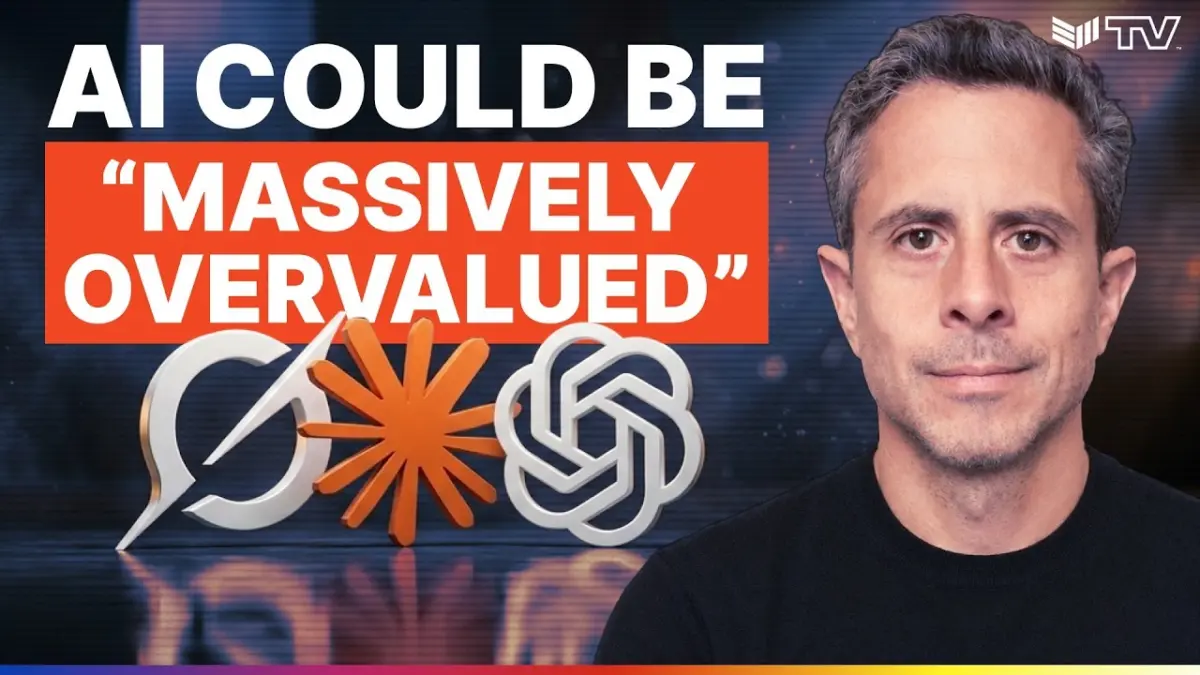
In a recent appearance on BMTV, economist and author of The Bitcoin Standard Saifedean Ammous sat down for an in-depth conversation regarding the intersection of macroeconomics, the booming artificial intelligence sector, and the current trajectory of Bitcoin. As financial markets navigate structural shifts, persistent inflation, and shifting monetary policies, Ammous offered a critical perspective on modern tech valuations while expressing strong optimism for the world’s leading cryptocurrency.
During the interview, Ammous turned a critical eye toward the current frenzy surrounding artificial intelligence, explicitly warning that prominent AI development firms such as OpenAI and Anthropic "might end up being massively overvalued." The discussion explored the broader implications of the AI trade, examining how massive capital expenditures in the technology sector interact with traditional economic pressures, the fiat monetary system, and broader societal impacts like the K-shaped economy affecting Main Street.
The Fiat Inflation Scam and Macroeconomic Realities
Ammous opened the discussion by tackling what he characterizes as the "fiat inflation scam," tying modern monetary policy directly into broader economic trends. According to Ammous, government-issued fiat currencies are structurally flawed by design, serving as a persistent tax on savers through continuous debasement. He analyzed the ongoing issues surrounding Federal Reserve rate hikes, the escalating global debt problem, and how these systemic monetary pressures ripple across the global economy.
Drawing international comparisons, Ammous highlighted Argentina as a prime real-world case study demonstrating the catastrophic effects of sustained inflation. By looking at how monetary mismanagement devastates local purchasing power and disrupts economic stability, he underscored why alternative monetary assets have become increasingly vital for individuals seeking to preserve their wealth outside of traditional banking systems. This environment of monetary degradation, he argued, creates the foundational backdrop for understanding both the speculative interest in new technology sectors and the steadfast demand for hard money.
Evaluating the AI Boom: Bubble or Breakthrough?
As the conversation shifted toward the technology sector, Ammous addressed the immense capital flows driving the artificial intelligence boom. While acknowledging the technological advancements being made, he questioned the long-term sustainability of the valuations attached to leading artificial intelligence startups and enterprises. He suggested that the massive spending cycles currently dominating venture capital and corporate balance sheets may be overly optimistic, drawing parallels to past speculative manias where market enthusiasm outpaced realistic revenue models.
Furthermore, Ammous examined the relationship between the AI trade, stablecoins, and broader financial market dynamics. He noted that while technological innovation continues to capture public imagination, the economic benefits are frequently unevenly distributed, contributing to a K-shaped economy where asset holders thrive while ordinary consumers on Main Street bear the brunt of inflation and rising costs of living.
Why Bitcoin and AI Do Not Compete
A central theme of the interview was the relationship between the burgeoning AI sector and Bitcoin. Addressing common questions from market participants about whether artificial intelligence investments and Bitcoin compete for the same capital, Ammous firmly rejected the notion that the two assets are direct rivals.
Instead, he emphasized a fundamental differentiator: scarcity. Ammous pointed out that Bitcoin possesses an absolute, immutable supply cap of 21 million coins—a mathematical rule that no entity, regardless of technological prowess, can alter. By contrast, artificial intelligence, despite its capacity to process vast amounts of data and generate unprecedented digital output, cannot create or alter the fundamental monetary properties of Bitcoin. Because AI cannot make more Bitcoin, Ammous argued that the two phenomena occupy entirely different categories of economic utility, ensuring that Bitcoin retains its unique value proposition as an incorruptible store of value.
Market Cycles and Bitcoin’s Outlook
Turning to the cryptocurrency market itself, Ammous assessed Bitcoin’s current market cycle, acknowledging that the asset has recently navigated through a challenging bear market environment. However, rather than expressing pessimism, he offered an encouraging outlook for investors watching the charts.
Ammous stated that the current market conditions likely represent the cyclical bottom for Bitcoin. With macroeconomic pressures mounting and the inherent limitations of fiat systems becoming more pronounced, he expressed confidence that "Bitcoin will start on its own run in a bit." As market participants weigh the sustainability of traditional equities and speculative tech trades, Ammous maintains that Bitcoin’s predictable monetary policy and decentralized nature position it to resume its upward trajectory as the premier monetary network of the digital age.