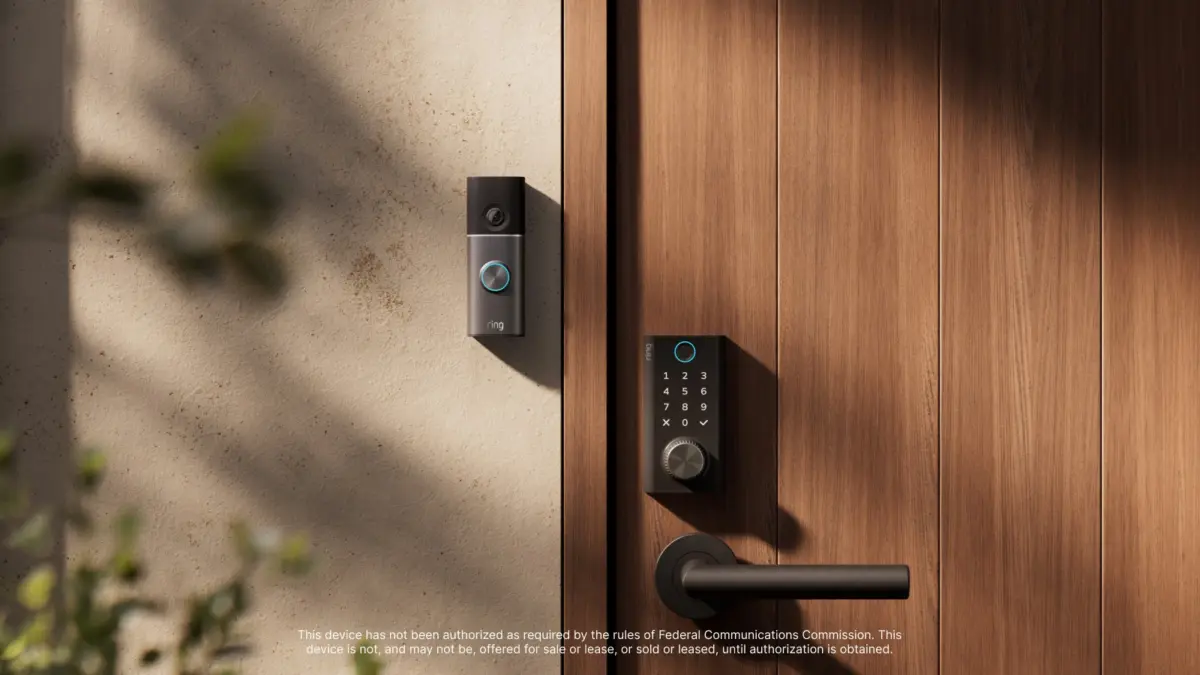
Ring, the Amazon-owned home security company widely known for its popular line of video doorbells, is officially making its long-awaited expansion into a brand-new hardware category: smart locks.
The introduction of the company’s first smart lock marks a significant strategic move for Ring, positioning the brand deeper into the smart home ecosystem. However, Ring’s new device is not merely a copy-and-paste iteration of the various other automated locks currently dominating the market. Instead, the company has chosen to tackle one of the most persistent and widespread consumer pain points that frequently deters mainstream buyers from embracing smart home equipment: the paralyzing fear of a battery dying and inadvertently locking homeowners out of their own properties.
To effectively address this issue, Ring’s upcoming smart lock has been engineered with a built-in power dial. In the event that the device’s battery completely runs out of charge, the homeowner does not need to worry about being stranded outside. Instead, they can simply turn the physical power dial a few times to generate enough emergency energy to power the lock back up, allowing them to enter their home smoothly and without hassle.
Ring founder Jamie Siminoff explained that the inspiration to fundamentally rethink the traditional smart lock came to him during a personal experience while looking to buy a lock for a vacation home. He noted that he struggled with the decision because that particular property gets used very little throughout the year, meaning a standard smart lock would sit idle while the battery slowly drained over time, inevitably leading to a frustrating dead battery scenario upon arrival.
Siminoff also grew increasingly concerned that family members or friends visiting the house independently might find themselves stuck outside. Because the door is not directly connected to a permanent household power source, any conventional smart lock on the market would be entirely dependent on its internal battery, leaving visitors vulnerable to unexpected lockouts.
Recognizing a major flaw in current industry standards, Siminoff recalled thinking that someone needed to fix the underlying problem. Utilizing artificial intelligence and internal development resources, he spearheaded a project aimed at creating a lock featuring a manual backup mechanism. The goal was to build a system where a user could hand-crank a dial just enough to generate the electrical charge required to power the lock mechanism and open the door. Once safely inside, the homeowner can easily remove the rechargeable battery pack and plug it in to charge as usual, restoring the lock to full smart functionality.
According to Siminoff, the standard charge on Ring’s new smart lock is designed to last approximately one year under normal usage conditions. The accompanying Ring mobile app will proactively alert the user well in advance when it is finally time to remove and recharge the battery pack. Furthermore, the Ring app serves as the central hub for managing access permissions, allowing homeowners to easily configure custom access schedules for individuals who may require periodic entry, such as a trusted dog walker, house cleaners, or visiting relatives.
Looking ahead, the company has ambitious plans to expand the software ecosystem surrounding the device. Eventually, Ring wants to allow third-party software developers to design specialized applications tailored for the lock so it can be utilized in various other commercial and residential scenarios, such as by Airbnb hosts and short-term rental property owners who need to regularly and securely change access codes for incoming guests.
In addition to its innovative manual power generation feature, the Ring lock offers four distinct methods for everyday entry, ensuring that users will never have to worry about forgetting a single digital code or misplacing a traditional physical key. Homeowners and authorized guests can unlock the door using the device’s integrated fingerprint reader for biometric security, a backlit touchscreen keypad for traditional PIN entry, the Ring mobile app from anywhere with an internet connection, or hands-free voice commands via Amazon Alexa.
Siminoff readily admitted that in terms of core features and daily automation, Ring’s new product may be comparable to several other sophisticated locks currently available on the retail market. However, he firmly believes that the device’s unique ability to directly eliminate consumer anxiety over unexpected lockouts will serve as its single biggest marketing and sales advantage. He noted that the constant underlying worry regarding battery failure is a massive limiting factor preventing hesitant consumers from purchasing and installing smart locks in their homes.
Furthermore, traditional smart locks that do attempt to offer some form of backup entry method typically rely on cumbersome and inherently less secure solutions—such as hiding a physical metal key somewhere on the property inside a fake rock or under a doormat, which defeats much of the security purpose of installing an electronic deadbolt in the first place.
Designed to fit a standard single-cylinder deadbolt seamlessly, Ring’s new smart lock is scheduled to become available for purchase in the United States during the first quarter of 2027, pending standard regulatory authorization from the Federal Communications Commission. When it officially launches, the device will be offered in three distinct finishes to match various home aesthetics: black, silver, and brass.
Alongside the unveiling of its highly anticipated smart lock, Ring also expanded its broader hardware lineup by introducing four new 4K security cameras. The newly announced products include the Outdoor Cam 4K Plus, the Spotlight Cam 4K Plus, the Floodlight Cam 4K Plus, and a versatile pan-tilt Indoor Cam 4K, further reinforcing the company’s dominant footprint in the comprehensive home monitoring space.