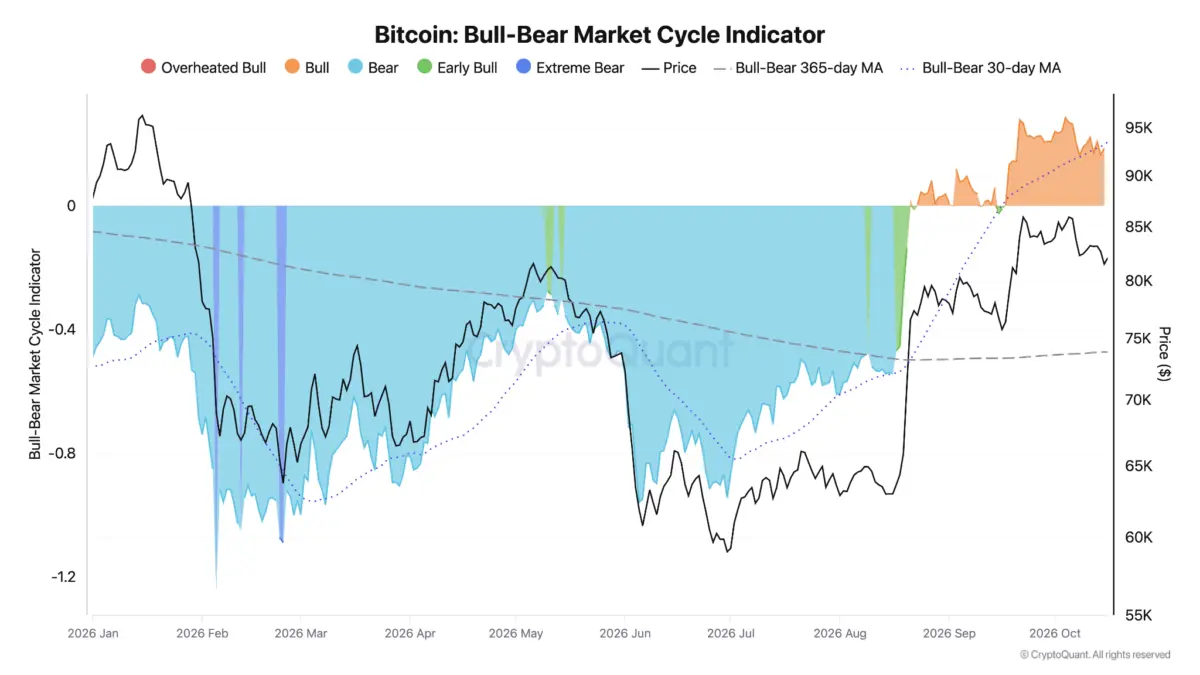
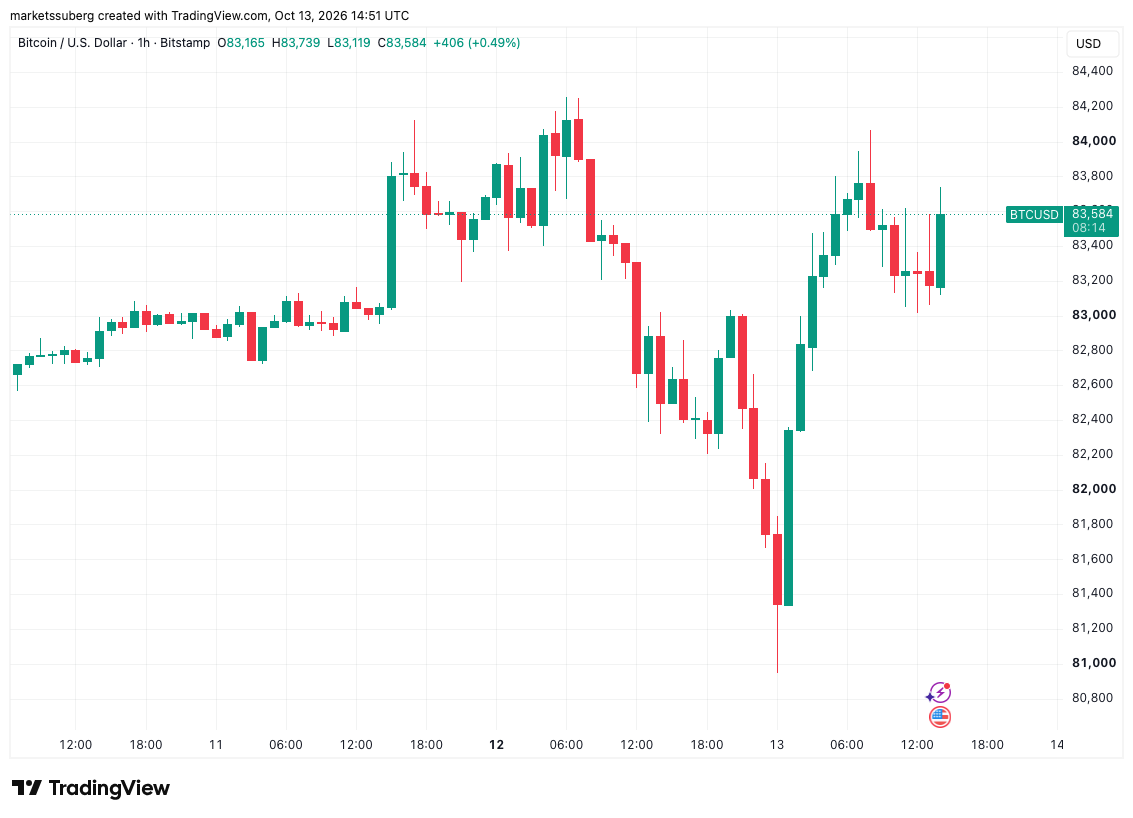
Bitcoin (BTC) continued its push toward the crucial $84,000 threshold as Wall Street opened on Tuesday, with US equities attempting to shake off the reverberations of a sharp technology sector sell-off originating in South Korea.
Data from TradingView indicated that the BTC/USD pair returned to near the $3,800 mark at the start of the United States trading session, successfully preserving a significant portion of the upside momentum it had gathered overnight. Despite facing notable macroeconomic headwinds and persistent resistance levels on exchange order books, the leading cryptocurrency demonstrated resilience as traditional financial markets grappled with cross-border market jitters and shifting monetary conditions.

S&P 500 and Nasdaq Brush Off KOSPI Losses
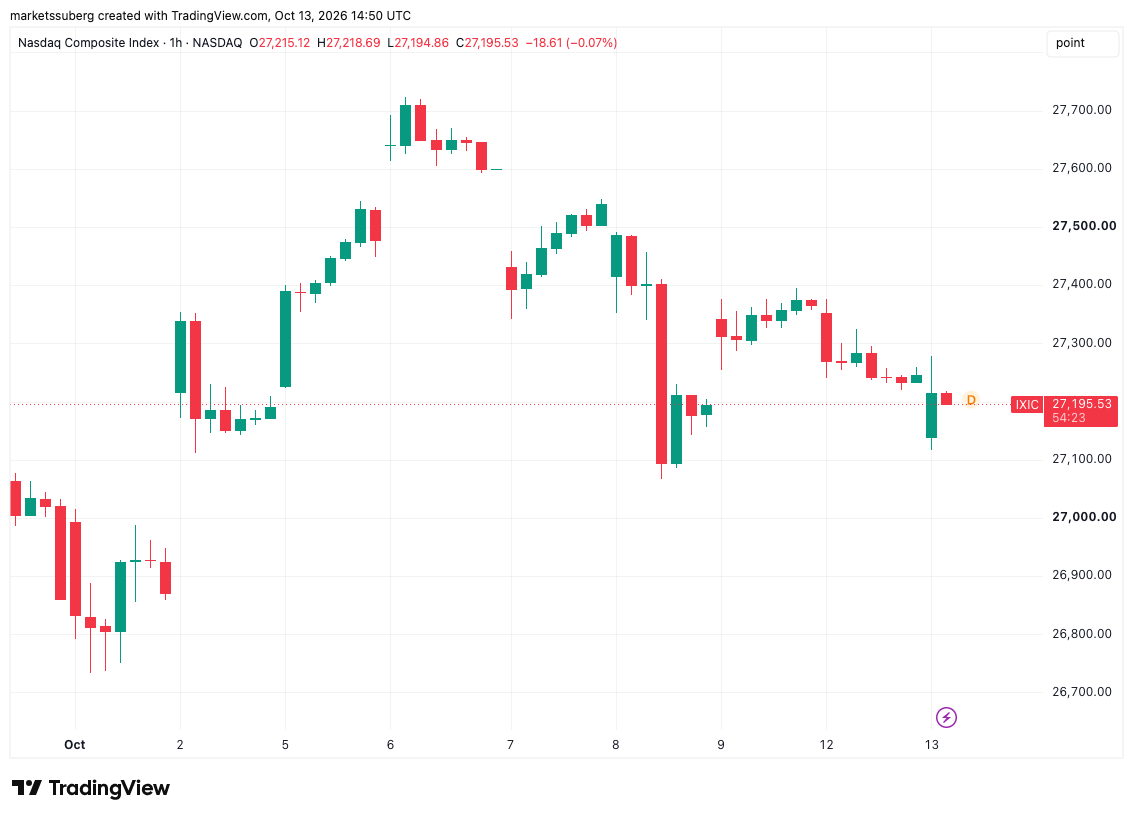
Equities initially opened lower on the day after futures suffered a downturn during Asian trading hours. The downward pressure was triggered when South Korea’s KOSPI Composite Index suffered a steep decline, shedding 7.4% over a two-day span. Semiconductor stocks led the regional losses, driven by mounting anxieties over soaring artificial intelligence capital expenditures and intensifying competition from Chinese technology firms.
However, the broader US markets showed unexpected stamina. Both the benchmark S&P 500 index and the technology-heavy Nasdaq Composite index made early gains to briefly turn green during the session. Even so, the broader gauges remained slightly down, off by less than 0.5% at the time of writing, as investors processed a complex mix of regional tech weakness and shifting domestic economic indicators.
Market analysts pointed to broader structural shifts in the financial ecosystem as the underlying driver of recent volatility. Damien Boey, a portfolio strategist at Wilson Asset Management in Sydney, Australia, highlighted the growing pressure stemming from fixed-income markets in comments provided to Reuters.
"The most important development has been not just bond yields going up, but the volatility for bonds… and that’s starting to work its way out through asset pricing across the board," Boey told Reuters. He added that the broader economic landscape presents multifaceted challenges for investors navigating high valuations. "It’s a very uncomfortable situation on many fronts… maybe AI capex just comes off the boil a little bit, and maybe a few players are casualties in that."
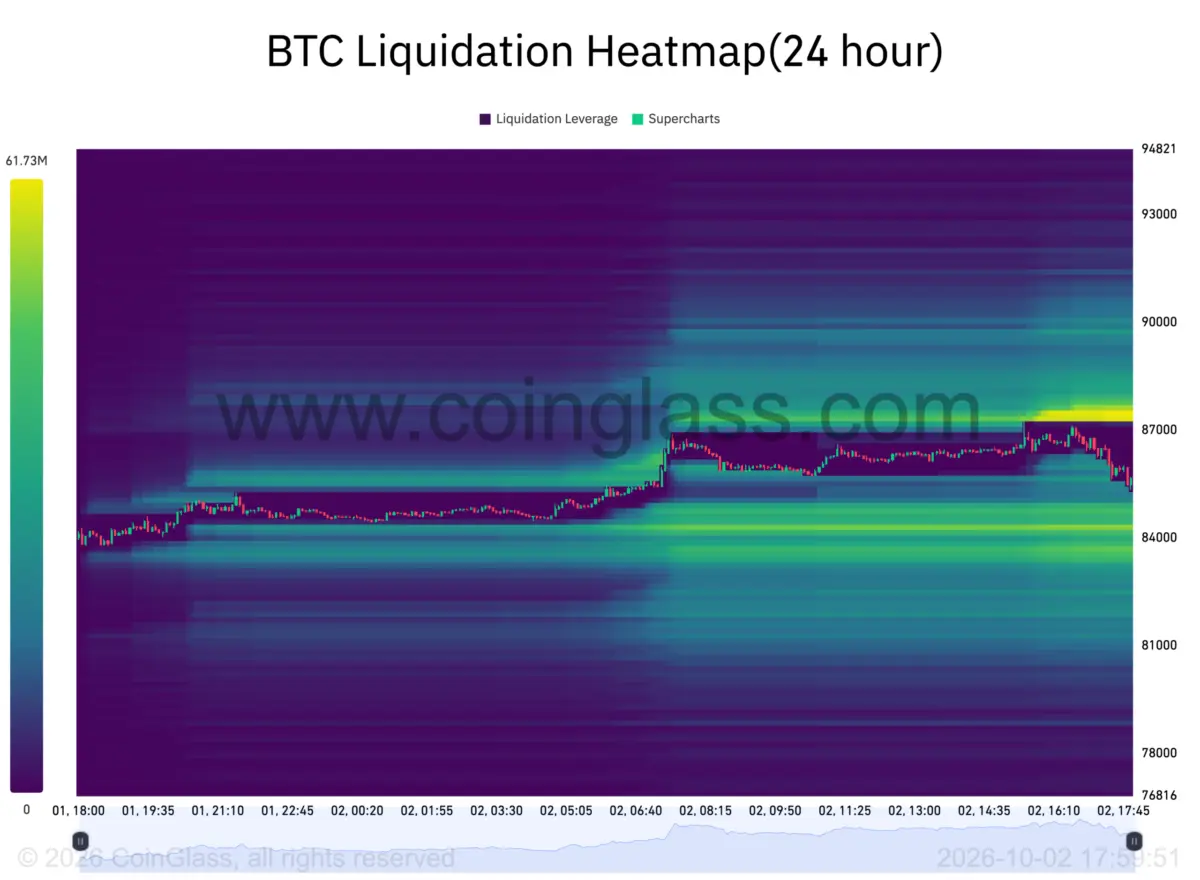
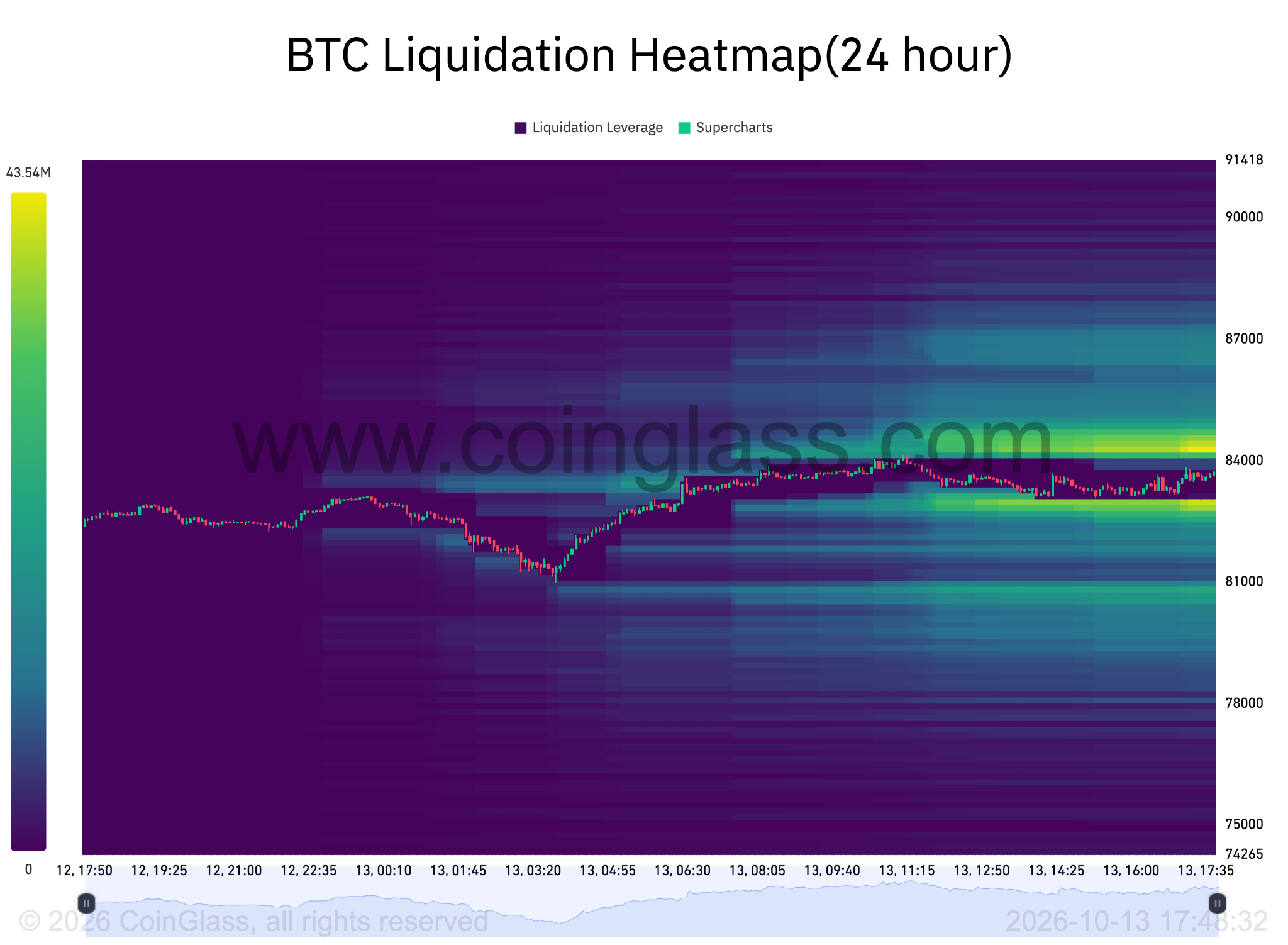
As traditional markets digested these warnings, Bitcoin remained hemmed in by heavy exchange order-book liquidity. According to data from derivatives analytics platform CoinGlass, significant sell walls and liquidity clusters continued to act as robust resistance barriers just above the $84,000 mark, capping immediate bullish breakouts and forcing market participants to carefully monitor order flow dynamics.
Dollar Strength in Focus as DXY Hits 18-Month Highs
Beyond immediate equity market fluctuations, Bitcoin bulls are currently facing a complex double macroeconomic headwind this month. According to market commentary published on Tuesday by CryptoQuant contributor Darkfost, the confluence of rising yields and a surging greenback is creating a challenging environment for speculative and risk-on assets alike.
With US bond yields hovering near their highest levels in nearly a quarter of a century, the strength of the US dollar has increased markedly. The US dollar index (DXY), which measures the currency against a basket of major US trading partner currencies, has climbed 5.5% since September 9. The index touched 102.57 during the session, marking its highest valuation levels since April 2025.
While the historically inverse correlation between the DXY and Bitcoin has shown signs of weakening throughout the year, on-chain analytics suggest that the broader crypto market is nevertheless suffering from a contraction in overall risk appetite. When the dollar rallies aggressively and sovereign yields remain elevated, capital tends to shift away from perceived high-risk instruments and toward safer, yield-bearing alternatives.
"Taken together, these factors constrain the liquidity available to markets and erode institutional confidence, leaving them reluctant to take on more risk," Darkfost wrote in the analysis blog post. He further elaborated on the selective nature of capital allocation under current financial conditions, noting that the climate remains fundamentally unfavorable for Bitcoin.
Because Bitcoin is still widely perceived by institutional allocators as a high-beta, highly risky asset, traditional equity benchmarks such as the Nasdaq 100 and the S&P 500—which are often viewed as more mature markets—continue to attract and absorb what little marginal liquidity remains in the system. As traders await further macroeconomic data releases, including upcoming US Consumer Price Index (CPI) reports, market participants across both traditional and digital asset sectors remain focused on how liquidity constraints will dictate price action through the remainder of the week.