Bitcoin (BTC) surged past the $87,000 threshold on Friday, climbing aggressively as a much weaker-than-expected United States employment report shifted macroeconomic expectations across global financial markets. The disappointing labor-market data prompted investors to rapidly scale back aggressive bets on Federal Reserve interest rate hikes, setting off a wave of relief that rippled through both traditional equities and digital asset markets.
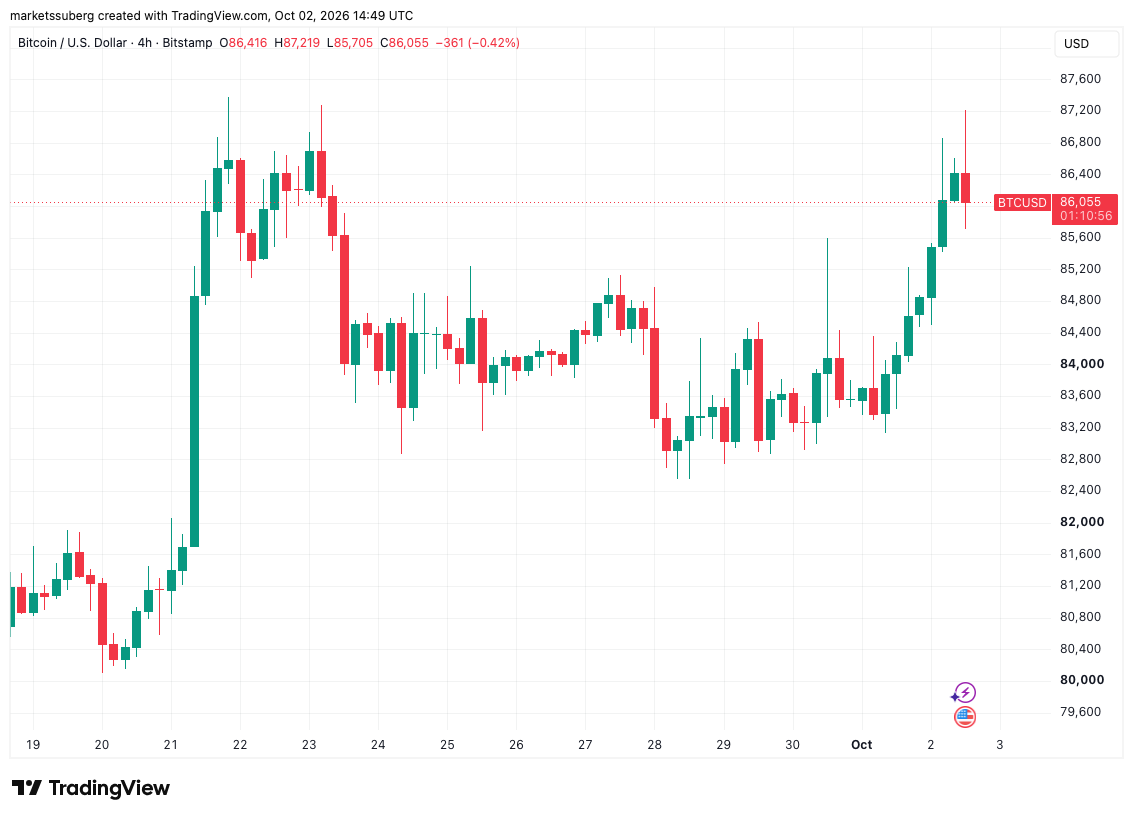
Data from TradingView indicated that the BTC/USD pair reached a peak of $87,229 on the Bitstamp exchange, trading just shy of fresh eight-month highs before encountering localized resistance. The sharp upward movement followed days of choppy consolidation and demonstrated the cryptocurrency’s acute sensitivity to shifting macroeconomic indicators, particularly those concerning central bank monetary policy and treasury yields.
The immediate catalyst for the market’s bullish response was the release of the September nonfarm payrolls report, which fell drastically short of Wall Street forecasts. According to the data, the US economy added a meager 29,000 jobs during the month, missing the consensus forecast of 84,000 by a wide margin. Furthermore, the figures for August—which had initially surprised markets on the upside when they were first released—underwent a significant downward revision, dropping from an initially reported 162,000 jobs down to 133,000.

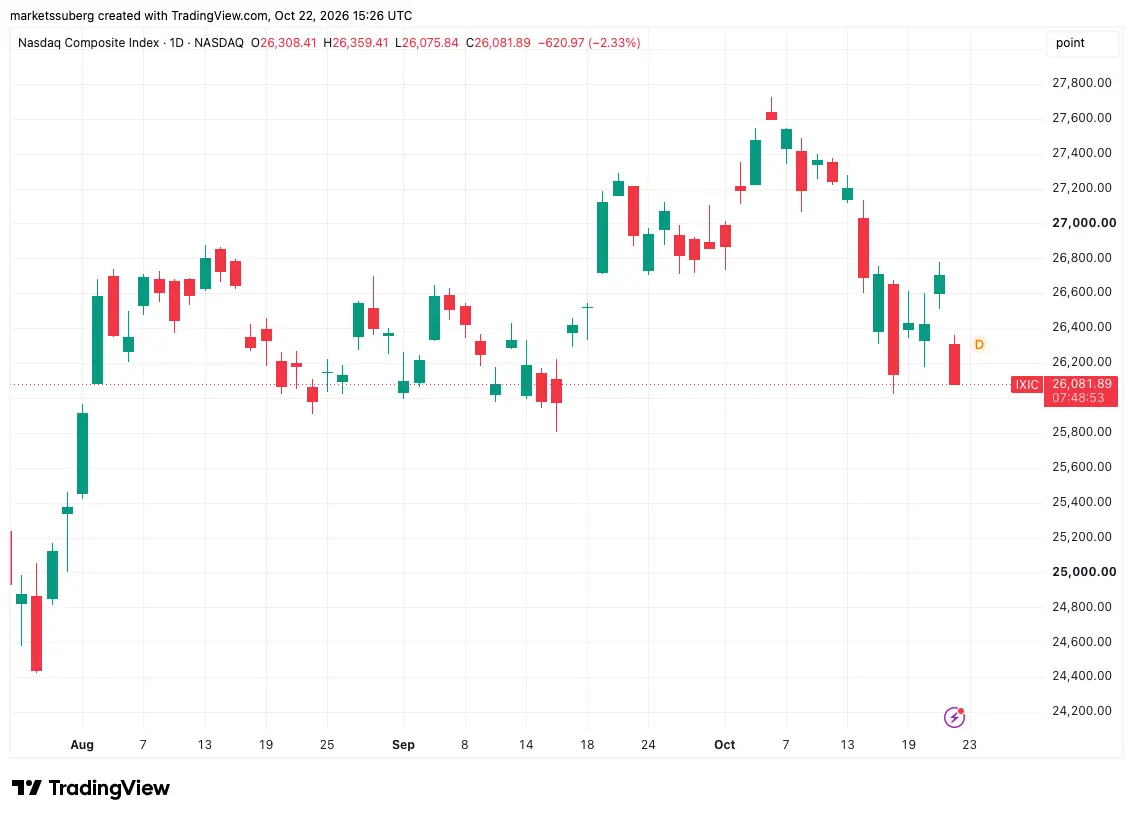
Financial markets reacted immediately to the softening labor indicators. Wall Street opened with notable gains as equity traders dialed back hawkish expectations for upcoming Federal Reserve policy meetings. The broader S&P 500 index rose by 1%, while the technology-heavy Nasdaq Composite Index outperformed, climbing 1.8% in early trading sessions.
Industry analysts were quick to emphasize the severity of the employment slowdown. "This marks the third weakest jobs report of 2026," noted prominent trading resource The Kobeissi Letter in a public reaction shared on social media platform X.
The cooling labor market fundamentally altered rate-cut expectations. According to the latest data from CME Group’s FedWatch Tool, market sentiment shifted dramatically, leaving just an 18% probability that the Federal Reserve would enact a 0.25% interest rate hike at its upcoming October policy meeting. Just one week prior, the probability of such a rate increase had stood significantly higher at 64%, underscoring how quickly macroeconomic sentiment can pivot based on a single tranche of employment data.
Bond Yields Extend Fall on Weak Labor-Market Data
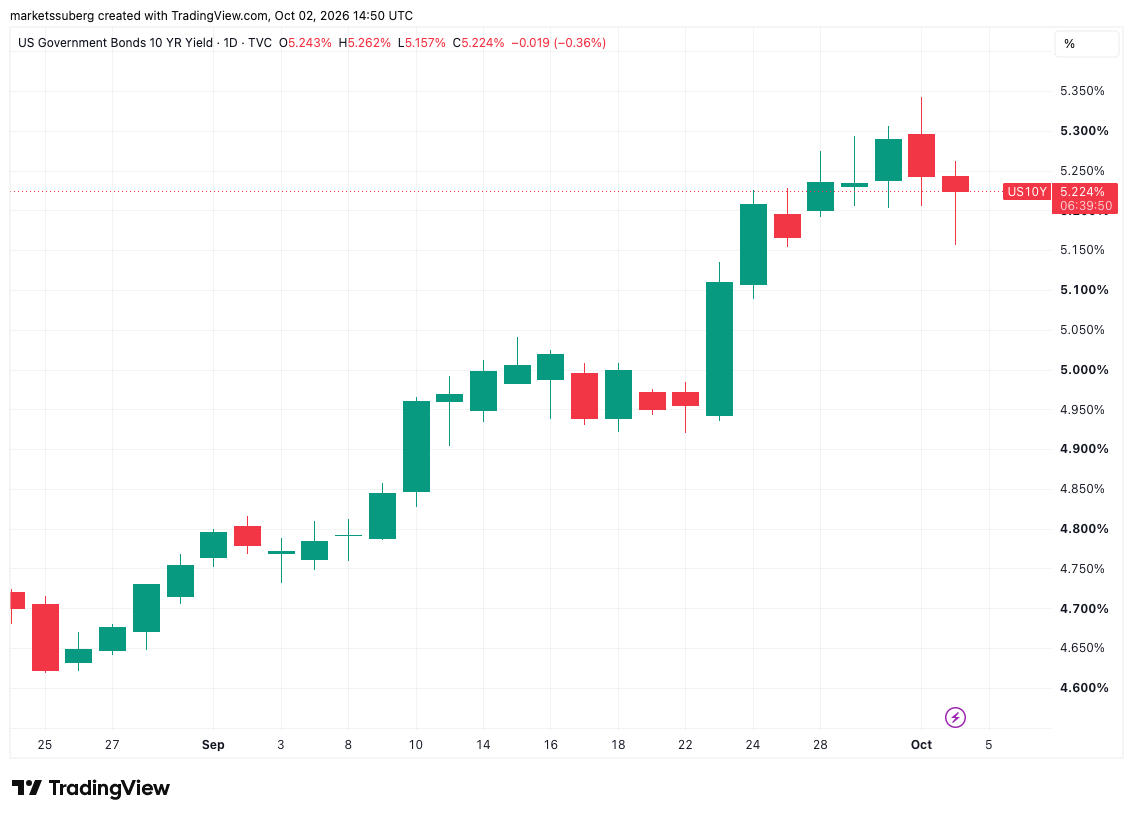
The downward pressure on interest rate expectations directly impacted the US fixed-income market, sending bond yields lower for a second consecutive day. At the time of writing, the benchmark 30-year Treasury yield stood at 5.573%, while the 10-year yield retreated to 5.2%.
These declines offered a stark contrast to the market dynamics observed earlier in the week. Just days prior, both the 30-year and 10-year Treasury yields had climbed to reach new 24-year highs. Those multi-decade peaks were established as bond markets looked past softer August Personal Consumption Expenditures (PCE) data—widely regarded by economists as the Federal Reserve’s preferred inflation gauge—in favor of lingering concerns over stubbornly high real interest rates.
The rapid retracement in bond yields provided a crucial tailwind for risk-on assets, creating an environment where non-yielding assets like Bitcoin could attract fresh capital inflows. Market participants interpreted the pullback in yields as a signal that the apex of the current monetary tightening cycle may finally be weighing less heavily on the broader financial system.
Despite the initial enthusiasm and the breach of the $87,000 level, Bitcoin’s price action ultimately struggled to sustain a permanent breakout beyond the multi-month highs established during September. Following the initial spike, the leading cryptocurrency retraced slightly, slipping back below the $86,000 mark as the trading session progressed.
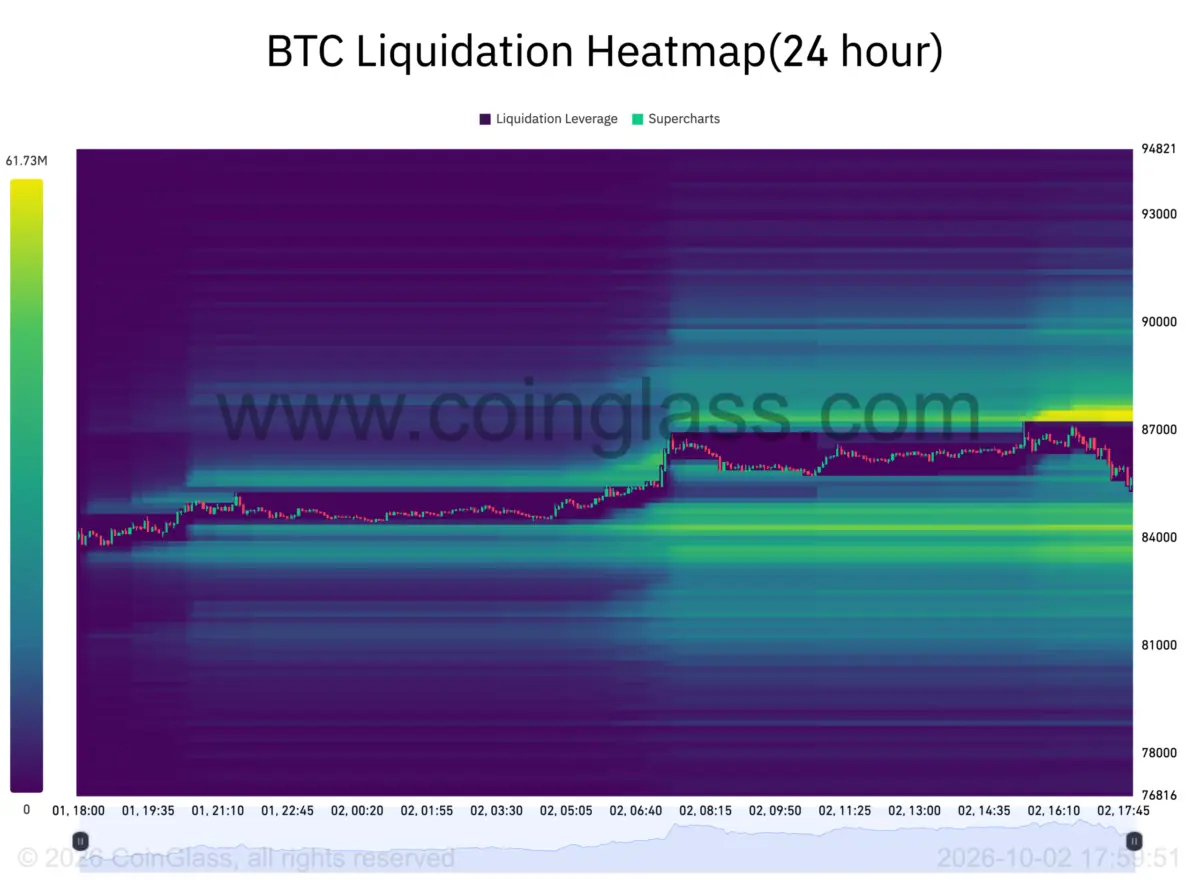
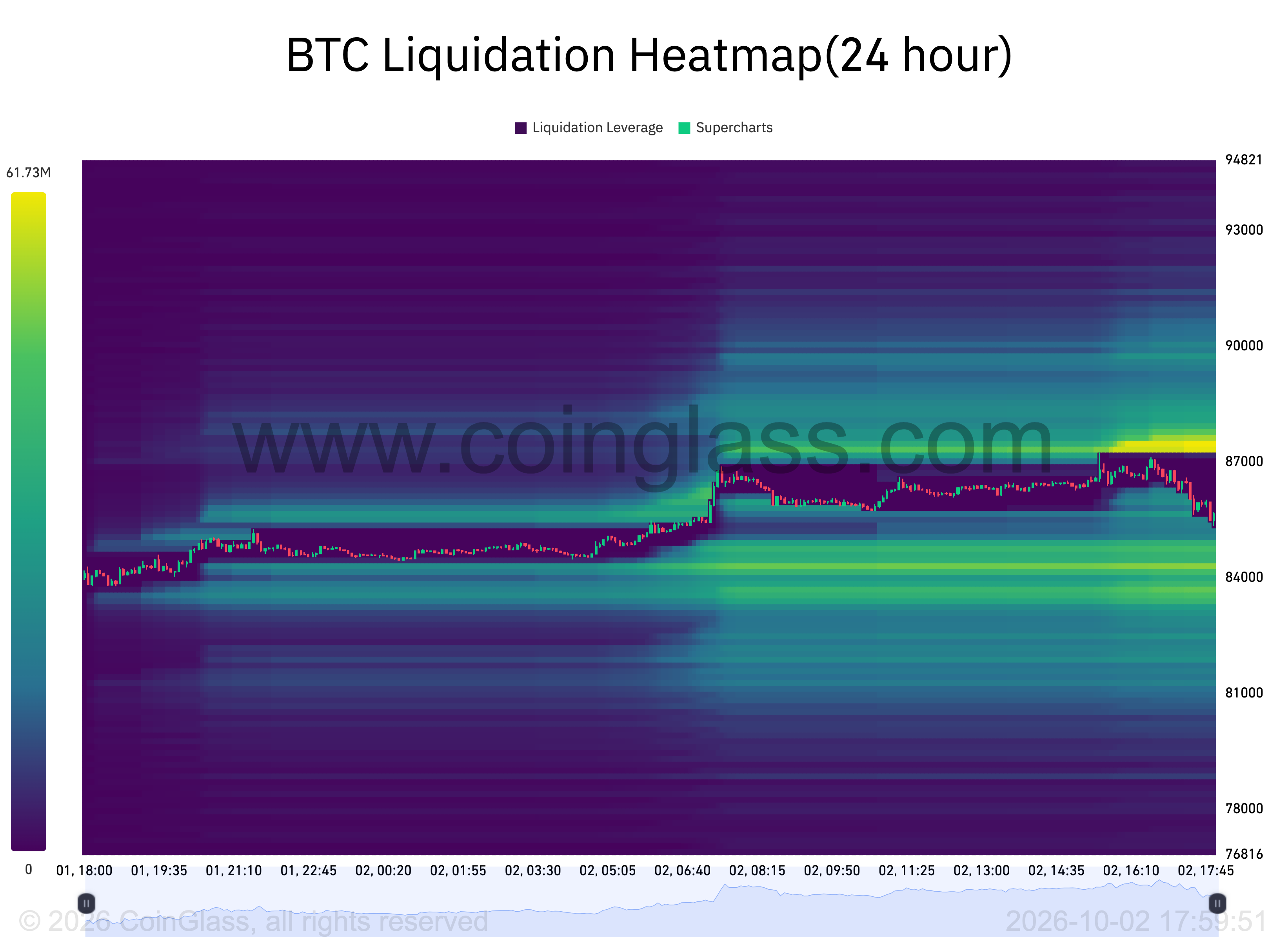
Market structure data helps explain the sudden stalling of the upward momentum. Prior reports had highlighted successive walls of ask liquidity clustered heavily on exchange order books, which consistently act as a ceiling to cap rapid upside movements. Specifically, the latest liquidation heatmaps and order book metrics pointed to a dense band of resistance forming around the $87,300 region, which effectively halted the advance and turned into a formidable local barrier for bullish traders.
Bitcoin Analysis Sees "Cleanest Upside Catalyst" in Yield Drop
Even with the temporary pullback beneath $86,000, professional trading firms and independent market analysts remain largely optimistic about the broader implications of the macroeconomic shift. In a comprehensive market note, prominent institutional trading firm QCP Capital argued that the BTC/USD pair remains well-positioned to benefit over the medium term from the softer labor-market print and the ongoing downward trend in bond yields.
"For Bitcoin, a Treasury relief rally would provide the cleanest upside catalyst," QCP Capital wrote in their analysis. The firm highlighted that the digital asset had already demonstrated impressive resilience by absorbing a severe real-rate shock earlier in the cycle—a macro environment that had notably placed heavy downward pressure on traditional safe-haven assets like gold.
Technical analysts have similarly focused on the sustainability of Bitcoin’s underlying market structure. Observing the daily price charts, trader Aksel Kibar pointed out that the cryptocurrency had successfully executed and confirmed a support retest near the $82,800 level. This technical validation suggests that despite the rejection at higher resistance bands, a solid foundation of demand remains intact to support prices against deeper corrections.
As global financial markets digest the implications of the cooling US labor market, attention will likely remain fixed on upcoming macroeconomic data releases and central bank communications. For now, the interplay between falling Treasury yields, shifting Federal Reserve expectations, and digital asset liquidity walls will continue to dictate Bitcoin’s path through the final quarter of the year.