Bitcoin remained under pressure, staying comfortably below the $82,000 threshold around Thursday’s Wall Street opening bell. The leading cryptocurrency faced renewed downward momentum as fresh geopolitical headlines concerning the Middle East re-entered the global spotlight, prompting investors across traditional and digital markets to reduce their exposure to risk-sensitive assets.
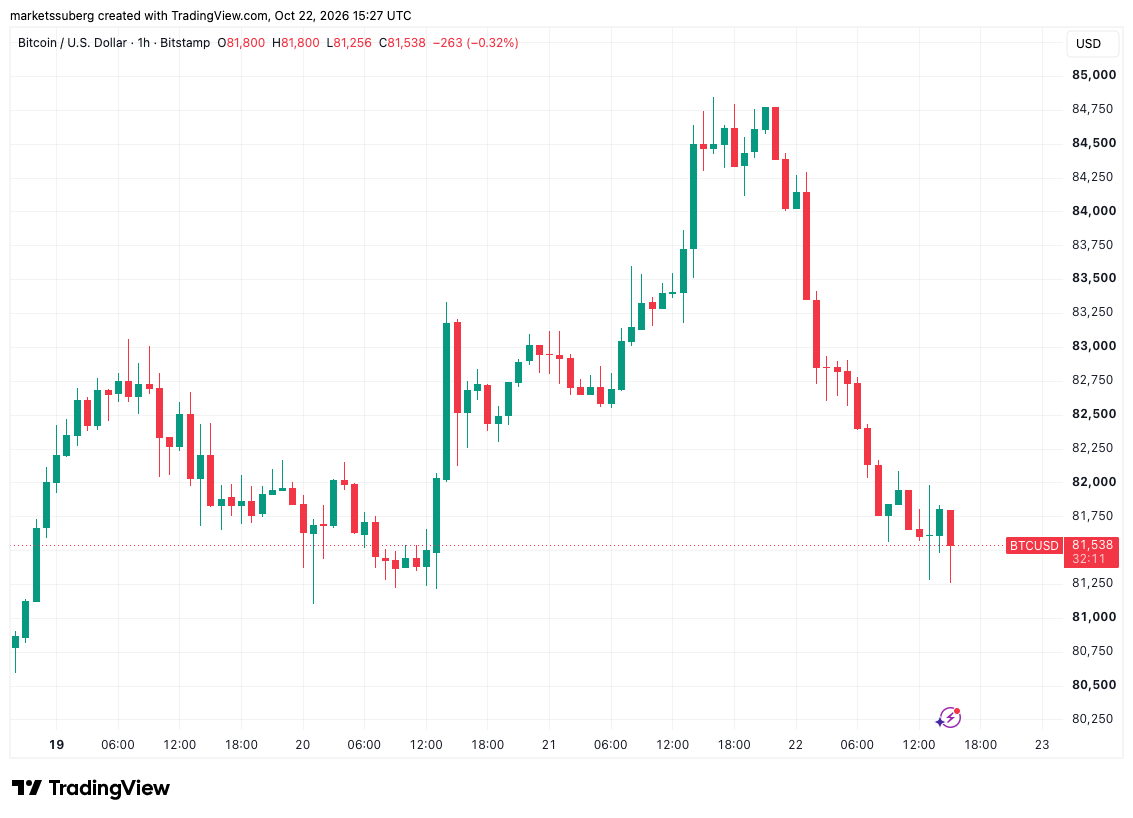
Data from TradingView captured the scale of the intraday pullback, showing the BTC/USD trading pair hitting a low of $81,256 on the Bitstamp exchange. This represented a notable 2.9% decline on the day, erasing some of the positive sentiment that had recently driven prices closer to the mid-$85,000 range. The broader financial markets mirrored this defensive posture, as investors reacted to a combination of corporate earnings reports, fluctuating energy prices, and sudden diplomatic developments that rattled global sentiment.
Stocks Fall as Trump Says US "Not Negotiating" with Iran
The shift toward a risk-off macroeconomic environment was largely catalyzed by renewed geopolitical friction. Market participants digested fresh remarks from former US President Donald Trump, who stated unequivocally that the United States was "not negotiating" with Iranian officials amid escalating tensions.
Addressing reporters ahead of the fast-approaching US midterm elections scheduled for November 3, Trump offered a stark assessment of the diplomatic stalemate. "We are going to have something one way or the other that will happen fairly soon," he told reporters. "Most people seem to think it’s after the election and we’ll see what happens."
These remarks compounded an already complex trading day that featured mixed reactions to major corporate updates, including Tesla’s latest third-quarter financial results and associated capital expenditure announcements. The intersection of geopolitical uncertainty and shifting corporate valuations created a defensive tone across global indices.
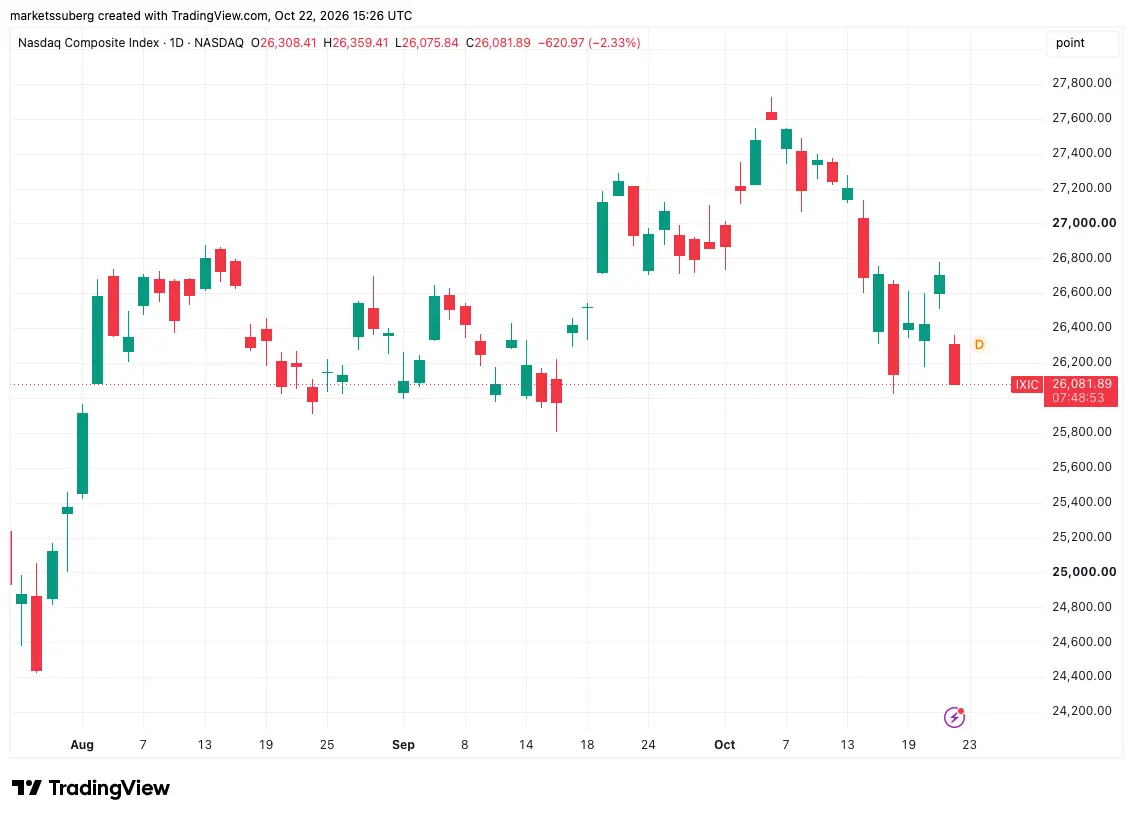
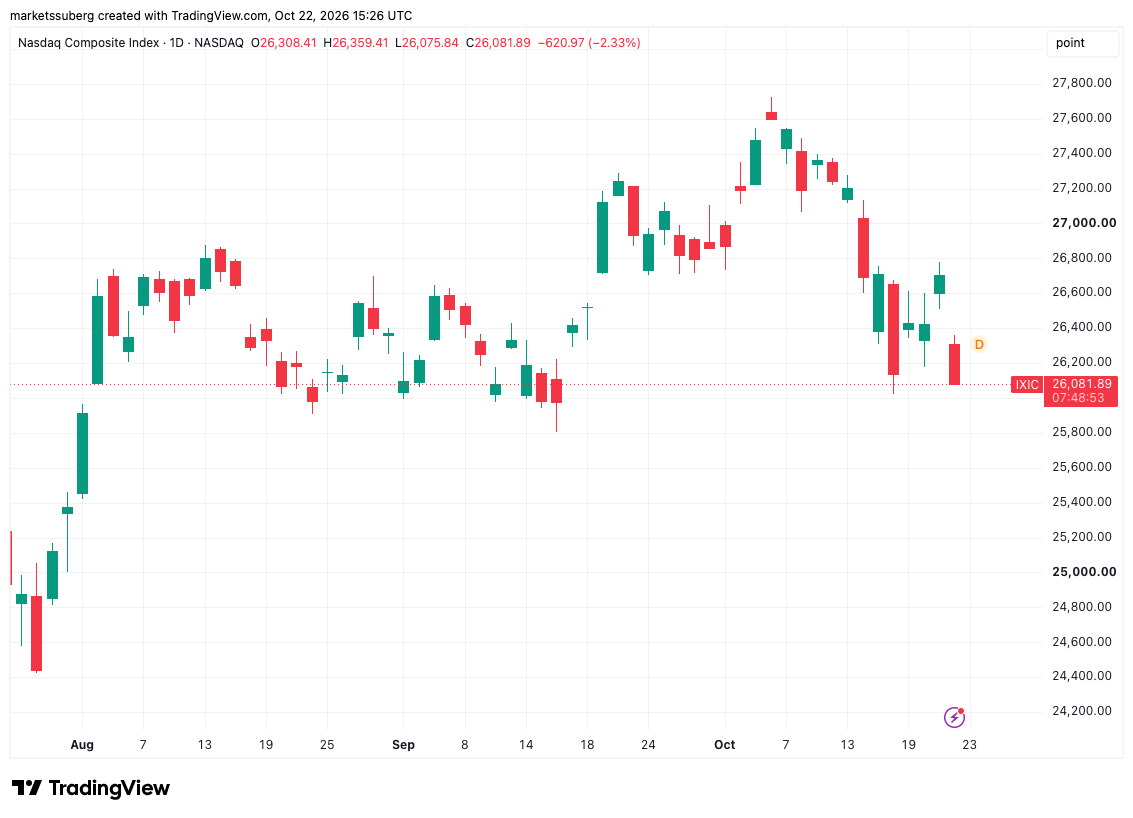
Traditional equity markets absorbed the blow immediately as Wall Street opened. The benchmark S&P 500 Index dropped 1.3% during morning trading, while the technology-heavy Nasdaq Composite Index suffered a steeper decline, falling 2.3% as technology stocks faced renewed scrutiny over artificial intelligence valuations and climbing energy costs.
Ian Lyngen, a strategist at BMO Capital Markets, highlighted the breadth of the market’s defensive pivot in comments provided to Bloomberg. "Tech stocks came under pressure amid renewed AI valuation fears. The rebound in energy prices contributed to the risk-off tone," Lyngen noted, adding that "Treasuries have emerged as a primary beneficiary as global risk sentiment has come under pressure."
As capital rushed toward safer havens, bond returns experienced notable shifts. The yield on the US 10-year Treasury bond approached the psychological 5% mark before pulling back, slipping to its lowest level since September 23 as investors sought the relative safety of government-backed debt instruments.
Expect BTC in Narrow Range Until Fed Meeting
Within the digital asset ecosystem, Bitcoin’s recent price action has largely oscillated around the aggregate cost basis of US spot Bitcoin exchange-traded funds (ETFs), which sits near the $81,500 level. This comes just a day after the asset attempted a push toward $85,000, underscoring a period of consolidation as market participants await clearer catalysts.
Analysts at Bitfinex Alpha, the dedicated research arm of the prominent crypto exchange Bitfinex, released an assessment outlining their expectations for the near-term market structure. According to their research report, BTC/USD is projected to trade within a relatively tight and defined range between $81,300 and $84,400 leading up to the upcoming Federal Reserve rate policy meeting scheduled for October 28.
"Sustained ETF demand with stable leverage metrics would support a breakout above $84,400, while macro headwinds combined with a close below $81,300 would increase the risk of a move towards the 15 October low at $79,821," the Bitfinex analysts wrote, emphasizing the delicate balance between ongoing institutional ETF inflows and broader macroeconomic pressures.
Looking beyond the immediate weekly horizon, market participants trading on longer-term derivatives platforms have adopted a more cautious stance regarding the likelihood of aggressive upward momentum in the immediate future. Traders on prediction markets such as Kalshi have noticeably trimmed their probability expectations for Bitcoin achieving new all-time highs or reaching extended price targets by mid-January 2027, with current odds for specific higher targets compressed as macro uncertainties continue to shape long-term projections.