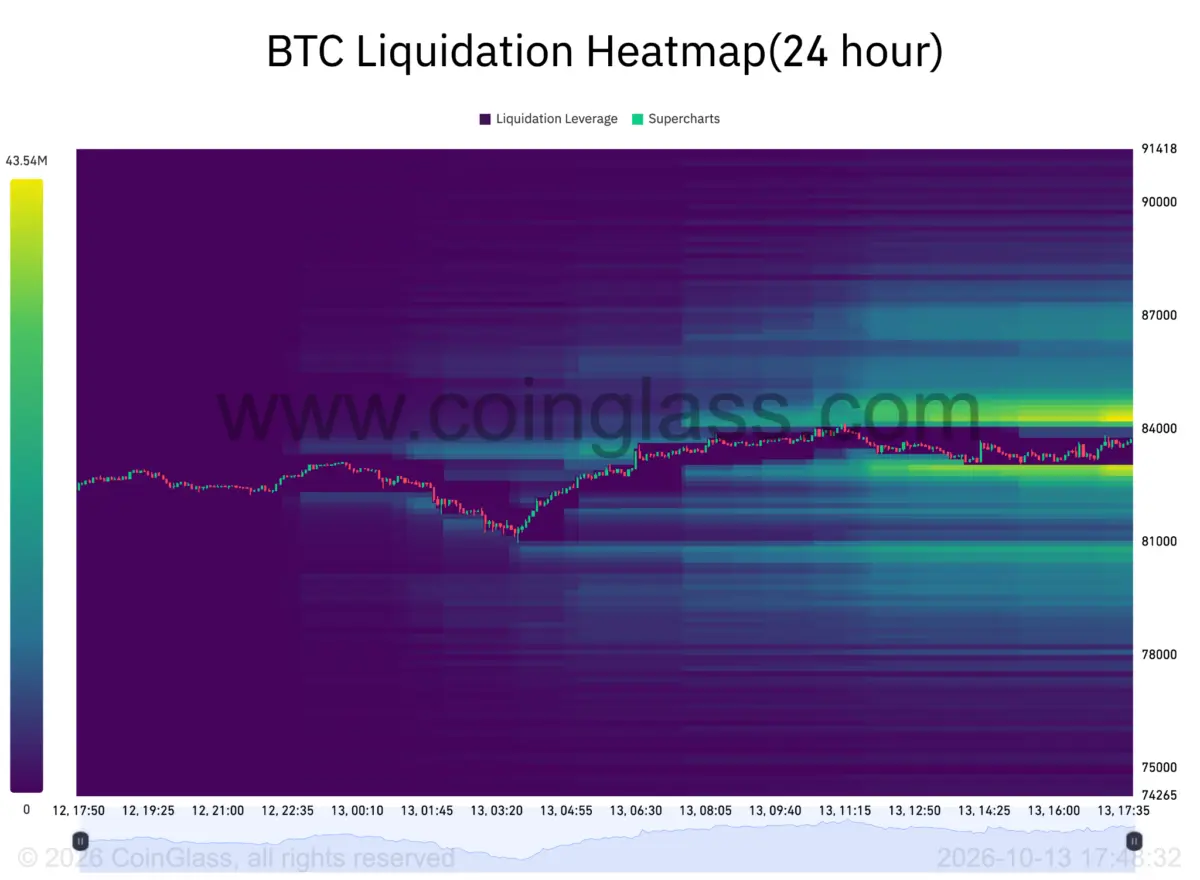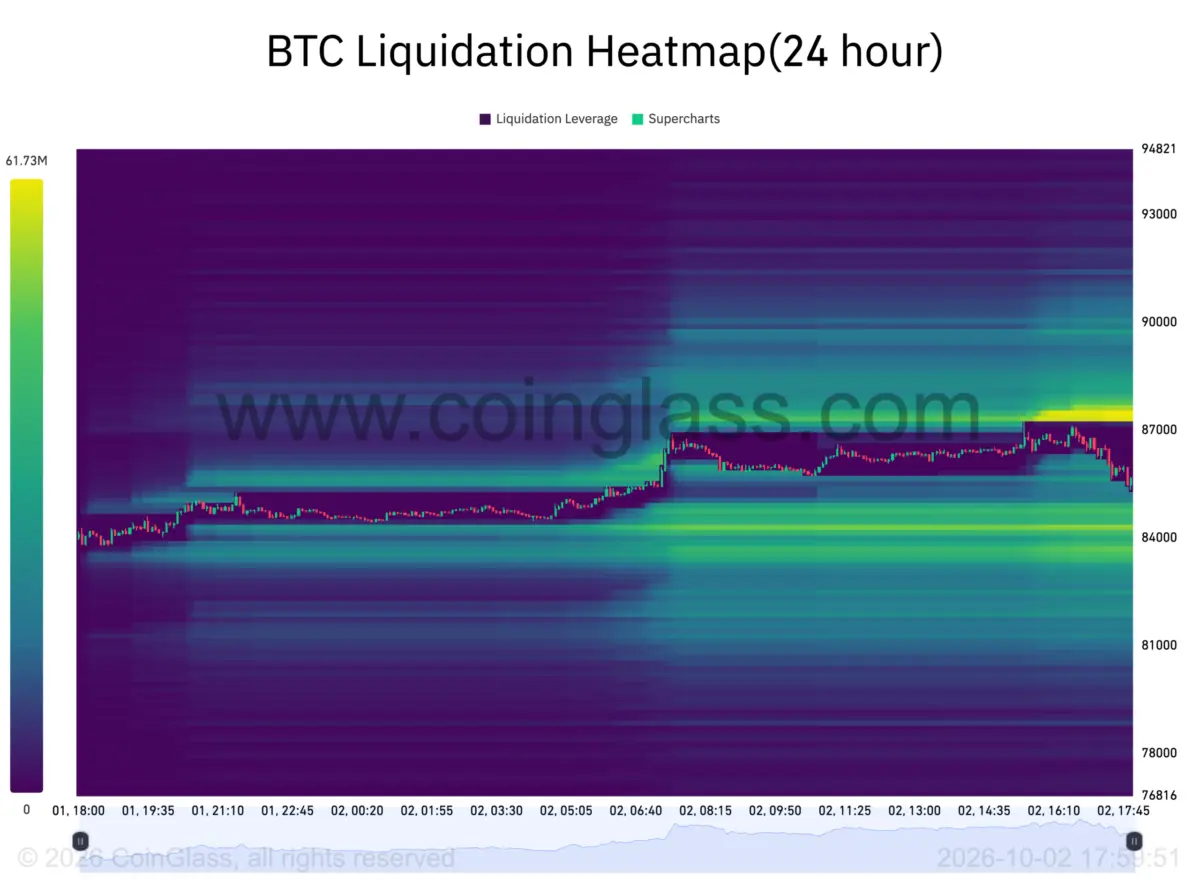
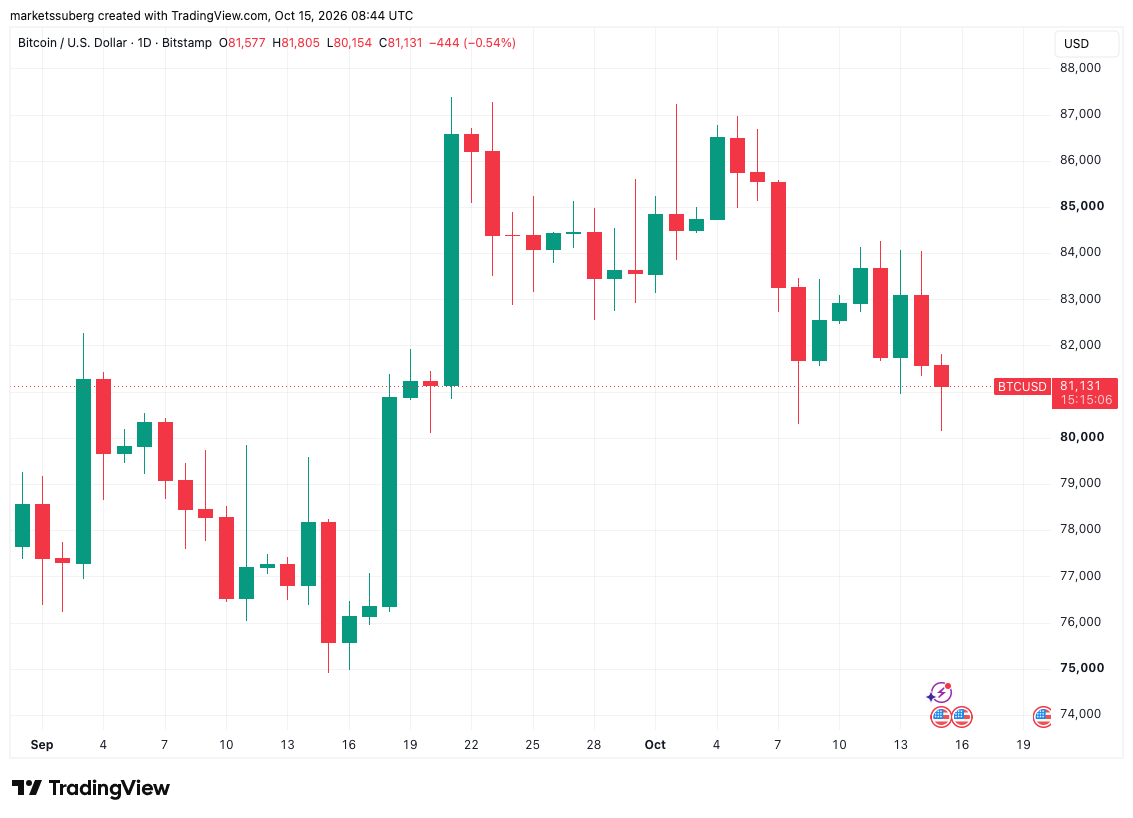
Bitcoin (BTC) tumbled to its lowest level in over three weeks on Thursday, mirroring a severe sell-off across global equity markets and reacting to renewed macroeconomic pressures stemming from both Asia and the United States.
Data from TradingView showed the BTC/USD pair hitting $80,154 on Bitstamp, marking a valuation floor that the leading cryptocurrency had not touched since September 20. The steep correction underscores the growing sensitivity of digital asset markets to broader traditional financial shocks, particularly cascading liquidations and risk-off sentiment rooted in international stock exchanges.
Bitcoin Price Nears $80,000 as KOSPI Falls 7.5%
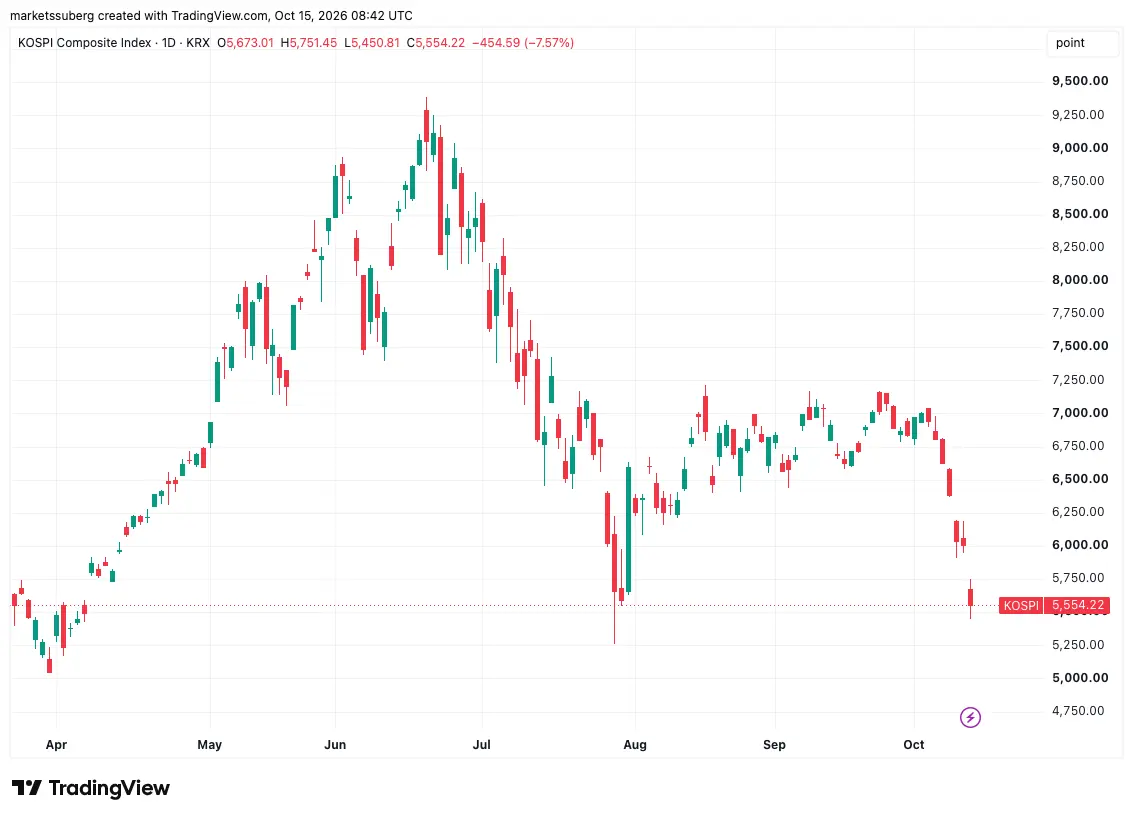
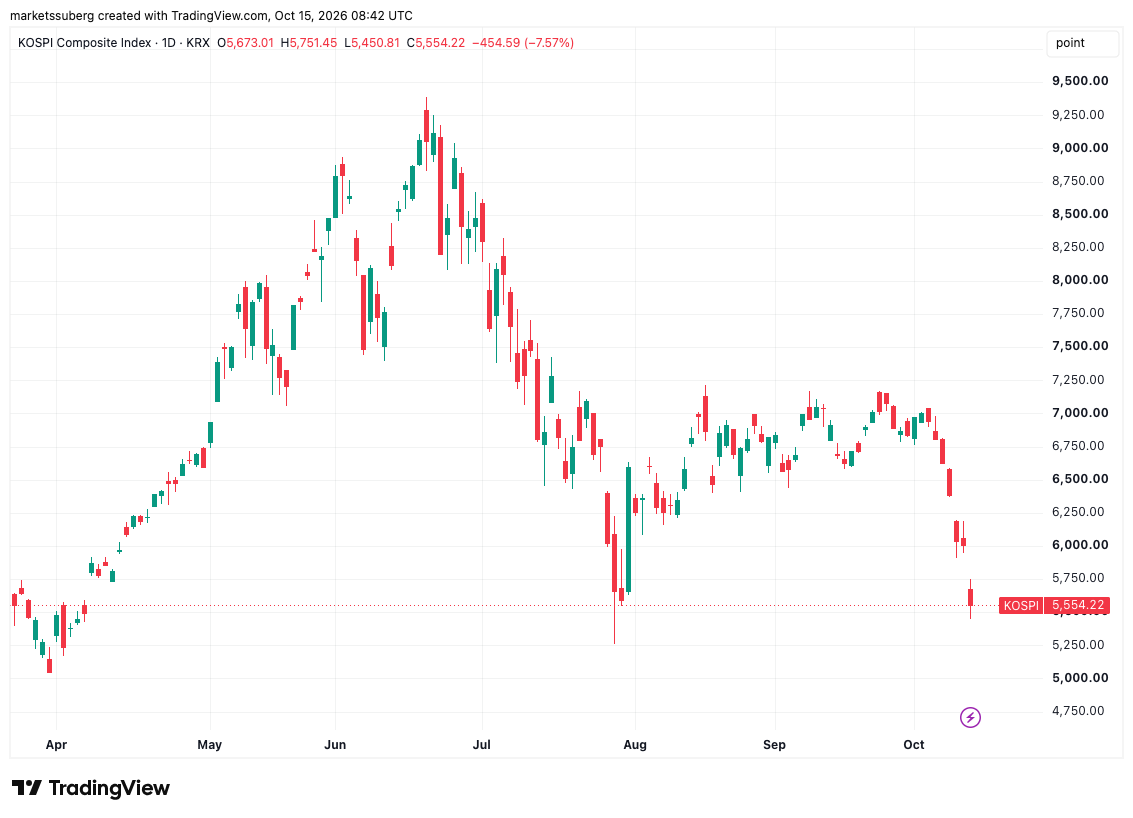
The primary catalyst for Thursday’s immediate digital asset downturn originated in South Korea, where the Korea Composite Stock Price Index (KOSPI) suffered a brutal session, finishing the day down 7.5%. This dramatic single-day drop extended the index’s losses for the week to a staggering 15.5%, rattling investors across the region.
As was the case earlier in the week, South Korea’s heavyweight technology sector bore the absolute brunt of the aggressive sell-off. Semiconductor giant SK Hynix saw its stock plummet 11% by the closing bell, while manufacturing and electronics titan Samsung Electronics finished the trading day down 9.5%.
Market analysts point to a confluence of structural and external pressures driving the South Korean market rout. Mounting anxieties over artificial intelligence debt obligations, persistent foreign capital outflows, and intensifying industrial competition from China have severely damaged investor confidence. Consequently, the KOSPI’s critical 200-day moving average plunged as low as 5,450 points during the week—a threshold not breached since late July. Although the index managed to trim some losses before ending Thursday’s session at 5,554 points, it still recorded its lowest daily close since April 8.
Weighing in on the deteriorating domestic landscape, Mirae Asset Securities analyst Kim Seok-hwan warned local media publication The Korea Herald that macro headwinds would continue to create severe friction for investors.
"Volatility is expected to persist in the near term," Kim remarked. "As domestic supply-demand conditions deteriorate, the market has become more sensitive to external risks, while a near-term improvement in the global environment appears unlikely."
Adding to the potential for prolonged instability, both SK Hynix and Samsung are scheduled to release their third-quarter earnings data on October 28 and 29, respectively. Should these eagerly anticipated financial reports fall short of lofty market projections, it could trigger another wave of downside volatility that would likely reverberate across technology sentiment globally. Current consensus estimates expect Samsung to confirm Q3 sales of 195 trillion won (approximately $145 billion) alongside an operating profit hovering near 107 trillion won ($80 billion).
Oil Falls Despite Singapore Tanker Sinking
The downward momentum gripping the cryptocurrency market was further amplified by persistent fallout from Wednesday’s higher-than-expected United States inflation data. The September print of the Consumer Price Index (CPI) came in hotter than anticipated at 3.7% year-on-year, instantly sparking a hawkish shift in market expectations regarding future interest-rate hikes by the US Federal Reserve.
Investors immediately began reassessing the macroeconomic landscape, questioning whether the hotter inflation print would force the central bank into aggressive monetary tightening or if underlying credit stress would ultimately prompt a policy recalibration. "Does the beat force further hiking — or does credit stress prompt policy recalibration?" trading firm QCP Capital questioned in a macro analysis shared with market participants on Thursday.
Interestingly, even though high energy prices accounted for a significant portion of the unwelcome uptick in the September CPI, both West Texas Intermediate (WTI) and Brent crude oil prices actually fell on Thursday. This unexpected downward movement in energy commodities occurred despite rapidly escalating geopolitical tensions in the Middle East. Earlier in the week, a Singapore-registered oil tanker was struck and sunk in the vital Strait of Hormuz on Wednesday—an incident that the Maritime and Port Authority of Singapore formally condemned as "unjustifiable."
Despite the severe disruption to a critical global oil chokepoint, market experts suggest that alternative supply lines and strategic interventions have successfully mitigated immediate panic. Speaking to CNBC, Firas Bechwaty, head of business development at online trading platform ICM, expressed skepticism that Hormuz transit volumes would return anytime soon to the levels seen before the ongoing conflict between the United States and Iran began.
However, Bechwaty observed that structural workarounds have largely absorbed the shock. "At the same time, Saudi crude continues to reach international buyers through alternative routes, while accelerated emergency stock releases by IEA members provide an additional buffer, preventing a sharp rise in prices, even as tensions remain elevated," he noted.
At the time of writing, WTI crude traded below $95 per barrel, reflecting a daily loss of 0.5%, while international benchmark Brent was down 2.2% to change hands at $103.7 per barrel.
As traditional markets grapple with persistent inflation concerns, corporate earnings anxiety in Asia, and volatile energy corridors, cryptocurrency investors continue to navigate a deeply interconnected macroeconomic environment where external shocks swiftly translate into digital asset price adjustments.