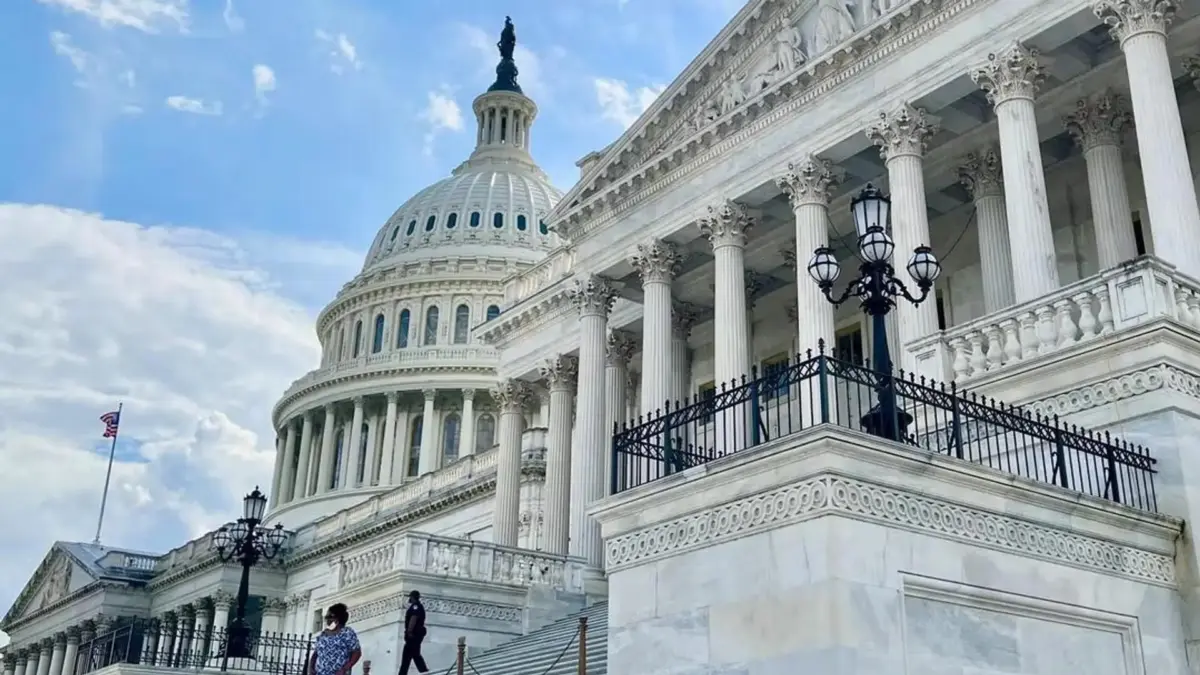
The U.S. Supreme Court has not yet indicated whether it will wade into a high-stakes legal battle surrounding prediction markets, but the pressure is mounting from all sides. A flurry of amicus briefs was recently filed before the nation’s highest court, urging justices to take up a pivotal case determining whether sports-based prediction market contracts constitute legal financial swaps or unauthorized state-level gambling.
The timing of these filings coincides with rapid regulatory maneuvers from Washington. The Commodity Futures Trading Commission (CFTC) recently issued two major regulatory proposals—including one interim final rule—seeking to cement its own interpretation of how these increasingly popular contracts fit into federal law.
This growing legal showdown pits federal financial regulators and event-contract platforms against a broad coalition of state governments, tribal nations, major sports leagues, and prominent architects of post-crisis financial reform. As the legal battle intensifies, the future of how prediction markets operate in the United States hangs in the balance.
The Legal Landscape and the Appellate Split
The possibility of the Supreme Court intervening in the dispute over prediction markets has been looming for months, driven primarily by a deepening split among federal appellate courts. Currently, federal circuit courts are deeply divided on the matter. Two appellate courts have ruled that prediction markets touching sports are essentially gambling products that should be regulated by individual states. Conversely, another appellate court sided with the federal perspective, ruling that the oversight of such contracts falls squarely under the jurisdiction of the CFTC.
This division has created an uncertain regulatory environment for prediction market providers, who offer platforms allowing users to buy and sell contracts based on real-world events, including elections, economic indicators, weather patterns, and athletic competitions. While proponents argue these markets serve vital functions in price discovery and forecasting, critics and state regulators maintain that sports-related contracts are indistinguishable from traditional sports betting and should be subject to localized consumer protections and state gaming laws.
Dodd, Gensler, and Major Stakeholders Push Back
Last week’s amicus curiae briefs brought together a remarkable array of influential figures and institutions urging the Supreme Court to grant certiorari and side with the states. Among the most notable filings were those submitted by former U.S. Senator Chris Dodd and former CFTC and Securities and Exchange Commission Chair Gary Gensler. Both men played central roles in shaping the 2010 Dodd-Frank Wall Street Reform and Consumer Protection Act, the foundational federal legislation at the heart of the current legal debate.
In his brief, former Senator Dodd argued forcefully that the Dodd-Frank Act was never intended to grant the CFTC sweeping authority to usurp state governments and override their traditional powers to regulate gambling within their borders. The filing took direct aim at a ruling by a Third Circuit Court of Appeals panel, which voted 2-1 to uphold the CFTC’s jurisdiction over sports-related swaps and prediction markets, drawing a sharp distinction between legitimate financial derivatives and sports wagers.
"Parlays that chain together multiple wagers—often on point spreads or player performances in different games, in different cities, in different sports—do not facilitate hedging or price discovery," Dodd’s filing stated, highlighting the nature of sports-related prediction market products that have drawn immense public popularity. "Nor are they ‘associated with’ the type of ‘potential financial, economic, or commercial consequences’ required to qualify as swaps under the Commodity Exchange Act."
Furthermore, Dodd’s brief challenged the CFTC’s assertion that it possesses "exclusive jurisdiction" over these contracts in a way that preempts state and tribal laws. The filing argued that the statute’s grant of exclusive jurisdiction merely designates the CFTC as the primary federal regulator for covered financial instruments, rather than issuing a blanket federal preemption that immunizes every contract listed on a designated contract market (DCM) from local oversight.
Gary Gensler, drawing on his extensive experience implementing financial regulations, echoed these sentiments in a separate amicus brief. Gensler argued that the statutory language of the law does not empower the CFTC to override state-level gambling prohibitions, maintaining a legal stance he has consistently advocated throughout ongoing appellate litigation.
The coalition of voices opposing federal preemption also includes the National Football League (NFL), which asserted a direct institutional interest in the outcome of the litigation. The league criticized what it termed the CFTC’s "laissez-faire" approach to the burgeoning sector, pointing to a stark regulatory divergence between how states rigorously monitor traditional gaming companies and how the federal government regulates designated contract markets.
In addition to the NFL, briefs were filed by 39 states alongside the District of Columbia, 145 tribal nations, and prominent gaming industry groups, including the Casino Association of New Jersey and the American Gaming Association. Together, these entities are pressing the Supreme Court to clarify that sports betting and event-based prediction contracts remain subject to state and tribal authority.
The CFTC Fights Back With New Rules
While opponents pressed their case at the Supreme Court, the CFTC moved quickly to fortify its regulatory stance. The agency issued an interim final rule alongside a separate proposal designed to clarify its statutory interpretation of how event contracts fit within the legal definition of a "swap."
Under the newly proposed framework, the agency seeks to draw a clear line between traditional casino-style gambling—which it acknowledges falls outside its regulatory purview—and broader event contracts. The regulator wants to formally enshrine sports, political outcomes, cultural milestones, and weather-related occurrences as valid categories of event contracts that legally qualify as swaps under federal oversight.
By formalizing these rules, the CFTC is attempting to solidify its regulatory authority over platforms offering event-driven financial contracts, even as federal courts weigh whether those powers infringe upon traditional state domains.
Next Steps in the Litigation
The legal battle now rests with the Supreme Court, which must decide whether it will review the conflicting appellate decisions and bring national clarity to the issue. Meanwhile, Kalshi, one of the primary prediction market platforms involved in the ongoing disputes, requested and received an extension from the court to file its response. Its formal response to the petition is currently due on November 9, 2026.
As the regulatory framework evolves and the legal arguments continue to unfold in Washington, market participants, state regulators, and federal agencies await word from the Supreme Court on whether it will ultimately settle the boundary between federal derivatives regulation and state-level gambling laws.