Cryptocurrency exchange giant Coinbase is expanding its technological footprint at the intersection of artificial intelligence and digital finance with the rollout of Agent Controls, a specialized service designed to connect users’ autonomous AI tools directly to their trading accounts. Unveiled in mid-November, the new suite of features introduces strict trading limits enforced directly on Coinbase’s servers, attempting to bring a layer of infrastructural security to automated financial operations while keeping ultimate responsibility firmly in the hands of the end-user.
The initiative follows promotional remarks made by Coinbase CEO Brian Armstrong, who highlighted the growing necessity for robust safeguards as autonomous agents become more deeply integrated into consumer financial accounts. As retail and institutional participants increasingly experiment with giving AI tools the autonomy to execute financial strategies, the industry faces mounting questions regarding risk management, runaway algorithms, and unexpected market volatility.
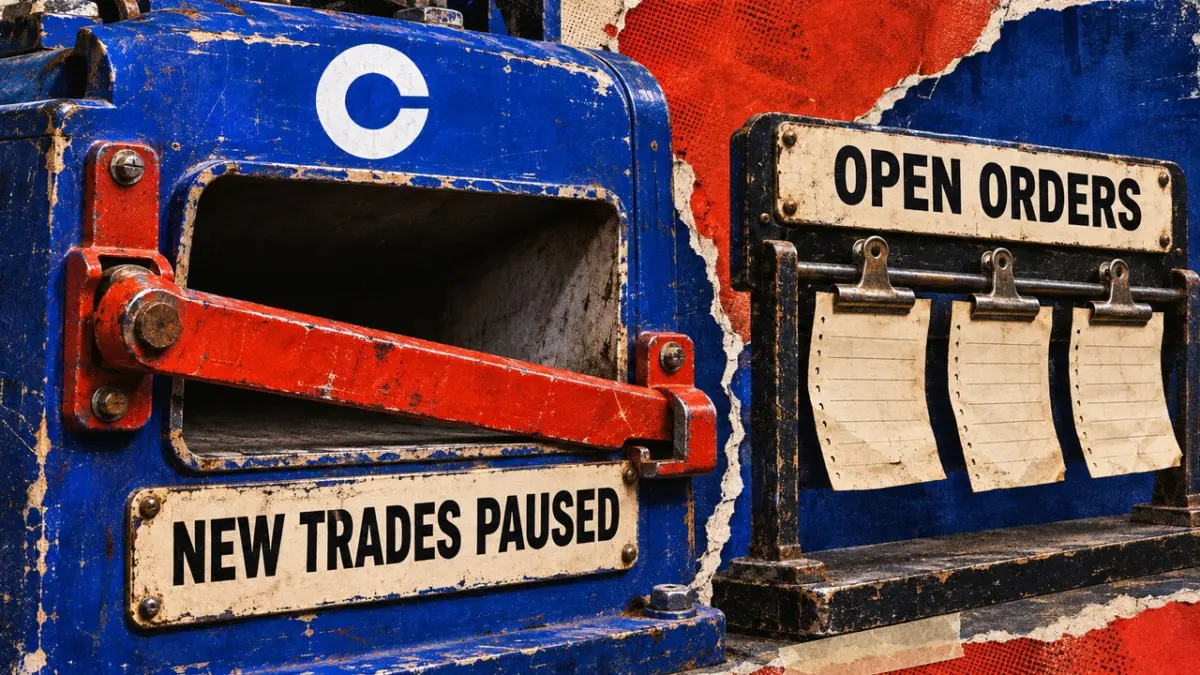
While the new server-enforced controls aim to mitigate these risks, the exchange has emphasized that pausing an agent’s trading activity does not automatically mean that existing orders have been canceled, open positions have been closed, or potential financial losses have been halted. The practical reality of automated trading means that users must remain vigilant about the distinction between stopping an agent and managing active market exposure.
Under the framework detailed in Coinbase’s official product announcements, the new controls introduce hard maximum dollar amounts for individual trades alongside a strict cap on total trading volume over any rolling 24-hour window. According to the exchange, any transaction that attempts to exceed these predefined volume limits will be automatically blocked from execution on the server side, ensuring that an AI model cannot bypass the restrictions through prompt engineering or internal logic loops.
Additionally, the system features an auto-stop function designed to act as a circuit breaker based on a specific portfolio percentage-loss trigger. If a user-defined drawdown threshold is breached, the agent is immediately restricted from placing any further trades. However, regaining the ability to trade requires manual intervention, as the user must actively turn trading back on through the Coinbase application.
A critical architectural element of the new offering is where the enforcement takes place. Coinbase has clarified that these protective limits are governed entirely on its own servers rather than within the AI client application. This structural separation ensures that an AI model cannot alter, override, or disable its own safety parameters. Users manage and adjust these settings exclusively through their authenticated Coinbase accounts, creating a distinct boundary between the rules governing financial execution and the conversational or programmatic instructions given to the underlying artificial intelligence model.
Despite these safeguards, certain product-category permissions remain under development. Coinbase has indicated that granular controls allowing users to explicitly permit or deny an agent’s ability to trade across distinct asset categories—such as spot cryptocurrencies, traditional equities, or complex derivatives—are forthcoming.
Furthermore, the initial rollout leaves several operational mechanics undefined. The official documentation does not state whether the auto-stop feature automatically cancels outstanding open orders or closes existing market positions when triggered. It also does not specify the precise baseline used for loss calculations, how asset valuation frequency is determined, or the exact mechanism by which the 24-hour volume window is counted and reset.
Technical guidance provided by Coinbase treats order management as a set of distinct operations rather than a monolithic action. For instance, documentation concerning equity trading explicitly warns users that simply receiving an order ID from the system is not definitive proof that an order has been fully filled, requiring individuals to actively check for final execution and cancellation results. Similarly, the underlying command reference lists the cancellation of an open order and the closing of an active financial position as entirely separate functions, the availability of which depends heavily on the specific product being traded.
The practical implication for everyday users is significant: one cannot treat an automated stop status as definitive confirmation that financial exposure has ended. A temporary pause in trading, a successful order cancellation, and the formal closing of a market position all answer entirely different questions regarding portfolio risk. While Coinbase’s published auto-stop description accounts for the first of those scenarios, it does not inherently promise the other two, leaving an operational gap that traders must navigate manually.
Portfolio isolation has a futures exception
To help users manage risk more effectively, Coinbase’s setup documentation recommends establishing a dedicated portfolio specifically for AI agent activity, funded solely with capital the user is fully prepared to risk. By restricting an agent’s operational access to this isolated sub-account, users can theoretically limit the scope of potential financial damage. In this scenario, the user’s initial allocation strategy and permission choices become a core component of overall account protection.
However, this isolation strategy encounters complications when dealing with regulated financial products. In the United States, derivatives trading—including futures contracts—requires the use of the platform’s default portfolio rather than an isolated sub-account. Consequently, a user considering automated futures trading cannot assume that the same dedicated spot-portfolio boundary applies universally across every supported asset class or financial instrument.
Supported AI applications typically connect to the infrastructure remotely using the Model Context Protocol via Coinbase OAuth, a system where users manually approve access to specific portfolios. Conversely, local command-line interfaces rely on specialized API keys scoped to selected accounts, which inherently carry Trade and Transfer permissions. While the documented Transfer permission allows for internal portfolio movements between accounts, Coinbase also maintains a strict client allowlist, meaning that software compatibility alone does not automatically grant operational access to a user’s funds.
The broader availability of these features varies considerably. According to the company’s product pages, the ability to trade cryptocurrencies, equities, or futures depends heavily on regional regulatory frameworks and individual account eligibility. Furthermore, whether an agent requires explicit approval before executing each individual trade or operates on an unattended schedule depends primarily on the design of the third-party agent application being utilized.
For security management, Coinbase’s documentation directs users to the Account Security Connections menu to properly revoke an agent’s access when it is no longer needed. The company explicitly warns that simply deleting a local software skill or clearing a chat history with an AI model does not revoke its API permissions or server-level connectivity.
As the financial industry continues to experiment with autonomous tools, Coinbase’s latest disclosures reiterate a fundamental warning: AI agents are susceptible to technical failures, and automated trading can result in the complete loss of invested capital. Ultimately, users retain sole responsibility for all transactions executed by their agents as well as any third-party data interactions. Traders must still decide what level of market exposure they are willing to accept, actively verify what has been executed in the markets, and manage the resulting positions themselves.