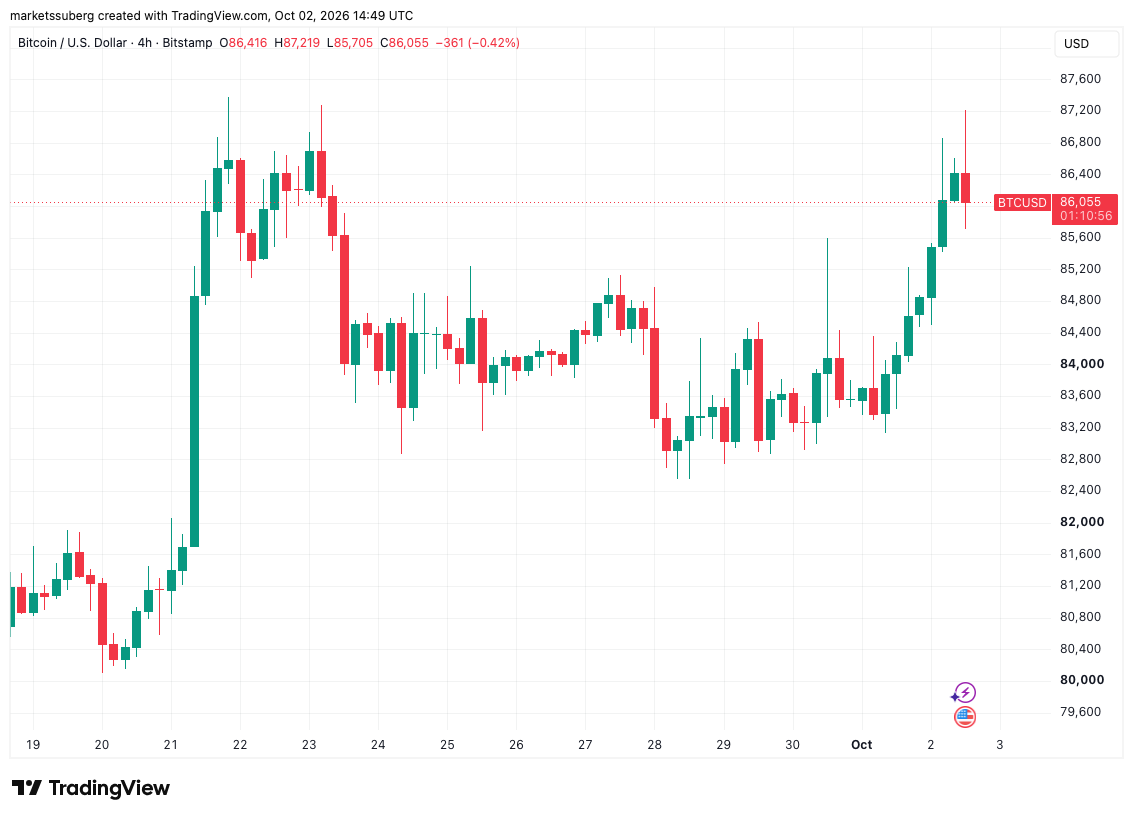
Bitcoin (BTC) surged past the $87,000 threshold on Friday, riding a wave of macroeconomic optimism triggered by a significantly weaker-than-expected United States jobs report. The digital asset climbed to an intraday high of $87,229 on Bitstamp, bringing it within striking distance of new eight-month highs as broader financial markets recalibrated their expectations for future monetary policy.
The sharp upward momentum in cryptocurrency markets coincided with a broader relief rally across traditional risk assets on Wall Street. Traders rapidly scaled back aggressive bets on upcoming Federal Reserve interest rate hikes after the latest employment figures revealed a pronounced cooling in the domestic labor market, injecting fresh liquidity and bullish sentiment back into both equities and digital assets.
Bond Yields Extend Fall on Weak Labor-Market Data
The primary catalyst for Friday’s market movements arrived with the release of the September nonfarm payrolls report. According to data published by TradingView and major financial tracking resources, the US economy added a meager 29,000 jobs during the month, falling dramatically short of the consensus Wall Street forecast of approximately 84,000 jobs.

Compounding the softer-than-expected headline figure, the employment numbers for August—which had previously surprised markets to the upside upon their initial release—were substantially revised downward. August job growth was trimmed from the previously reported 162,000 positions down to 133,000. Market commentators were quick to highlight the deteriorating trajectory of the labor sector, with prominent trading and macro analysis resource The Kobeissi Letter noting on social media platform X that the September print officially marked "the third weakest jobs report of 2026."
The cooling labor metrics instantly shifted market psychology regarding the Federal Reserve’s monetary tightening cycle. Data extracted from CME Group’s widely followed FedWatch Tool demonstrated a dramatic recalibration of investor expectations. Following the employment data release, the probability of the Federal Open Market Committee enacting a 0.25% interest rate hike at its upcoming October meeting plummeted to just 18%, a steep decline from the 64% probability assigned by the market just one week prior.
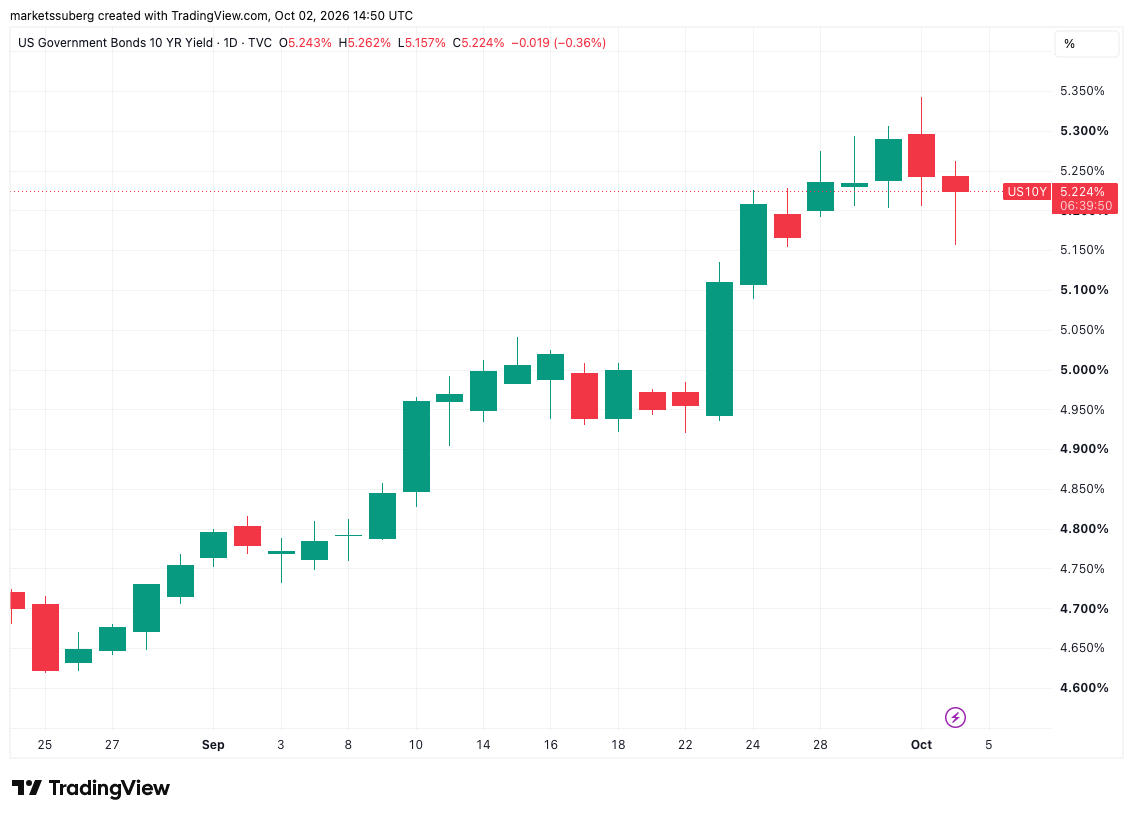
This rapid evaporation of hawkish monetary policy expectations sent shockwaves through the fixed-income market. US Treasury bond yields extended their downward trajectory for the second consecutive trading session. At the time of writing, the benchmark 30-year Treasury yield hovered at 5.573%, while the 10-year yield retreated to 5.2%.
These declines offered a sharp contrast to the economic environment earlier in the week. Just days prior, on Wednesday, both the 30-year and 10-year Treasury yields had climbed to fresh 24-year highs. Those multi-decade peaks had materialized as bond markets stubbornly looked past softer August Personal Consumption Expenditures (PCE) data—widely recognized as the Federal Reserve’s preferred gauge of underlying inflation—to price in sustained high interest rates.
The sudden reversal in yields provided immediate breathing room for risk-on assets. As the opening bell rang on Wall Street, US stocks posted solid gains as equity traders welcomed the prospect of a less aggressive central bank. The benchmark S&P 500 index advanced by 1%, while the technology-heavy Nasdaq Composite Index outperformed, climbing 1.8% as falling yields reduced the discount rate applied to future corporate earnings.
Bitcoin Analysis Sees "Cleanest Upside Catalyst" in Yield Drop
Despite the initial explosive surge past the $87,000 milestone, Bitcoin’s price action encountered localized selling pressure, failing to decisively break above the multi-month resistance highs established during September. By the time of publication, the world’s largest cryptocurrency had retraced slightly, trading back below the $86,000 mark as market participants digested the complex interplay between macroeconomic data and exchange-level order book dynamics.
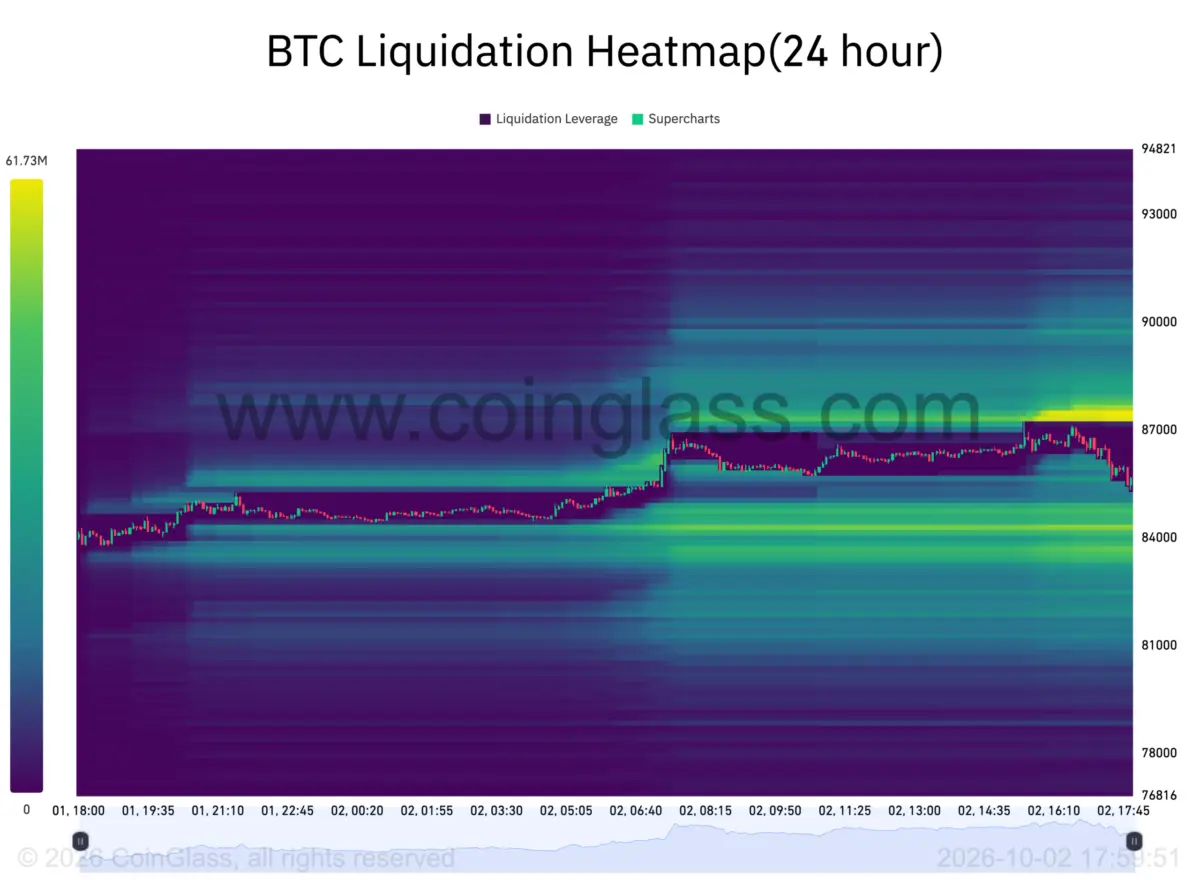
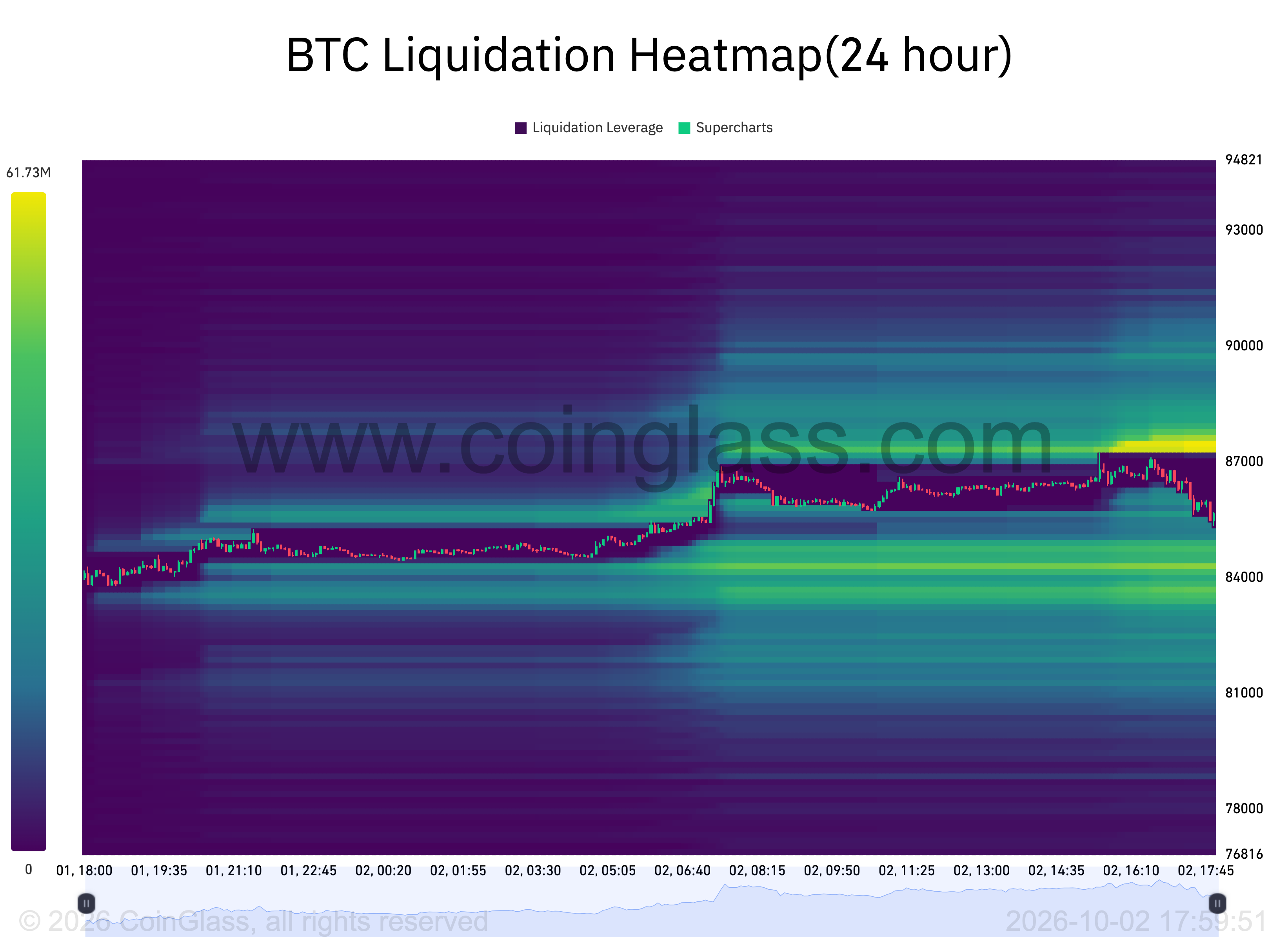
Market observers and on-chain analytics platforms had previously noted structural hurdles capping Bitcoin’s upward trajectory. Reports from market intelligence feeds highlighted successive walls of ask liquidity clustered heavily on centralized exchange order books. Specifically, data from liquidation heatmaps provided by CoinGlass revealed a dense concentration of sell orders and liquidity bands forming formidable near-term resistance around the $87,300 price level, effectively acting as an invisible ceiling that blocked an uninterrupted march toward new yearly highs.
Nevertheless, institutional trading desks and market analysts remain broadly optimistic about the medium-term implications of the macroeconomic shift. In a comprehensive market note, institutional trading firm QCP Capital argued that BTC/USD remains structurally well-positioned to benefit from the cooling labor market, particularly as Treasury yields continue their descent.
"For Bitcoin, a Treasury relief rally would provide the cleanest upside catalyst," QCP Capital wrote in their latest market insight report. The trading firm underscored the underlying strength of the digital asset, emphasizing that Bitcoin had "already demonstrated resilience through a real-rate shock that pressured gold." This decoupling from traditional safe-haven pressures during periods of elevated real yields has increasingly bolstered confidence among institutional allocators viewing Bitcoin as a maturing macroeconomic asset class.
Technical analysts evaluating the daily price structure have also pointed to encouraging signs of consolidation following the volatility. Noted market trader Aksel Kibar highlighted that Bitcoin’s recent price movements successfully established and retested a crucial support floor near $82,800 on the daily chart. This successful defense of key technical support suggests that the broader uptrend remains intact, providing a stable base from which bulls can attempt subsequent breakouts as macroeconomic headwinds continue to subside and the Federal Reserve edges closer to a definitive pivot in monetary policy.