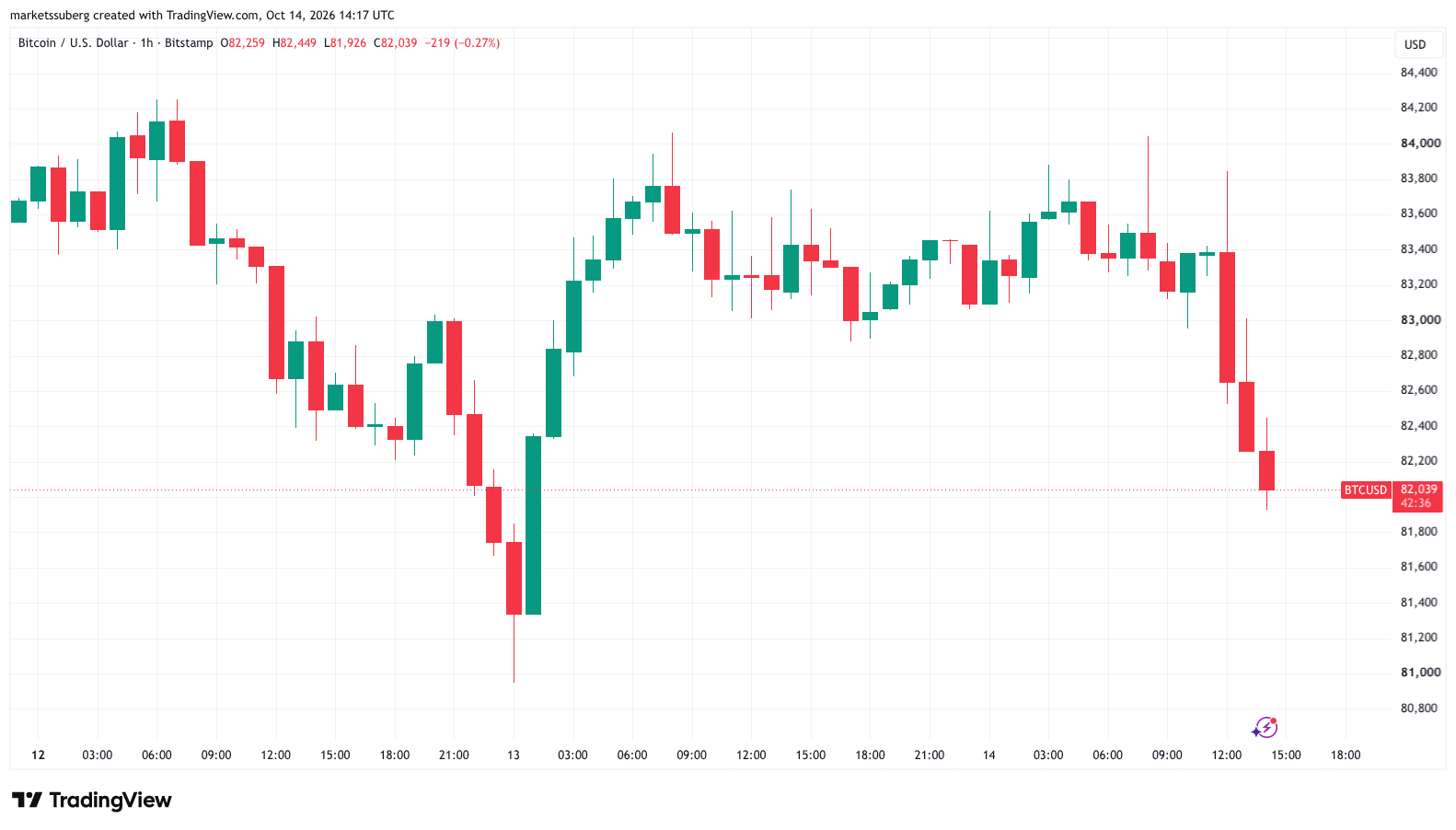
Bitcoin (BTC) dropped beneath the $82,000 threshold following Wednesday’s Wall Street opening bell, as a sharper-than-anticipated reading on United States consumer inflation rattled traditional and digital asset markets alike.
The latest data release from the Bureau of Labor Statistics (BLS) immediately reverberated across global financial centers, triggering a swift repricing of risk assets, sending bond yields surging, and forcing a rapid recalibration of expectations surrounding upcoming Federal Reserve monetary policy decisions. According to market data from TradingView, cryptocurrencies, precious metals, and stock-market futures all experienced notable downward pressure almost immediately following the official publication of the Consumer Price Index (CPI) report for September.
Bitcoin Slips Under $82,000 on Higher US CPI Print
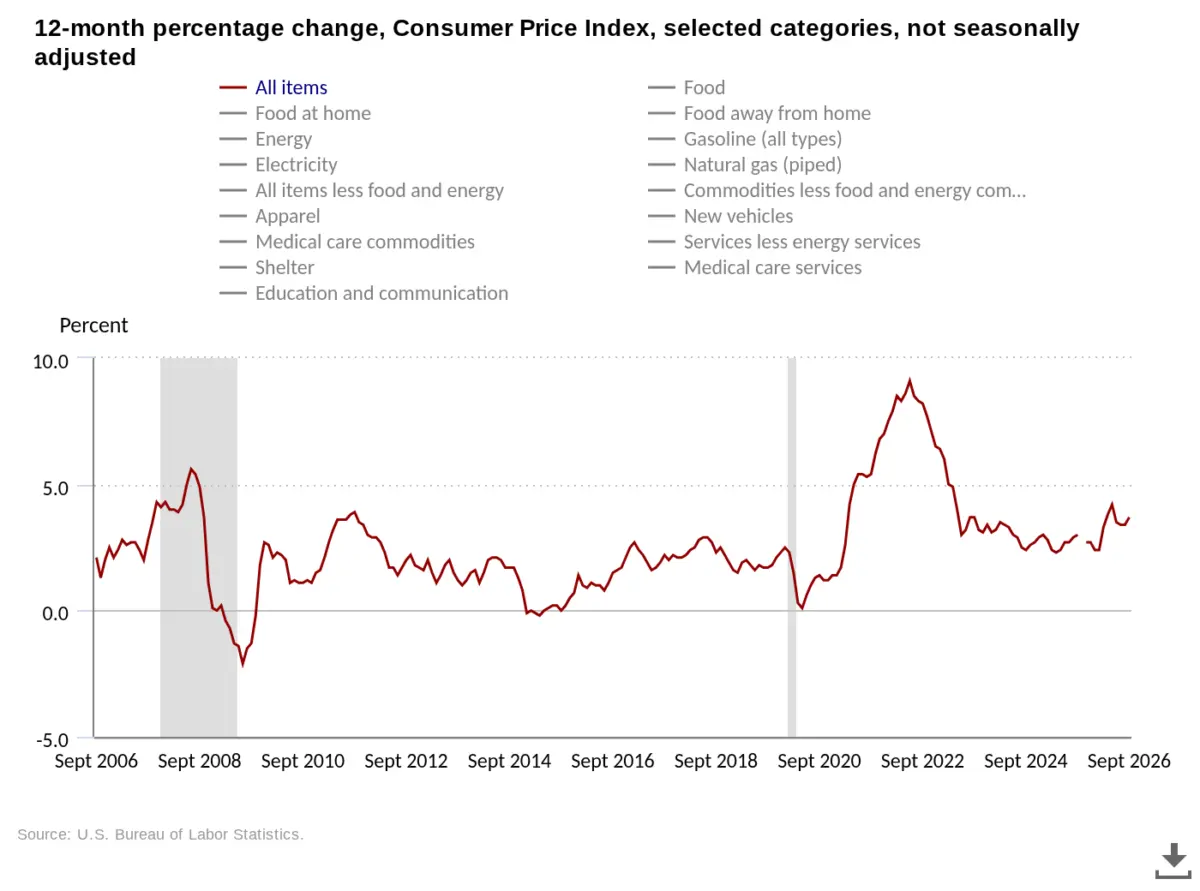
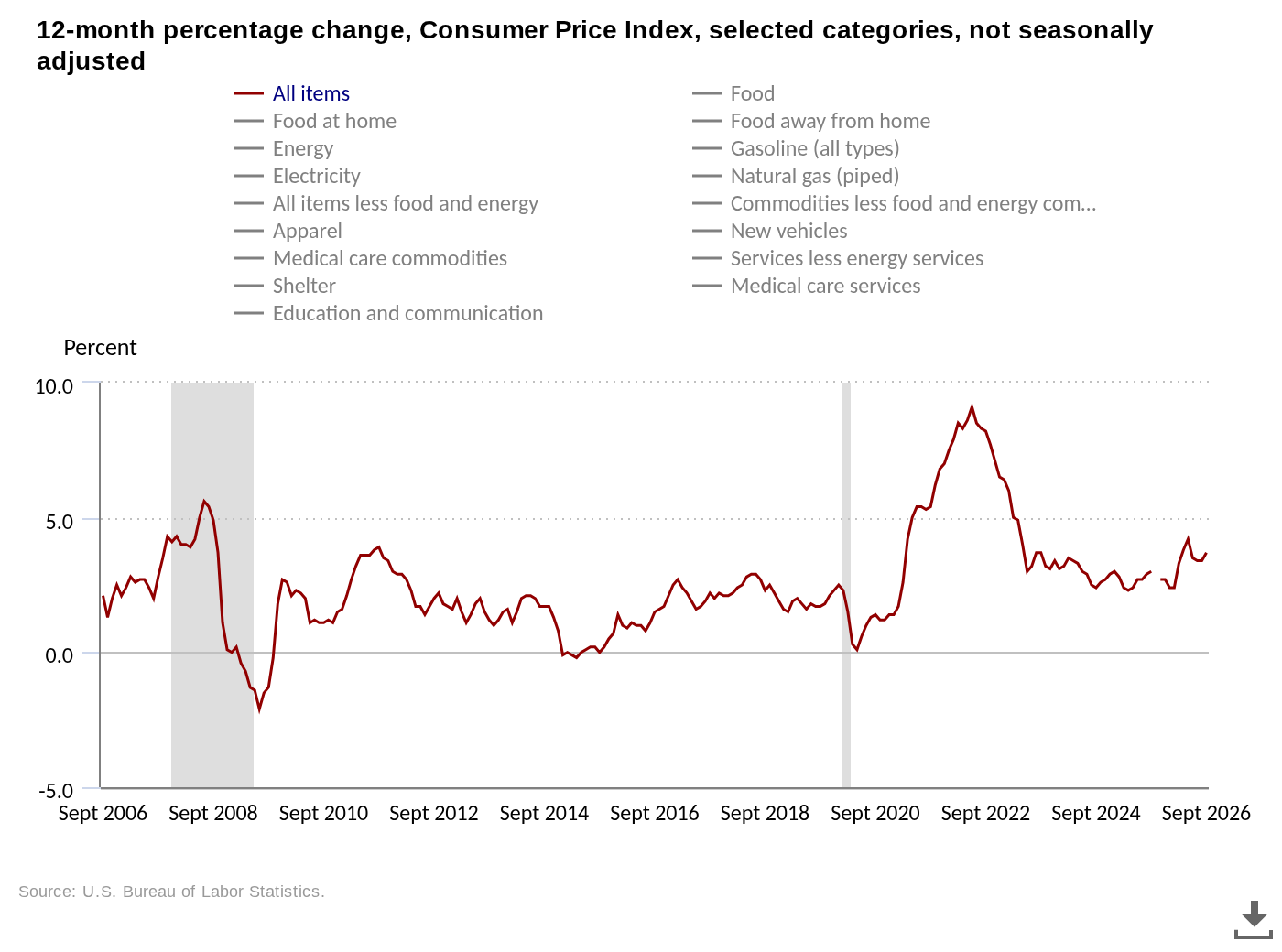
The headline Consumer Price Index printed at 3.7% on a year-on-year basis, landing 0.1% above the prevailing market consensus. The persistent upward pressure on consumer prices was heavily driven by surging fuel costs stemming from ongoing geopolitical tensions in the Middle East and a broader oil-supply crisis that has deeply impacted global energy markets.

"The index for gasoline rose 9.1 percent in September, accounting for over half of the monthly all items increase. The energy index increased 5.2 percent over the month following a 2.1-percent increase in August," an official BLS release stated, highlighting the primary catalyst behind the hotter-than-expected monthly figures.
Inflationary pressures, however, were not isolated to the energy sector. Core CPI—a closely watched metric that strips out volatile food and energy components to provide a clearer picture of underlying price trends—also exceeded forecasts. The core index came in at 2.6% year-on-year, likewise surpassing expectations by 0.1 percentage points and demonstrating that broader price stickiness remains a formidable challenge for economic policymakers.
Market analysts were quick to weigh in on the implications of the persistent data. Sonu Varghese, chief macro strategist at the Carson Group, pointed out that investors should perhaps no longer be caught off guard by stubbornly elevated readings. Speaking to CNBC, Varghese remarked that the only true surprise is that market participants continue to be surprised by broad-based inflation, adding that the economy has yet to experience the full downstream impact of higher diesel prices and the ongoing artificial intelligence infrastructure boom.
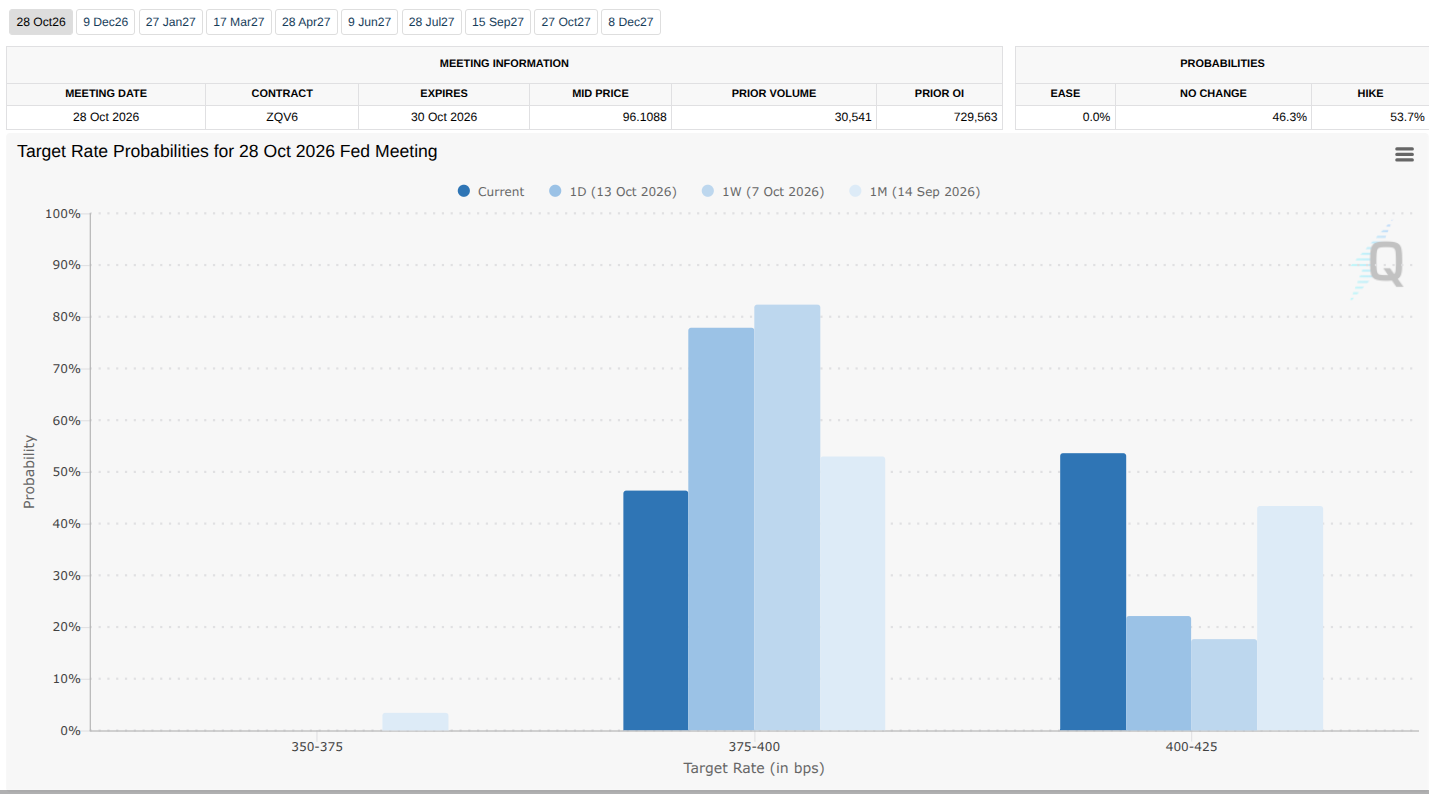
The renewed inflationary heat prompted immediate adjustments in interest-rate expectations. Data extracted from CME Group’s FedWatch Tool revealed that market participants were rapidly shifting their outlooks regarding the Federal Reserve’s next policy moves. The majority of market participants now favor a 25-basis-point interest-rate hike at the central bank’s upcoming policy meeting scheduled for October 28. The implied probability for this outcome jumped to 53.7%, a sharp rise from just 22.1% recorded the previous day. Furthermore, expectations for a subsequent 25-basis-point hike at the December meeting solidified, with odds currently standing at an even 50%.
Economic experts suggest the central bank faces a delicate balancing act amid mixed macroeconomic signals. Theresa Sheehan, an economic analyst at Econoday, noted that when taken in combination with the softer payroll numbers recorded in the September employment report, the Federal Open Market Committee (FOMC) will likely remain on hold for any immediate rate adjustments at the October 27–28 meeting, though a distinct bias toward tightening policy further in December remains intact.
As market participants digest the September figures, attention is already turning to the next batch of crucial economic data. As previous reports have noted, the next key US inflation data release—the Producer Price Index (PPI) for September—is scheduled to be published on Friday, offering further insight into wholesale price pressures working their way through the economic pipeline.
Analysis: High CPI ‘Last Thing Global Bond Markets Needed’
The broader macroeconomic fallout from the CPI report extended far beyond the digital asset ecosystem. Gold prices experienced sharp downward movement, falling as low as $4,079 per ounce in the immediate aftermath of the data publication, while US government bond yields experienced a violent upward spike.
The benchmark 10-year Treasury yield, which is exceptionally sensitive to shifts in energy prices and inflation expectations, climbed to 5.329%. This move brought the yield to within approximately three basis points of striking new 24-year highs, renewing severe stress across fixed-income markets.
Economist Robin Brooks did not mince words when assessing the market reaction, writing in a blog post that the hot inflation print was the absolute last thing global bond markets needed at this juncture. Prior to the release, there had been tentative signs that the global bond sell-off was beginning to stabilize, but the unexpected inflation data effectively reignited turbulence across sovereign debt markets.
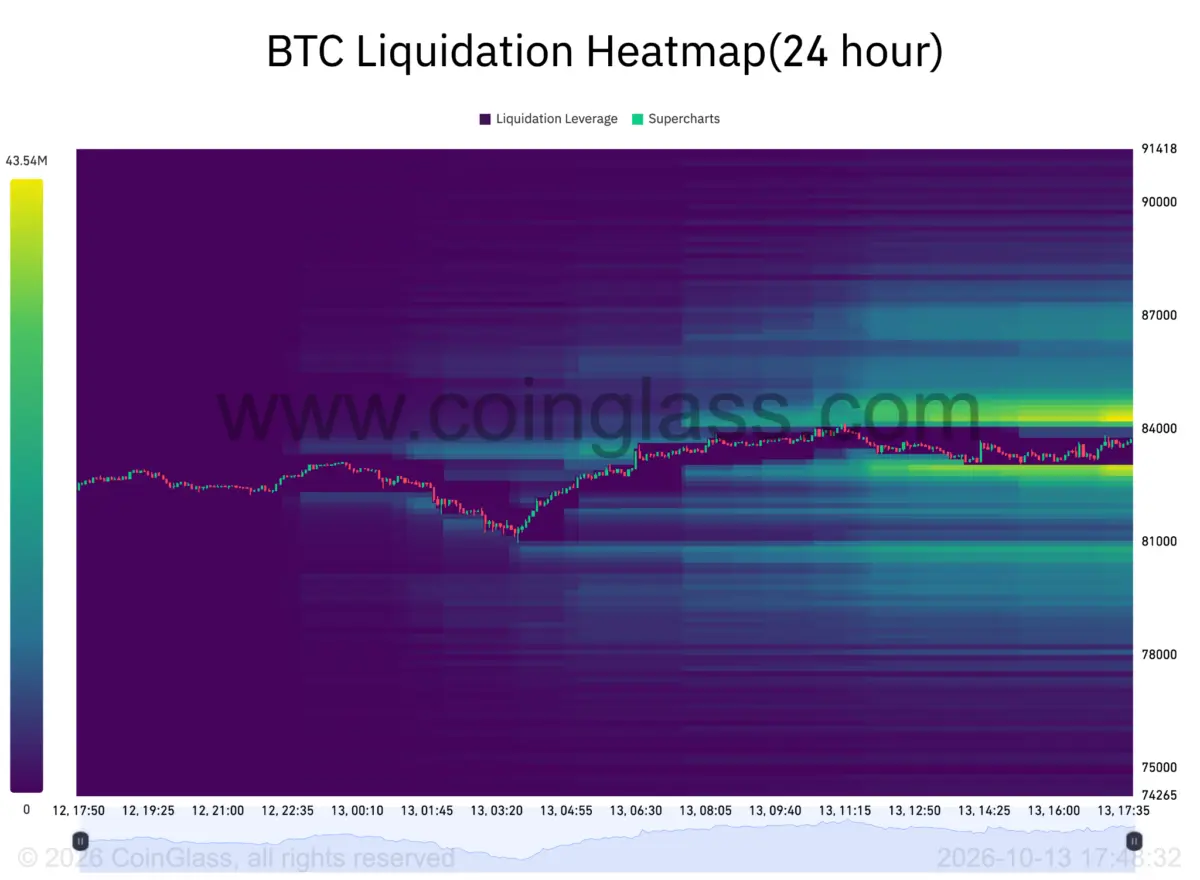
Amid the broader macroeconomic storm, Bitcoin price action continued to hover within a crucial technical range. BTC prices circulated tightly around an area between $82,500 and $83,400, leaving market technicians and analysts waiting to see whether this pivotal zone will successfully hold as firm support or give way to deeper corrective downside.