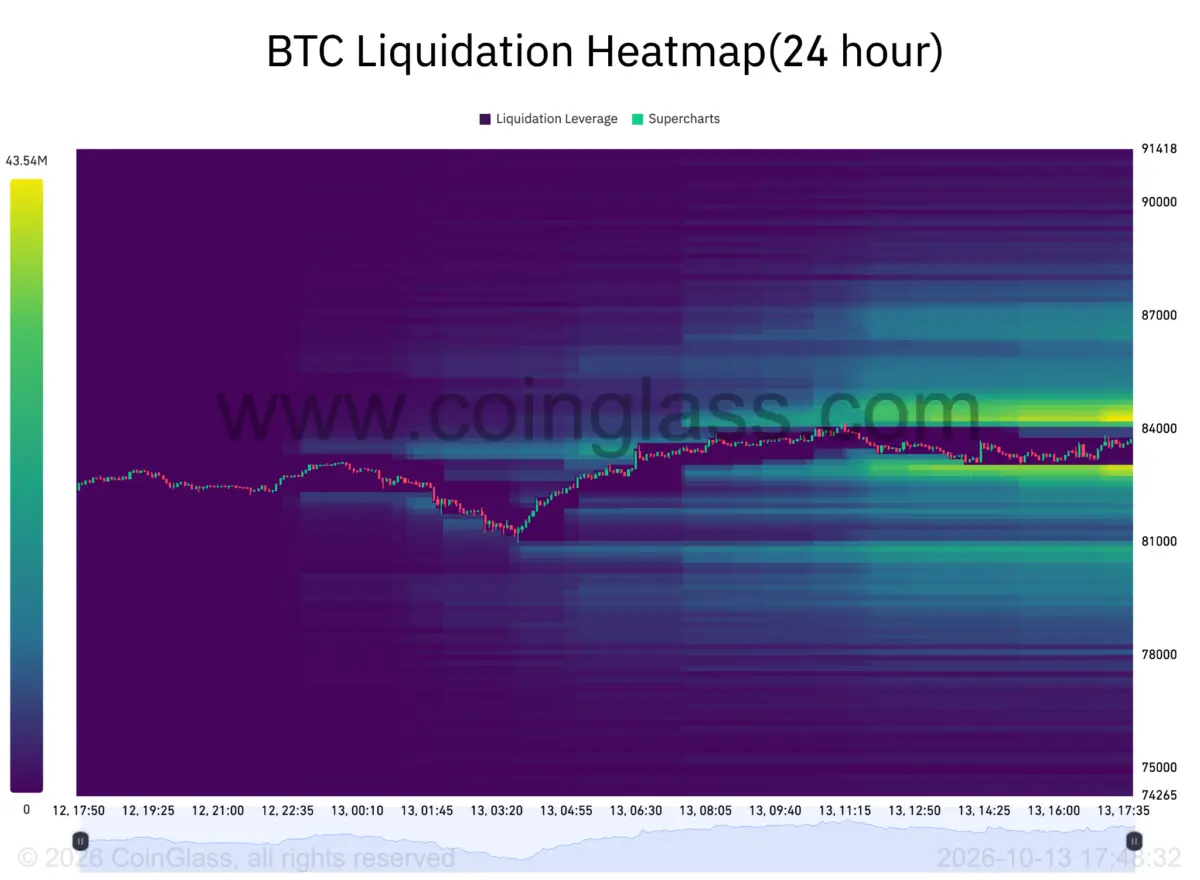
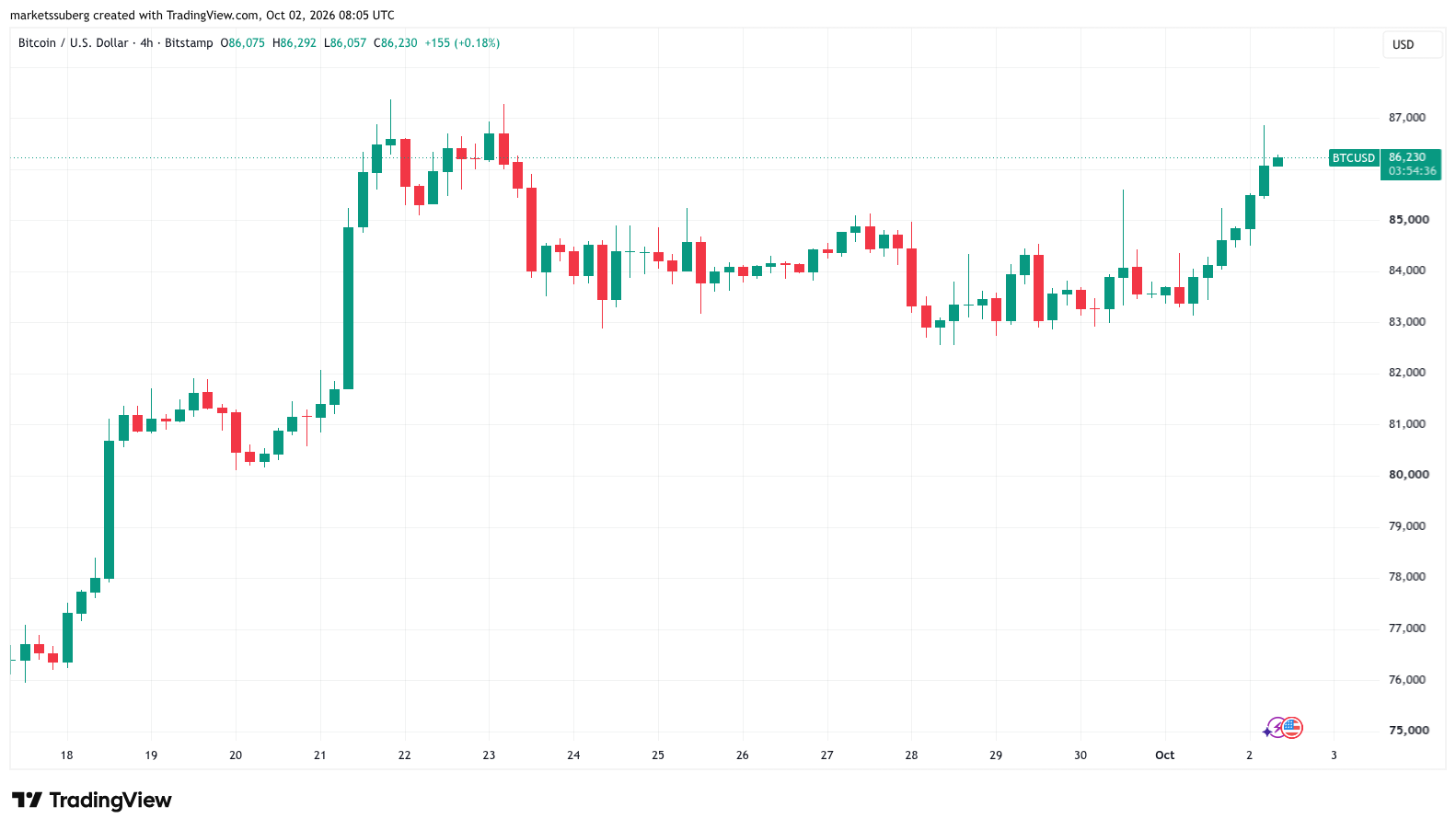
Bitcoin (BTC) surged toward the $87,000 threshold on Friday, sparking a wave of volatility that saw short liquidations surpass $120 million over a 24-hour period. The leading cryptocurrency reached an intra-day high of $86,857 on the Bitstamp exchange before experiencing a minor pullback that brought prices back below the $86,000 mark.
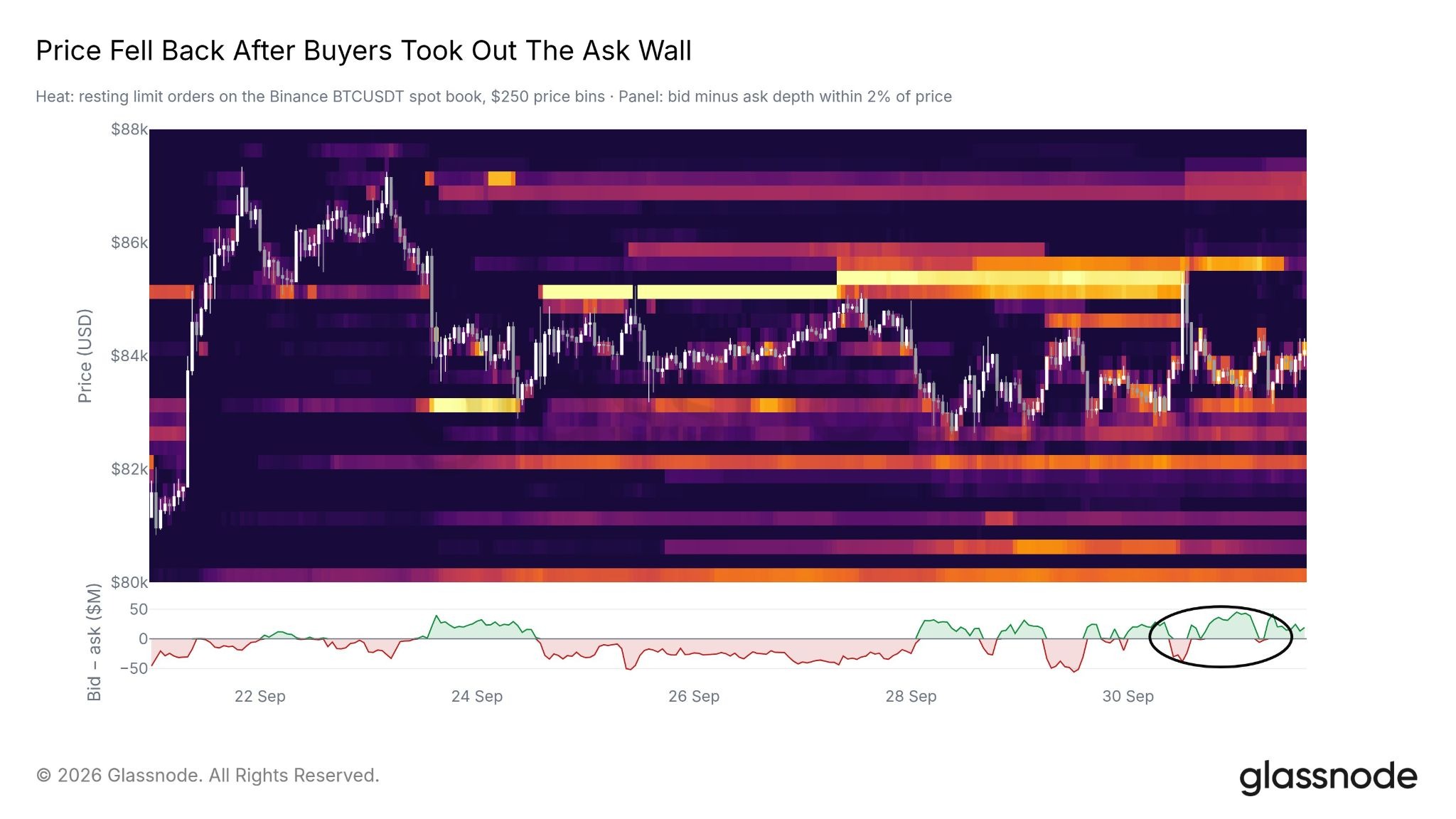
This upward price movement marked Bitcoin’s highest valuation since September 23, driven by shifting dynamics within exchange order-book liquidity. For much of the week, price action had remained heavily rangebound due to a dense concentration of sell orders clustered around the $85,000 level. However, persistent buying pressure ultimately allowed bulls to break through that formidable barrier, according to data provided by onchain analytics platform Glassnode.

Market analysts noted that the clearing of these sell walls has fundamentally altered the short-term order book landscape. With reduced ask liquidity situated immediately above current price levels, market watchers suggest the path of least resistance could potentially allow prices to move upward at an accelerated pace, particularly as lingering sell orders appear to have been withdrawn from major exchanges.
Earlier in the week, market tracking reports highlighted that more than $30 million in concentrated sell orders had materialized around the $85,700 mark, acting as a ceiling for bullish ambitions. Following the subsequent breakout, data from derivatives tracking platform CoinGlass revealed a dense cluster of potential short liquidations accumulating just above the $87,300 threshold. This concentration of liquidation exposure at higher price levels indicates that traders maintaining short positions have been increasingly squeezed as the market tests the upper boundaries of its recent trading range.
Across the broader digital asset ecosystem, the sudden price spike triggered cascading liquidations among bearish speculators. Total Bitcoin short liquidations over the 24-hour window reached approximately $122 million, while the aggregate cross-crypto liquidation figures climbed to $210 million, reflecting widespread market re-positioning as BTC pressed toward multi-week highs.
Bitcoin buyers battle liquidity walls below $87,000
The zone surrounding $86,000 continues to hold profound structural significance for the market, functioning as the aggregate breakeven point for investors who acquired exposure through United States-based spot Bitcoin exchange-traded funds (ETFs). The interplay between institutional inflows and order book liquidity has become a central focus for market analysts evaluating the sustainability of the current price advance.
In a recent edition of its regular market research newsletter, The Week Onchain, Glassnode emphasized that a sustained and decisive breakout will ultimately require confirmation from higher trading volume and a resurgence in spot ETF inflows. Such developments, the firm noted, would provide tangible evidence of broader institutional and retail support underpinning Bitcoin’s ongoing recovery.
Daily inflows into US spot Bitcoin ETFs have notably cooled since September 21, a date that coincided with a near-record daily net inflow tally of $999 million, representing the highest single-day accumulation in nearly a year. While institutional investment vehicles have continued to record positive net additions, the velocity of capital entering the funds has slowed considerably compared to that benchmark period.
"The funds are still buying, but at a small fraction of the pace of those two days," Glassnode researchers wrote, highlighting that a return to inflows matching that previous momentum would serve as the most definitive indicator of renewed, aggressive institutional demand.
Despite the recent cooling trend in daily flows, market participants continue to monitor the performance of individual fund issuers. On October 1, US spot Bitcoin ETFs collectively recorded net inflows of $102.7 million, according to data compiled by Farside Investors. BlackRock’s iShares Bitcoin Trust (IBIT) led the sector by attracting $195 million in fresh capital during the session. However, concurrent outflows registered across several competing fund products partially offset these gains, resulting in a more modest net daily total for the broader ETF category as Bitcoin tests key technical resistance zones.