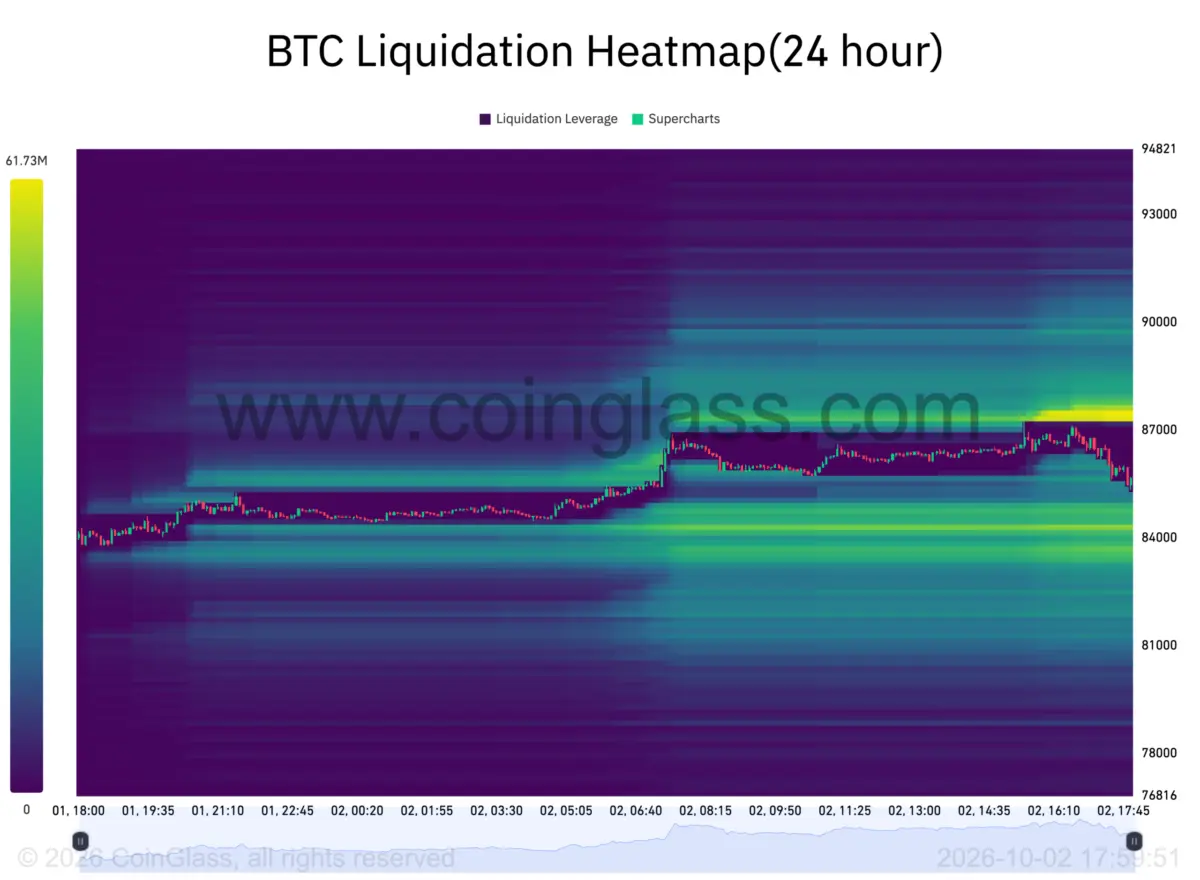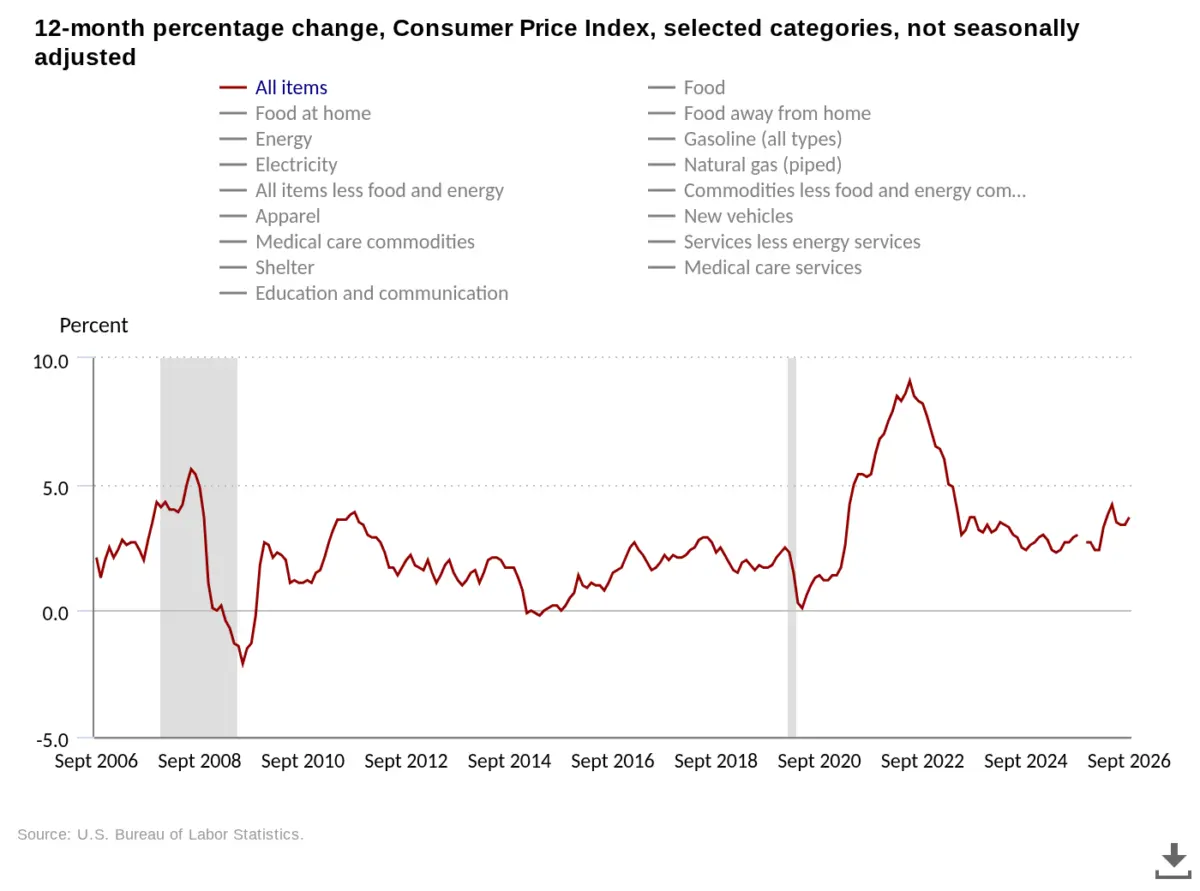
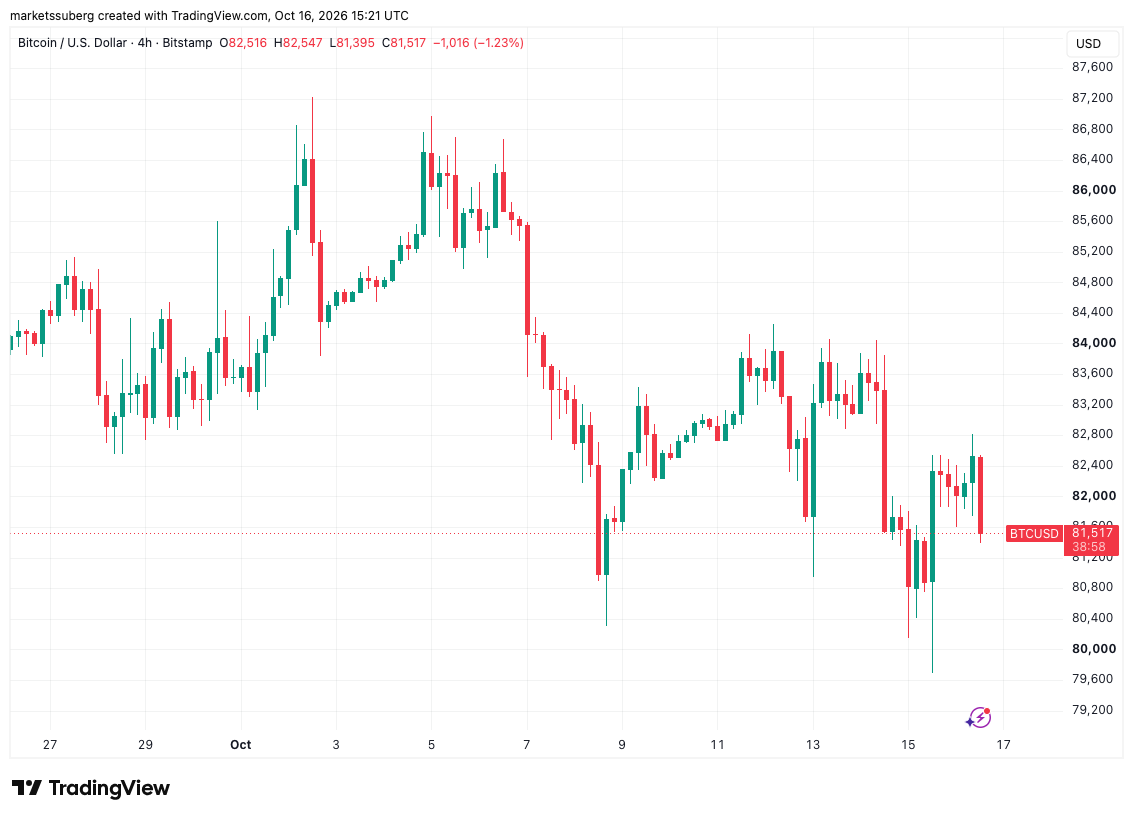
Bitcoin (BTC) traded near the $82,000 threshold as the Wall Street trading session opened on Friday, finding stability alongside a broader recovery in South Korean equity markets. The leading cryptocurrency successfully held the majority of its reclaimed ground after enduring a notable volatility shakeout that saw prices bounce sharply from the $80,000 support level earlier in the week.
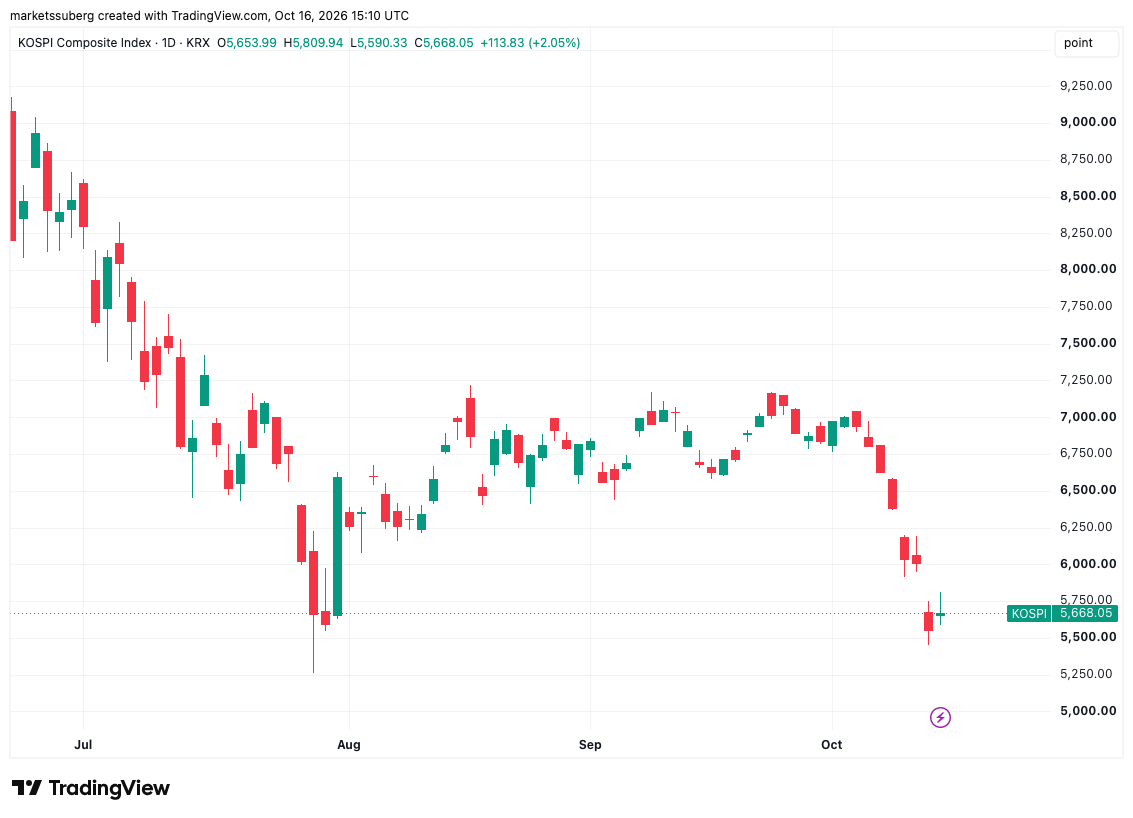
Data compiled from TradingView illustrated that the BTC/USD pair managed to consolidate its position after Thursday’s sudden dip and subsequent recovery. The digital asset market had faced downward pressure earlier in the week, driven primarily by a protracted sell-off across South Korean technology stocks. However, the final trading session of the week brought a measure of relief to Asian financial hubs, helping sentiment spill over positively into digital asset markets as Western trading desks came online.

Traders See Dovish Edge to Warsh Comments
The recovery in risk assets was further supported by macroeconomic developments out of the United States. Federal Reserve Chair Kevin Warsh provided investors with a degree of relief during a high-profile discussion with International Monetary Fund (IMF) Managing Director Kristalina Georgieva, notably avoiding any hawkish rhetoric or signaling regarding aggressive future interest-rate hikes.
During the conversation, Warsh adopted a measured stance regarding upcoming monetary policy decisions. "I don’t prejudge meetings. I don’t believe in saying now what I might do at the meetings that we have in the balance of this year," he told attendees and viewers.
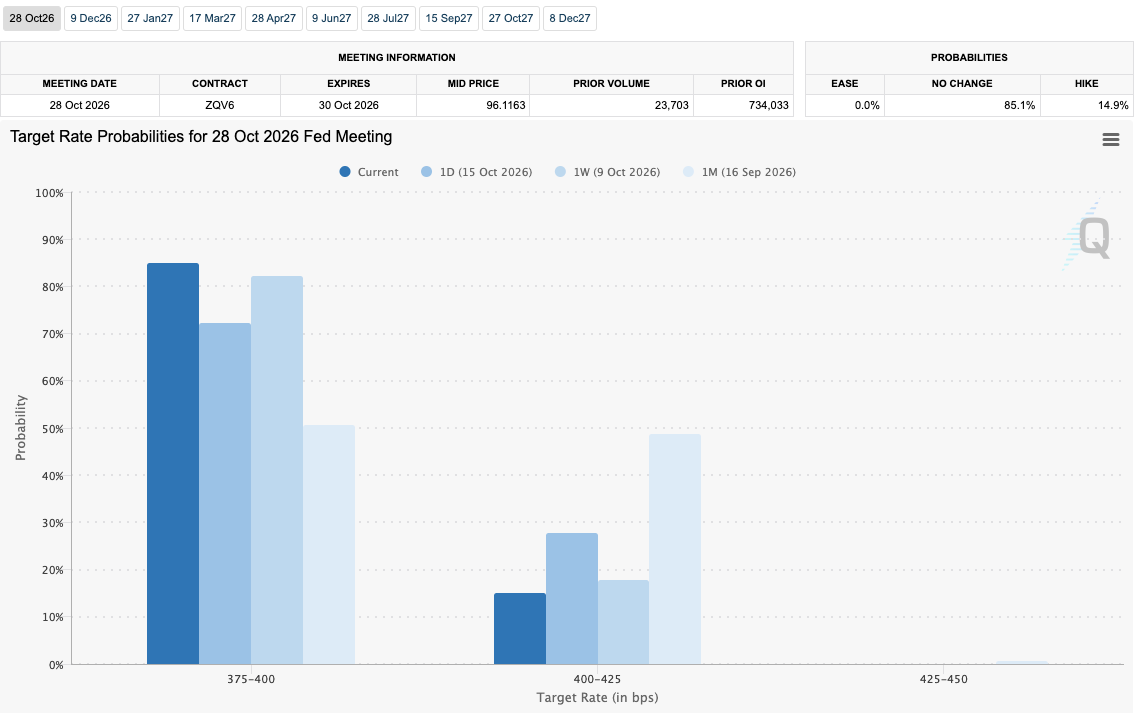
Market participants quickly interpreted this cautious tone as carrying a dovish signal, particularly regarding the central bank’s tolerance for further tightening amid ongoing economic complexities. The reaction was immediately visible in derivatives and rate-probability markets. Data sourced from CME Group’s FedWatch Tool indicated that the market-implied probability of a 25-basis-point interest rate hike at the upcoming October Federal Open Market Committee (FOMC) meeting dropped sharply to 15%, falling significantly from the 27% probability recorded just one day prior.
Noted economist Robin Brooks weighed in on the shifting narrative, suggesting that mounting stress within the artificial intelligence (AI) sector—which served as a primary catalyst for the recent sell-off in South Korean equities—may be influencing the Federal Reserve’s more deliberate and patient approach.
Writing in a recent commentary, Brooks noted that Warsh’s commentary signaled a lack of urgency from the central bank regarding further tightening measures, effectively removing the October meeting from active consideration for a rate increase. He added that the broader market environment is increasingly factoring in potential macro shocks, noting that growing concerns regarding potential strains in tech and AI valuations are leaving investors and financial institutions far more receptive to a dovish monetary message.
US Bond Yields Eye Rebound as Stocks Halt Upside
While digital assets and certain equities found footing, traditional financial markets presented a more mixed picture as the week concluded. US bond yields began climbing upward once again as broader stock indexes steadied, renewing ongoing debates among macroeconomic strategists regarding whether the US Treasury may eventually be forced into a difficult balancing act between taming the persistent bond market sell-off and maintaining bullish momentum in equity valuations.
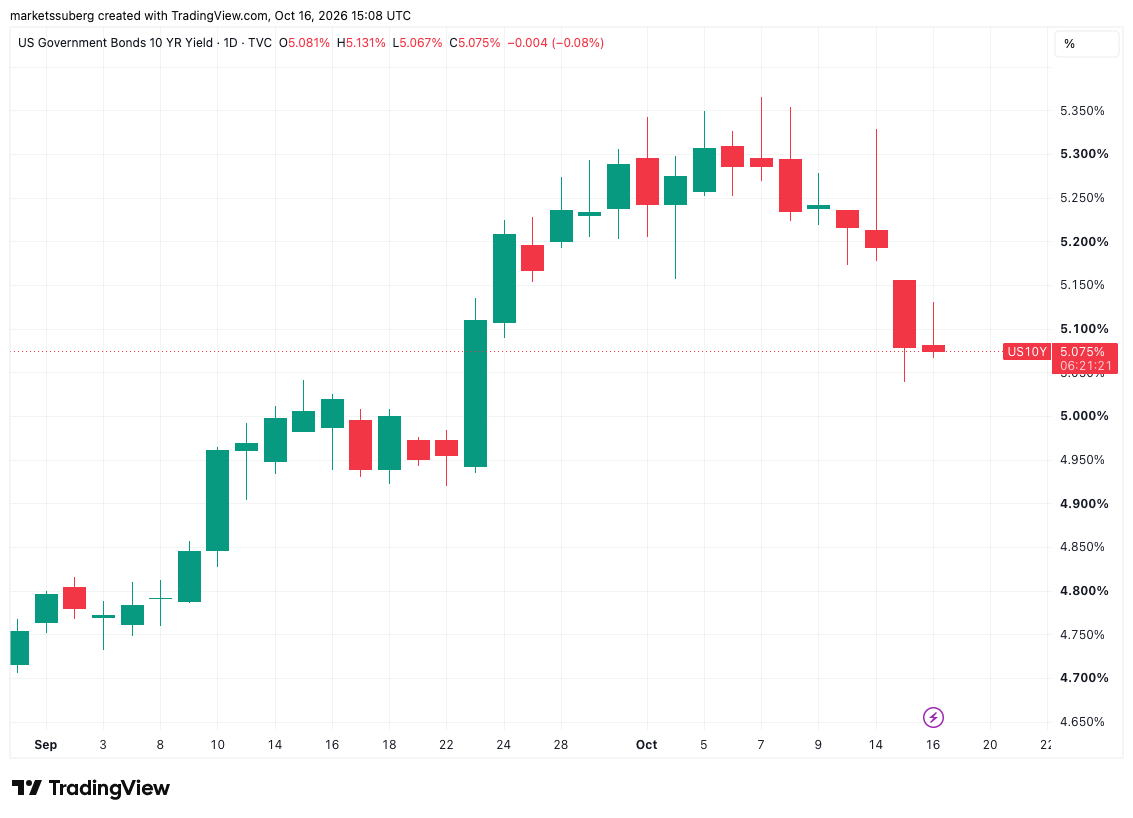
The benchmark US 10-year Treasury yield hovered around 5.07% on Friday, having earlier attempted a sharper reversal upward that pushed the yield as high as 5.13%. Market commentators have closely monitored this yield expansion, noting that fluctuations in equity valuations have served as a primary driver of bond market corrections since late summer.
Market analysis published by financial commentary outlet The Kobeissi Letter highlighted the paradoxical nature of the current equity landscape. In an assessment shared on social media, the commentary suggested that major stock indices might be trapped within a stealth "bull-bear" market paradigm. According to the analysis, persistent geopolitical tensions—such as the ongoing conflict involving the US and Iran—have weighed heavily on investor sentiment, acting as a depressant on valuations. Without these overlapping pressures, traditional stock markets might otherwise be trading significantly higher.
Furthermore, persistent inflationary pressures have continued to drive sustained investor demand for tangible asset exposure, even as central banks navigate complex interest-rate cycles. The analysis pointed out that despite the S&P 500 progressing through the fifth year of its broader secular bull market, a substantial risk discount remains actively priced into equities. This structural discount has effectively acted as a hidden bear market, keeping a lid on the valuations of some of the world’s largest and most rapidly growing corporations.
Observers suggest that this underlying macroeconomic backdrop creates the potential for a sharp, aggressive upward repricing in indices like the S&P 500 if geopolitical and inflationary uncertainties eventually dissipate or become fully priced out by the market. As macroeconomic crosscurrents continue to shape the investment landscape, both traditional and digital asset markets remain highly sensitive to incoming signals from central bankers, currency fluctuations, and shifting sovereign bond yields.