Altcoin exchange deposits have climbed to their highest transaction counts since October 2025, according to data from onchain analytics platform CryptoQuant, which warns that market participants may be preparing to lock in profits following a period of strong sector performance.
The significant spike in exchange inflows comes at a time when smaller cryptocurrencies have begun capturing a larger slice of the overall digital asset market capitalization. However, historical trading patterns suggest that sudden surges in exchange deposits are frequently precursors to sell-offs, raising questions about the near-term sustainability of the current altcoin momentum.
Altcoin Exchange Inflows Hit Highest Levels Since October 2025
In its latest weekly research report released on Tuesday, CryptoQuant highlighted a dramatic escalation in exchange deposit activity involving a broad array of alternative cryptocurrencies.

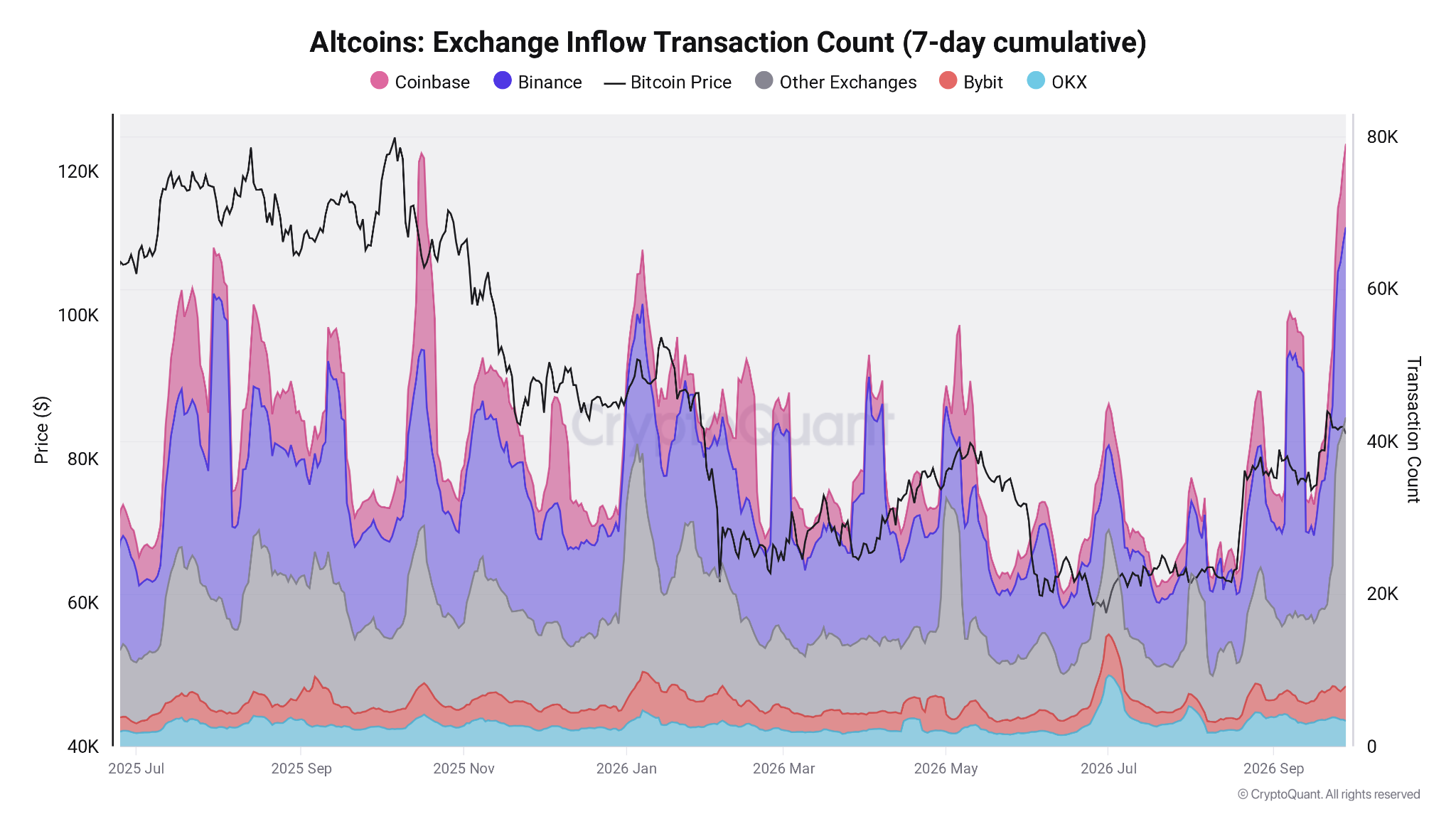
According to the analytics platform, the seven-day count of altcoin deposit transactions across tracked exchanges surged to 78,000 on September 28. This figure represents an increase of approximately 160% compared to just 29,800 recorded two weeks prior on September 14.
"Altcoin exchange inflows have exploded to their highest levels since Bitcoin’s last all-time high," CryptoQuant noted in its assessment of the macro market environment.
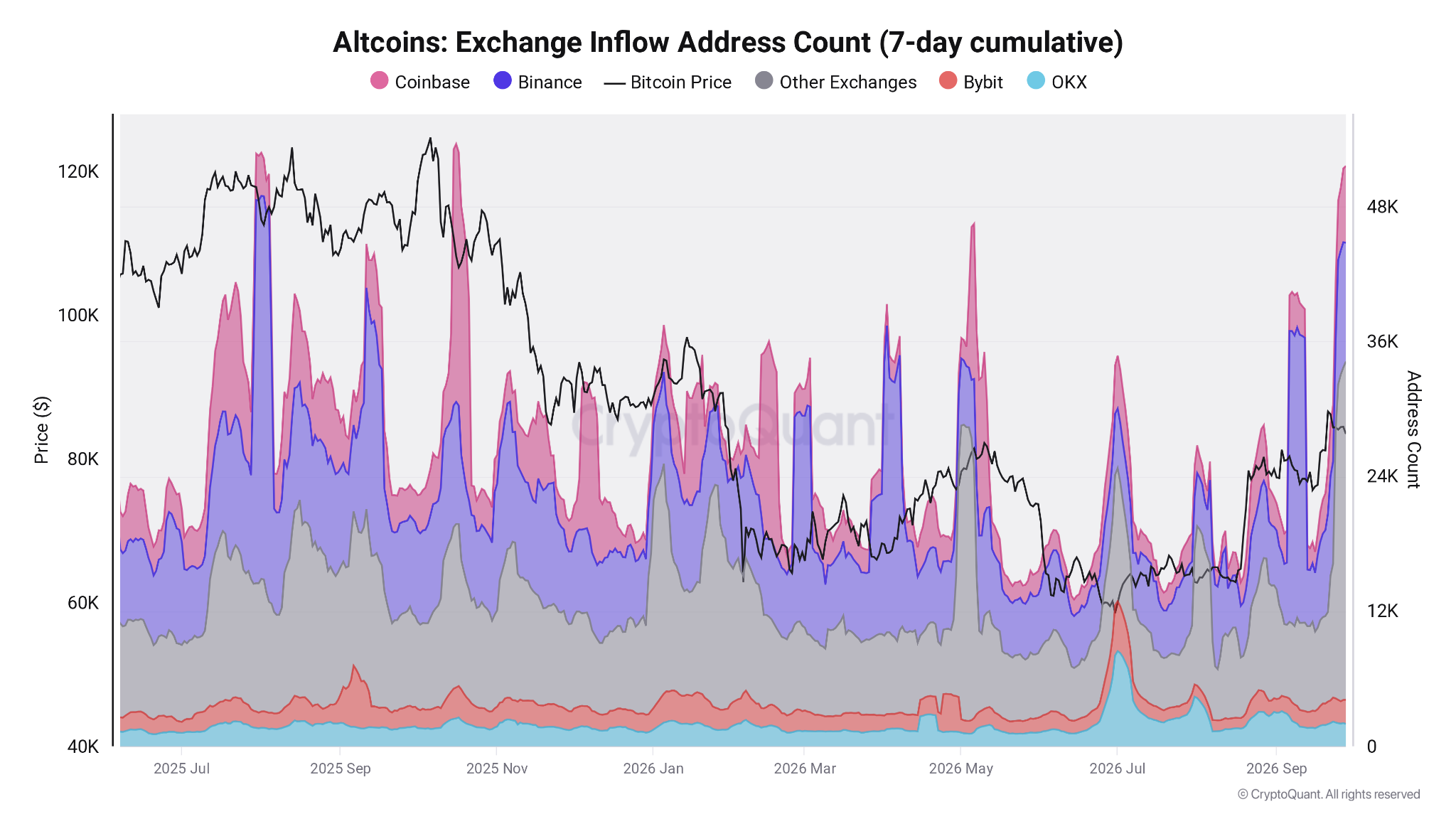
A parallel trend was observed in the number of active wallet addresses transferring alternative coins to centralized trading platforms. Between September 14 and September 28, the count of unique depositing addresses nearly tripled, climbing from roughly 17,600 to 51,600. CryptoQuant pointed out that this address count has similarly reached its highest watermark since October 2025, emphasizing that the uptick is broad-based rather than isolated to a handful of specific tokens.
In the digital asset ecosystem, a sharp increase in the volume of coins moving from private wallets to exchange-hosted accounts is widely interpreted as an indicator of impending liquidation. When holders transfer their assets to centralized platforms, they typically do so with the intention of executing trades, reallocating portfolios, or capitalizing on recent price appreciation by converting holdings into stablecoins or fiat currency.
This onchain warning arrives as Bitcoin, the industry’s primary market bellwether, experiences a cooling-off period. After briefly scaling past the $87,000 threshold last week for the first time since January, BTC pulled back below $83,000. Market analysts have pointed to shifting order-book liquidity dynamics and sustained selling pressure from long-term holders as key obstacles preventing Bitcoin from maintaining its upward trajectory in the short term.
Smaller Altcoins’ Market Share Hits Highest Level Since February
The sudden surge in exchange deposits does not occur in a vacuum; it follows a noticeable rotation of capital into the broader altcoin sector as Bitcoin dominance faces persistent resistance.
In the preceding week, Glassnode’s specialized Altcoin Cycle Signal metric heavily favored alternative cryptocurrencies over Bitcoin. The proprietary metric evaluates price data across the 250 largest altcoins by market capitalization while intentionally excluding stablecoins to provide a clearer picture of speculative appetite and risk-on sentiment within the broader crypto economy.
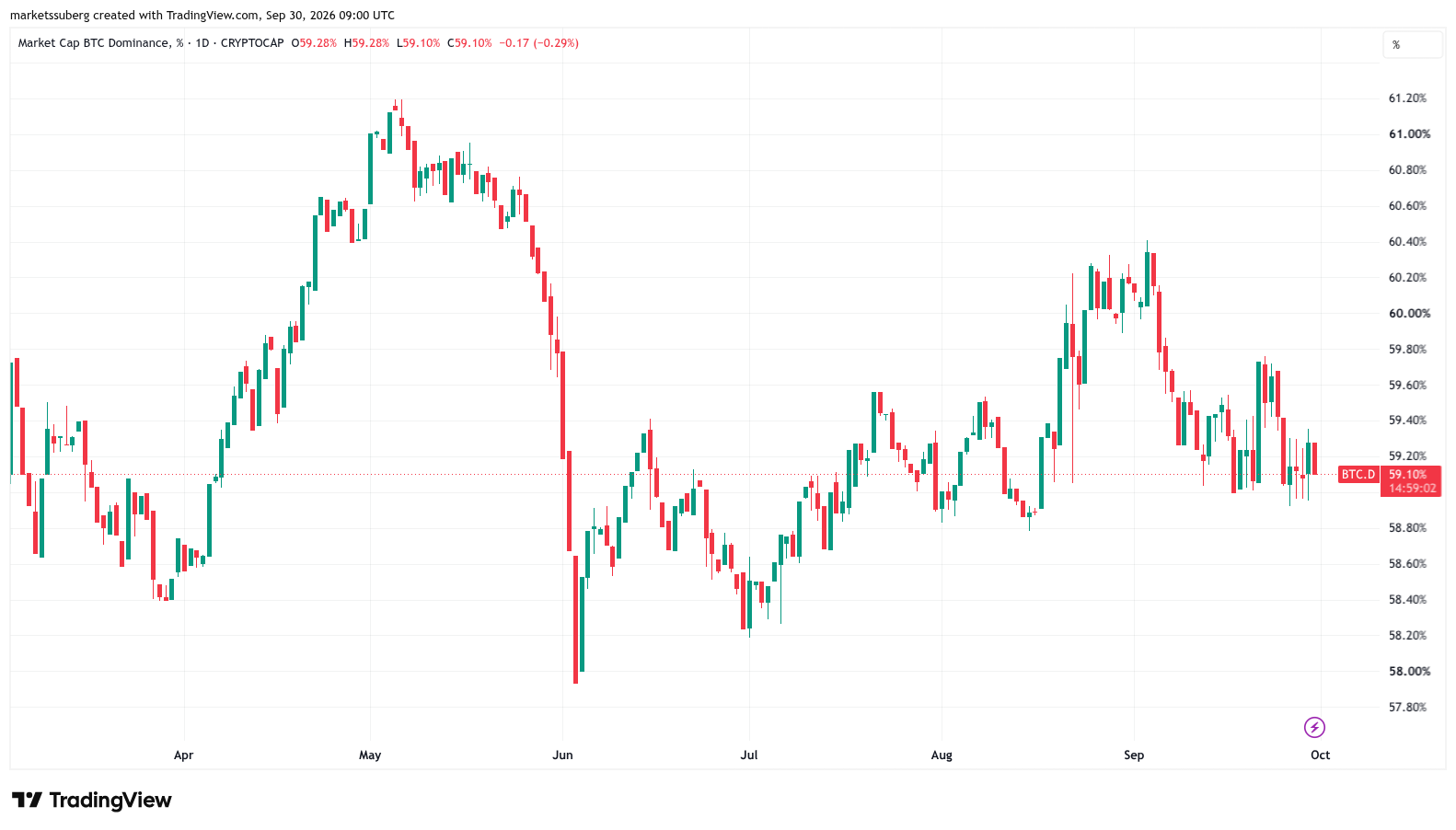
Concurrently, Bitcoin’s share of the total cryptocurrency market capitalization has remained subdued below the crucial 60% threshold. TradingView data indicates that Bitcoin dominance has traded within a relatively narrow band between 58% and 60.4% since late May, giving alternative assets the breathing room needed to stage localized rallies and capture investor interest.
Further illustrating this shift in market dynamics, digital assets operating outside the top ten by market capitalization expanded their footprint significantly. By September 27, smaller altcoins accounted for 9% of the total cryptocurrency market capitalization, marking their highest collective market share since February of this year.
As the market weighs the implications of heightened exchange inflows against the backdrop of an expanding altcoin footprint, traders and analysts alike are closely monitoring whether the brewing wave of profit-taking will trigger a wider correction across the sector or if resilient market demand will successfully absorb the incoming supply.