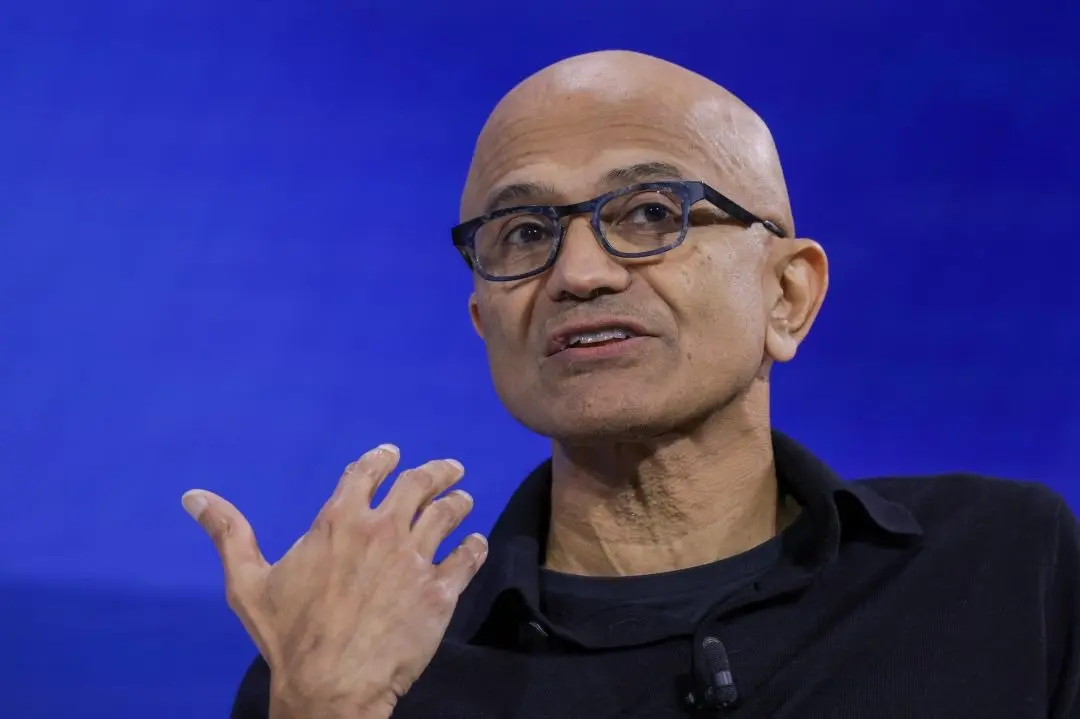
Microsoft Chief Executive Officer Satya Nadella has offered fresh insights into one of the most drastic workforce maneuvers in the recent history of the technology sector. Speaking during an extensive appearance at the DealBook Summit, Nadella addressed the motivations behind Microsoft’s decision in October to offer voluntary buyouts to approximately 60,000 of its employees. Rather than resorting to a series of sudden, massive layoffs to downsize or restructure the organization, the company essentially urged a massive portion of its workforce to consider stepping down voluntarily.
The short answer, according to Nadella, is artificial intelligence. However, the Microsoft chief was quick to clarify that the situation is far more nuanced, and perhaps less dystopian, than standard industry anxieties might suggest. He is not arguing that software engineers and other traditional tech roles are being outright replaced by algorithms or automated bots. Instead, Nadella described a fundamental reorganization of Microsoft into an enterprise where every single employee integrates AI into their daily routines, shifting the core responsibility of human workers toward managing, directing, and orchestrating that technology rather than executing baseline manual tasks.
The buyout initiative was designed, Nadella told interviewer Andrew Ross Sorkin, to ensure that employees retained a sense of agency and personal choice during a period of massive corporate transition. In a professional climate frequently dominated by anxiety over impending automation, the company wanted to give its personnel a structured mechanism to evaluate their own career paths.
To illustrate how deeply the corporate workflow is shifting, Nadella pointed to the rapid evolution of software engineering. The industry, he noted, has experienced a dizzying psychological pendulum over recent years. Initially, skepticism reigned as many doubted whether artificial intelligence could ever genuinely handle complex software development. That skepticism abruptly morphed into panic as advanced models demonstrated an astonishing capability to write code, triggering widespread fears that software engineers would soon become entirely obsolete.
Now, Nadella argues, the tech world is reaching a more mature understanding: software engineering is very much alive and poised to thrive. The crucial difference, however, is that the operating point has fundamentally shifted. The way development teams are structured and the day-to-day work a software engineer performs look radically different today than they did just a few years ago.
For some workers, navigating this continuous wave of reorganization and structural change can be exceptionally difficult. Nadella acknowledged these human friction points candidly, noting that while the adaptation is undeniably tough, it is an absolute necessity for an enterprise seeking to remain competitive in a rapidly transforming global economy.
To ground this high-level strategy in concrete reality, Nadella offered a striking example from within Microsoft’s own product development divisions. He pointed to the team responsible for building Cowork, the sophisticated AI agent integrated into Microsoft 365 applications. That entire critical product group consists of just 11 developers. These engineers have thoroughly mastered the art of leveraging artificial intelligence to handle the heavy lifting of production. As Nadella described it, they build a software factory that in turn builds the product, rather than spending their time directly constructing the application line by line.
Nadella firmly believes that this operational model represents the future for virtually all corporate roles. Over time, every employee will transition into a manager of intelligent agents, providing high-level strategic direction rather than executing routine, repetitive tasks. That level of guidance and oversight, he emphasized, is the direction in which all modern employment is inevitably heading.
Yet executing this grand vision is a complex logistical challenge, particularly for a venerable organization with deep historical roots. As a 51-year-old corporation, Microsoft did not originate as an AI-first company. It carries decades of established infrastructure, legacy systems, and traditional workflow habits. The central question facing management is how quickly an incumbent institution of this scale can successfully transform its work processes, daily workflows, and ultimate deliverables, all while maintaining proper wage support and organizational stability for its workforce. Nadella conceded that this massive transformation will inevitably take considerably more time than external observers might expect. Along the way, there will naturally be individuals who look at the shifting landscape and decide they want to make entirely different choices for their professional lives.
This sentiment echoes remarks Nadella made just days prior during an extensive interview with Gergely Orosz on The Pragmatic Engineer podcast. Elaborating further on the rationale behind asking 60,000 workers to consider voluntary resignation, Nadella addressed the broader psychological climate within the tech sector. He noted that corporate leadership and media narratives have inadvertently generated immense anxiety among workers, leaving many feeling that they lack control over their own professional destinies due to the relentless hype surrounding the AI revolution.
Discussions concerning the technological singularity—the hypothetical future milestone where artificial intelligence surpasses human intelligence—combined with sweeping predictions that automation will eradicate human employment entirely, have taken a heavy psychological toll. Nadella pointed out that this pervasive fear makes it exceptionally difficult for workers who might otherwise be willing to embrace change to do so with confidence. Transforming a corporate giant requires walking the difficult path of making genuine structural changes, properly slotting personnel into emerging roles, and providing meaningful new opportunities, rather than simply issuing top-down edicts.
Viewed through this lens, the October buyout offer served as a clear, definitive message from corporate leadership to the entire Microsoft organization. Employees were essentially given a stark choice: they could align themselves with the new AI-first operational strategy—a paradigm that will permanently redefine their daily responsibilities—or they could take advantage of a financial package to transition out of the company and pursue alternative paths elsewhere.