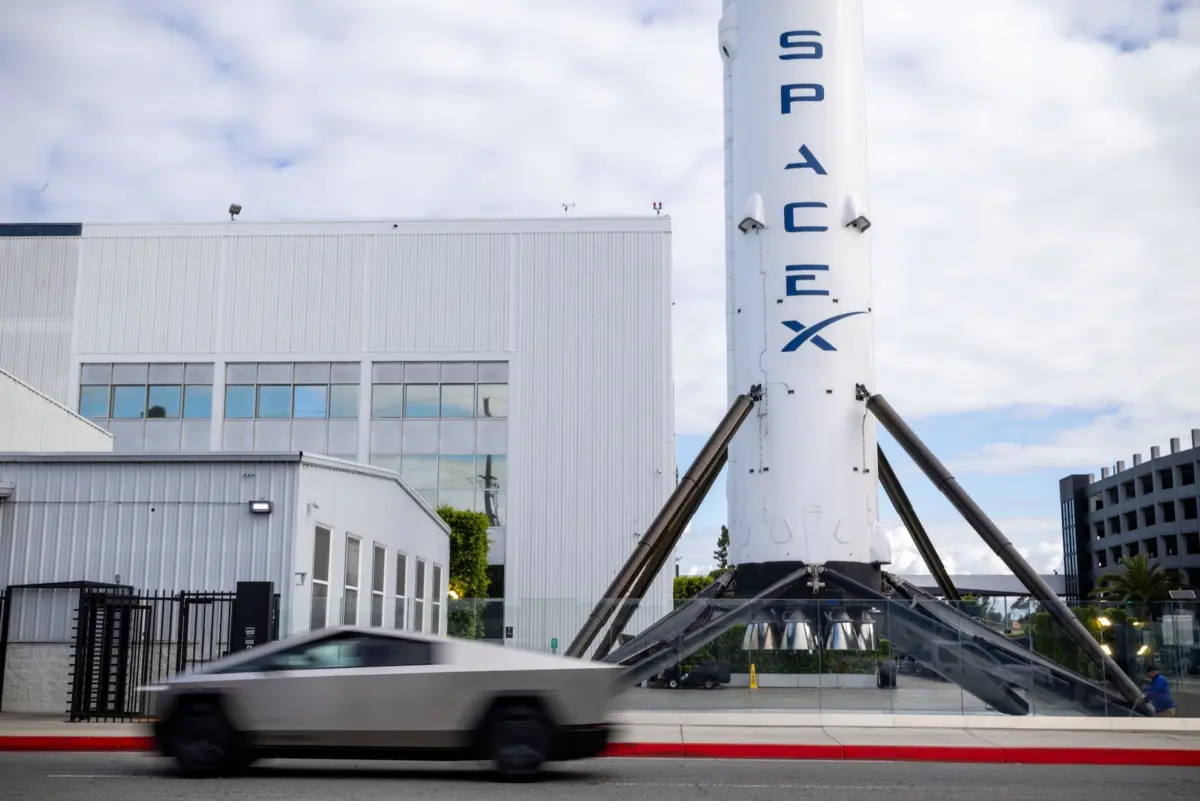
The boards of directors at both SpaceX and Tesla have taken a formal step toward exploring a potential corporate combination, establishing special committees to review a possible merger between the two corporate giants.
According to Elon Musk, who serves as the chief executive officer and the largest individual shareholder of both companies, these special committees were formed in direct response to requests from shareholders. Because Musk holds a controlling and dual-sided interest in both enterprises, he finds himself on both sides of the potential transaction, prompting the implementation of standard corporate governance safeguards to manage conflicts of interest.
Speaking during SpaceX’s third-quarter earnings call, Musk addressed the unfolding corporate dynamics with characteristic candor, describing the setup as a necessary hurdle to ensure fair and objective evaluation.
"Because I’m a conflicted party, I can’t actually be in the discussions of the special committees, so it’s this sort of a… It’s an odd kabuki dance where two groups of people are talking, and I can’t be in the conversation," Musk said in response to a shareholder question during the call.
While Musk did not publicly name the specific individuals appointed to these committees, he emphasized that they are composed entirely of independent directors. Both companies maintain distinct boards with members who meet rigorous regulatory standards for independence.
At Tesla, the board includes seven independent members under Nasdaq listing standards. This roster features board chair Robyn Denholm, Ira Ehrenpreis—who also serves as a committee chair—former Tesla chief technology officer JB Straubel, Joe Gebbia, Jack Hartung, James Murdoch, and Kathleen Wilson-Thompson, according to the company’s October proxy filing. Neither Musk nor his brother, Kimbal Musk, qualifies as an independent director due to their familial and executive ties. Members like Denholm, Gebbia, Ehrenpreis, Hartung, Murdoch, and Wilson-Thompson routinely handle high-stakes corporate governance, sitting on established committees that oversee corporate audits, executive compensation, and governance standards.
SpaceX operates with a distinct board that includes six independent directors, overlapping in some respects with Tesla’s governance network. Ehrenpreis also sits on the SpaceX board, serving as the chair of its compensation and nominating committee. Additional independent directors at SpaceX include Randy Glein, Donald Harrison, Steve Jurvetson, Luke Nosek, and Roelof Botha. Meanwhile, non-independent representation on the SpaceX board includes Antonio Gracias, Musk himself, and SpaceX president and chief operating officer Gwynne Shotwell.
Gracias, who formerly served on Tesla’s board, is the founder and leader of Valor Equity Partners, an investment firm holding a significant 3.4% stake in SpaceX. Valor has also deepened its operational ties with SpaceX through financial maneuvers, such as financing SpaceX’s artificial intelligence hardware purchases via complex leaseback arrangements.
Despite the formation of the review committees, Musk cautioned that a merger is far from a done deal. While he expressed personal support for the overarching concept of combining the two companies, he pushed back against any notion that the transaction is inevitable.
"I think some people out there assume that a SpaceX and Tesla Motor is a certainty, and I think that would be overstating it," Musk said, reiterating that while he believes the merger is a good idea, the ultimate decision rests entirely with the investor base. "At the end of the day, the shareholders have to be supportive of this."
According to the CEO, the special committees assigned to review the deal have not yet reached any formal agreement regarding the financial terms or structural details of potential transactions.
Should the committees eventually recommend a merger, the path to approval will look starkly different at each company due to varying shareholder voting thresholds and ownership concentrations. At SpaceX, Musk’s grip on the company was heavily cemented following its initial public offering and subsequent valuation milestones, leaving him with more than 50% of the voting power. This concentrated voting bloc would theoretically make it significantly easier to secure the requisite shareholder support for a merger on the SpaceX side.
In contrast, the hurdle at Tesla is substantially higher. Securing a green light from Tesla investors requires clearing a strict 50% vote threshold calculated from all eligible shareholders, rather than merely counting the votes of those who actively participate in the proxy process, Musk pointed out.
Looking at the strategic rationale behind the exploratory talks, Musk argued that mounting technological convergence makes a union increasingly logical. He pointed to the rapid evolution of artificial intelligence and advanced computing as primary drivers for why the two entities should tear down corporate silos.
"I do think there’s a lot of merit to combining the companies as we are pretty much in the superintelligence singularity," Musk said.
He highlighted several collaborative pipelines where both companies stand to gain immense operational synergies. These include joint efforts in developing advanced AI software, humanoid robotics, SpaceX’s orbital artificial intelligence data center project known as Starmind, and Terafab, the joint semiconductor manufacturing venture established between Tesla and SpaceX to secure critical chip supply lines.