A sharp and sudden cryptocurrency market sell-off sent shockwaves through the digital asset ecosystem, wiping out more than $1.1 billion in leveraged positions over a 24-hour period. The dramatic correction was heavily driven by plunging prices across Bitcoin and major altcoins, compounded by macroeconomic pressures, large-scale government wallet movements, and a wave of panic-driven capitulation among inexperienced market participants. As volatility spiked across major centralized trading venues, newer investors rushed to offload their holdings at a loss, creating one of the most turbulent trading sessions in months.
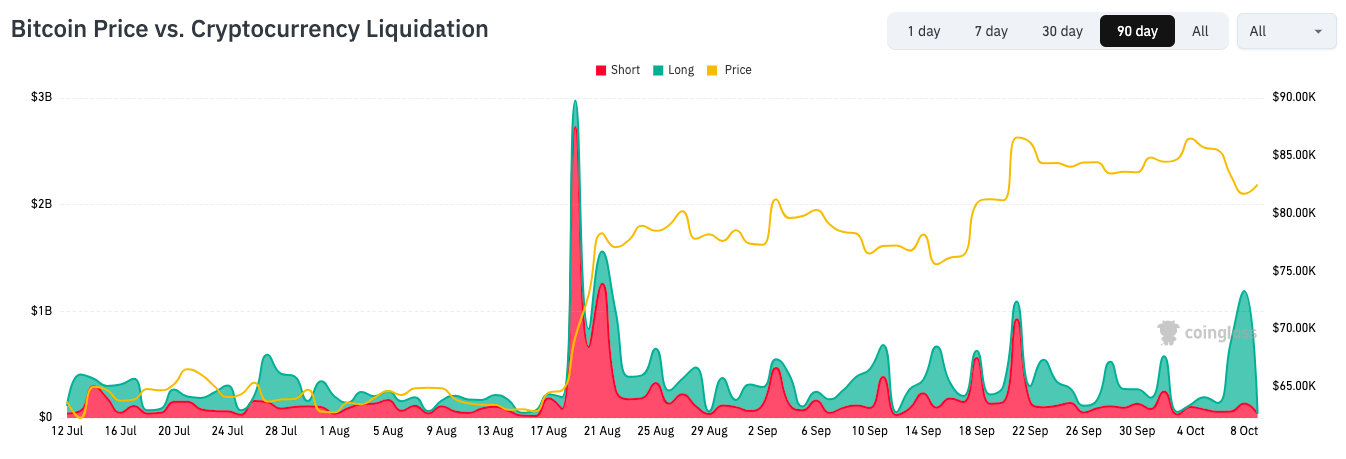
According to data compiled by market intelligence platform CoinGlass, total crypto liquidations reached $1.09 billion during the 24-hour window leading up to 10 am UTC on Friday. This staggering figure represents the largest single-day tally of forced position closures since August 21. During that late-summer surge, the BTC/USD trading pair had climbed swiftly from $73,000 to $79,500, notching fresh two-month highs and subsequently triggering $1.3 billion in short liquidations as bearish traders were caught off guard by the upside momentum.
However, the recent market dynamic flipped entirely in favor of bears. Long positions bore the absolute brunt of the downturn, accounting for a massive $1.05 billion of Thursday’s total liquidation volume. Over-leveraged traders betting on a continuation of the summer bull run were caught completely exposed as prices broke through critical technical thresholds, forcing automated margin calls and cascading liquidations across the broader derivatives market.
The sudden downward spiral was further catalyzed by fresh macroeconomic anxiety and onchain disclosures regarding state-controlled digital assets. Market sentiment turned fragile following reports that the United States government had initiated a transfer involving more than 12,000 Bitcoin that had been previously confiscated through various legal proceedings. In the cryptocurrency community, historically large movements of government-held coins frequently spark immediate anxiety regarding potential impending spot market sales, as traders fear that the sudden influx of supply could overwhelm active demand.
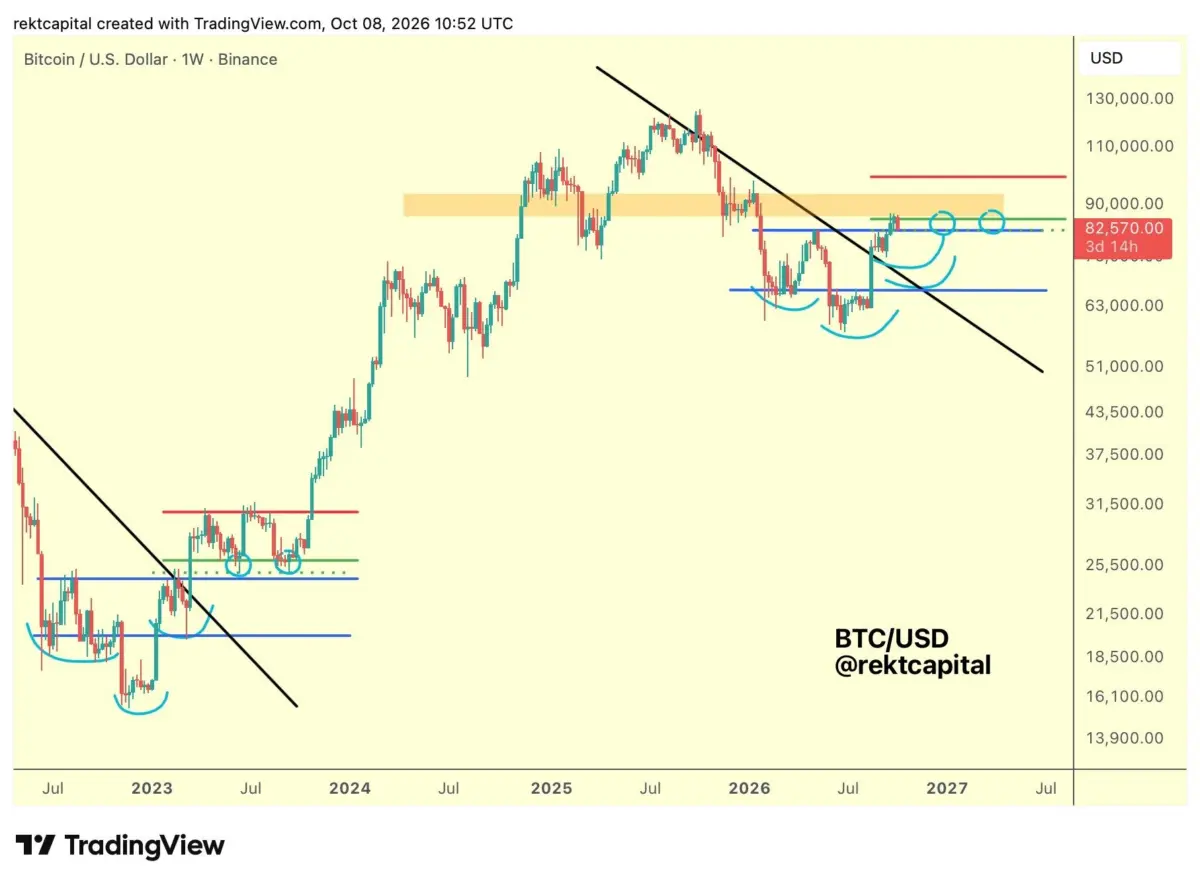
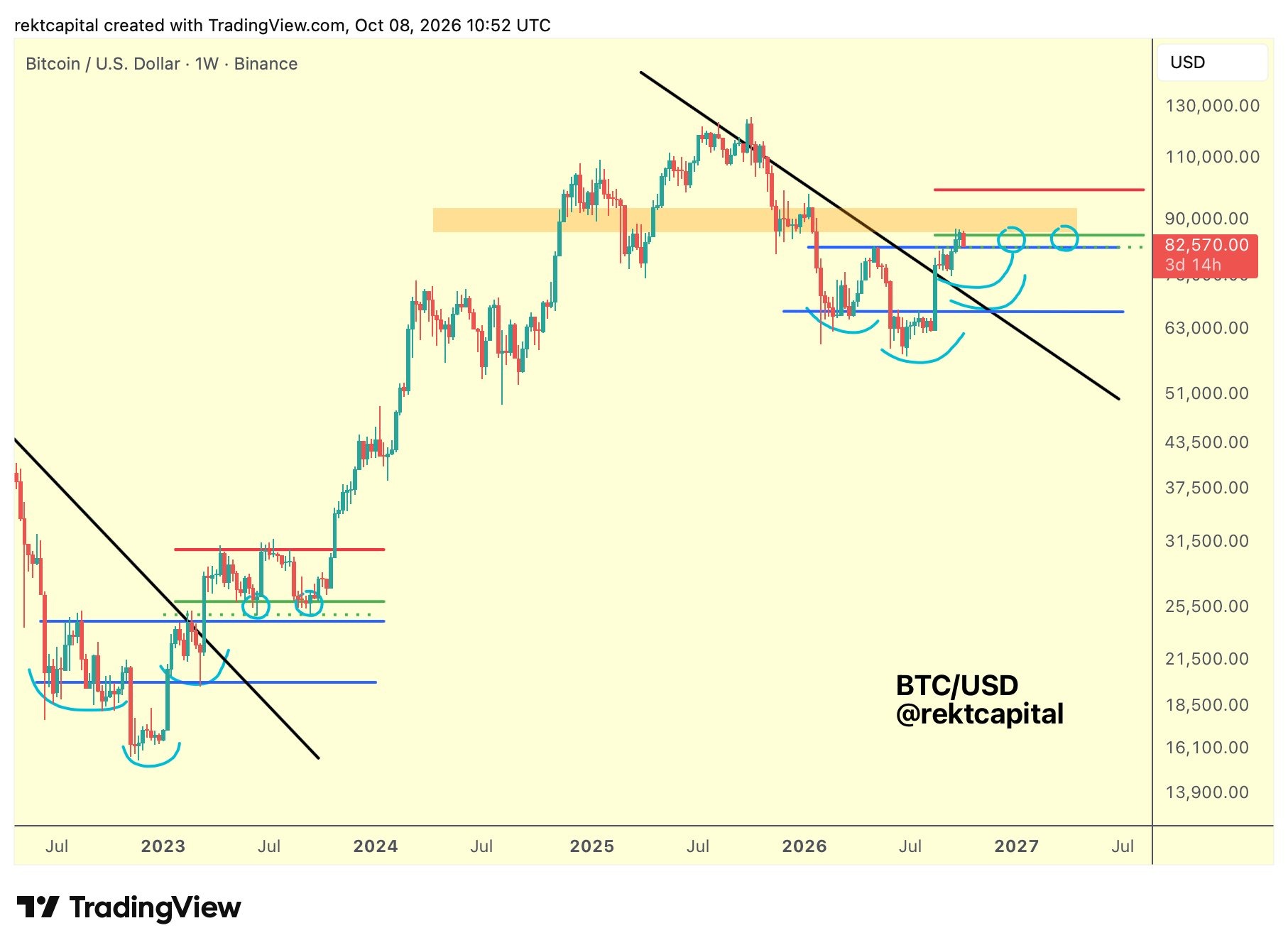
Amid this compounding pressure, the benchmark cryptocurrency, Bitcoin, suffered a steep descent, touching a local low of $80,350 on the Bitstamp exchange. This marked Bitcoin’s weakest price performance since September 18. Following the sharp flush, the asset managed to orchestrate a modest rebound, trading back up to approximately $82,500 by Friday. This particular price zone has served as a critical battleground for market participants. Ever since Bitcoin initiated its broader macroeconomic uptrend in early July, the $82,500 level has acted as a primary anchor, functioning as the crucial breakout point for a prominent inverse head-and-shoulders reversal pattern. For the broader bullish market thesis to remain intact, technical analysts emphasize that Bitcoin must successfully defend this threshold and establish it as firm support to confirm a sustained reversal.
Prominent independent trader and market analyst Rekt Capital, who has been closely monitoring the evolution of this macro reversal pattern and drawing comparisons to Bitcoin’s resilient recovery phase back in 2023, pointed to the impending weekly candle close as a definitive indicator for market direction.
Sharing his insights with followers on social media platform X, Rekt Capital noted that Bitcoin was actively struggling to maintain its footing above the crucial threshold. He stated that a weekly close below $82,500 would officially invalidate the retest, effectively turning the former support level into robust overhead resistance and pulling Bitcoin back into its established macro accumulation range.
Short-Term Holders Send 55,600 BTC to Exchanges at a Loss
Beneath the derivative market liquidations, underlying onchain metrics painted a vivid picture of escalating stress and capitulation among newer market participants. As spot prices slid downward, analytics platform CryptoQuant highlighted a noticeable surge in defensive behavior from short-term holders—defined broadly as blockchain entities and retail investors who have held their Bitcoin tokens for a duration of six months or less without moving them.
According to figures reported by CryptoQuant contributor Amr Taha, short-term market participants funneled a staggering 55,600 Bitcoin directly to centralized exchanges at a realized loss on Thursday alone. In onchain analytics, transactions executed at a loss indicate that the transferred coins are being deposited into exchange accounts at a lower market valuation than when they were acquired in their preceding on-chain transaction. This behavioral pattern typically signals a wave of emotional, impulse-driven selling as retail investors rush to liquidate their underwater positions out of fear that a prolonged downturn will result in even deeper losses if action is delayed.
To put the scale of Thursday’s capitulation into perspective, CryptoQuant noted that the volume of loss-driven transfers eclipsed the figures recorded on June 26, an occasion when Bitcoin slipped below the psychological $60,000 threshold for the second consecutive day. Analysts pointed out a striking contextual difference between the two events: during the June sell-off, Bitcoin was changing hands near $59,300, whereas Thursday’s panic occurred while Bitcoin was still trading comfortably above the $81,000 mark—representing a price difference exceeding 36%. This suggests that the psychological pain point and tolerance for drawdowns among newer cohorts can manifest aggressively even at elevated price levels following a prolonged period of consolidation or growth.
Furthermore, industry observers noted that simply depositing coins onto an exchange does not automatically mean that every single satoshi was instantly dumped onto the order books. Nevertheless, the heavy influx of distressed supply highlights a classic market cleansing dynamic. Historically speaking, aggressive waves of loss-driven selling executed by short-term participants frequently coincide with local capitulation events. By shaking out weaker hands and absorbing excess leverage, these turbulent phases often lay the necessary groundwork for market exhaustion, potentially paving the way for a subsequent price recovery once selling pressure dissipates.