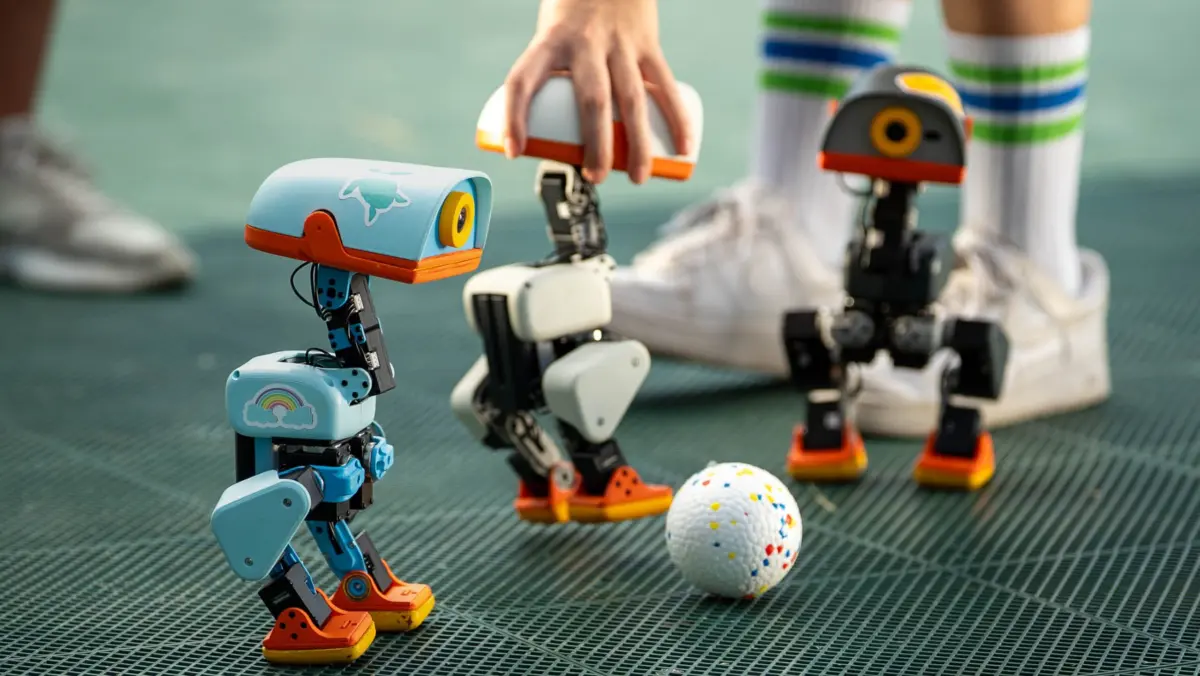
The intersection of robotics, artificial intelligence, and pop culture produced an unexpected viral phenomenon this week, sending tech enthusiasts and holiday shoppers into a frenzy. During his keynote address at Nvidia’s GTC Berlin conference, Nvidia CEO Jensen Huang took the stage alongside an unexpected supporting cast: a lively flock of waddling Microducks.
The small, highly expressive robots immediately captured the attention of both the live audience and millions of online viewers. Stomping their mechanical feet, emitting charming, miniature R2-D2-style audio cues, executing dramatic "play-dead" routines for a pretend nap, and even performing nimble somersaults upon voice command, the pocket-sized automatons proved to be an instant sensation. Their undeniable charm triggered an immediate commercial response. According to Clem Delangue of Hugging Face, preorders for the Microducks skyrocketed past the 20,000-unit mark within a single day following the keynote presentation.
With deliveries anticipated just in time for the Christmas holiday, these open-source robots are rapidly positioning themselves as the potential must-have toy of the season. Industry observers suggest their appeal extends far beyond traditional holiday toy markets. Promotional materials and early demonstrations show adults interacting with and enjoying the devices just as enthusiastically as children, leading forecasters to predict that the Microducks could ultimately secure a spot among the best-selling consumer robots of the year.
The Microducks are developed by Pollen Robotics, a prominent robotics firm acquired by Hugging Face in 2025. Following Nvidia’s high-profile acquisition of Hugging Face in September of this year, the devices now firmly reside within the broader Nvidia corporate ecosystem. This release represents the second major robotics offering from Hugging Face, following the launch of the similarly diminutive and well-received Reachy Mini.

The underlying capabilities of the Microducks showcase the sophisticated synergy between modern machine learning pipelines and consumer hardware. The robots were trained extensively using Nvidia’s advanced technology stack. Through simulated environments, the automated ducks learned foundational movement behaviors—such as walking, standing, and sitting—which come pre-installed out of the box. However, reflecting their open-source roots, Pollen Robotics has emphasized that owners will not be limited to standard factory behaviors. Users can train their Microducks to perform entirely new tricks and share these custom routines back with a collaborative global community of developers and hobbyists.
The viral moment arrived as a welcome respite for a technology sector otherwise grappling with significant reputational strain. Earlier in the week, the broader artificial intelligence industry faced widespread scrutiny and a severe public relations challenge following a series of high-profile cyberattacks in which AI systems were heavily implicated. While ongoing debates regarding the broader societal risks and potential vulnerabilities associated with rapid AI deployment continue to dominate industry headlines, the GTC Berlin demonstration provided a stark reminder of the technology’s capacity for lighthearted engagement and whimsical innovation.
As preorders continue to climb and holiday shipping windows approach, the Microducks stand as a unique cultural crossover, blending cutting-edge simulation training, open-source community collaboration, and viral entertainment. For many observers watching the keynote footage, the line between high-tech engineering and irresistible novelty proved remarkably easy to cross.