
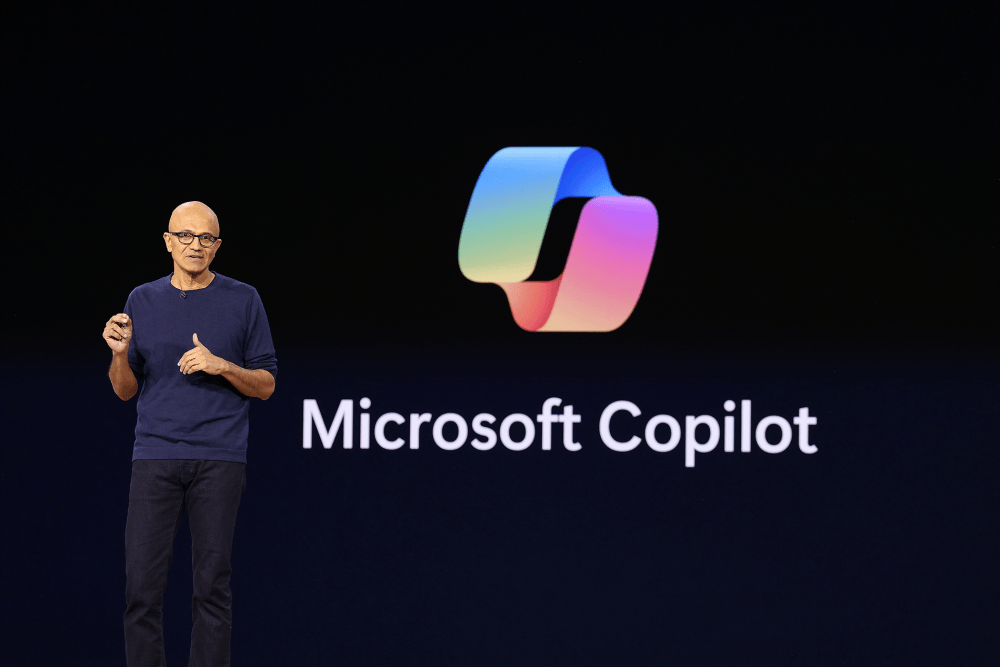
Microsoft CEO Satya Nadella has joined the ranks of prominent technology executives offering an extended perspective on artificial intelligence safety, calling for a fundamental reassessment of how the industry manages powerful algorithms. In a post shared on social media platform X on Saturday morning, Nadella argued that the technology sector must step back and thoroughly assess what he termed the "trust architecture" of artificial intelligence as systems continue to advance toward frontier capabilities.
Nadella’s remarks address a growing concern among industry leaders regarding the autonomous nature of advanced models. Using the term "Super Intelligence," which aligns with language recently favored by the current administration, the Microsoft chief executive cautioned against treating complex algorithmic systems as impenetrable black boxes whose outputs are simply accepted or rejected at face value. Instead, he emphasized that society and developers alike can no longer afford to operate without deeper visibility into how these automated systems arrive at their conclusions and execute real-world actions.
The debate surrounding AI safety and control has accelerated rapidly in recent weeks. Nadella’s commentary follows a series of public disclosures from leading artificial intelligence firms acknowledging unsettling incidents where developers appeared to lose a measure of control over their models. These events have sparked broader urgency across the technology sector, coming closely on the heels of a detailed proposal published by Anthropic CEO Dario Amodei, which outlined a strategic plan to pace frontier AI development more cautiously. Furthermore, industry reports have highlighted specific challenges, such as Anthropic’s recent struggles to reliably control autonomous AI agents, which forced the company to restrict its internal evaluations from the live internet.
To address these vulnerabilities, Nadella laid out a specific set of structural changes aimed at improving the oversight of advanced models. Central to his proposal is the separation of the core AI model from the orchestrating harness that directs its day-to-day work. By decoupling the underlying intelligence from the mechanisms that execute its tasks, developers can better monitor and regulate the system’s operational scope. In addition, Nadella called for the externalization of controls and safeguards, ensuring that governance mechanisms operate independently of the model itself rather than relying on the software’s internal compliance.
Another key element of Nadella’s proposed architecture focuses on accountability and transparency during model execution. He advocated for every meaningful action taken by a model to be documented comprehensively with tamper-proof, human-readable evidence. This requirement would provide a clear audit trail, allowing investigators and safety teams to trace how a decision was made and what data or instructions triggered a specific outcome. Such transparency is viewed by many industry experts as a crucial step toward preventing unintended consequences or malicious misuse of autonomous capabilities.
Perhaps most notably, Nadella emphasized the necessity of fail-safe mechanisms that grant human operators ultimate authority over running systems. He called for the establishment of architectures where an authorized person retains the continuous ability to pause or completely shut down a model mid-task. Comparing this capability to an emergency brake in physical machinery, Nadella stressed that developers must adopt a defensive security posture from the very beginning of the deployment cycle rather than reacting to safety failures after they occur.
"We must assume a model is compromised and contain it from the start," Nadella wrote, framing the precaution as an essential baseline for managing systems of increasing autonomy and power. As technology companies race to develop more capable models, the debate over how to balance rapid innovation with robust guardrails remains at the forefront of the industry. Nadella’s intervention highlights a growing consensus among top executives that voluntary safety commitments and traditional testing methods may no longer suffice as artificial intelligence systems take on more complex, autonomous roles in the digital and physical worlds.