
Running an independent blockchain has long carried a distinct and powerful promise: absolute control. For years, developers launching a standalone Layer 1 architecture envisioned themselves as masters of their own digital destiny. By setting their own consensus rules, maintaining dedicated validator networks, and building custom infrastructure tailored precisely to their users, these projects could operate entirely divorced from any external network.
Yet, as the crypto industry matures, a harsh economic reality is setting in: with great power comes great responsibility, alongside staggering operational expenses. Maintaining a secure standalone blockchain requires a robust ecosystem of active users, committed developers, and deep economic activity capable of footing the bill for the infrastructure that protects the network. For a growing number of smaller and mid-tier networks, keeping an entire independent ecosystem afloat no longer makes financial sense.
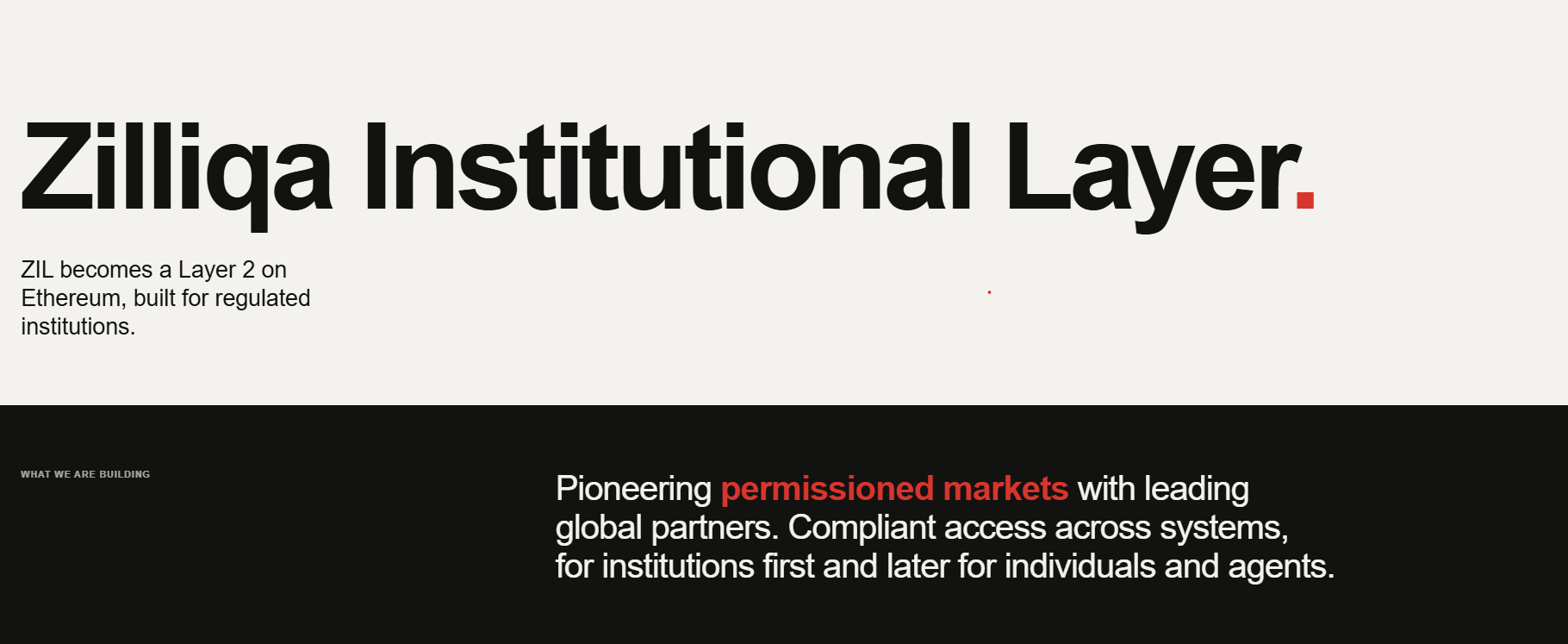
Zilliqa has emerged as the latest high-profile project to confront this reality head-on. Last week, the network announced its formal plans to abandon its long-standing Layer 1 architecture and transition into an Ethereum-based Layer 2 network. The frank admissions from the team underscored the brutal conditions facing alternative Layer 1 chains in the current market environment.
"We know it’s not great. For nine years we built and ran our own Layer 1. It hasn’t worked," the project stated in a public announcement. Usage figures never reached the critical mass required by a standalone chain. Furthermore, funding and liquidity for independent Layer 1 networks have largely dried up, while recent high-profile exploits have laid bare just how capital-intensive it is to secure a chain in isolation. The data, as the team noted, is permanently recorded on-chain for everyone to evaluate.
Zilliqa is far from an isolated casualty of these shifting market dynamics. The Gnosis ecosystem, which has historically maintained a close proximity to Ethereum, is actively working to transition Gnosis Chain into an integrated Ethereum-based network via its ambitious Ethereum Economic Zone initiative. Through its RollupX test network, Gnosis intends to demonstrate how participating chains can effectively share Ethereum settlement layers and achieve synchronous composability as native rollups.
Meanwhile, the gaming-focused Ronin blockchain completed its own strategic migration back to Ethereum as a Layer 2 network. As interest and venture capital funding continue to drain away from alternative Layer 1 networks, industry observers are left wondering whether the broader blockchain landscape is witnessing the beginning of a massive consolidation wave centered squarely within the Ethereum ecosystem.
The Cost of Going It Alone
Operating an independent Layer 1 blockchain demands continuous funding across multiple core infrastructure layers. These networks generally must maintain execution engines, consensus mechanisms, data availability protocols, and settlement layers simultaneously. Beyond the pure technical overhead, they are also forced to continually fund the lucrative token incentives required to attract and retain the stakers who secure their networks.
According to industry analysts, the entire viability of a standalone architecture ultimately boils down to network profitability. Max Shannon, a senior research analyst at Bitwise, notes that Layer 2 solutions present a dramatically more attractive financial and operational proposition for developers. Because Layer 2 networks only need to maintain execution environments—and do not necessarily require their own native tokens to bootstrap security—they bypass many of the crippling capital requirements plaguing smaller Layer 1s.
Market data illustrates a stark chasm in financial sustainability across the blockchain landscape. The top ten largest projects generate immense revenues that make their standalone models viable. For instance, the Layer 2 networks operated by mainstream financial giants Coinbase and Robinhood generated $48 million and $52 million in fees respectively over a recent 365-day period, boasting profit margins exceeding 90%. Furthermore, the next eight largest chains each pull in more than $1 million annually.
However, once you move past the top ten, the financial picture darkens rapidly. From the 11th spot onward, annual fee generation across networks collectively plummets to less than $1 million. Consequently, a network may possess genuinely ambitious technology and a fiercely dedicated community, but those assets alone cannot pay mounting infrastructure bills.
While Ethereum is frequently criticized by competitors for leaking a significant portion of its fee revenue to downstream Layer 2s, that exact economic architecture is precisely what makes building within its ecosystem so attractive to cash-conscious projects. Even so, simply launching as an Ethereum Layer 2 is no silver bullet for instant profitability. Analysts point to networks like Optimism, Katana, and Linea as prime examples where operational expenses continue to outstrip fee revenues, while heavily hyped projects like Blast have already been forced to shut down entirely.
Ethereum as a Liquidity Black Hole
Gnosis has targeted the spring of 2027 to officially complete its complex transition. The move will see the network phase out its independent validator-based consensus model in favor of native Ethereum settlement. Martin Köppelmann, co-founder of Gnosis, reflected on the evolution, noting that he gave a presentation two years ago outlining "native rollups" that could genuinely extend Ethereum rather than operating as isolated silos. He added that the upcoming RollupX architecture goes far beyond what he initially imagined possible.
The core objective of Gnosis’s Ethereum Economic Zone initiative is to allow separate Ethereum-based networks to interact synchronously. Under this model, a smart contract operating on one network can directly call another network and instantly utilize its response within the exact same transaction block, entirely bypassing the traditional, sluggish bridge-and-wait process that has historically plagued multi-chain environments.
This technical prospect has generated considerable excitement among prominent Ethereum supporters. Crypto commentators have described the emerging economic zone as a potential "black hole for liquidity," arguing that it could empower participating networks to tap directly into Ethereum’s massive total value locked while simultaneously cementing Ethereum’s undisputed dominance as the industry’s premier liquidity hub. The compounding network effects and heightened interoperability raise the distinct possibility that more disparate chains will be inevitably pulled into Ethereum’s gravitational orbit.
Beyond the Cost Savings
The migration toward Ethereum-centric architectures involves more than just immediate operating cost savings. By integrating with an established ecosystem, projects can instantly plug into a massive, pre-existing network of applications and developers rather than expending monumental capital to build those network effects completely from scratch.

Alex Gluchowski, co-founder and chief executive of Matter Labs—the primary development team behind the Ethereum Layer 2 network ZKsync—anticipates that a growing number of Layer 1 teams will ultimately choose to maintain their own customized execution chains while offloading settlement duties to Ethereum. Running an independent Layer 1, Gluchowski notes, forces a team to simultaneously split its focus between maintaining bulletproof network security and building compelling applications that people actually want to use.
Sharing Ethereum’s robust security infrastructure affords development teams the breathing room to focus squarely on user experience and product-market fit. Gluchowski contends that very few legitimate user requirements genuinely demand an entirely independent Layer 1 rather than a specialized Ethereum-based chain. Crucially, he emphasizes that sovereignty and Ethereum integration are not mutually exclusive concepts; chains can comfortably retain complete control over their internal operational rules while leveraging Ethereum for shared, trust-minimized settlement.
Furthermore, applications handling highly sensitive financial and enterprise information often require private operational environments under strict internal control. Gluchowski points out that shared settlement layers do not inherently require projects to expose confidential transaction data to the public.
Nevertheless, significant technical hurdles remain. The most pressing obstacle facing the Layer 2 landscape today is that individual networks continue to operate largely in isolation from one another and from Ethereum itself. While users can technically move assets between various rollups, the process is far from seamless, and cross-ecosystem interoperability remains poor. Network fragmentation is already a severe reality, and bridging the connectivity gap between private execution environments and public liquidity pools will become increasingly critical as privacy-focused applications scale.
Despite the powerful momentum toward ecosystem consolidation, market analysts urge caution against oversimplifying the industry into a binary narrative where every chain inevitably bows to Ethereum. While major institutional players like Coinbase and Robinhood have embraced Ethereum-based Layer 2 networks, other prominent entities continue to forge independent paths. Purpose-built Layer 1 architectures—such as Circle’s Arc, Stripe’s Tempo, and Hyperliquid’s dedicated perpetual futures blockchain—demonstrate that specialized financial networks still see unique value in maintaining total independence. Ultimately, the broader debate regarding the supremacy of Layer 1 versus Layer 2 architectures remains far from settled.