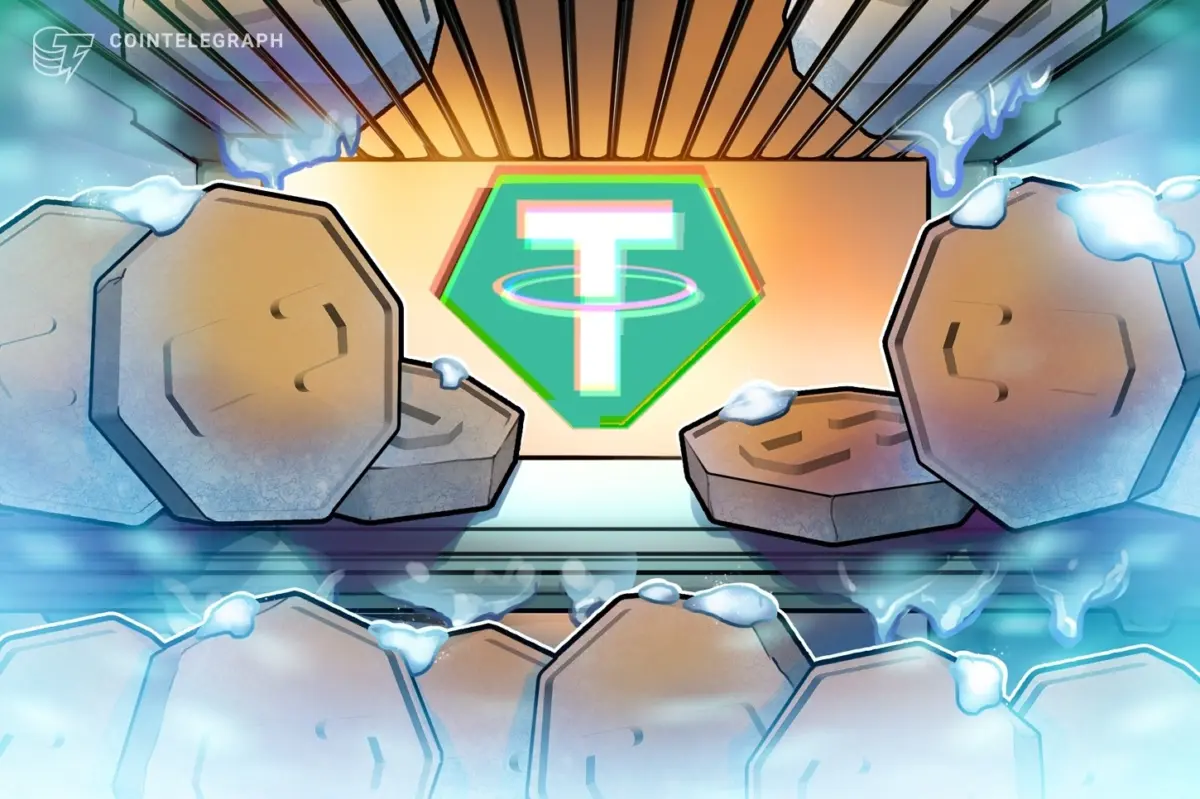
Decentralized cross-chain liquidity network THORChain found itself at the center of an unexpected administrative storm on Friday when stablecoin issuer Tether abruptly blacklisted several of the network’s key vault addresses. The sudden action temporarily froze approximately 1.45 million USDt (USDT) in user and protocol funds across four distinct wallets, halting normal trading operations and triggering urgent requests for clarification from the network’s leadership.
Chad Barraford, the technical co-founder of THORChain, took to the social media platform X to publicly address the incident as it unfolded. According to Barraford, Tether blacklisted the THORChain vault addresses without providing any prior warning or explanation to the development team. The unexpected freeze immediately disrupted the flow of assets through the decentralized liquidity protocol, leaving developers and liquidity providers scrambling to understand the motivation behind the sudden regulatory or administrative maneuver by the centralized stablecoin issuer.
In his initial posts, Barraford expressed profound confusion over the move, noting that the THORChain core team had maintained no prior communications with Tether regarding the specific addresses that were targeted. "We don’t know why this choice was made and have had no comms with USDT before this action and are actively reaching out to have a conversation," Barraford wrote on X prior to the addresses being restored. He further emphasized the protocol’s bewilderment, adding, "We hope that this was made in error / misunderstanding."
The sudden lockdown sent ripples through the decentralized finance (DeFi) community, where automated protocols rely heavily on uninterrupted token transfers and liquidity pools to maintain algorithmic efficiency. Because Tether maintains the technical capability to freeze individual wallet addresses associated with its stablecoin across various blockchain networks, issuers of centralized assets wield significant power over decentralized applications that integrate fiat-pegged tokens. When a major issuer exercises this blacklisting function without public justification, it often raises acute concerns within the broader crypto ecosystem regarding centralization risks, censorship resistance, and the vulnerability of multi-chain liquidity architecture.
Fortunately for the THORChain network and its users, the disruption proved to be short-lived. Just two hours after the initial blacklisting became public knowledge, Barraford returned to social media to provide an update, announcing that Tether had reversed the decision. All four of the affected wallet addresses were unfrozen, allowing the network to resume normal trading activities and restore full access to the 1.45 million USDT held within the vaults.
Despite the swift resolution, the incident left many questions unanswered regarding what triggered the freeze in the first place and why the restrictions were lifted just as quickly as they were imposed. Journalists and industry observers immediately sought comment on the matter, but neither Tether nor THORChain representatives provided an immediate response to inquiries from media outlets attempting to uncover the background of the sudden freeze and unfreeze cycle.
The unexpected THORChain episode occurs against a broader backdrop of increasing legal and regulatory scrutiny facing Tether, the world’s largest stablecoin issuer, regarding its wallet-freezing practices. Stablecoin issuers are routinely pressured by law enforcement agencies and international regulatory bodies to freeze funds suspected of being linked to illicit activities, hacks, scams, or international financial crimes. However, the lack of transparency surrounding many of these administrative actions has increasingly drawn ire from digital asset firms, legal advocates, and affected users.
Earlier in the same week, cross-border payments platform Conduit Technology filed a formal lawsuit against Tether. According to that legal complaint, Tether froze $2.76 million worth of USDt in a specific corporate wallet tied to an ongoing investigation originally launched by Brazilian authorities in 2024. Conduit Technology’s legal action highlights the growing friction between corporate stablecoin issuers enforcing compliance measures and fintech firms or corporate entities caught in the crosshairs of international asset freezes.
Similarly, legal tensions involving Tether expanded into international courts earlier in August, when two Thai nationals filed a lawsuit against the stablecoin issuer. The plaintiffs in that case alleged that Tether wrongfully froze $42.4 million in USDt following what was described as an "informal request" originating from United States Homeland Security Investigations in connection with an alleged "pig butchering" financial scam case. These mounting legal challenges underscore a complex landscape where centralized private companies find themselves acting as de facto financial police, often balancing competing demands from global law enforcement agencies against the operational needs and property rights of digital asset holders and corporate clients.
Beyond direct legal actions and asset freezes, Tether’s extensive web of financial and institutional relationships continues to attract high-level political attention. In related developments, financial institution Cantor Fitzgerald has faced mounting inquiries from United States Senate Democrats concerning its extensive business ties to Tether, reflecting the growing systemic importance of stablecoins within both traditional financial markets and the digital asset economy.
As the digital asset industry continues to mature, incidents like the brief blacklisting of THORChain’s USDt vaults serve as a stark reminder of the delicate and sometimes precarious intersection between centralized stablecoin infrastructure and decentralized financial protocols. While THORChain’s vaults have resumed normal operations and the 1.45 million USDT is once again fully accessible to the network, the event leaves lingering questions regarding the communication channels between centralized token issuers and decentralized platforms, as well as the standards governing administrative freezes across the wider blockchain landscape.