A sophisticated, state-level cyber-espionage actor has been identified infiltrating mobile network infrastructure across Asia, utilizing compromised operators to intercept calls and text messages with a distinct focus on subscribers in Taiwan. Identified by cybersecurity firm Enea and tracked since the beginning of 2025, the threat actor—dubbed “SilentAir”—has demonstrated a high degree of technical proficiency in manipulating global mobile signaling protocols to conduct targeted surveillance.
The revelation of SilentAir’s activities comes as part of a broader analysis of evolving threats to the telecommunications sector. Enea, which provides specialized software and security solutions for global telecom networks, published its findings on November 11. The report not only details the tactics of SilentAir but also provides fresh insights into “Liminal Panda,” another notorious, China-linked group known for its persistent campaigns against mobile operators. While Enea has observed potential behavioral overlaps between the two entities, the firm maintains that a formal, proven connection between SilentAir and Liminal Panda remains elusive.
SilentAir’s Tactical Focus on Taiwanese Subscribers
Enea’s investigation characterizes SilentAir as a highly confident state-level actor. The group’s operations are defined by the strategic exploitation of Signaling System No. 7 (SS7) and Diameter protocols—the fundamental frameworks that allow mobile networks to communicate with one another to route calls and texts globally. By hijacking equipment within operators across at least six Asian countries, SilentAir has managed to project its reach into a dozen other nations and territories, effectively turning the infrastructure of compromised carriers into a launchpad for espionage.
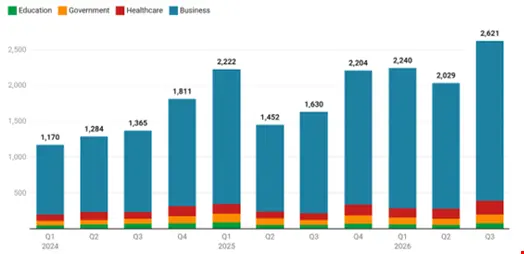
The group’s operational tempo is marked by calculated inconsistency. Attacks occur in sporadic waves, ranging from the targeting of a small handful of individuals to mass campaigns affecting several thousand subscribers in a single month. These bursts of activity are separated by months of relative silence, a hallmark of state-sponsored actors attempting to evade detection by security operations centers.
Data analysis by Enea reveals that interception is a primary objective for SilentAir, accounting for 18.30% of its total signaling activity. This figure stands in stark contrast to the typical behavior of commercial surveillance companies, which generally utilize similar protocols but for different ends, accounting for roughly 2.07% of interception activity.
A particularly concerning aspect of SilentAir’s methodology is the suspected theft of two-factor authentication (2FA) credentials. In numerous instances, researchers observed 2FA codes arriving at the target’s device moments after the interception of traffic began. Enea suggests that this sequence indicates a broader, coordinated effort to hijack secondary accounts, such as email, banking, or corporate credentials, by leveraging the compromised phone number as a gateway.
Furthermore, the actor makes heavy use of "silent SMS" messages—texts sent to devices that do not trigger a notification or visual alert on the user’s screen. These messages are primarily directed at Taiwanese users, often arriving during the late hours of the night. Enea has noted that the timing of these operations, combined with the clear geopolitical focus on Taiwan, the absence of Chinese targets, and the observable lulls in activity during Chinese holidays, points toward a China-nexus origin. However, the firm maintains a "low confidence" assessment regarding this attribution, adhering to rigorous standards of forensic evidence. Among the primary targets identified are political and government VIPs, underscoring the high-stakes nature of the espionage campaign.
Liminal Panda and the Evolution of GTPDoor
While SilentAir captures headlines for its signaling-based exploits, Enea’s report also highlights the continued evolution of Liminal Panda, a group previously linked to China-nexus operations by CrowdStrike in late 2024. Starting in early 2026, Enea’s firewall systems began identifying and blocking sophisticated command-and-control (C2) exchanges linked to Liminal Panda across multiple customer networks.
At the center of Liminal Panda’s toolkit is “GTPDoor,” a potent Unix-based backdoor. The malware is designed to camouflage its communications within the GPRS Tunneling Protocol (GTP), which is the standard protocol used to carry mobile data roaming traffic. By embedding C2 traffic inside legitimate roaming data packets, the malware effectively hides in plain sight, bypassing traditional perimeter defenses that are often configured to prioritize traffic flow over deep packet inspection of the GTP layer.
Enea reports that it has verified infections or identified strong indicators of compromise at between five and ten operators, though the firm suspects the true scope of the campaign may involve several dozen carriers across Asia, Africa, and Latin America.
The threat is further complicated by a new iteration of GTPDoor that utilizes GTP-U, the portion of the protocol specifically designed to carry user data. Unlike the control-plane traffic that GTPDoor previously targeted, user-plane traffic is significantly heavier in volume, making it much harder to monitor. Furthermore, Enea notes that while the control-side of the protocol is increasingly scrutinized, the user-plane component often lacks the same level of granular security oversight. Crucially, the user-plane architecture remains consistent even as networks transition to 5G, meaning this new variant of the backdoor is not limited by the older 4G infrastructure, serving as a versatile and persistent fallback mechanism for the attackers.
The Challenge of Telecom Security
The persistence of groups like SilentAir and Liminal Panda highlights a systemic vulnerability in the global telecommunications architecture. The reliance on legacy signaling protocols like SS7, which were designed in an era where network trust was assumed, remains a critical weakness that sophisticated actors continue to weaponize. Even with the introduction of more modern protocols and 5G standards, the transitionary nature of mobile networks often leaves "seams" in security where attackers can operate.
Enea has confirmed that it has been working closely with affected customers to remediate the compromises caused by Liminal Panda and has issued alerts to the operators identified as sources for SilentAir’s signaling attacks. While these interventions have successfully disrupted the immediate operations of both groups, the underlying structural issues remain.
The firm’s analysis serves as a stark warning to the telecommunications industry: while individual threats can be cleared, the environment remains highly permissive for state-sponsored actors. The combination of stolen credentials, the weaponization of roaming protocols, and the ability to operate across international borders creates an asymmetrical conflict where defenders must be perfect at all times, while attackers only need to succeed once to gain a foothold. For now, the activity of these actors has been forced into a defensive posture, but Enea anticipates that, given the strategic value of the information held by mobile operators, the conditions are set for these groups—or new, similar actors—to resurface as they adapt to the current security countermeasures.