A critical security vulnerability identified within OpenCode, the widely adopted open-source agentic AI coding platform, has been quietly addressed by its developers. However, the manner in which the patch was deployed—without a formal Common Vulnerabilities and Exposures (CVE) entry or a public security advisory—has left a significant portion of the platform’s massive user base potentially exposed and unaware of the danger lurking in their development environments.
OpenCode has become a cornerstone tool for modern software engineering, boasting an impressive community footprint with over 218,000 stars on GitHub. By integrating agentic AI capabilities directly into the coding workflow, it has streamlined development processes for thousands of organizations. Yet, a new report published on October 19 by Pillar Security highlights a severe flaw that could have turned these powerful tools against their users.
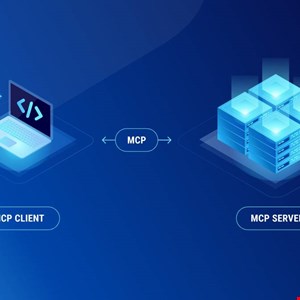
Eilon Cohen, head of security research at Pillar Security, disclosed that the vulnerability affects OpenCode versions 1.0.137 through 1.18.32. The flaw is particularly dangerous for developers working on Windows and Windows Subsystem for Linux (WSL) environments. If successfully exploited, the vulnerability allows an attacker-controlled Remote Model Context Protocol (MCP) server to execute arbitrary code on a developer’s machine. The attack is designed to trigger during the MCP OAuth authentication process, meaning the malicious code execution could occur without requiring any additional user interaction or explicit consent, effectively bypassing standard security expectations.
The Breakdown of Disclosure and Response
The timeline of the discovery and the subsequent handling of the patch have drawn criticism from the security community. Pillar Security researchers reported the vulnerability to Anomaly, the company behind OpenCode, in late August 2026. This initial disclosure was handled through the GitHub Security Advisory program and included comprehensive reproduction material, providing the developers with everything necessary to verify the exploit.
Approximately one month after the initial report, Anomaly acknowledged receipt of the findings. However, the company’s response was dismissive, suggesting that the risks posed by malicious MCP servers were "outside their threat model." Despite this initial stance, the company proceeded to release a patch in version 1.18.33 on September 28. Crucially, this update was rolled out without any accompanying public documentation, security advisory, or assigned CVE identifier.
This "silent patch" approach has raised significant alarms among security professionals. Pillar Security researchers warned that because there was no formal advisory, conventional vulnerability scanners and automated dependency management tools—which rely on public vulnerability databases—will not flag the outdated versions. As a result, countless enterprises and individual developers likely remain on vulnerable iterations of the software, oblivious to the fact that their development workstations could be compromised by an untrusted MCP connection.
The Failure of URL Validation as a Security Barrier
At the heart of the vulnerability is a technical oversight in how OpenCode handles data from MCP servers. Pillar Security assessed the flaw as having a critical severity rating, with a CVSS score of 9.8. The researchers argue that the steps taken by Anomaly in the initial patch are insufficient to provide comprehensive remediation.
The core of the issue involves the way the application processes URLs. According to the research team, attempting to rely solely on URL scheme validation—a common but insufficient defensive measure—cannot prevent the attack. A sophisticated attacker can easily embed a malicious payload within a URL that appears to be a legitimate HTTPS address, effectively bypassing filters that only look for the protocol type.
On Windows systems, the technical failure occurred because the vulnerable dependency passed these untrusted URLs directly to PowerShell without proper escaping. Because the shell was not instructed to treat the input as a literal string, it interpreted specific characters within the URL as executable commands. This is a classic case of command injection, where the input is treated as part of the instruction set rather than as data.
While version 1.18.33 of OpenCode introduced URL scheme checks, Pillar Security argues that this is merely a superficial fix. The real danger remains if the underlying dependency is not updated to handle the URL correctly. The researchers emphasize that the proper fix involves upgrading to a version of the dependency that enforces strict quoting of the URL. This ensures that even if an attacker manages to pass a malicious payload, the system will treat it as a harmless string rather than a sequence of executable commands.
The team at Pillar Security strongly advises developers and organizations to move away from the practice of passing untrusted URLs through shell commands entirely. Instead, they recommend utilizing argument-based process execution, which significantly reduces the risk of command injection by treating parameters separately from the command itself.
Distinguishing Between Security Incidents
This disclosure arrives at a precarious time for OpenCode, surfacing only days after the company confirmed a separate, high-profile security breach involving its "Console" feature. The Console, which serves as a centralized hub for teams to share access to various AI models through managed API credentials, had been compromised, leading to concerns about the exposure of sensitive developer keys.
In an interview with Infosecurity, Eilon Cohen was careful to distinguish the two incidents, noting that the RCE vulnerability reported by his team is entirely unrelated to the Console breach. He explained that the Console incident involved a legacy system situated behind a hosted key proxy, which resulted in the exposure of provider keys stored by users.
"The vulnerability we reported runs the other way," Cohen noted. "It involves a malicious remote MCP server executing code on a developer’s own machine during the OAuth handshake. It is a completely different target and a different attacker position."
Despite the technical differences, Cohen emphasized that the two incidents share a common underlying theme in the era of AI-integrated development. The core issue, he suggested, is the fundamental question of trust: "Who you let hand credentials and inputs to an AI coding tool, and what that tool does with them."
As AI agents become increasingly autonomous and integrated into the software development lifecycle, the surface area for potential attacks continues to expand. The OpenCode incidents serve as a stark reminder that as developers offload more complex tasks to AI platforms, the security of those platforms becomes synonymous with the security of the entire development ecosystem. For now, the responsibility falls on individual developers and IT security teams to manually audit their OpenCode installations, ensuring they have moved beyond the vulnerable 1.18.32 version, regardless of the lack of public alerts. Without proactive management, the convenience afforded by agentic AI tools may come at the cost of the very infrastructure they are meant to build.