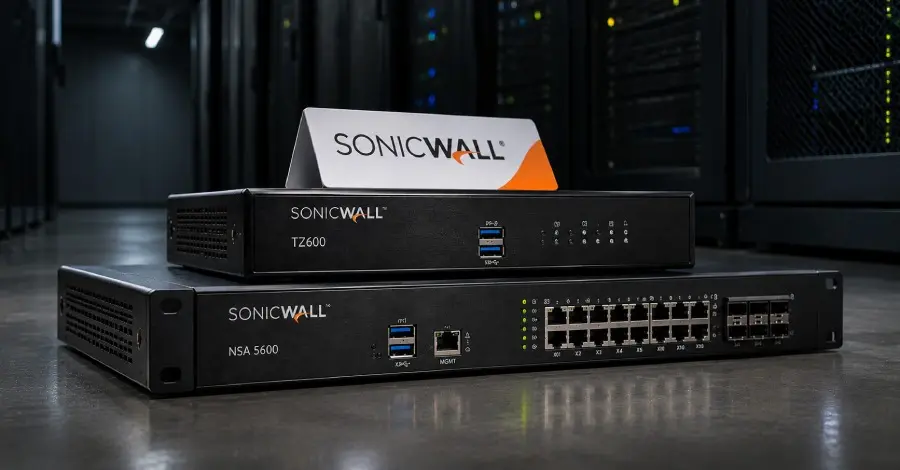
Network security provider SonicWall has issued an urgent advisory to all customers still operating Generation 6 firewalls, instructing them to retire and replace the legacy hardware immediately and to remove the devices from the internet edge. The warning comes as organizations face a rapidly escalating threat landscape, increasingly fueled by artificial intelligence and automated exploitation tools that target vulnerable perimeter hardware faster than ever before.
According to the security advisory issued by SonicWall, attackers are now heavily leveraging automation and AI to discover and compromise unsupported edge devices with unprecedented speed. The company noted that any internet-facing Gen 6 firewall currently left in service should be treated as a high-risk exposure. Organizations relying on these older systems running SonicOS 6.x are being strongly urged to migrate toward supported Gen 8 firewalls operating on SonicOS 8 to maintain adequate defense perimeters.
In recent years, the cybersecurity community has observed a sharp increase in threat actors targeting network edge devices as a primary launch point for initial access. This trend is exacerbated by a collapsing window between vulnerability disclosure and active exploitation. Findings from Google Mandiant’s M-Trends report, published in March 2026, highlight a startling evolution in the speed of cyber attacks. The report reveals that the mean time to exploit vulnerabilities has effectively turned negative, reaching an estimated minus seven days. This metric indicates that malicious exploitation frequently begins before a formal patch is even made available to the public, marking a dramatic shift from historical benchmarks where defenders enjoyed weeks or months to secure their systems.
Google’s threat intelligence analysts emphasize that this accelerated timeline is closely tied to the growing interest cybercriminals and state-sponsored groups show toward security appliances and core networking infrastructure. Because these assets sit directly in the path of data ingress and egress points, they afford attackers significant visibility and sweeping administrative permissions once compromised. This operational leverage makes perimeter hardware an extremely lucrative target for malicious actors seeking a foothold inside corporate networks.

Complementing these findings, the Cisco Talos 2025 Year in Review report underscores the heavy concentration of risk residing in edge architecture. Talos researchers discovered that nearly a quarter of all Common Vulnerabilities and Exposures identified during the year directly impacted network devices, including virtual private network appliances, next-generation firewalls, load balancers, and core routers.
Because these systems reside on the absolute perimeter of enterprise environments, a successful compromise often grants threat actors direct, unhindered access to critical internal networks. This reality aligns closely with real-world trends tracked within the Cybersecurity and Infrastructure Security Agency Known Exploited Vulnerabilities catalog. Historically, exploitation campaigns consistently favor edge devices because they face the public internet, frequently suffer from delayed patching cycles, and provide immediate operational leverage upon infiltration.
With Generation 6 units officially reaching end-of-life status and no longer receiving active security updates or patches—even for critical vulnerabilities—remaining deployment sites face severe, unmitigated exposure. SonicWall warns that the security risk to an unsupported firewall compounds significantly with each passing day it remains online.
Cybersecurity experts point out that a single successful breach at the perimeter can compromise an entire organization. A compromised firewall grants attackers an ideal springboard for credential theft, lateral movement across internal segments, and the subsequent deployment of ransomware or other destructive payloads. As threat actors continue refining their AI-driven reconnaissance and exploitation capabilities, the window for organizations to phase out legacy network infrastructure and adopt modern, supported hardware continues to close.