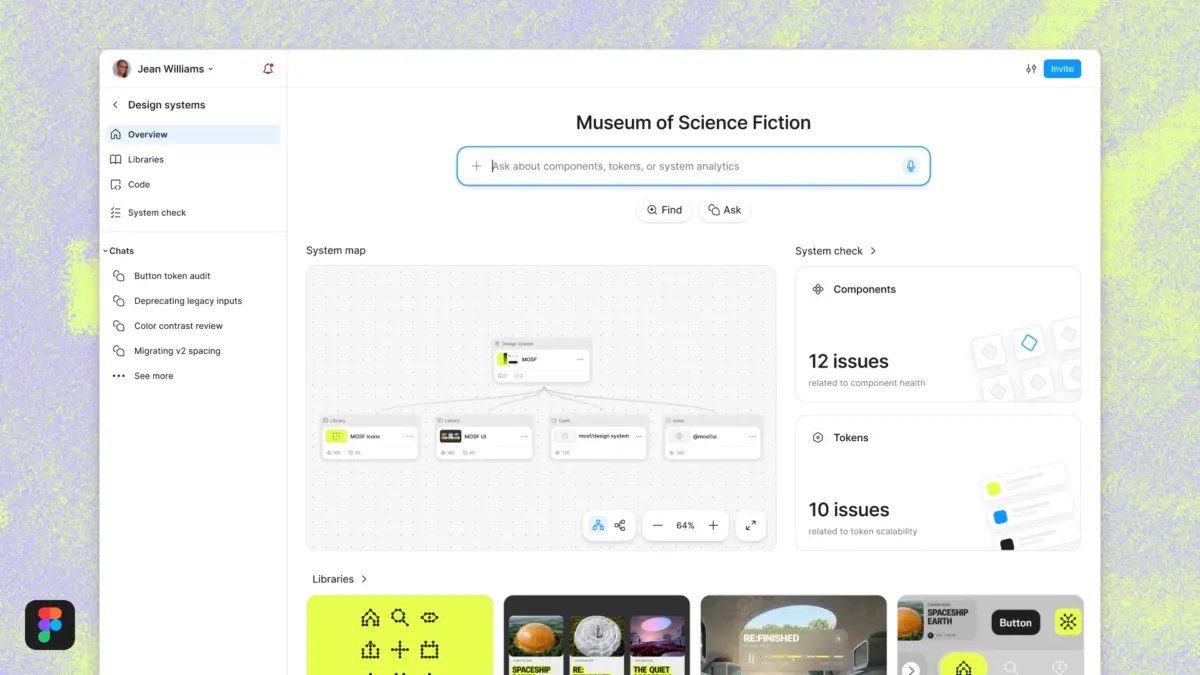
Design platform Figma made a series of major product announcements aimed at tightening the gap between design and code during its inaugural Config event in India. The company introduced a new Markdown-based editor designed to help organizations define their brand guidelines, manage centralized design and code libraries, and integrate seamlessly with the Payload headless content management system. By establishing these structured guidelines, Figma intends to give both its native tools and third-party AI agents a clear framework to follow, minimizing the unpredictable nature of generative AI and ensuring brand consistency during the creative process.
The centerpiece of these new offerings is a feature called Figma Specs. Operating as a streamlined Markdown editor, Specs allows users to articulate and document a company’s design language in a straightforward format. This documentation serves as a centralized source of truth that both human teams and AI agents can reference while designing directly within Figma. Specs files are versatile, capable of existing as standalone documents in a workspace or co-existing directly alongside elements on the canvas.
Beyond functioning as a traditional text editor, Figma Specs allows users to dynamically reference other elements within the platform. Creators can link items directly from the canvas, embed FigJam diagrams, incorporate code layers, and connect various design assets. This centralized approach enables teams to bring rich context into their workspaces, including comprehensive design systems, associated code libraries, and governance guidelines. By feeding this structured context to AI agents, organizations can steer automated tools to adhere strictly to established design rules.
The introduction of these guardrails coincides with Figma’s broader rollout of its on-canvas AI agent to a wider user base over the past week. Because generative AI systems inherently possess a non-deterministic nature, Figma is positioning Specs and related management tools as critical solutions to guide artificial intelligence toward more predictable, brand-compliant outcomes.

In tandem with the Markdown editor, Figma expanded the availability of its code layers feature, moving it from a private beta introduced in June into a public beta. Code layers bring actual programming elements directly into canvas designs, facilitating the creation of highly interactive prototypes. With this public beta, a broader audience of users can test the functionality, prompting the platform’s AI agent to convert a static design into functional code or modify existing code snippets to iterate rapidly on product prototypes.
Reflecting on the evolving relationship between writing code and designing software, Figma’s chief design officer, Loredana Crisan, highlighted how generative technology has transformed engineering workflows.
"We see Figma as the place where software teams come to decide what they build and ship. And so for that, I think one of the key things to keep in mind about what AI has changed and what it made available is the ability to build," Crisan told TechCrunch. "There are 17-times more lines of code being produced today than in the past. But when you’re looking at releases, only 1.3-times more releases. A lot of that code actually is not necessarily built to ship, but really built to discover what the product is. It’s built to design."
To further support developer and designer ecosystems, Figma announced that its Model Context Protocol (MCP) now supports over 20 new tools. Among the newly integrated services are Open Code, Dia, Grok Bot, and Sarvam, an emerging AI startup based in India.

The company is also deepening the integration of Payload, an open-source headless CMS that Figma acquired last year. Payload is now being integrated into Figma Make, a product geared toward generating dynamic websites and managing underlying content directly from the design environment. According to the company, adoption of Payload has surged, with downloads increasing sixfold over the past twelve months.
Figma’s choice of India for its first Config event highlights the country’s rising strategic importance to the company. Late last year, Figma established its first physical office in India, housing sales, partnerships, go-to-market strategies, and product support operations. The company reports that India represents its largest user market outside of the United States, with the platform currently utilized by 40% of the top 100 companies listed on the Bombay Stock Exchange.