Ravie Lakshmanan
November 17, 2026
Vulnerability / Endpoint Security
IT management and software provider N-able has rolled out a critical security update to address a sweeping array of serious vulnerabilities impacting its N-central platform. Designated as N-central 2026.4 Hotfix 3, the new software patch introduces essential security enhancements designed to harden the Remote Monitoring and Management (RMM) and Unified Endpoint Management (UEM) platform against escalating threats.

The emergency release follows a chaotic period for the company and its user base, which has seen sudden service disruptions, restricted platform features, and active exploitation in the wild. According to official release notes from N-able, Hotfix 3 builds directly upon the defensive measures previously delivered in Hotfix 2. The update incorporates deep architectural and operational improvements spanning authentication mechanisms, access controls, Agent and Probe communications, file handling routines, core server components, legacy application programming interfaces, and user management systems.
Among the most significant changes introduced in Hotfix 3 is the permanent removal of configuration options for legacy APIs, effectively blocking them to eliminate a primary vector utilized in recent cyberattacks. As part of these ongoing security maneuvers, N-able noted that certain peripheral functionalities—specifically Remote Control capabilities and Microsoft Intune integrations—remained temporarily blocked as the company prioritized neutralizing active threats.
The urgency of the update cannot be overstated, particularly for organizations maintaining local infrastructure. N-able has strongly urged customers running on-premise N-central deployments to apply the server-side upgrade as rapidly as possible to safeguard their environments. For organizations utilizing Hosted N-central servers managed directly by the company, the server-side infrastructure is updated automatically without requiring direct intervention from administrators. However, a critical caveat remains applicable across all deployments regardless of how they are hosted. N-able has emphasized that every single customer, whether hosted or on-premise, must upgrade all of their deployed Agents and Probes to the latest version to achieve full protection. The company cautioned that outdated Agents and Probes that fail to undergo this necessary upgrade process remain dangerously susceptible to impersonation attacks.
The release of Hotfix 3 comes directly on the heels of emergency measures taken by N-able just days prior, when the company began forcefully restricting select N-central features and integrations following the public disclosure of a dangerous new set of vulnerabilities. These newly uncovered flaws were tracked under the descriptive monikers 4EverAble2Shell and Agent2Shell.
Under specific conditions, these security shortcomings grant malicious actors the capability to execute arbitrary code with root privileges, ultimately allowing attackers to achieve SYSTEM-level access on targeted Windows systems. The mechanics behind the successful exploitation of 4EverAble2Shell heavily hinge upon whether the legacy API mode remains enabled within the target environment. Because the newly deployed N-central version completely eliminates and strips away legacy APIs, it permanently plugs this specific attack vector for organizations running the updated software.

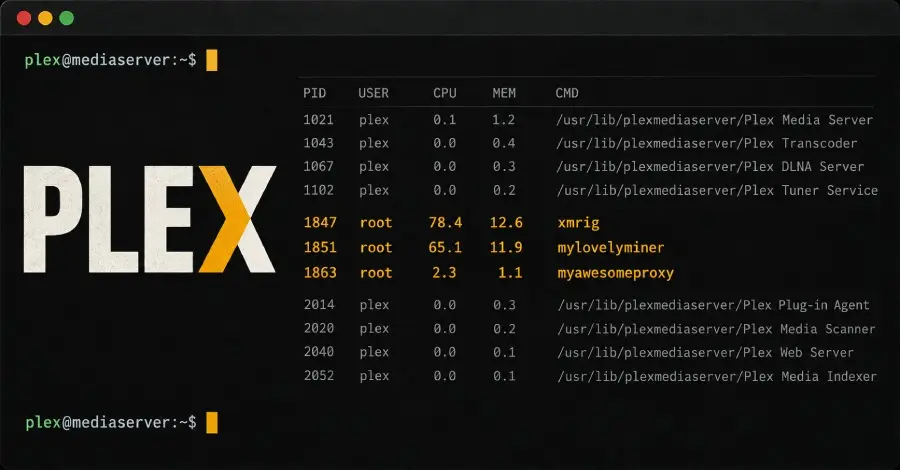
Unfortunately, the window between vulnerability disclosure and malicious exploitation proved exceptionally narrow. The 4EverAble2Shell vulnerabilities rapidly came under active exploitation by cybercriminal groups shortly after their discovery. Threat actors were observed leveraging the flaws to compromise vulnerable, unpatched servers and deploy unauthorized cryptocurrency miners, causing performance degradation and unexpected resource consumption for affected organizations.
The underlying security flaws were brought to light through the disclosure efforts of independent security researcher Sean Bales. Following his initial findings, Bales published extensive details concerning an expansive set of 24 Common Vulnerabilities and Exposures (CVEs). Emphasizing the necessity of prompt administrative action, Bales noted that the released technical details pertain strictly to patched vulnerabilities and should not be functional against environments operating on the latest patch levels.
The sweeping array of fixes contained within N-central 2026.4 Hotfix 3 represents a vital step for managed service providers and enterprise IT departments relying on the platform for daily operations. As threat actors continue to weaponize vulnerabilities in enterprise software tools, rapid patch management and the elimination of outdated legacy protocols remain essential defenses in maintaining resilient endpoint security postures.