Microsoft has once again shattered its own security update records, delivering a massive Patch Tuesday deployment that addresses a staggering 1,413 vulnerabilities across its ecosystem. The October release marks a dramatic escalation in the volume of software flaws being addressed by the Redmond-based technology giant, continuing a broader upward trend in vulnerability disclosures that security analysts attribute increasingly to the rapid adoption of artificial intelligence in bug-hunting. Among the thousands of fixes issued this month is a high-profile security flaw that Microsoft has confirmed is already facing active exploitation in the wild, prompting swift intervention from cybersecurity authorities worldwide.
The comprehensive October 2026 security update spans a wide array of Microsoft products and platforms. The distribution includes 1,102 flaws identified within Windows, 134 in the Office suite, 61 within Developer Tools, 36 in SharePoint Server, and 22 in SQL Server. A deeper breakdown of the severity and nature of these vulnerabilities reveals that more than 670 are classified under privilege escalation, while over 300 involve remote code execution capabilities. Additionally, the release addresses roughly 250 information disclosure flaws, with more than 70 distinct issues rated as critical in severity due to the potential risk they pose to enterprise environments and individual user systems alike.
Industry experts tracking the staggering volume of vulnerabilities have pointed to structural shifts in how software is analyzed and audited. Dustin Childs, head of Threat Awareness at the Zero Day Initiative, noted that handling hundreds of CVEs in a single monthly release has transitioned from a rare exception to an expected industry baseline. According to Childs, artificial intelligence is playing a notable role in this shift by accelerating bug-hunting efforts on both sides of the security divide. Software vendors are leveraging advanced tooling to uncover and remediate internal flaws more efficiently, while independent researchers and malicious actors alike are utilizing similar capabilities to discover vulnerabilities at an unprecedented pace.
Childs emphasized that artificial intelligence is not manufacturing these software bugs out of thin air, but rather compressing the timeline between when a vulnerability is introduced and when it is ultimately detected. Consequently, the raw volume of CVEs is no longer the most critical metric for security operations teams to monitor. Instead, security professionals argue that discovery is currently scaling faster than exploitation. Organizations that attempt to triage patches based purely on the sheer count of CVEs risk squandering valuable operational resources on low-risk issues, whereas teams prioritizing vulnerabilities based on proven exploitability and public exposure are better positioned to protect their networks against emerging threats.

At the center of this month’s updates is a critical vulnerability designated as CVE-2026-96951, which Microsoft has acknowledged is actively being exploited in real-world attacks. Microsoft formally credited Riku Bamba and Yuya Chudo of Fujitsu, alongside Benoit Sevens of Anthropic and an independent researcher known as yhw, for identifying and reporting the issue. When successfully exploited, this vulnerability allows threat actors to successfully evade Mark of the Web defenses, a security feature designed to flag files downloaded from potentially unsafe locations on the internet.
In a typical email or instant message attack scenario leveraging this flaw, a malicious actor would transmit a specially crafted file engineered to bypass standard warnings. Microsoft noted that an attacker lacks any direct mechanism to force a user to view the malicious content, meaning the attack sequence still relies on user interaction. To achieve success, an adversary must successfully entice a target to click a link directing them to a compromised website or open a malicious attachment sent via communication channels.
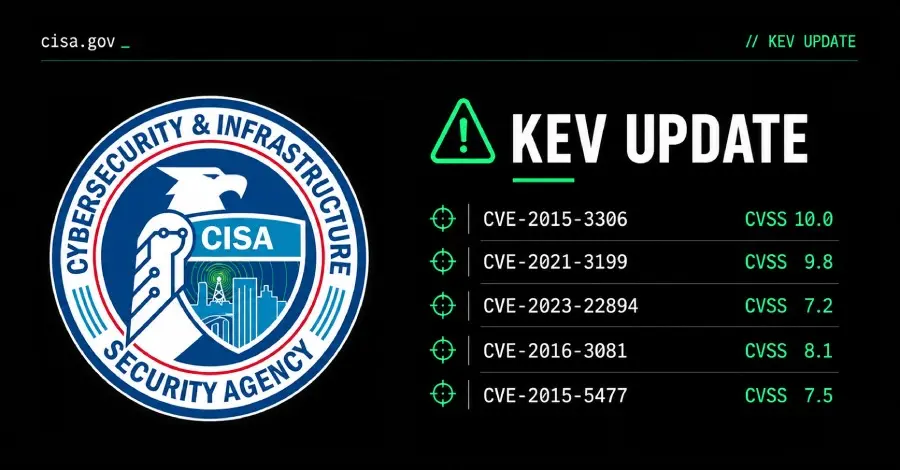
While precise details regarding the exact nature of these real-world attacks, the identities of the threat actors, or the specific targets remain undisclosed, regulatory bodies have acted swiftly. The U.S. Cybersecurity and Infrastructure Security Agency promptly added the vulnerability to its Known Exploited Vulnerabilities catalog, establishing a strict compliance deadline for federal civilian executive branch agencies to apply the necessary mitigations.
Another prominent entry in this month’s advisory is CVE-2026-108398, a vulnerability that was publicly known prior to the official release of the patches. This security flaw enables sophisticated attackers to bypass Windows Defender Application Control enforcement, effectively permitting the execution of unauthorized applications on targeted systems. Microsoft attributed the discovery of this issue to James Forshaw of Google Project Zero, while an anonymous researcher was credited with reporting a secondary publicly disclosed flaw designated as CVE-2026-92707.
According to Microsoft’s advisory, an authenticated attacker with local access can place a specially crafted .NET assembly onto an affected machine and register it to be loaded by a protected process. This mechanism allows the adversary to bypass strict application control restrictions and execute arbitrary code within a protected process environment without requiring any user interaction. Mike Walters, president and co-founder of Action1, underscored the severe nature of the vulnerability, characterizing it as a potent post-compromise attack technique. Walters warned that local attackers can leverage the flaw to circumvent security controls silently, compromising overall system integrity, exposing sensitive corporate data, weakening endpoint defenses, and potentially disrupting critical business operations.

Beyond core Windows and enterprise server products, the October patch deployment also addressed a high-severity non-Microsoft vulnerability tracked as CVE-2026-21413, which carries a critical CVSS score of 9.8. This heap-based buffer overflow flaw impacts the Raw Image Extension component and is capable of triggering remote code execution. Microsoft explained that an attacker could exploit the vulnerability simply by enticing a user to navigate to a folder containing a specially crafted RAW image file. Crucially, the flaw can be triggered automatically when the operating system generates a thumbnail or preview of the file, meaning the user does not even need to open the image to initiate the compromise.
This unprecedented flood of patches arrives against the backdrop of an ongoing industry transformation driven by automated and AI-assisted security research. Just a month prior, Microsoft addressed nearly 1,000 vulnerabilities in a single update cycle. According to tracking data compiled by Tenable senior staff research engineer Satnam Narang, Microsoft has already issued patches for more than 4,000 distinct CVEs over the course of the year. Industry observers note that the sheer density of these monthly bulletins means that multiple vulnerabilities capable of causing significant concern are frequently bundled together, any one of which might have stood out as a major historical event in eras characterized by lower patching volumes.
To help enterprise IT and security teams navigate the overwhelming volume of monthly updates, Microsoft introduced a new organizational framework known as risk cohorts alongside the October patch release. A risk cohort groups related vulnerabilities that demand a similar level of assessment from customers, offering a streamlined starting point for triage and remediation. However, Microsoft emphasized that these cohorts are intended solely as an initial guide rather than a definitive decision-making tool. Organizations are strongly advised to continue evaluating individual CVEs based on active exploitation metrics, intrinsic severity, attack vectors, user interaction requirements, and product-specific deployment guidance to maintain robust security postures across their enterprise networks.