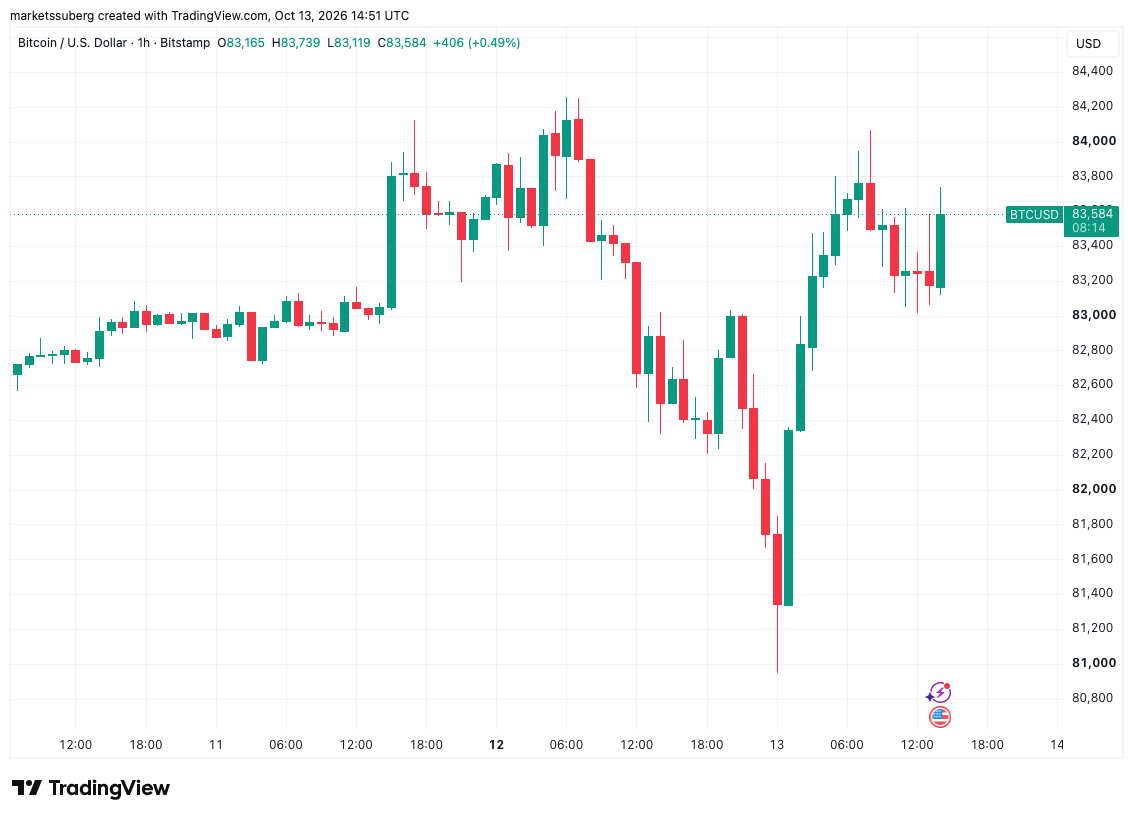
Bitcoin (BTC) continued its push toward the $84,000 threshold during Tuesday’s Wall Street opening bell, demonstrating notable resilience as United States stock markets attempted to stabilize following a sharp technology sector rout originating in South Korea.
Data from TradingView captured the BTC/USD trading pair recovering to hover near $83,800 as the domestic trading session got underway, successfully preserving a significant portion of the gains it had accumulated overnight. Despite facing persistent macroeconomic headwinds and localized resistance zones on order books, the premier cryptocurrency maintained its upward trajectory, keeping traders and analysts closely monitoring critical technical levels.
S&P 500 and Nasdaq Brush Off KOSPI Losses
Broader traditional financial markets initially opened lower following a wave of severe selling pressure across Asian equity futures. The downturn was triggered by South Korea’s benchmark KOSPI Composite Index, which endured a steep 7.4% decline over a span of two consecutive sessions. The sell-off was heavily concentrated within the semiconductor sector, fueled by growing market anxieties surrounding escalating artificial intelligence (AI) capital expenditures and intensifying competitive pressures from China.

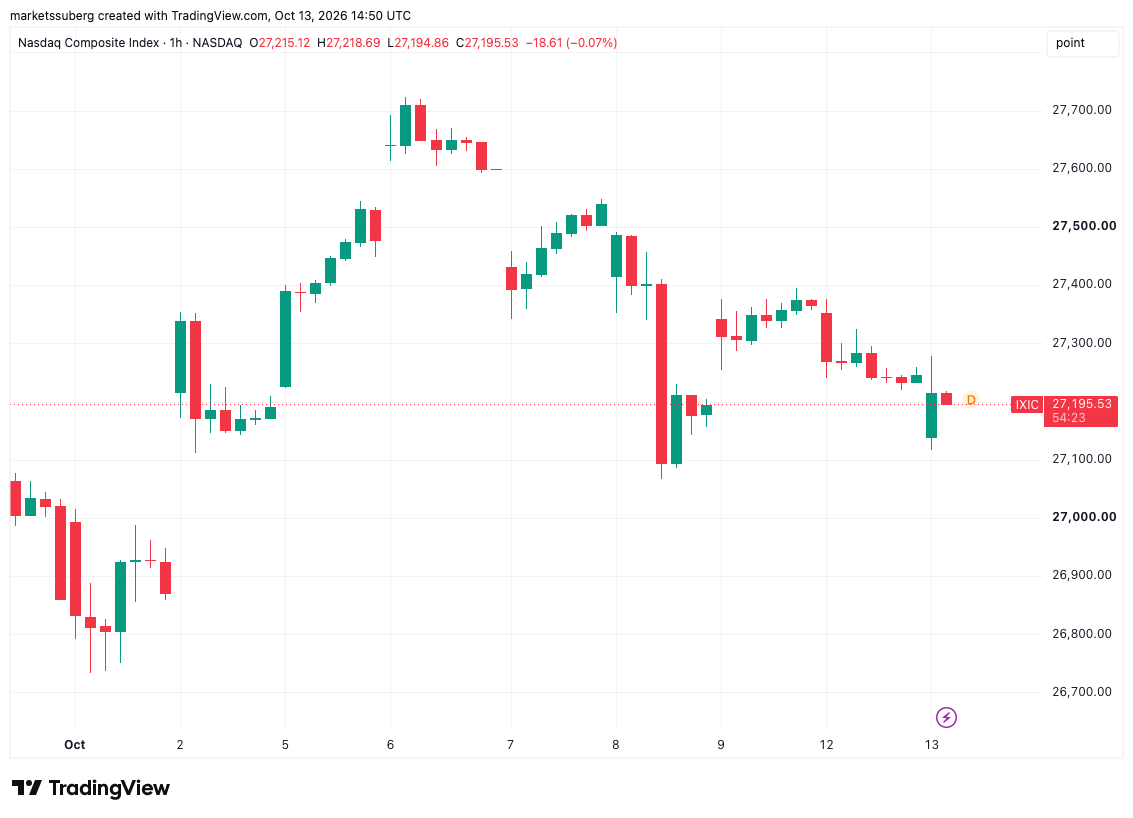
Despite the pessimistic lead from Asia, domestic US equities displayed unexpected fortitude. Both the benchmark S&P 500 index and the technology-heavy Nasdaq Composite index mounted early intraday recoveries, briefly pushing into positive territory before easing slightly. At the time of reporting, both major market gauges were trading down by less than 0.5%, signaling that Wall Street investors were largely attempting to digest and shake off the overnight international shockwaves.
Market analysts point to broader structural shifts in fixed-income markets as the underlying driver of broader financial market jitters. Damien Boey, a portfolio strategist at Wilson Asset Management in Sydney, Australia, highlighted the cascading effects of fixed-income volatility during an interview with Reuters.
"The most important development has been not just bond yields going up, but the volatility for bonds… and that’s starting to work its way out through asset pricing across the board," Boey told Reuters. He further characterized the current market environment as uniquely challenging, noting, "It’s a very uncomfortable situation on many fronts… maybe AI capex just comes off the boil a little bit, and maybe a few players are casualties in that."
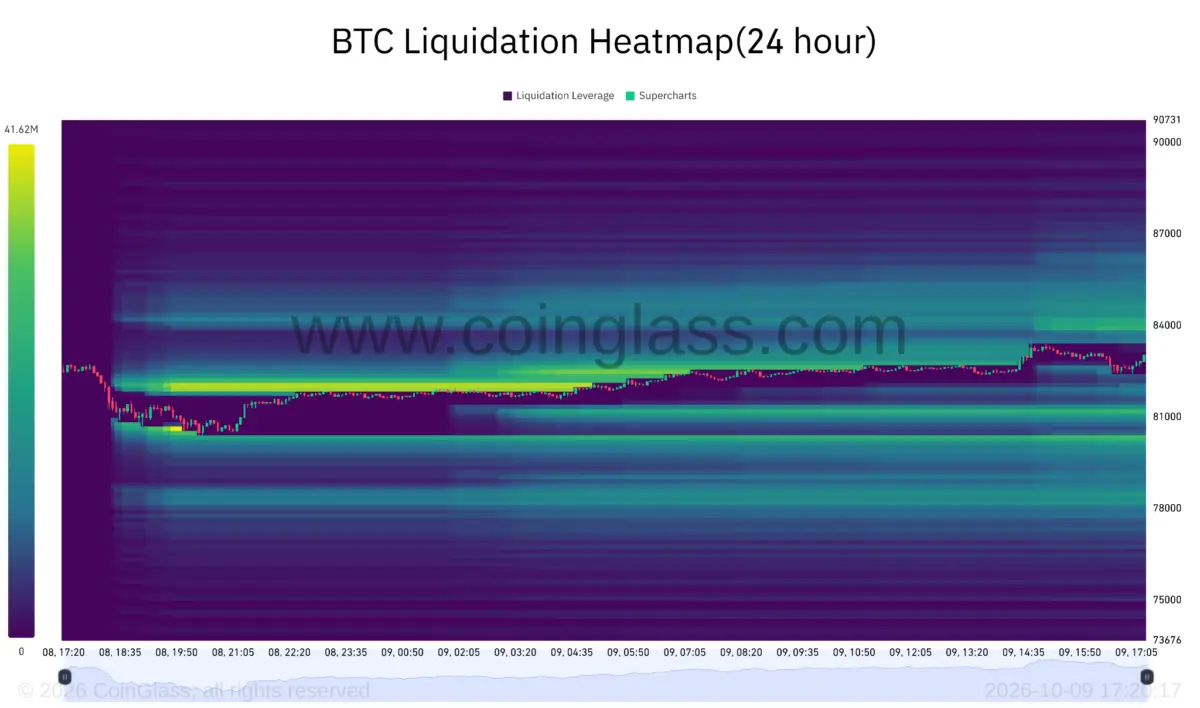
As traditional equities stabilized, digital asset markets continued to grapple with their own internal micro-structure challenges. According to liquidity data from CoinGlass, Bitcoin remained constrained by heavy exchange order-book liquidity resting directly above the $84,000 mark. This concentration of sell orders has continuously acted as a formidable ceiling, capping upward momentum and turning the psychological milestone into a stubborn resistance barrier for bullish market participants.
Dollar Strength and Liquidity Pressures in Focus
Beyond immediate exchange-level order book dynamics, crypto market participants are increasingly contending with a complex macroeconomic backdrop. Writing in recent market commentary, CryptoQuant contributor Darkfost pointed out that Bitcoin bulls are currently facing a powerful double macro headwind that threatens to suppress broader risk appetite.
With benchmark global bond yields hovering near multi-decade highs, the United States dollar has experienced a significant and sustained resurgence. The US Dollar Index (DXY), which measures the greenback against a carefully weighted basket of major trading partner currencies, climbed 5.5% since September 9. The index recently touched 102.57, marking its strongest valuation levels recorded since April 2025.
Although the historical inverse correlation between the DXY and Bitcoin has shown signs of weakening over the course of the year, analysts note that the broader cryptocurrency market is still acutely vulnerable to an overall contraction in systemic risk appetite.
"Taken together, these factors constrain the liquidity available to markets and erode institutional confidence, leaving them reluctant to take on more risk," Darkfost wrote in the published analysis. He added that the prevailing environment remains fundamentally unfavorable for Bitcoin, which continues to be categorized by broader institutional allocators as a high-beta, high-risk asset. In contrast, more mature traditional markets like the S&P 500 and the Nasdaq Composite have shown a greater capacity to absorb what little excess liquidity remains within the global financial system.
As market participants await further domestic economic data releases—including upcoming US Consumer Price Index (CPI) figures—traders are left weighing the interplay between persistent institutional demand, tightening global liquidity conditions, and macro-driven currency strength.