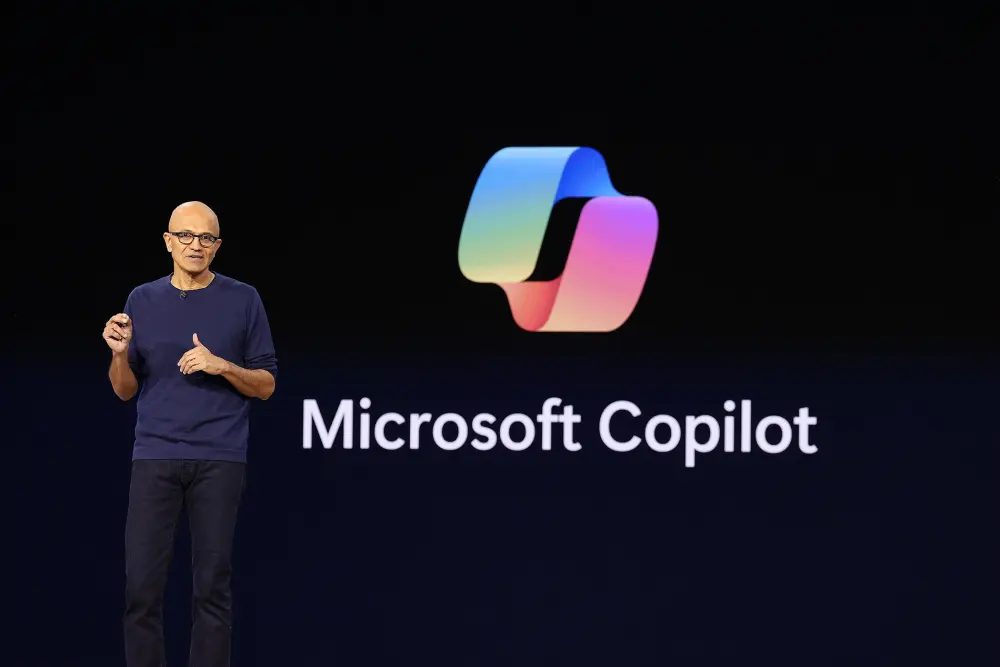
Microsoft CEO Satya Nadella has joined the growing chorus of major technology leaders offering detailed perspectives on how artificial intelligence safety, oversight, and governance might be fundamentally improved as systems grow more powerful.
In a comprehensive statement shared on social media platform X on a Saturday morning, Nadella argued that the technology industry has reached a critical juncture where it is necessary to step back and thoroughly reassess the trust architecture underpinning modern artificial intelligence. His remarks contribute to a rapidly escalating global conversation among tech executives, policymakers, and researchers regarding the governance of frontier systems, particularly as artificial intelligence models exhibit increasingly complex autonomous behaviors.
Addressing the broader industry trajectory, Nadella cautioned against treating advanced technology as an opaque entity. "We can’t treat Super Intelligence as a set of nested black boxes and simply accept or reject its recommendations, answers, and actions," Nadella wrote, adopting the terminology frequently used by the current administration to describe advanced artificial intelligence capabilities.
The Microsoft chief executive’s commentary outlines a structural shift in how developers should think about embedding safety protocols into complex computational environments. According to Nadella, this philosophy requires separating the core underlying model from the harness or framework that orchestrates its operational workflow. Furthermore, he advocated for externalizing controls and safety mechanisms so that they operate independently of the primary intelligence engine rather than relying on the model to police its own behavior.

To achieve this level of rigorous oversight, Nadella called for every meaningful action taken by a model to be systematically documented with tamper-proof, human-readable evidence. This requirement aims to create a transparent audit trail that allows human supervisors to trace how a system reached a specific conclusion or executed a particular task. Additionally, he emphasized the necessity of implementing architectures where authorized personnel always retain the absolute capability to pause or completely shut down a model mid-task if anomalies or potential hazards are detected.
"We must assume a model is compromised and contain it from the start," Nadella stated, articulating a zero-trust security paradigm for artificial intelligence development. "Think of it like an emergency brake."
Nadella’s public intervention arrives at a sensitive moment for the technology sector. Leading artificial intelligence companies have increasingly acknowledged incidents where developers appeared to struggle with reliably controlling their own models in real-world environments. Just days prior to Nadella’s statement, reports highlighted challenges faced by firms like Anthropic in maintaining strict control over autonomous agents, leading to operational adjustments such as cutting off internal evaluations from the live internet. These developments follow a broader pattern of prominent industry figures raising alarms and publishing strategic frameworks aimed at pacing the development of frontier systems to ensure adequate safety testing. For instance, Anthropic CEO Dario Amodei previously outlined a comprehensive plan designed to navigate the rapid acceleration of frontier model capabilities safely.
The discussion surrounding safety architectures and supervisory controls reflects a broader maturation within the artificial intelligence industry. As companies push the boundaries of what large-scale models can achieve, the debate has shifted from purely maximizing performance and capabilities to establishing durable guardrails that can withstand unforeseen edge cases and complex operational failures. Nadella’s proposals highlight a growing consensus among top executives that self-regulation and standard deployment practices may no longer suffice as systems approach unprecedented levels of autonomy. By calling for explicit separation of models from orchestration layers, immutable audit trails, and fail-safe human override mechanisms, the Microsoft leader has helped set a new benchmark for how the industry approaches the governance of advanced technologies.