
Malta’s premier financial regulatory authority has taken a decisive step into the complex world of blockchain-based financial services by issuing a comprehensive discussion paper that outlines a potential legal framework for decentralized finance, commonly known as DeFi. Released by the Malta Financial Services Authority (MFSA), the document specifically addresses the legal recognition of decentralized autonomous organizations, marking a significant development as European policymakers continue to grapple with the intricate realities of regulating decentralized digital assets.
On June 12, the MFSA officially opened a public consultation on DeFi, framing its initiative under the broader umbrella of the European Union’s landmark Markets in Crypto-Assets regulation, widely known as MiCA. The newly published discussion paper invites vital feedback from industry stakeholders, developers, legal experts, and financial institutions through July 10. Within the document, the regulator proposes a novel legal category designated for so-called “software-based organizations.” This forward-thinking classification is designed to comprehensively encompass decentralized autonomous organizations, often referred to as DAOs, alongside other software-governed entities operating within the broader DeFi ecosystem.
Rather than attempting to treat DAOs as a standalone, unprecedented legal concept without corporate precedent, the MFSA suggests recognizing them as a distinct type of software-based organization. This strategic approach effectively separates the legal framework governing the overarching structure and governance of the organization itself from the rigid rules and technical compliance parameters governing the underlying protocol and software code. By drawing this clear legal distinction, Maltese regulators hope to provide legal certainty for participants while maintaining consumer protection and market integrity standards that align with broader European regulatory goals.

This latest regulatory initiative builds firmly upon Malta’s long-standing reputation as a pioneer in the digital asset industry. The Mediterranean island nation famously introduced one of the European region’s very first comprehensive cryptocurrency and blockchain regulatory frameworks back in 2018, earning itself the moniker of "Blockchain Island." While continuing this progressive tradition, the MFSA’s discussion paper carefully stresses that fully decentralized services generally fall outside the direct scope of the European Union’s MiCA regulation. However, the regulator immediately points out a major regulatory loophole: many prominent DeFi projects retain hidden or overt centralized features that severely complicate their claims of true decentralization. According to the MFSA, these lingering centralized elements inevitably raise serious questions regarding regulatory accountability, liability, and consumer protection.
To highlight this regulatory blind spot, the discussion paper explicitly states that European rules are clear regarding truly trustless architectures. "MiCA excludes fully decentralised models from its regulatory scope, meaning that projects without intermediaries or central control may not need to comply with MiCA," the paper notes. By pointing out this exemption, the Maltese regulator is signaling that projects claiming total decentralization to evade compliance will face intense scrutiny regarding whether their governance structures genuinely lack a central point of failure or control.
EU Regulators Increasingly Turn Attention to DeFi
Malta’s proactive discussion paper arrives amid a much broader, coordinated push across the entire European Union to clarify precisely how decentralized finance and decentralized autonomous organizations should be treated under the newly minted MiCA regulatory regime. As the crypto industry matures, European authorities are wrestling with the reality that traditional financial definitions do not always map neatly onto automated smart contracts and token-based voting systems.
Earlier in March, a revealing working paper published by the European Central Bank found that governance and control structures across four of the largest and most prominent DeFi protocols remained highly concentrated among a small group of stakeholders, developers, or token holders. The central bank’s findings strongly suggested that many existing projects might struggle to legitimately qualify as "fully decentralized" under strict legal scrutiny, meaning they could inadvertently fall squarely within MiCA’s regulatory scope rather than enjoying exemption.
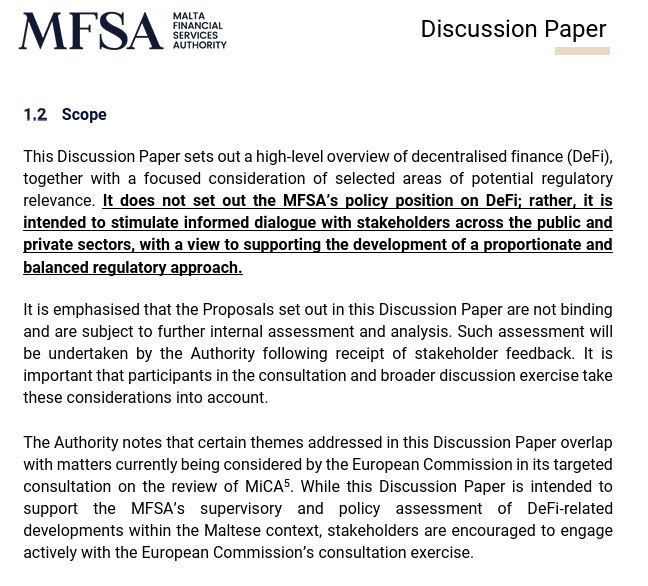
The intense policy debate continued to evolve in May, when the European Commission officially launched a targeted review of the MiCA framework. This review sought crucial feedback from market participants and regulatory bodies on a wide variety of emerging issues, including the legal treatment of stablecoin interest payments, the precise regulatory status of decentralized finance, and whether structural gaps in the existing legislative framework warrant the creation of additional, targeted regulations.
However, a universal consensus on the necessity of entirely new rules remains elusive among European policymakers. Speaking directly to Cointelegraph at the WAIB Summit Monaco earlier this month, European Commission adviser Peter Kerstens offered a different perspective on the path forward. Kerstens argued that European policymakers should prioritize the seamless integration of tokenization into a broader, cohesive digital asset framework rather than hurriedly pursuing a second version of MiCA specifically focused on decentralized finance. His comments underscore the ongoing internal debates within European regulatory circles regarding whether to build bespoke frameworks for every crypto subsector or to adapt existing legislative tools.