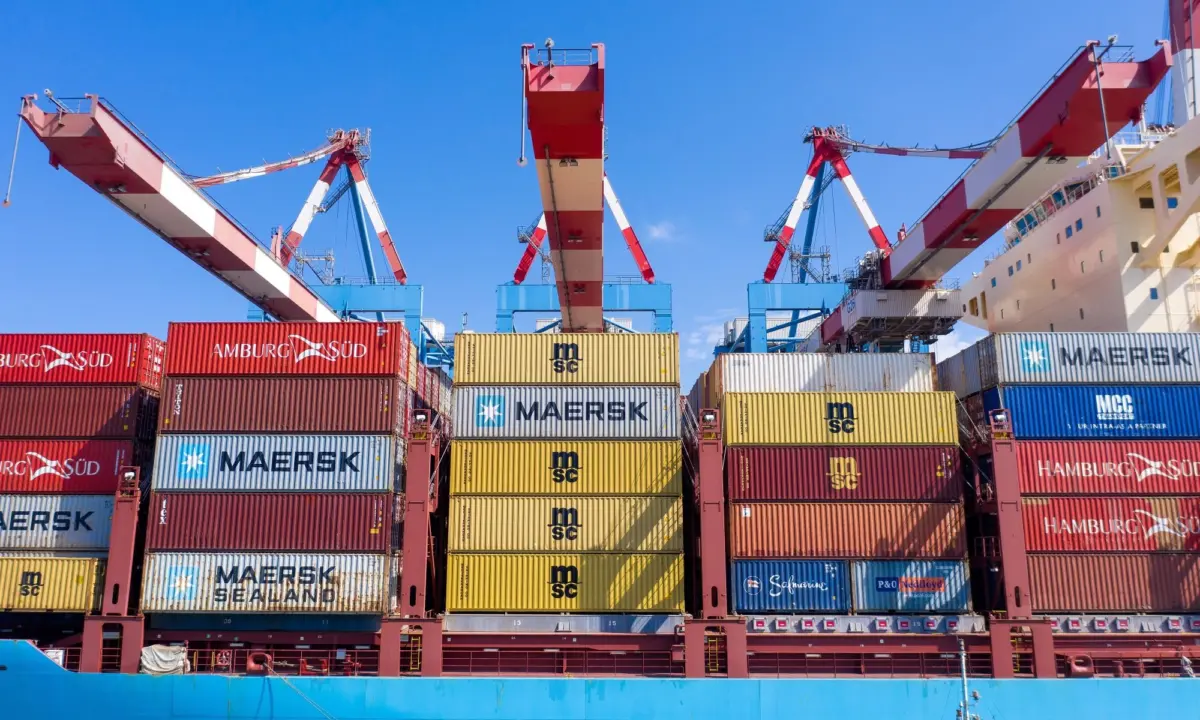
Global shipping and logistics giant A.P. Moller-Maersk has disclosed that an unauthorized party successfully accessed and extracted data from a legacy information technology system. The compromised infrastructure was not part of Maersk’s core native architecture, but rather an older system inherited through a previous corporate acquisition.
The security breach, publicly revealed by the company, underscores a pervasive vulnerability across acquisitive enterprises worldwide. While corporate mergers and acquisitions are frequently celebrated for their long-term financial synergies, market expansion, and operational consolidation, the underlying technology infrastructure tells a more complicated story. Technology stacks inherited through M&A activity can quietly remain operational and security liabilities long after the initial transaction has closed and its financial benefits have been fully absorbed into corporate performance expectations.
According to Maersk’s preliminary findings, the unauthorized access was successfully contained. The company has not reported a widespread, companywide compromise of its digital environment. Furthermore, preliminary investigative results suggest that no sensitive enterprise data was exposed during the incident. Crucially for global supply chain partners, Maersk confirmed that there was no indication of disruption to its broader operations or to connected customer-facing systems.
The incident brings renewed attention to the structural challenges of enterprise resource planning (ERP) consolidation and digital transformation. For decades, large multinationals have grappled with the reality that corporate mergers consistently move faster than technical integration. Merging diverse corporate cultures and financial portfolios is a streamlined process compared to harmonizing disparate, deeply entrenched technology platforms.
Integration Savings Can Become Deferred Costs
In the typical corporate playbook, M&A integration is heavily evaluated through the lens of cost savings, operational efficiencies, and the elimination of redundant or overlapping administrative functions. Technology rationalization is almost always central to these financial targets, promising streamlined architectures and reduced maintenance overhead.
However, reality often diverges from the spreadsheet projections. Acquired IT systems are frequently kept in active service because they support specialized legacy workflows, contain complex data that is notoriously difficult to migrate, or maintain critical connections to customers and suppliers who depend entirely on established, legacy processes.
For corporate dealmakers and chief financial officers, leaving inherited systems untouched can also appear economically rational on paper. Migrating historical data, replacing specialized niche applications, and fundamentally disrupting established daily workflows all carry substantial upfront financial costs and operational risks.
Yet, the strategic decision to defer modernization and maintain status-quo legacy systems can create lingering legal, operational, and security obligations that far outlast the formal integration program. What initially presents itself as a clever cost-saving maneuver during a merger can slowly morph into a recurring vulnerability and a deferred financial expense.
This susceptibility is amplified in the modern threat landscape. Broad industry research and intelligence reports, including insights compiled by PYMNTS Intelligence regarding digital footprints and artificial intelligence-driven threats, indicate that large enterprises with sprawling, fragmented digital surfaces face heightened exposure to sophisticated, automated attacks. Modern adversarial fraudsters increasingly leverage machine learning and artificial intelligence to probe legacy endpoints, exploiting the blind spots created by unintegrated corporate acquisitions.
Maersk did not immediately reply to requests for additional comment regarding the mechanics of the breach. However, the company’s official public statement emphasized that there was no evidence suggesting the intrusion spread horizontally into other core corporate systems, nor did it affect customers, vendors, and shipping partners connected through application programming interfaces (APIs) and electronic data interchange (EDI) networks. Assuming these preliminary findings hold true as the investigation concludes, the event serves as a practical demonstration of the value of strict network segmentation and containing risk within a tightly managed, discrete environment.
Cross-Jurisdiction Supply Chain Can Make the Stakes Larger
For multinational logistics and shipping powerhouses, the operational and financial consequences of inherited technology extend far beyond the boundaries of the acquiring organization itself. Modern international supply chains and physical fulfillment platforms form an intricate, highly interdependent web, connecting maritime carriers, physical warehouses, customs intermediaries, overseas suppliers, and end customers through overlapping digital systems and continuous data exchanges.
Even in scenarios where a cybersecurity event does not trigger an immediate halt to physical shipping operations, the sensitive commercial information held within those peripheral digital environments can still generate severe secondary risks. These vulnerabilities frequently involve the compromise of commercial confidentiality, the disruption of delicate customer relationships, and exposure to targeted fraudulent communications or business email compromise schemes.
This dynamic underscores why modern enterprise risk management must maintain a sharp, deliberate distinction between general operational resilience—keeping the physical ships moving and the warehouses staffed—and rigorous data protection.
Industry experts emphasize that the solution rarely lies in impulsive, wholesale abandonments of older infrastructure. Instead, the focus must shift toward intelligent architectural modernization. Speaking on the broader landscape of legacy systems and digital transformation, Garrett Baird, vice president of product, banking and FinTech at Paymentus, noted that the objective is not about abandoning legacy systems entirely, but rather modernizing securely and intelligently around them.
At the same time, broader market data underscores how deeply enterprise decision-makers care about seamless technological harmony. Research from industry analysts consistently demonstrates that a significant majority of businesses—ranging from small-to-medium enterprises up to Fortune 500 multinationals—rank system integration and compatibility as a paramount priority when evaluating new technology solutions and strategic partnerships.
As Maersk’s ongoing internal investigation continues, the shipping giant’s experience serves as a stark reminder to corporate strategists across all industries. The true price tag of a corporate acquisition cannot be calculated solely at the closing table; it must account for the long-term stewardship, security fortification, and eventual modernization of every digital asset inherited along the way.