
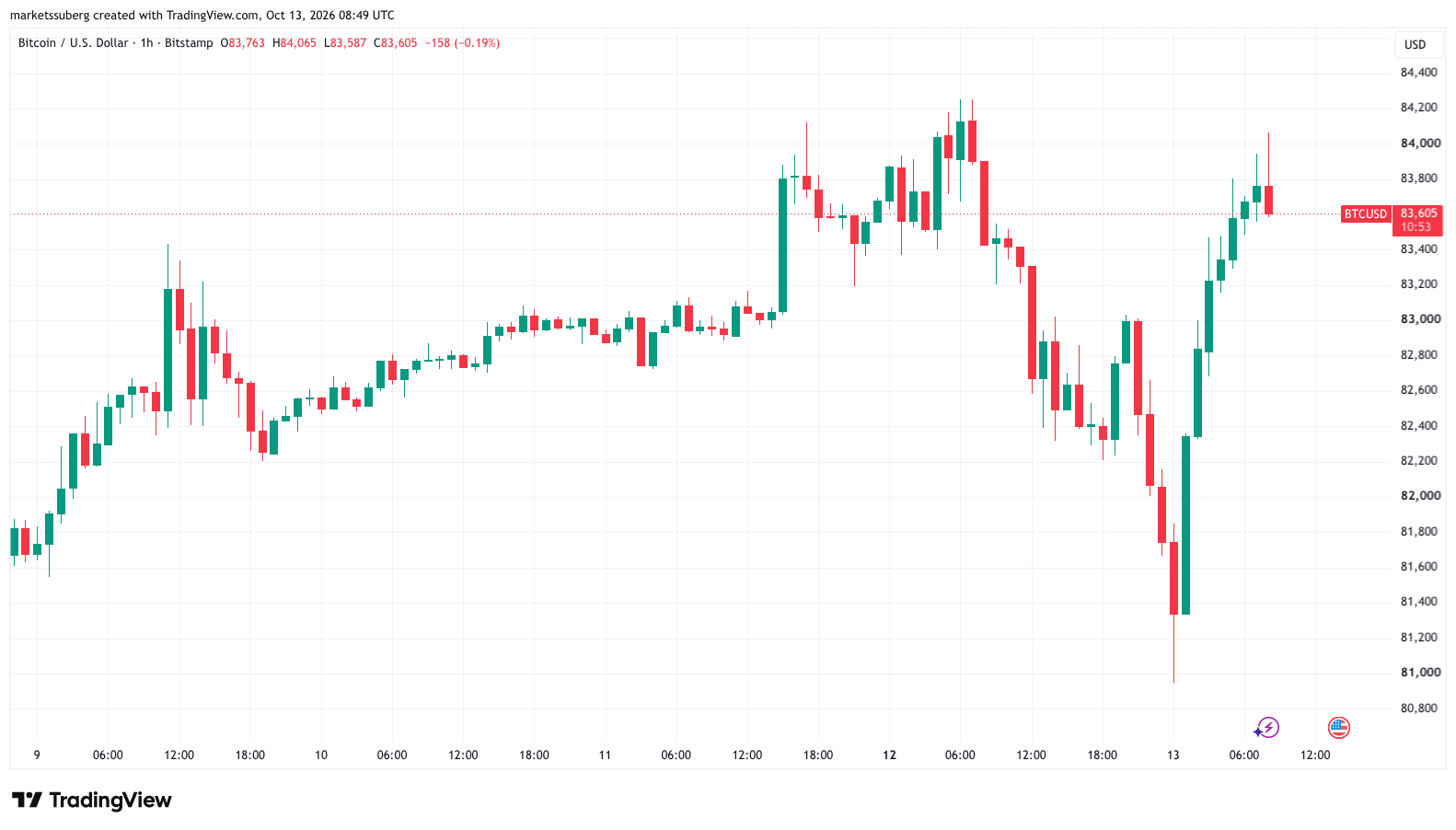
Bitcoin (BTC) staged a notable recovery on Tuesday, climbing back toward the $84,000 threshold as broader cryptocurrency markets managed to decouple from a fresh wave of panic and sell-offs sweeping across traditional financial sectors in South Korea.
Data from TradingView tracked BTC/USD advancing by more than 2.5% during the Tuesday trading session, touching a high of $83,944 on Bitstamp. This upward momentum successfully retraced the downward pressure experienced at the start of the week, a drop that had initially been exacerbated by broader geopolitical tensions, including strikes in Ukraine and Iran that temporarily pushed oil prices toward a one-month high.

Despite lingering macroeconomic headwinds and shifting institutional flows, the premier digital asset demonstrated an unexpected degree of resilience, hovering near the upper boundary of its established local trading range between $80,000 and $87,000. Market participants noted that while the recovery showcased impressive buying interest on lower time frames, bulls continued to face stiff resistance as they attempted to cement a firm foothold above the $84,000 mark.
South Korea’s KOSPI Loses 200-Day Trend Line as Panic Returns
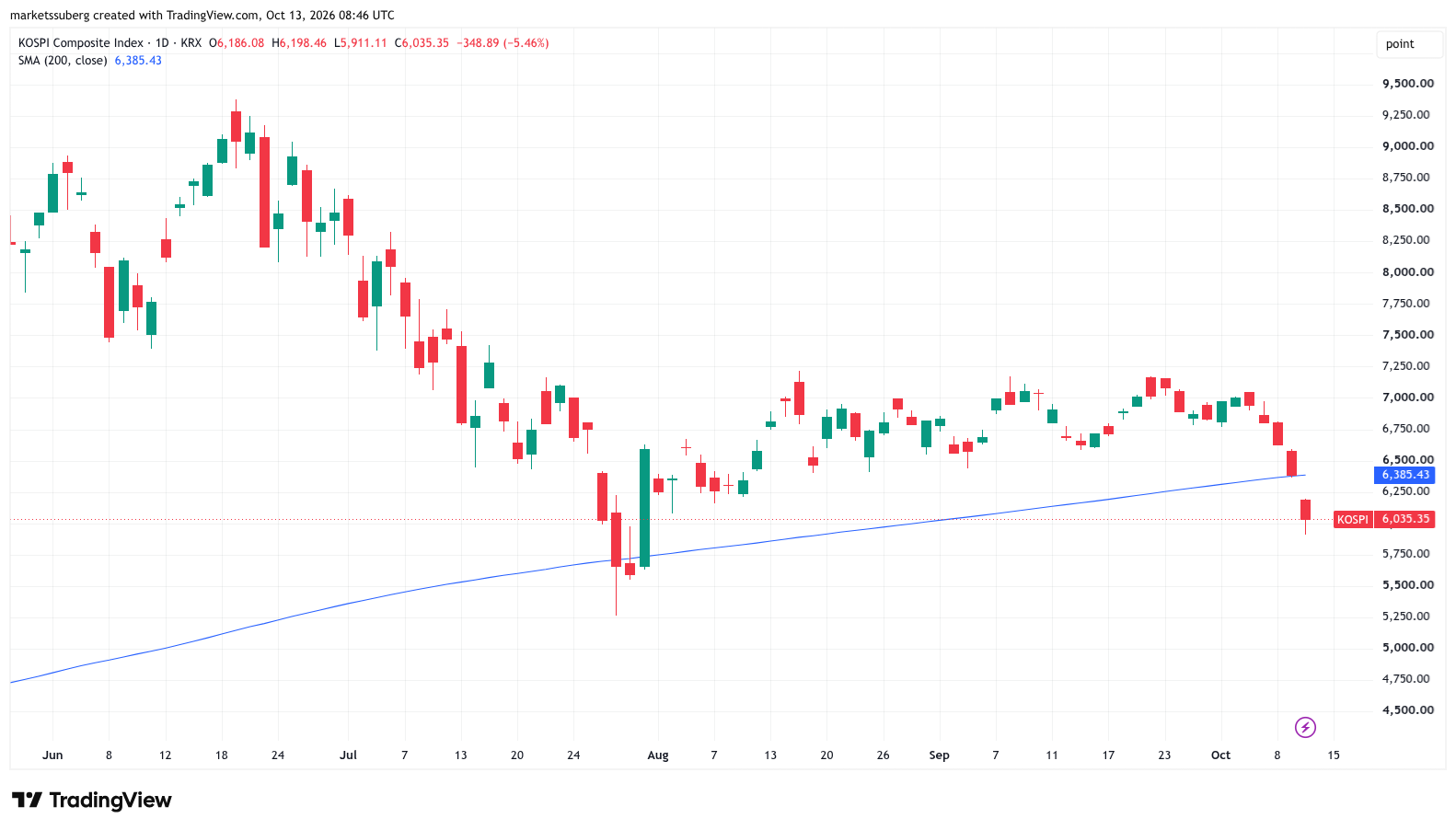
The mid-week rebound in the digital asset market unfolded against a backdrop of severe turbulence in traditional Asian equities. A renewed technology-focused sell-off gathered intense momentum on South Korea’s KOSPI Composite Index, extending its losses for the week to an alarming 7.4%. In a technical blow that rattled regional investors, the benchmark index slipped decisively below its crucial 200-day moving average for the first time since late July.
Semiconductor heavyweights bore the brunt of the downward pressure. SK Hynix closed the session more than 10% lower, compounding a wave of existing corporate problems for Samsung Electronics following its disappointing third-quarter earnings report released the previous week. Foreign institutional investors have been aggressively unwinding their positions in the region, offloading approximately 173 trillion won—equivalent to roughly $129 billion—worth of SK Hynix and Samsung shares since the beginning of 2026. This massive capital flight accounts for the vast majority of year-to-date net sales across the broader KOSPI index.
The sudden capitulation bore striking similarities to the market rout witnessed in August, when escalating concerns regarding the sustainability of the artificial intelligence boom and the heavy corporate debt obligations tied to infrastructure expansion triggered sharp liquidations. Those losses quickly cascaded beyond regional borders, creating a ripple effect across global financial markets.
Industry analysts pointed out that sentiment among equity investors has turned increasingly fragile. Market participants appear eager to lock in profits, particularly within memory and AI-related hardware stocks that have vastly outperformed the broader market throughout the year. The intensifying race and technological competition coming from Chinese semiconductor manufacturers have also introduced an additional layer of complexity and anxiety for Korean investors, even as Chinese domestic firms continue to navigate their own structural technology hurdles.
Bitcoin Price Rebounds Despite Waning ETF Demand
In stark contrast to the market dynamics observed during the August sell-off, Bitcoin largely avoided a copycat plunge this time around. While traditional markets in Asia absorbed heavy losses, digital asset valuations remained remarkably stable, finding support within their familiar consolidation band.
During the previous major equity pullback, analysts attributed Bitcoin’s relative strength to mounting expectations of monetary policy easing by major global central banks. This macro backdrop remains in focus as traders look ahead to crucial United States inflation data scheduled for release later in the week. The upcoming Consumer Price Index (CPI) report precedes the Federal Reserve’s closely watched interest rate decision on October 28, with widespread market consensus anticipating that policymakers will keep benchmark interest rates steady within the current 2.75% to 4% range.
This resilient price action is all the more notable given that it has occurred alongside a cooling of institutional demand via regulated investment vehicles. Investor appetite for direct Bitcoin exposure through US spot exchange-traded funds (ETFs) has visibly waned over the course of October. Cumulative net outflows from these products have reached $451 million so far this month, a figure compounded by a $69 million single-day net outflow recorded on Monday.
On-chain metrics and exchange order book data illustrate the ongoing battle between buyers and sellers near current price levels. CoinGlass liquidation heatmaps revealed a thick, highly concentrated band of ask liquidity resting just above the $84,000 zone on major exchange order books. This localized supply wall has made it challenging for short-term bullish momentum to sustain a clean break higher, leaving traders closely monitoring whether spot demand can absorb the overhead sell pressure as the weekly macro calendar unfolds.