“I think I’m going to switch back to my other iPhone.”

That sentence was uttered multiple times during a five-day vacation with the new iPhone Duo. The trip brought a wave of minor frustrations, from unoptimized applications and unfamiliar physical gestures to the sudden return of Touch ID and camera limitations that occasionally forced a dual-phone setup just to feel secure.

Yet, by the time the journey concluded, the desire to pack it in and abandon the device had completely vanished.

When the Duo first arrived as a manufacturer loaner from Apple, the unboxing process stirred genuine intrigue. Peeling back the factory seal wrap and booting up the experimental hardware provided a distinct flutter of anticipation—the kind of excitement that rarely accompanies a standard smartphone review these days. As a technology reporter handling test hardware routinely, the initial thrill of a package opening usually fades quickly. But in the days leading up to the Duo’s official release, the curiosity had grown to the point of running the numbers on financing a $2,000 upgrade and browsing TikTok reviews of specialized cases.

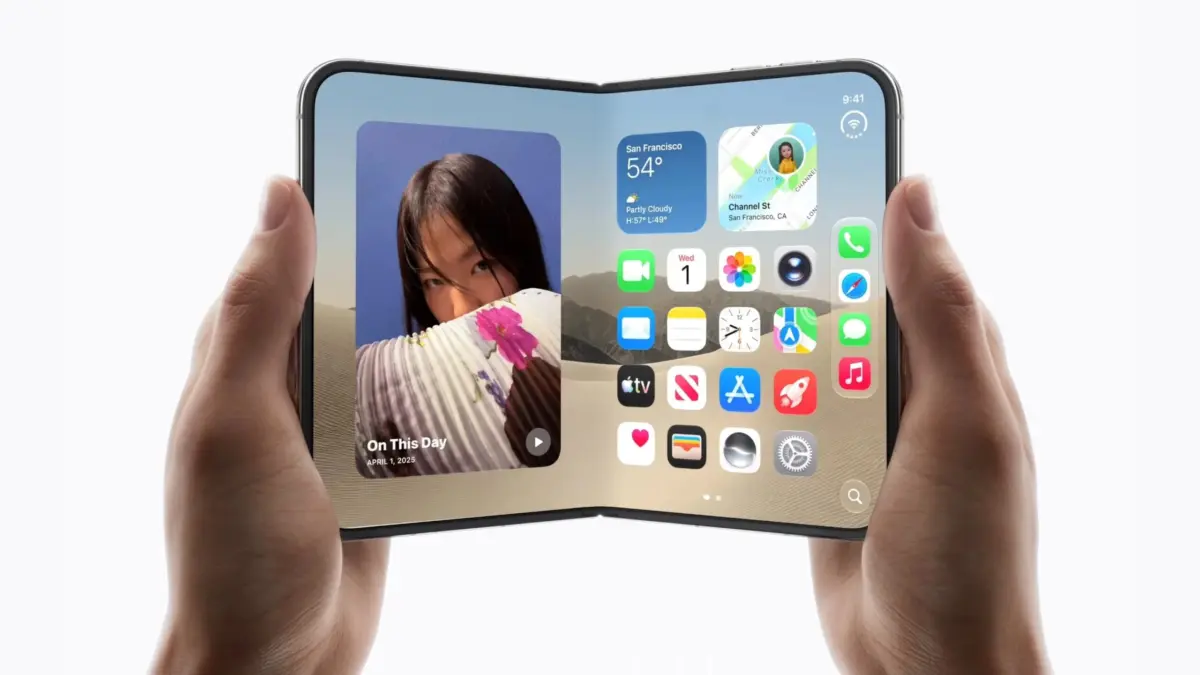
Transitioning to the Duo represents a massive behavioral and ergonomic shift, particularly for someone coming straight from the expansive footprint of an iPhone 17 Pro Max. The two devices could hardly be more different in form factor and philosophy. To hedge bets while heading out of town immediately after delivery, the Pro Max was packed alongside the Duo as a safety net. Ultimately, though, the Duo saw the vast majority of use, weathering a week of real-world travel and emerging as a surprisingly compelling daily driver despite its early-generation quirks.

Transitioning between fundamentally different hardware designs carries an inherent psychological cost. For a user accustomed to the refined, ultra-thin rectangular geometry of traditional slab iPhones, the Duo’s short, squat, and novel physical proportions felt jarring at first. Lamenting the loss of screen real estate while closed, the initial skepticism raised valid questions about pocketability.

As it turned out, the hardware slips effortlessly into both front and back pockets, even when protected by a case. Repeatedly forgetting to remove the device before sitting down led to countless accidental compression tests in back pockets, yet the chassis emerged completely unscathed. Accidental drops from table height and bedside edges onto unyielding surfaces like concrete, tile, and hardwood floors failed to crack or shatter the glass. While these real-world tumbles hardly qualify as rigorous laboratory drop tests, they offer considerable reassurance for clumsy users navigating unfamiliar environments.

Naturally, the travel period also exposed distinct pain points. Navigating long text threads required more scrolling due to the compact nature of the outer display. Certain unoptimized third-party applications tucked critical controls away behind obscure three-dot menus, turning routine actions into a scavenger hunt. Furthermore, the Google Search app exhibited a frustrating tendency to freeze repeatedly during high-use scenarios.

While software stability issues rarely fall on Apple, the freezing behavior proved to be a persistent annoyance during travel, where search tools are relied upon heavily for mapping points of interest, checking weather conditions, and reading restaurant reviews. The application would frequently lock up, rendering the back button unresponsive. This behavior appeared tied specifically to Google’s mandatory AI search modes, which often initiate without direct user prompts. Force-closing the application served as the primary workaround, dumping the user back to a clean search box upon relaunch. Observing these software glitches amid Alphabet’s wider strategic focus on AI search integration highlights an ironic oversight in ensuring core application reliability on Apple’s newest hardware format.

Early reviews frequently highlighted the prevalence of unoptimized applications displaying thick black borders on the side when closed, further cramping an already limited external display. While this aesthetic drawback remains true, daily use proves it is far from a dealbreaker. Software developers have rolled out Duo-optimized updates at a rapid pace, and applications awaiting patches remain entirely functional, if somewhat visually unpolished. Google Maps, for instance, lacked a dedicated Duo optimization during the trip yet performed flawlessly for turn-by-turn driving directions and local destination discovery.

Older, unmaintained software legacy issues point toward an inevitable industry reckoning. In an era where outdated applications face mounting security vulnerabilities and aggressive exploits powered by automated hacking tools, letting go of unmaintained software ecosystems feels increasingly necessary.

More substantive criticism, however, centers on the absence of Face ID. The omission of facial recognition stands out as the Duo’s most glaring hardware compromise, overshadowing considerations regarding screen creases, camera counts, or specialized side buttons. Fumbling with physical finger presses feels remarkably archaic compared to the seamless friction of facial authentication. While wearing an Apple Watch provides a convenient background workaround for unlocking the main device, authentication hurdles quickly reappear during app usage and contactless retail checkouts.

Apple Pay transactions underline just how frictionless Face ID has made everyday commerce. Relying on Touch ID at the cash register while juggling shopping bags, purses, and pet leashes introduces a cumbersome physical chore. Overcoming deeply ingrained muscle memory requires cradling the device precisely while positioning a thumb correctly on the sensor. Minor misalignments demand repeated adjustments, triggering vocal frustrations at the checkout counter. While users undoubtedly adapt to the return of fingerprint recognition over time, it represents a notable deterrent for potential early adopters. Industry reports suggesting a future iteration will incorporate under-display Face ID technology indicate that Apple is well aware of this limitation.

Camera performance represents another major divergence from traditional flagship tiers. Equipped with a dual-lens rear camera system rather than the triple-lens array found on the iPhone 17 Pro Max, the Duo lacks a dedicated telephoto lens and relies on a more modest 10x digital zoom compared to the Pro’s expansive 40x range. Advanced low-light hardware and professional formats like ProRAW and ProRes are similarly absent.

For dedicated mobile photographers and content creators, the Duo clearly cannot serve as a primary device. For average consumers, however, the camera system proves entirely adequate. Routine snapshots destined for social media stories, casual text messages, or home screen photo widgets demand little in the way of professional-grade optics. Image processing on the Duo occasionally introduces heavy smoothing or over-sharpened foliage details under tricky lighting, and distant landscapes can appear somewhat flattened. Yet, for general point-and-shoot documentation during vacations, the output satisfies casual needs without issue.

The fundamental appeal of the Duo lies in its identity: it is a foldable device built by Apple. Foldables carry a distinct sense of whimsy that traditional slab phones have largely abandoned, functioning almost as sophisticated adult toys. Developers are clearly enjoying the creative freedom of the new format, producing imaginative applications designed specifically to leverage dual screens. Combined with accessories like the folio case featuring an integrated kickstand, the hardware provides an exceptional platform for media consumption.

Apple’s deliberate approach to engineering the device shines through in the minute details, from a nearly invisible display crease to a consistent aspect ratio that scales content proportionally across screens. Integration within the broader Apple software ecosystem ensures a smooth transition for users deeply embedded in iOS services and app purchases.

Interestingly, daily routines revealed that the device was unfolded far less frequently than initially expected. Two primary factors explain this behavioral shift. First, unfolding the device in public spaces invariably attracts attention and sparks conversations with curious strangers. Encounters with servers, fellow shoppers, and local business owners happened regularly throughout the trip, with several intrigued observers asking to handle the hardware and test its folding mechanism. Demonstrating features like the outer display animation tool—designed to display playful character movements to capture children’s attention during photography—consistently elicited genuine delight.

Observers frequently marveled at the hardware engineering, expressing astonishment at the hidden hinge and inquiring about the matte nano-texture finish of the inner screen designed to minimize glare. Discussions regarding environmental durability, particularly concerns over dust and particulate contamination in the hinge following negative historical precedents with early Android foldables, are largely mitigated by the Duo’s robust IP68 dust-tight rating.

Second, unfolding the physical chassis introduces a psychological shift regarding screen time. Opening the device feels like a deliberate initiation of an intentional session, reserved for focused tasks such as watching streaming media or running dual applications side-by-side in split-screen multitasking. Managing simultaneous windows—such as reading news feeds while monitoring social commentary alongside—highlights practical use cases tailored to specific workflows.

Conversely, the compact nature of the closed outer display reduces the impulse to reflexively check time-wasting applications like endless short-form video feeds or casual games. This behavioral divergence stems from more than just practical usability constraints or unoptimized vertical layouts; the physical design actively interrupts the compulsive engagement loops fostered by modern smartphones.

Rather than encouraging endless, reflexive scrolling out of boredom, the Duo encourages purposeful interaction. Because engaging with the expansive internal display requires a conscious physical motion, device usage becomes inherently more thoughtful. This dynamic aligns neatly with broader cultural trends embracing retro technology, where physical dials and mechanical steps reintroduce a sense of deliberation into human-computer interaction.

Despite its initial setup hurdles, software quirks, and compromises in biometric security and camera capability, the Duo succeeds through sheer novelty and refined execution. It delivers a compelling, entertaining hardware experience that proves as satisfying to put down as it is to pick up.