The United States Federal Bureau of Investigation has announced that threat actors tied to the Democratic People’s Republic of Korea have successfully stolen more than $400 million worth of cryptocurrency over the past 18 months through a sophisticated social engineering campaign codenamed FaceStealer. The cloud-based infrastructure underpinning this hard-to-detect campaign has now been dismantled and seized as part of a coordinated set of actions announced by federal law enforcement.
Simultaneously, the U.S. Department of Justice revealed the court-authorized seizure and restraint of more than $1.2 billion in cryptocurrency recently stolen by North Korea-linked actors operating under the moniker TraderTraitor following a major hack of the Binance cryptocurrency exchange. According to federal officials, these plundered digital assets are systematically funneled back into Pyongyang to finance its illicit weapons programs.
"The North Korean regime relies on proceeds from large-scale cryptocurrency theft to fund its illicit weapons program, stealing billions of dollars in recent years," said FBI Cyber Branch Operations Director Brett Leatherman in a public statement. He added that North Korean cyber actors have aggressively targeted individuals within the cryptocurrency and Web3 sectors through deeply deceptive social engineering tactics, culminating in the loss of hundreds of millions of dollars.

According to findings detailed by the Justice Department, the FaceStealer operation relies heavily on surreptitiously recorded videos and advanced deepfakes to facilitate cryptocurrency theft and bypass security instincts. Certain aspects of this malicious activity overlap with a separate campaign previously documented by cybersecurity firm Kaspersky under the name GhostCall.
The underlying cyberattacks are directly linked to a prolific, financially motivated threat cluster tracked globally as BlueNoroff. This group is known by a variety of alternative cryptonyms across the threat intelligence community, including APT38, CageyChameleon, CryptoCore, DangerousPassword, Nickel Gladstone, Sapphire Sleet, Stardust Chollima, and UNC1069.
The mechanics of the campaign typically begin with hackers luring targets via video meeting invitations sent from accounts previously stolen from prior victims. When targets accept and join the meeting, their own video streams are covertly recorded, while they are simultaneously served an authentic, prerecorded webcam video of previous victims known to them, designed to disarm suspicion and build immediate trust.
Federal officials noted that the North Korean hackers also utilize sophisticated intelligence and generative AI tools to develop realistic deepfake videos of well-known and influential individuals within the cryptocurrency and Web3 industries. These synthetic personas are introduced during live virtual meetings to further lower the guard of targeted executives and developers.

A few moments into the conference call, victims are typically confronted with a mock technical error claiming that their audio cannot be heard. They are then provided with a link intended to resolve the non-existent issue. This mechanism deploys a ClickFix-style lure engineered to install malicious software onto the victim’s workstation, siphon away digital assets, and compromise their administrative privileges across broader organizational computer infrastructure.
In a comprehensive report shared with the cybersecurity industry, researchers at JUMPSEC detailed how this social engineering operation is constructed upon a specialized phishing kit designed to mimic mainstream videoconferencing platforms like Zoom and Microsoft Teams. Analysts have characterized FaceStealer as a victim acquisition platform that leverages compromised trusted contacts to fuel a self-propagating attack chain primarily managed through messaging applications like Telegram.
This vector often involves hijacking social media and communications accounts across platforms such as Telegram, LinkedIn, Slack, and Discord for extended periods. Once control is established, the attackers access the victim’s contact lists to systematically target their personal and professional networks.
Attacks mounted by BlueNoroff are known to focus specifically on individuals working within the cryptocurrency and Web3 industries, alongside developers and maintainers of critical open-source software repositories. The ultimate strategic objective is to gain unauthorized access to developer devices and software supply chain accounts, enabling widespread software supply chain attacks. Notably, the FaceStealer framework was utilized earlier this year to target the maintainer of the popular Axios npm package, attempting to distribute a trojanized version carrying a cross-platform remote access trojan.

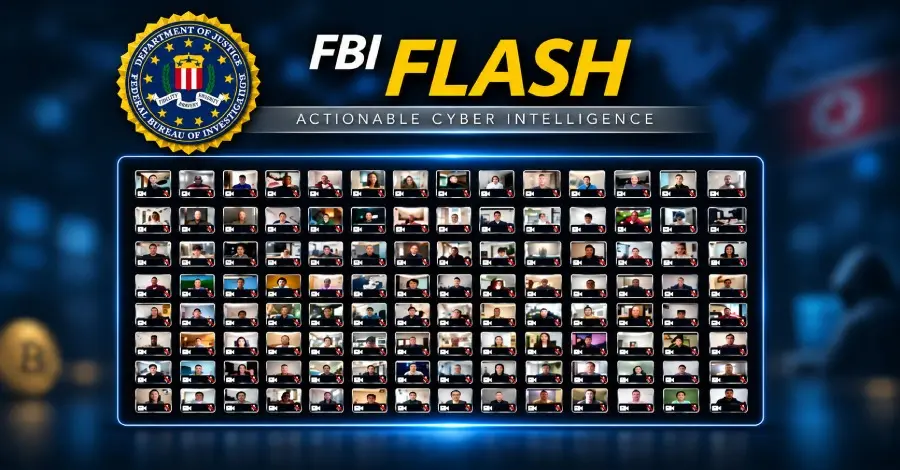
Federal law enforcement agencies have seized more than 900 victim webcam video recordings that hackers used to impersonate individuals during follow-on attacks. The FBI warned that it remains actively aware of several additional attempts by North Korean operatives targeting software developers, library maintainers, and major code repositories boasting significant download volumes.
Earlier analysis published by Arctic Wolf revealed that this targeted social engineering campaign had targeted hundreds of victims across more than 20 countries, with concentrations in the United States, Singapore, the United Kingdom, Hong Kong, South Korea, and the United Arab Emirates. The vast majority of these identified targets operate directly within blockchain finance, investment sectors, or corporate executive roles, with chief executive officers and founders accounting for nearly half of the targeted demographic.
The operational scope of the campaign has continued to expand, encompassing hundreds of targets across dozens of countries, with more than 80 percent identified as founders and C-suite executives. Beyond traditional lures like fake software updates, the campaign has integrated generative AI technologies from major platforms to supply operators with convincing avatars, artwork, and synthetic participant videos. Reconnaissance efforts
have also broadened, with attackers scraping profile photos, live webcam streams, and public conference recordings from YouTube to replicate the exact likeness and voice of industry leaders without requiring direct initial compromises.

Security researchers emphasize that the FaceStealer campaign operates distinctly from other North Korean recruitment-themed operations, such as the ClickFake Interview framework tied to the broader Contagious Interview campaign. While FaceStealer focuses heavily on video call impersonation and deepfakes, recruitment-themed schemes approach prospective targets on professional networks by offering fake technical assessments or take-home coding projects designed to execute hidden backdoors and malicious payloads like BeaverTail and InvisibleFerret.
Recent investigations by firms like JFrog have uncovered that these threat actors have even established entirely fictitious corporate entities, complete with professional websites, client testimonials, active job postings on mainstream boards, and verified recruiter profiles. These elaborate setups are meticulously designed to deceive qualified candidates into running malicious code under the guise of standard employment evaluations.
Security experts advise organizations and professionals to maintain rigorous hygiene, recommending that interview assignments involving code downloads be isolated within disposable virtual machines rather than executed on primary work laptops. Employers and security teams continue to urge heightened vigilance regarding unexpected file downloads and unsolicited interview requests, even when originating from seemingly trusted professional connections.