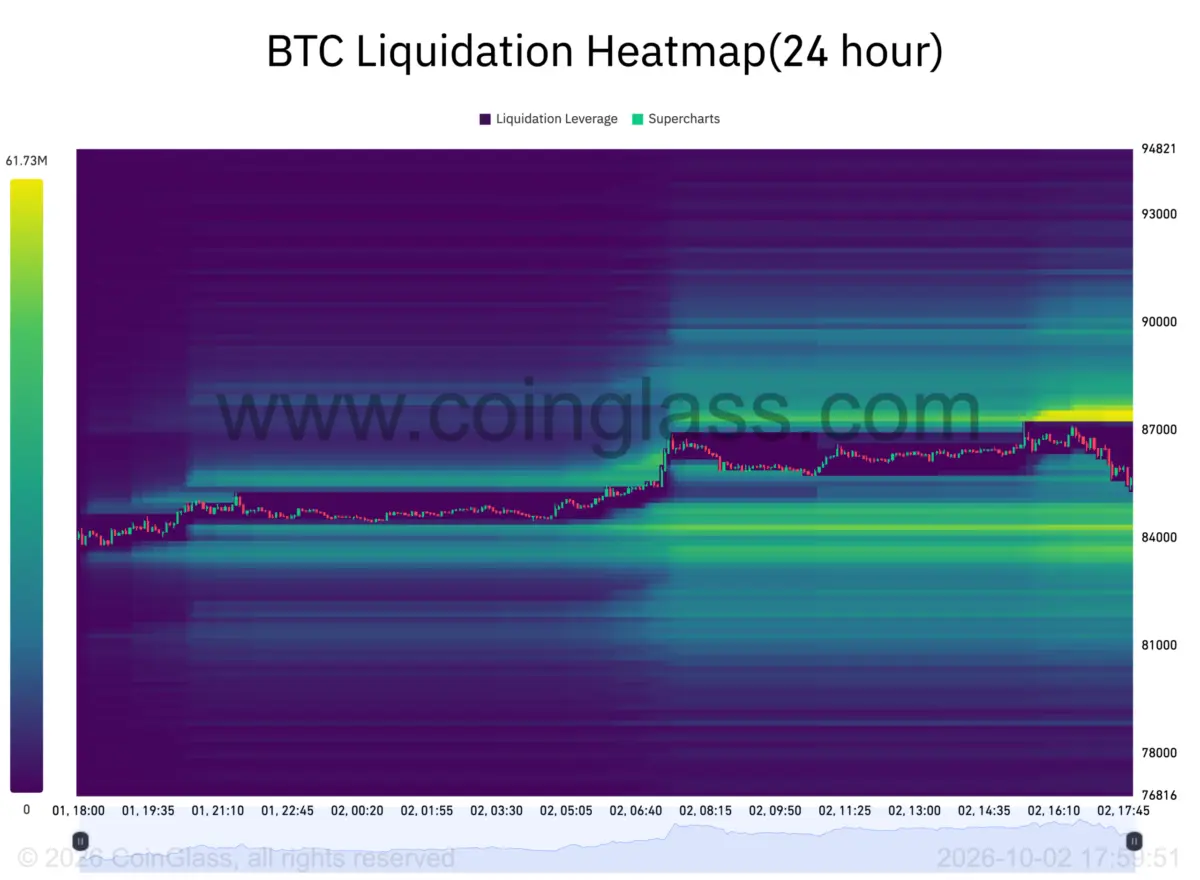
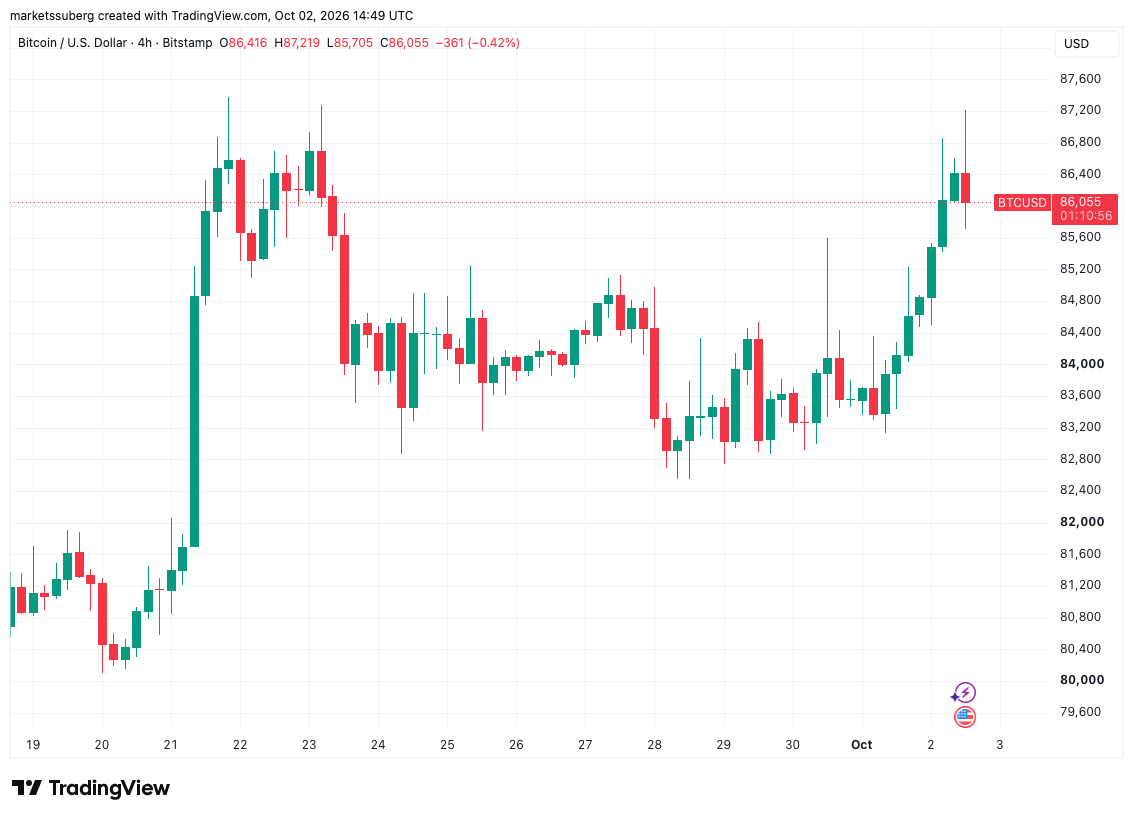
Bitcoin (BTC) experienced a notable upward surge on Friday, briefly piercing the $87,000 threshold following the release of weaker-than-expected US macroeconomic data. The digital asset climbed to a local peak of $87,229 on Bitstamp, bringing it tantalizingly close to establishing fresh eight-month highs before a minor retracement brought prices back below the $86,000 mark during late-session trading.
The primary catalyst for the sudden market movement was the September nonfarm payrolls report, which significantly missed market consensus. According to the latest figures, the United States economy added a meager 29,000 jobs during the month, falling far short of the anticipated 84,000 additions predicted by economists. Furthermore, the employment figures for August—which had initially surprised markets with stronger-than-expected growth—were substantially revised downward by federal agencies from an initial reading of 162,000 down to 133,000.
Market commentators and financial analysts quickly weighed in on the disappointing labor market indicators. Trading resource The Kobeissi Letter noted on social media platform X that the newly released metrics officially mark "the third weakest jobs report of 2026," highlighting a cooling trend within the broader US economy that investors had been anticipating for several months.

Bond Yields Extend Fall on Weak Labor-Market Data
The soft employment data immediately reverberated across traditional financial markets, triggering a strong reaction in both fixed-income and equity sectors. US stock indices climbed sharply at the opening bell on Wall Street as traders quickly scaled back aggressive, hawkish bets regarding potential interest rate hikes by the Federal Reserve. The broad-market S&P 500 index rose by 1%, while the technology-heavy Nasdaq Composite Index outperformed, posting a strong 1.8% gain for the session.
Expectations regarding future central bank monetary policy shifted dramatically in the wake of the employment report. Data captured by CME Group’s FedWatch Tool indicated that the probability of the Federal Reserve enacting a 0.25% interest rate hike at its upcoming October monetary policy meeting plummeted to just 18%. This represents a sharp drop from a 64% probability recorded just one week prior, reflecting a sudden shift in market sentiment toward a more accommodative or paused monetary policy stance.
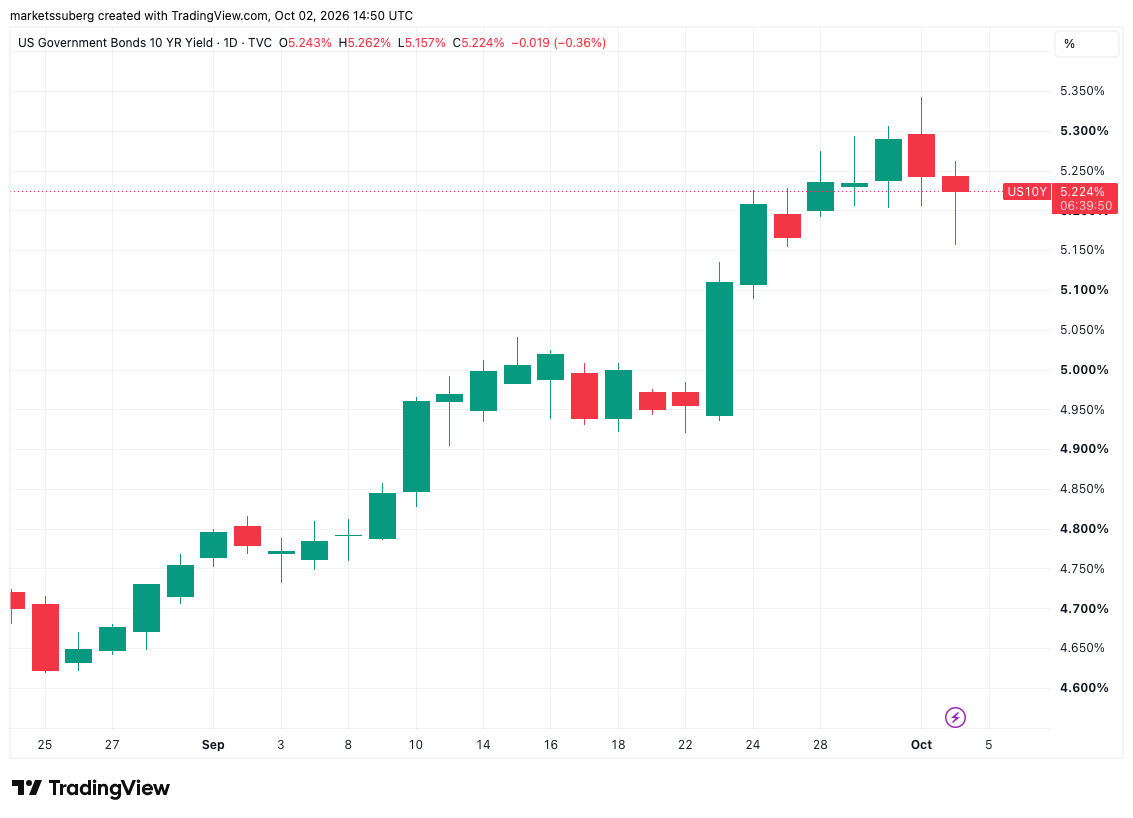
The shifting interest rate outlook also drove a sustained sell-off in US Treasury markets, with bond yields falling for the second consecutive trading day. At the time of writing, the benchmark 30-year Treasury yield hovered at 5.573%, while the 10-year yield retreated to 5.2%. This downward pressure on yields stands in sharp contrast to the dramatic market conditions observed just days prior. On Wednesday, both the 30-year and 10-year yields reached new 24-year highs as traditional financial markets briefly looked past softer August Personal Consumption Expenditures (PCE) data—widely regarded as the Federal Reserve’s preferred gauge of underlying consumer inflation.
Bitcoin Analysis Sees “Cleanest Upside Catalyst” in Yield Drop
Despite the sharp spike past $87,000, Bitcoin’s price action ultimately struggled to sustain a decisive breakout beyond the multi-month resistance levels established throughout September. As the trading session progressed, BTC slipped back down below the $86,000 threshold, reflecting ongoing market friction near historical technical boundaries.
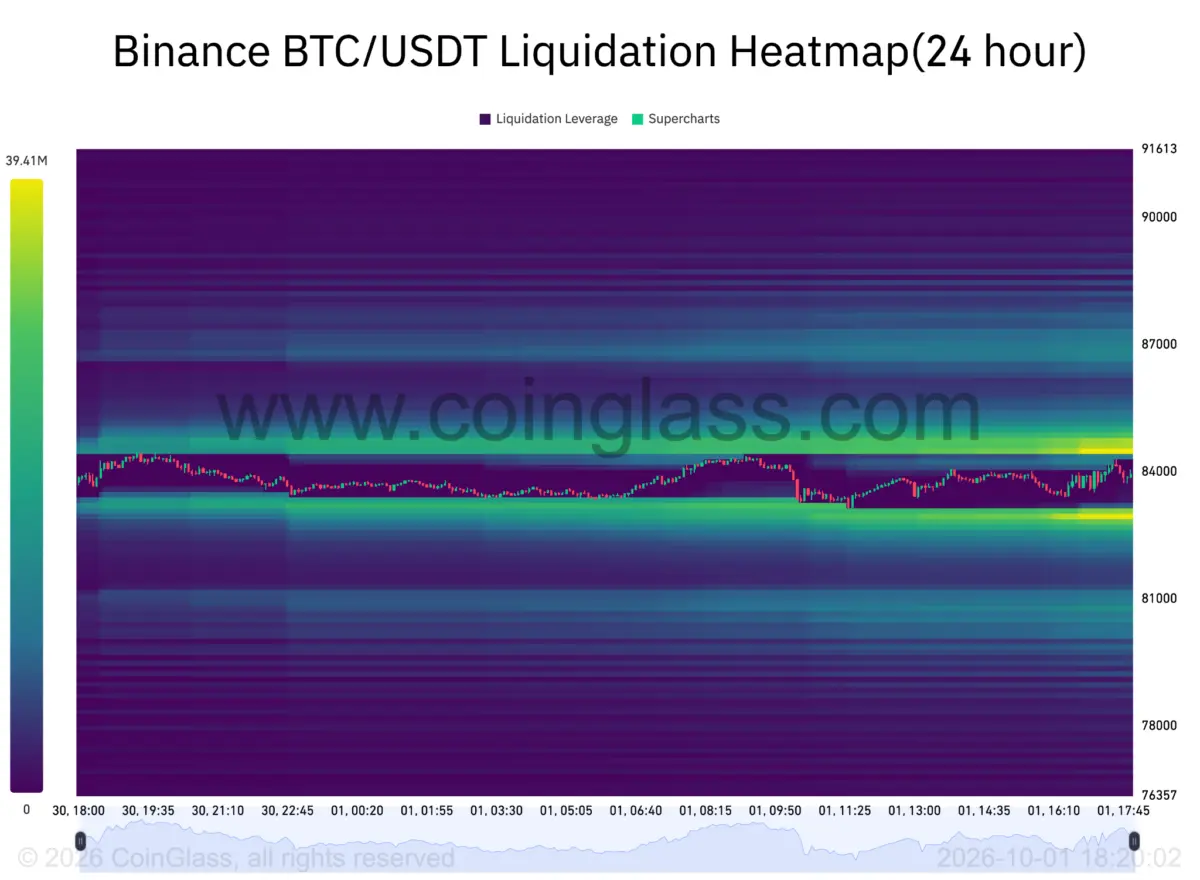
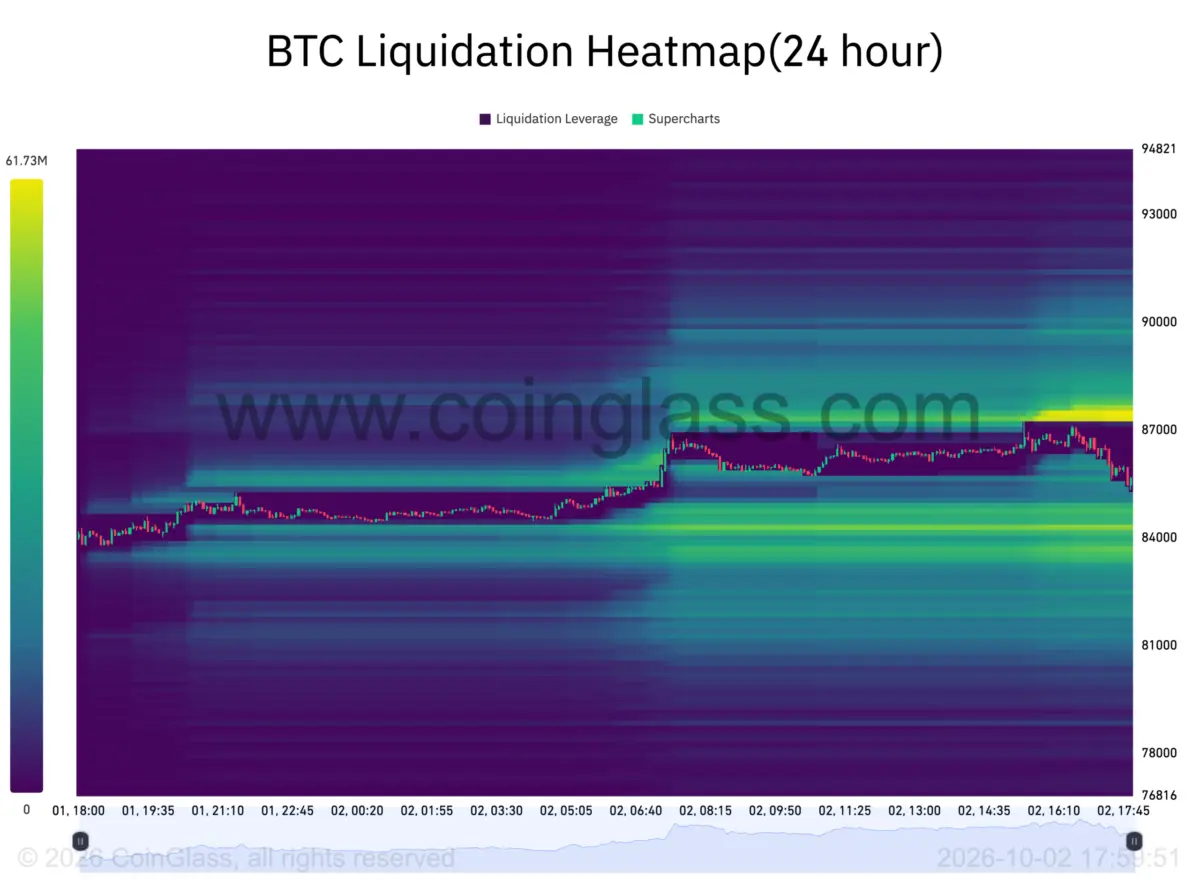
Market observers have pointed to persistent structural resistance in order books as a key factor capping immediate upward momentum. Previous market data highlights successive walls of ask liquidity clustered near exchange order books, with the latest concentration of sell orders forming a formidable resistance band around the $87,300 level.
Nevertheless, institutional market analysts remain optimistic about the broader macroeconomic setup for the leading cryptocurrency. In a recent research note, trading firm QCP Capital argued that BTC/USD should continue to draw structural support from the softer labor-market print, particularly as benchmark Treasury yields extend their downward trajectory.
"For Bitcoin, a Treasury relief rally would provide the cleanest upside catalyst," QCP Capital wrote in their market assessment. The firm also emphasized that the digital asset has previously demonstrated notable resilience during periods of broader macroeconomic pressure, successfully navigating a real-rate shock that put heavy downward pressure on traditional safe-haven assets like gold.
Independent market analysts have also identified encouraging technical developments on lower timeframes. Trader Aksel Kibar noted that a successful support retest around the $82,800 level has already been established on the daily chart, providing a solid technical foundation for the asset as it digests the latest macroeconomic developments and tests local market boundaries.