Bitcoin (BTC) reversed its latest recovery gains following Tuesday’s opening on Wall Street, slipping back as US bond yields continued a relentless march toward multi-decade highs. The cryptocurrency’s minor relief rally stalled just shy of the $85,000 threshold, bringing macro-economic pressures back to the forefront for digital asset investors navigating a turbulent global financial landscape.
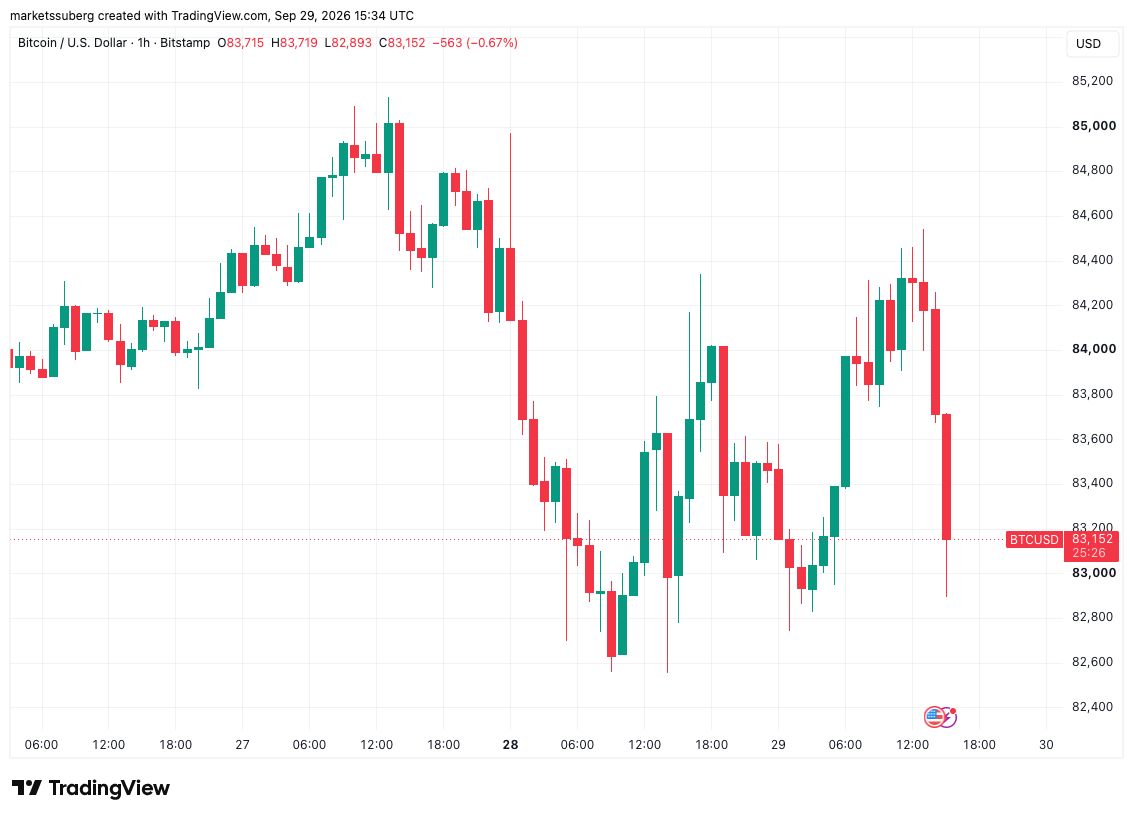
Data from TradingView indicated that a local push to $84,540 ran out of steam as the traditional US trading session got underway. The flagship cryptocurrency quickly retreated, falling below its daily opening level near $83,600 and highlighting the sensitivity of crypto assets to broader macroeconomic conditions.

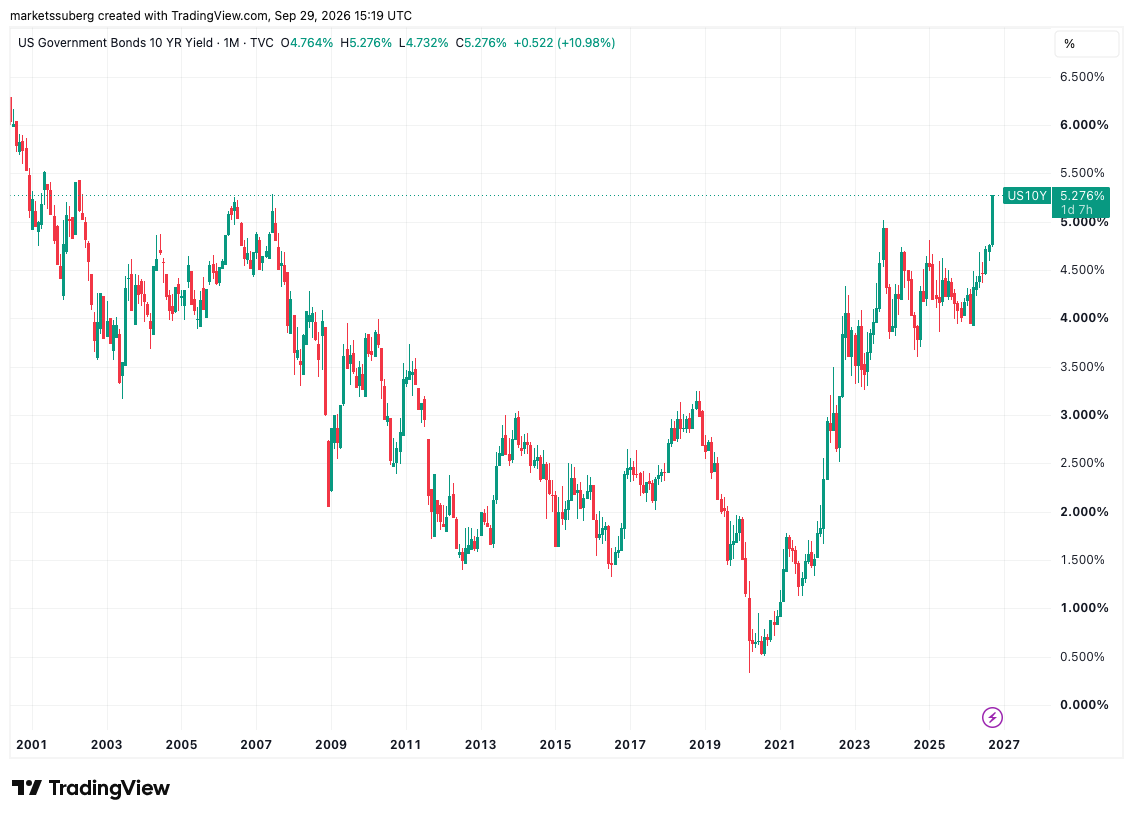
The primary catalyst behind the sudden market friction came from the US bond markets, which showed no signs of cooling down. The 30-year US Treasury yield vaulted to new 24-year highs, pushing comfortably above the 5.60% mark. Meanwhile, the benchmark 10-year yield touched 5.26%, bringing it to the cusp of surpassing its June 2007 highs and reaching territory not witnessed since April 2002. This historic surge in yields has rippled across virtually all risk-on and traditional safe-haven assets, creating an environment of heightened caution.
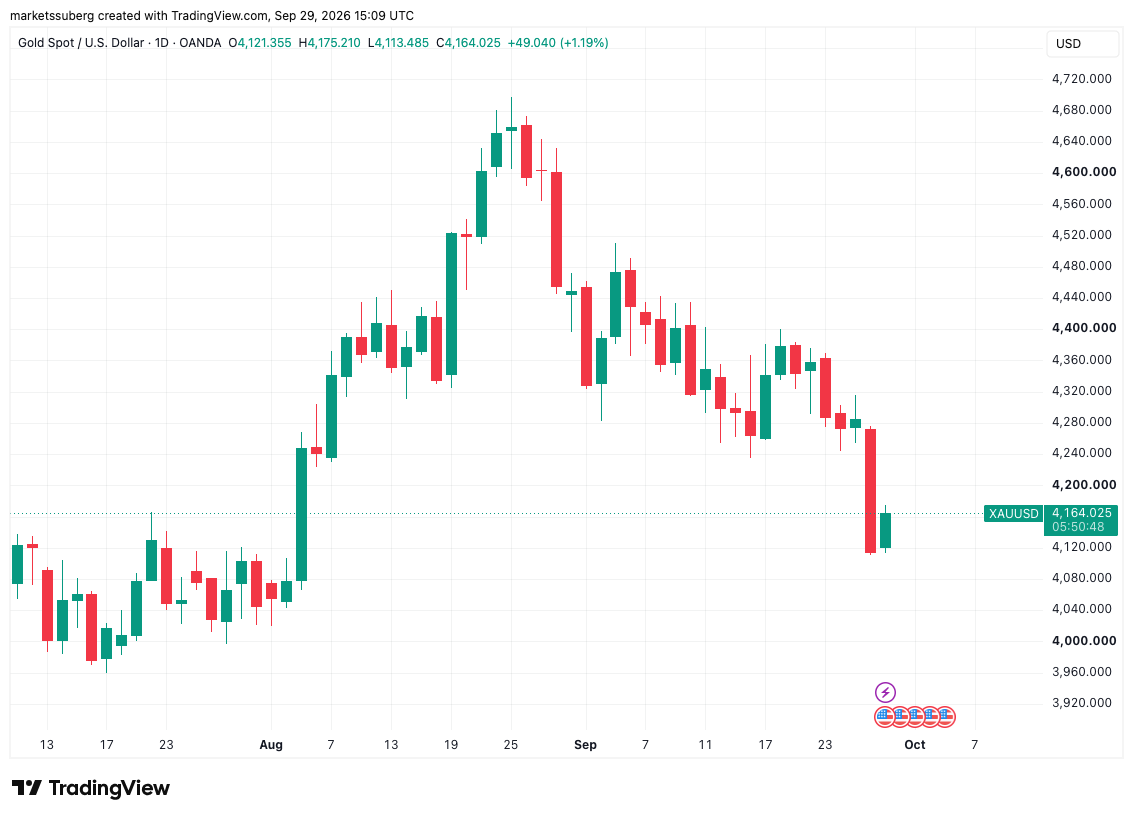
Compounding the pressure on financial markets are ongoing geopolitical tensions, notably the ongoing conflicts and uncertainty surrounding the US-Iran situation. Coupled with high global oil prices and persistent, sticky inflation, these factors have kept investors on edge. The dramatic climb in bond yields has also heavily impacted precious metals, which typically thrive during times of geopolitical distress. Gold suffered a sharp 3.6% drop on Monday, plunging to $4,115 per ounce before staging a minor recovery to trade around $4,166.
Prominent market commentators were quick to flag the abnormal behavior of traditional safe havens. The financial commentary resource The Kobeissi Letter noted that gold’s sharp retreat in the face of widespread geopolitical risk was a highly unusual occurrence. In a post shared on social media platform X, the publication emphasized that the aggressive surge in yields was causing extraordinary disruptions across the entire precious metals market, upending traditional correlations between inflation hedges and macroeconomic stress.
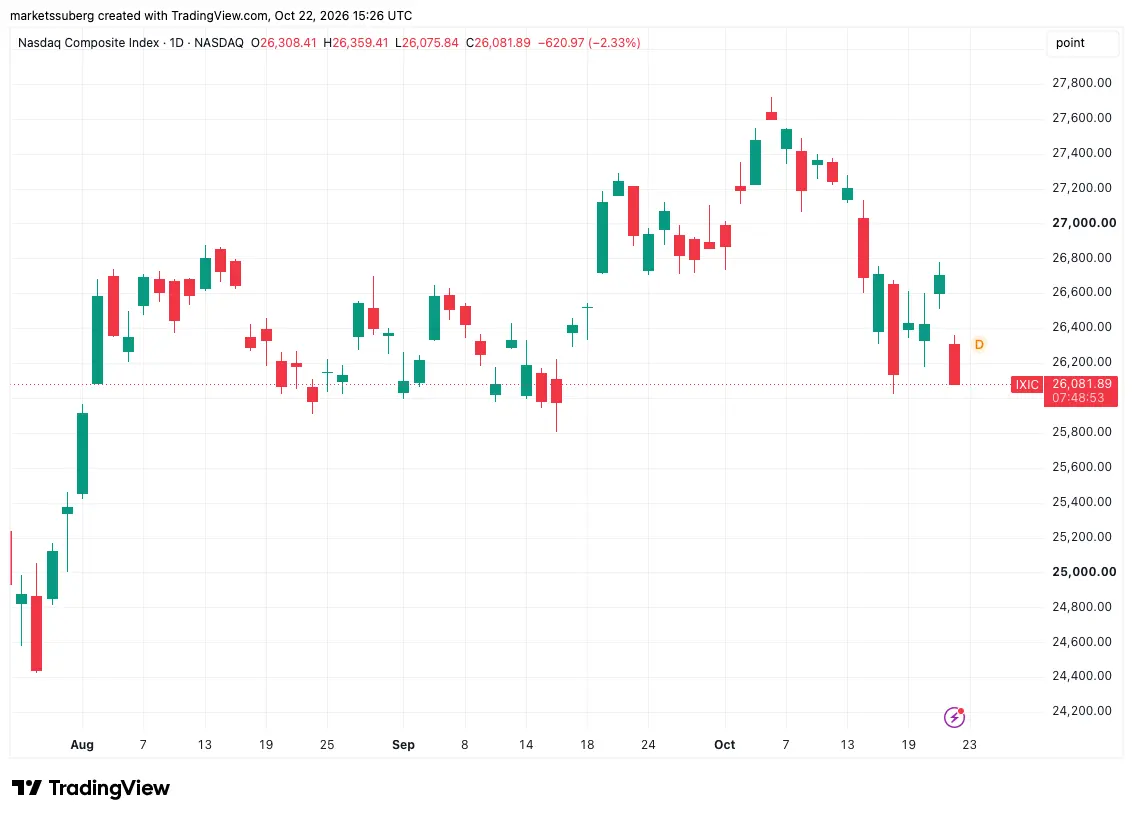
While broader US equities managed to avoid catastrophic volatility, other analysts pointed to underlying market fractures that could spell potential relief or further turbulence ahead. New commentary from trading resource Mosaic Asset Company highlighted the possibility of a renewed upward swing driven by extremely oversold market conditions.
According to Mosaic, the percentage of stocks trading in short-term uptrends on a year-to-date basis has plunged to levels last seen in late March, a period when the S&P 500 hovered near formal correction territory. Furthermore, a wide array of market breadth metrics signal deep oversold conditions, while investor sentiment has experienced a pronounced shift toward bearishness over the preceding two weeks.
Despite these cautionary indicators, Mosaic noted that robust fundamental economic data—such as higher-than-expected job gains recorded in August—could provide a solid floor for equities even as the Federal Reserve continues its path of monetary tightening. Market participants are increasingly pricing in an anticipated 0.25% interest rate hike by the Federal Reserve during its upcoming October meeting, a factor that continues to loom large over both equities and digital assets.
Long-Term Holder Supply Reinforces Overhead Resistance
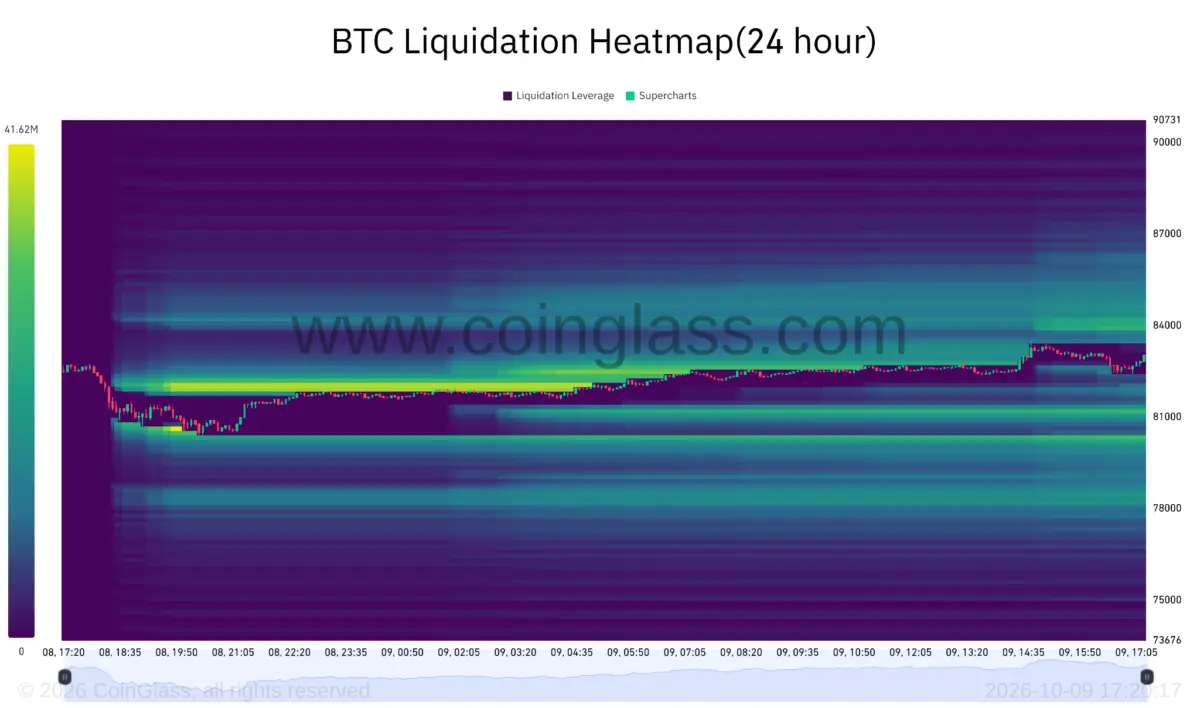
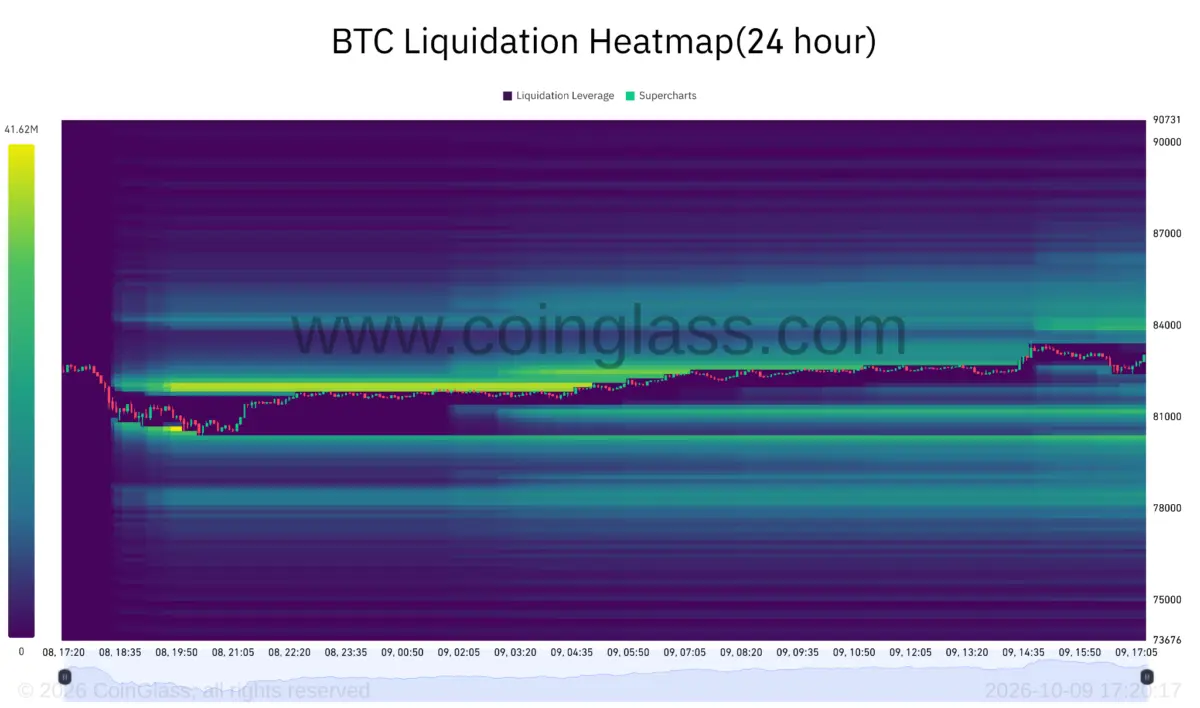
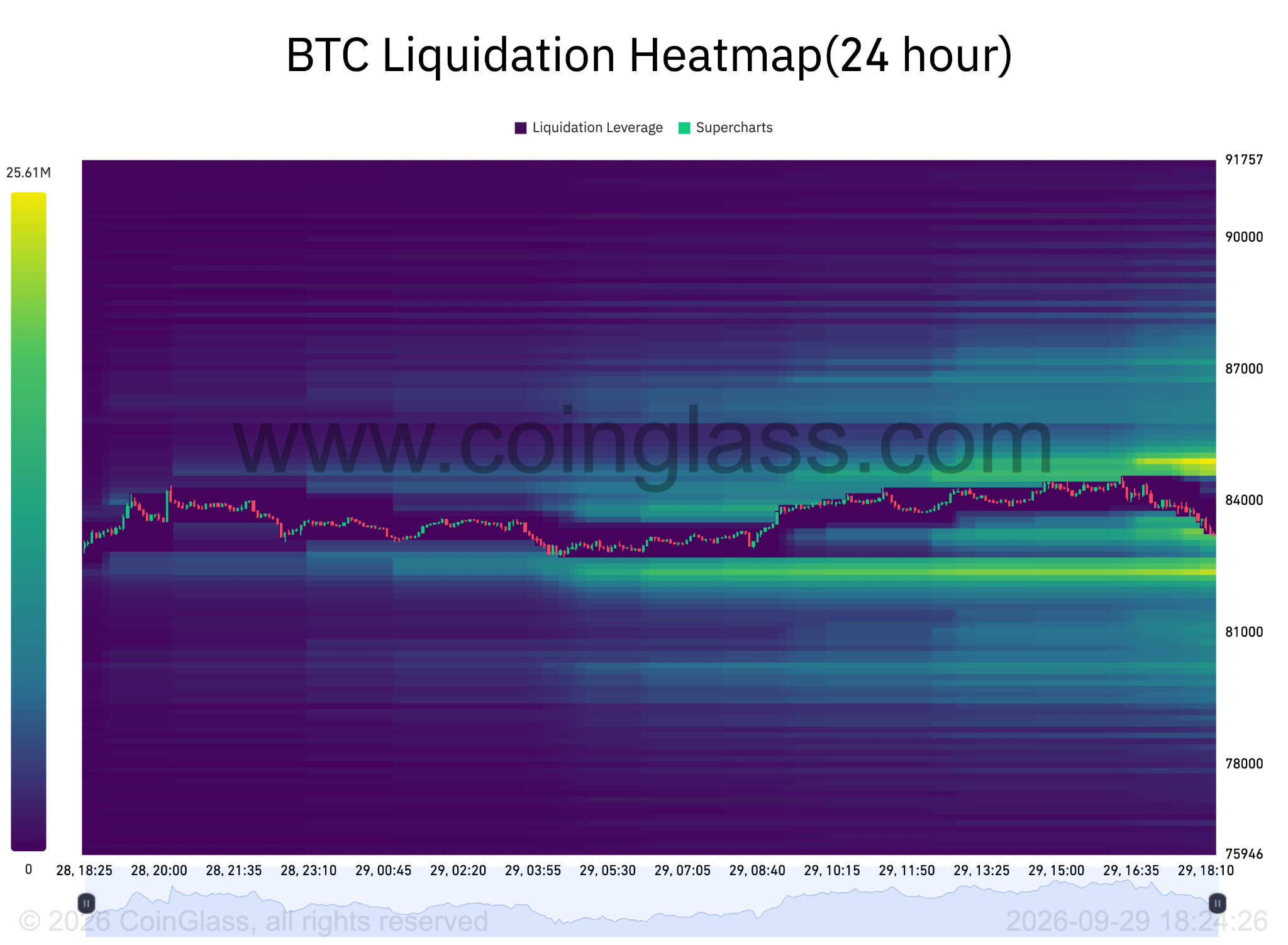
On lower time frames, Bitcoin’s price trajectory remained heavily dictated by shifting liquidity dynamics within exchange order books. Order-book data sourced from CoinGlass demonstrated that heavy overhead resistance had rapidly thickened around the $85,000 mark. As liquidity clustered at this level, the cryptocurrency experienced immediate downward pressure, echoing similar market behavior witnessed earlier in the week where bulls were repeatedly blocked from targeting yearly opening highs.
Onchain analytics platform Glassnode further illuminated the structural hurdles facing Bitcoin’s current price action, pointing directly to persistent supply walls. According to Glassnode’s metrics, coins controlled by long-term holders—defined as wallets that have maintained unspent transaction outputs (UTXOs) for at least six months without moving them—are heavily concentrated in the $84,000 to $85,000 range.
This dense accumulation of long-term supply means that a massive cluster of coins sits at this specific price point, creating a high probability of profit-taking whenever Bitcoin attempts a sustained breakout. In an update to its followers on X, Glassnode noted that Bitcoin has conspicuously stalled beneath its heaviest supply cluster in recent history. The analytics provider stressed that the asset must successfully break through and decisively hold above this dense resistance zone for the broader macro rally to continue unimpeded.