Bitcoin is increasingly cementing its position as the premier financial asset of the modern era, according to Gui Gomes, CEO of OranjeBTC. In a recent comprehensive discussion on the intersection of digital assets and traditional finance, Gomes broke down the mechanics of Bitcoin-backed loans, the explosive grassroots adoption of cryptocurrency in Brazil, and the long-term trajectory that could see Bitcoin ascend to the status of a global reserve currency.
As digital credit markets mature and financial products evolve, Gomes explained how innovations in borrowing and lending are pushing Bitcoin deeper into the fabric of global financial markets. Among the most notable milestones highlighting this shift is a first-of-its-kind Bitcoin-backed loan executed in Brazil, signaling a major evolution in how Latin American markets view and utilize digital assets. Every structural step forward, Gomes argued, brings the asset class closer to its ultimate destination as the foundational layer of global monetary architecture.
Running the Strategy Playbook in Latin America
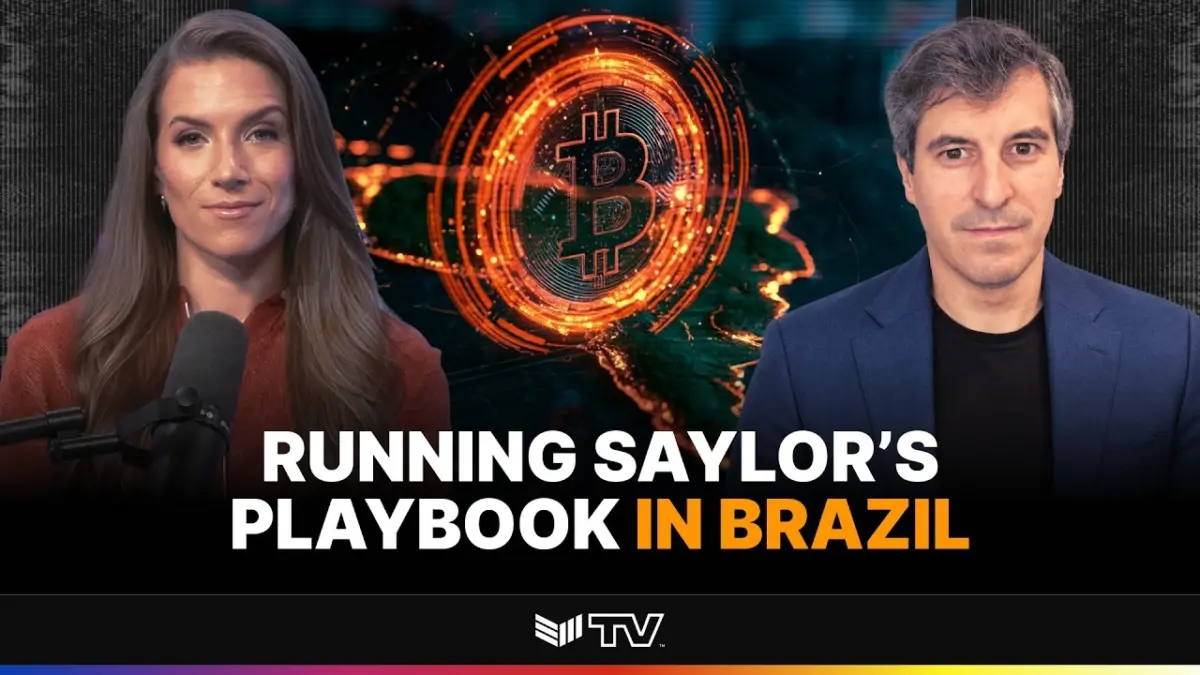
The conversation opened with an examination of OranjeBTC’s strategic playbook and its execution across Latin America. Gomes detailed how regional economic dynamics have created a fertile environment for Bitcoin-based enterprises. Unlike mature Western markets where legacy financial infrastructure is deeply entrenched, Latin America has frequently grappled with currency devaluation, inflation, and restricted access to traditional banking services. These economic hurdles have inadvertently accelerated the search for sovereign, non-sovereign, and decentralized financial alternatives.
By deploying corporate treasury strategies tailored to the realities of Latin America, companies like OranjeBTC are positioning themselves at the vanguard of a profound financial transformation. Gomes noted that executing these strategies requires a nuanced understanding of local regulatory frameworks, macroeconomic pressures, and cultural attitudes toward savings and investment. Rather than simply mirroring models built for Wall Street, the approach in Latin America emphasizes resilience, liquidity, and long-term capital preservation through hard assets.
Brazil’s Leadership in Grassroots Adoption
A focal point of the discussion was Brazil’s standing as a global leader in cryptocurrency integration. According to Gomes, Brazil currently ranks number one in grassroots Bitcoin adoption, a phenomenon driven by a digitally savvy population and a proactive fintech ecosystem. Brazilians have long been accustomed to navigating volatile economic conditions, making them uniquely receptive to decentralized stores of value that operate outside the control of central banks.
This grassroots momentum is not merely retail speculation; it represents a fundamental shift in how everyday citizens interact with money. From remittances and cross-border commerce to daily savings, Bitcoin has found a natural home among Brazilians seeking shelter from the domestic fluctuations of the Real. This widespread grassroots foundation provides a stable and expanding base for institutional products, creating a symbiotic relationship between retail adoption and corporate market development.
Building a Bitcoin Treasury Company in Brazil
Building a Bitcoin treasury company within Brazil offers a distinct set of structural advantages, Gomes explained. The country possesses a sophisticated financial sector capable of supporting complex corporate vehicles, alongside a growing pool of investors eager to gain exposure to digital assets through compliant domestic channels. This environment allows treasury-focused firms to accumulate Bitcoin on their balance sheets while bridging the gap between traditional capital markets and the burgeoning digital economy.
The advantages extend beyond mere asset accumulation. Operating within Brazil enables companies to leverage local capital markets to fund expansion, tap into specialized talent pools, and engage directly with regulators who are increasingly open to financial innovation. By establishing robust corporate frameworks locally, firms can scale their operations regionally while maintaining high standards of transparency and corporate governance.
Navigating New Regulations and VASP Licensing
Regulatory clarity has historically been a major hurdle for the cryptocurrency industry worldwide, but Brazil has made significant strides in establishing a structured legal framework. Gomes discussed the country’s developing Bitcoin regulations and the implementation of Virtual Asset Service Provider (VASP) licensing. These regulatory developments provide a clearer path for institutional participation, ensuring that companies operating within the digital asset space adhere to stringent compliance, anti-money laundering, and consumer protection standards.
Rather than stifling innovation, the introduction of formal licensing has lent legitimacy to the sector. Institutional investors and traditional financial institutions require regulatory certainty before deploying capital into digital assets. Brazil’s proactive approach to licensing positions the country as a compliant, secure jurisdiction for digital asset businesses, thereby attracting larger pools of domestic and international investment.
Economic Shifts and the Pro-Market Environment
The broader macroeconomic and political landscape in Brazil also plays a critical role in the adoption of alternative financial assets. Gomes touched upon Brazil’s recent elections and the ongoing political and economic shift toward a more pro-market posture. Economic policies that emphasize fiscal responsibility, privatization, and deregulation create a more favorable environment for businesses, including those operating at the intersection of technology and finance.
As the political climate evolves to support market-driven solutions, the barriers to entry for innovative financial products continue to decline. This pro-market shift coincides with changing monetary dynamics, including discussions around interest rate adjustments, the stability of the Brazilian Real, and the country’s preparation for its next phase of economic growth. In this environment, digital assets are increasingly viewed not as a speculative fringe, but as a strategic component of modern corporate and national financial planning.
Expanding Investor Access and the DIGI11 Ecosystem
For global investors looking to gain exposure to these developments, accessing vehicles like OranjeBTC shares offers a direct route into the Latin American digital asset narrative. Gomes elaborated on the mechanisms enabling international participation, highlighting how local financial instruments are bridging local and global markets.
A prime example of this financial bridge is DIGI11, a product designed to bring sophisticated digital asset strategies—such as those associated with STRC and SATA—directly to Brazilian investors. By packaging these strategies into accessible domestic investment vehicles, market participants in Brazil can gain diversified exposure to the digital asset economy without needing to navigate complex offshore platforms. Furthermore, Gomes discussed how the DIGI11 ecosystem successfully delivered its first dividend, marking a significant milestone in proving the economic viability and cash-flow-generating potential of these digital-native corporate structures.
Bitcoin as the Ultimate Collateral and the Future of Digital Credit
The conversation ultimately returned to the core thesis of Bitcoin’s utility: its unmatched properties as collateral. Gomes reiterated his view that Bitcoin is likely the best collateral an individual or institution could possibly ask for, pointing to its absolute scarcity, 24/7 global liquidity, borderless nature, and decentralized settlement guarantees.
Unlike traditional real estate, equities, or sovereign debt, which are subject to localized counterparty risks, political interference, and supply inflation, Bitcoin provides a pristine, mathematically verifiable foundation for credit markets. This unique characteristic is enabling the development of sophisticated digital credit products, including Bitcoin-backed loans that allow holders to unlock liquidity without triggering taxable events or relinquishing long-term ownership of their assets.
The execution of the first-of-its-kind Bitcoin-backed loan in Brazil demonstrates that these credit markets are moving rapidly from theory to practical reality. As financial institutions, corporations, and individuals increasingly recognize the superior qualities of Bitcoin as a collateral asset, the volume of digital credit secured by the network is expected to expand exponentially.
According to Gomes, each of these developments—from grassroots adoption and regulatory maturation to corporate treasury accumulation and the growth of digital credit—serves as a stepping stone on the path toward Bitcoin’s ultimate integration into the global financial architecture. As these systems scale, they bring the digital asset closer to fulfilling its ultimate destiny: becoming the world’s undisputed reserve currency.
Disclaimer: The views and opinions expressed in this show are those of the participants and do not necessarily reflect the official policy or position of BTC Inc., Bitcoin Magazine, or any affiliated entities. This content is provided for informational and educational purposes only and should not be construed as investment, legal, tax, or accounting advice. Nothing contained in this show constitutes a solicitation, recommendation, endorsement, or offer to buy or sell any securities or financial instruments. Viewers should consult their own advisors before making financial or business decisions.