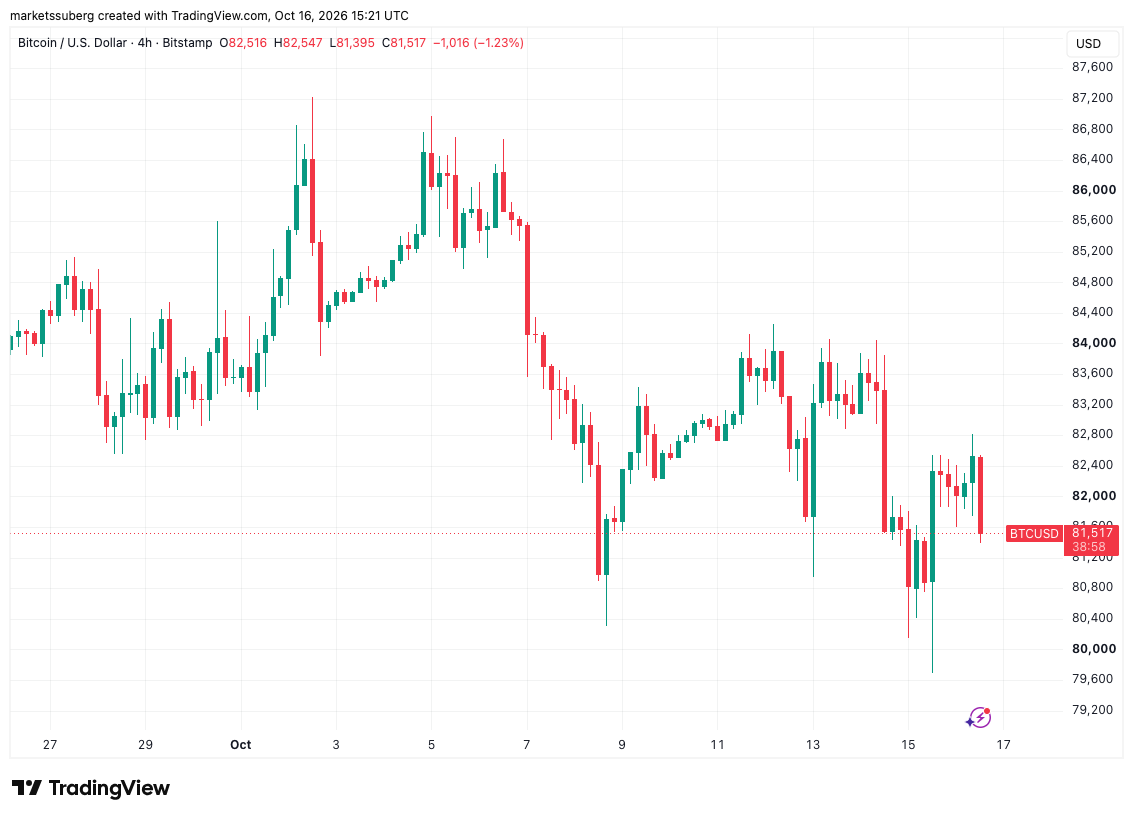
Bitcoin (BTC) traded near the $82,000 mark around Friday’s Wall Street opening bell, as broader cryptocurrency markets showed signs of stabilization following a sharp rebound in South Korean equities. The premier cryptocurrency successfully defended its reclaimed territory, holding most of its gains after staging a notable technical bounce from the $80,000 psychological support level earlier in the week.
Data from TradingView underscored how the BTC/USD pair managed to weather a turbulent global macroeconomic landscape. The cryptocurrency’s resilience arrived just as traditional financial markets began digesting a mixture of regional stock recoveries, shifting monetary policy signals from top central bankers, and persistent underlying pressures within the global fixed-income and technology sectors.
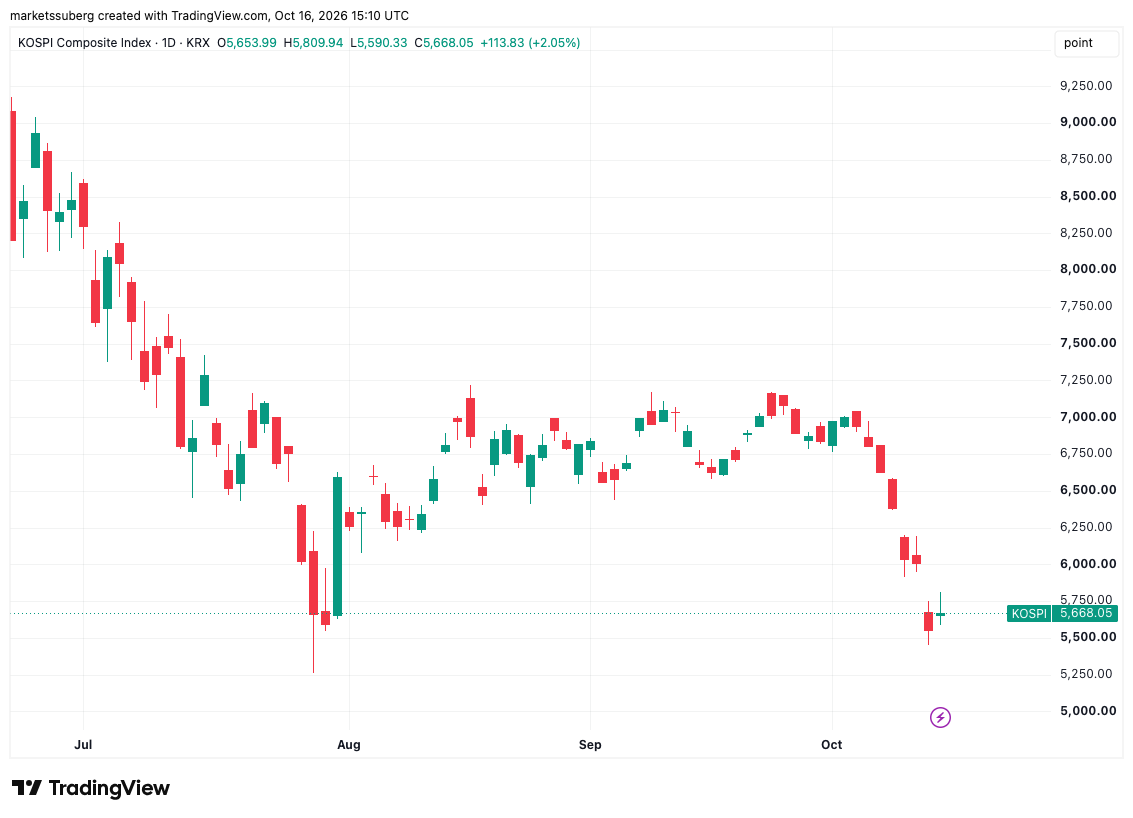
The earlier downward pressure on digital assets had closely mirrored a brutal weeklong sell-off across South Korean technology stocks. However, Friday’s Asian trading session provided a much-needed sigh of relief for regional investors. The KOSPI Composite Index staged a recovery, closing the session up 2% at 5,668. Despite the encouraging end-of-week bounce, the index still registered a steep 8.3% decline for the week as a whole, reflecting lingering fragility in high-growth regional equities.

In contrast, United States equity markets largely decoupled from the severe panic seen in Asian markets earlier in the week, though Wall Street experienced a mixed session on Friday. The tech-heavy Nasdaq Composite Index drifted downward by 0.5%, weighed down by ongoing sector-specific valuations, while the broader S&P 500 index managed a modest gain of 0.5%, demonstrating underlying resilience among top-tier US corporations.
Traders See Dovish Edge to Warsh Comments
A significant catalyst for the relief rally across both traditional and digital asset markets came from Federal Reserve leadership. During a high-profile discussion with International Monetary Fund (IMF) Managing Director Kristalina Georgieva, Federal Reserve Chair Kevin Warsh notably avoided making any hawkish remarks or mentioning potential further interest-rate hikes, offering investors a temporary reprieve from monetary tightening anxieties.
"I don’t prejudge meetings. I don’t believe in saying now what I might do at the meetings that we have in the balance of this year," Warsh stated during the dialogue.
Market participants quickly seized upon this phrasing, interpreting Warsh’s measured tone as a subtle, dovish signal regarding the future trajectory of interest rates. Financial markets had previously been on edge regarding the possibility of aggressive central bank tightening, but the Fed chair’s deliberate omission of future hike commitments shifted immediate market psychology.
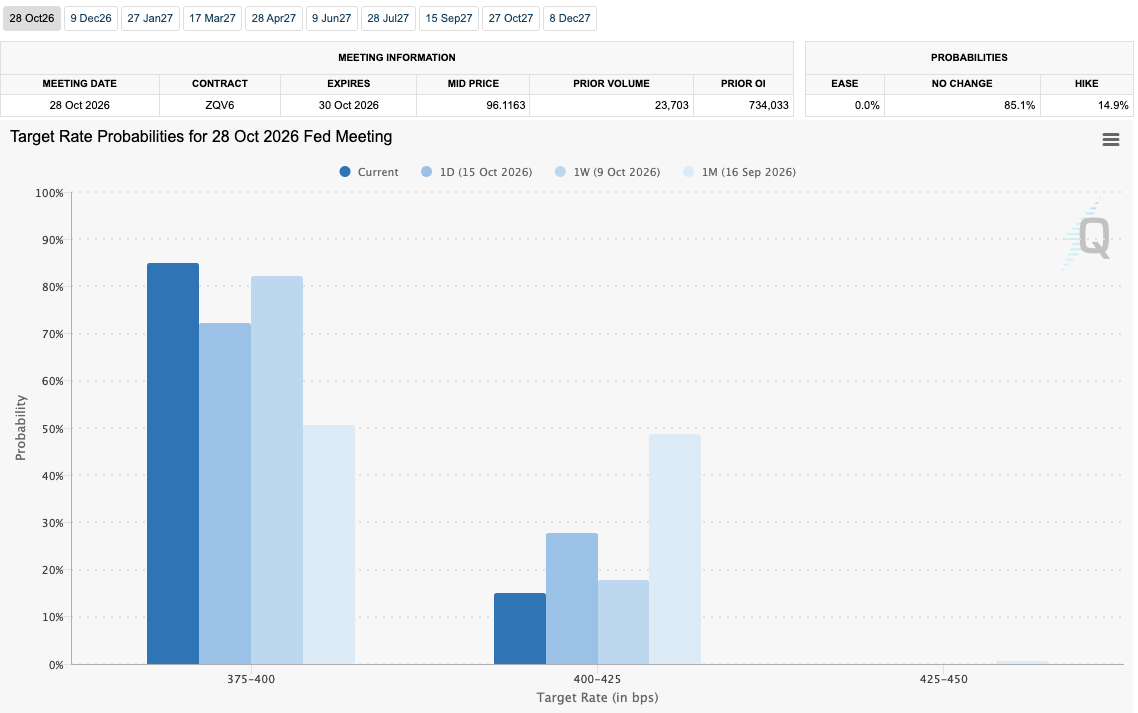
The impact was swiftly reflected in derivatives and interest rate swap markets. Data extracted from CME Group’s FedWatch Tool revealed that the implied probability of a 25-basis-point interest rate hike at the upcoming October Federal Open Market Committee (FOMC) meeting dropped sharply to just 15%. This marked a substantial decline from the 27% probability recorded just a day prior, drastically altering short-term market expectations.
Renowned economist Robin Brooks weighed in on the shifting narrative, suggesting that mounting stress within the artificial intelligence (AI) sector—which many analysts believe acted as a primary driver behind the recent South Korean market sell-off—may be influencing the Fed chair’s cautious approach.
"Warsh gave no indication the Fed’s in any hurry to hike, so the October meeting is now pretty much off the table in terms of a hike," Brooks wrote in a public commentary note. He further elaborated on the shifting macroeconomic psychology, noting that broader market apprehensions surrounding potential overextensions in the technology sector were paradoxically playing into the hands of accommodative monetary policy expectations. "What’s helping the Fed is fears of an AI blow-up, which is making markets more receptive to a dovish message," Brooks added.
US Bond Yields Eye Rebound as Stocks Halt Upside
While equity and crypto markets found temporary footing, fixed-income markets presented a contrasting picture. US bond yields began marching higher as stock indices steadied, renewing long-standing debates among macroeconomic analysts regarding whether the United States Treasury and the Federal Reserve may eventually be forced into a difficult balancing act: choosing between containing a persistent sell-off in the sovereign debt market or maintaining supportive conditions for bullish equity valuations.
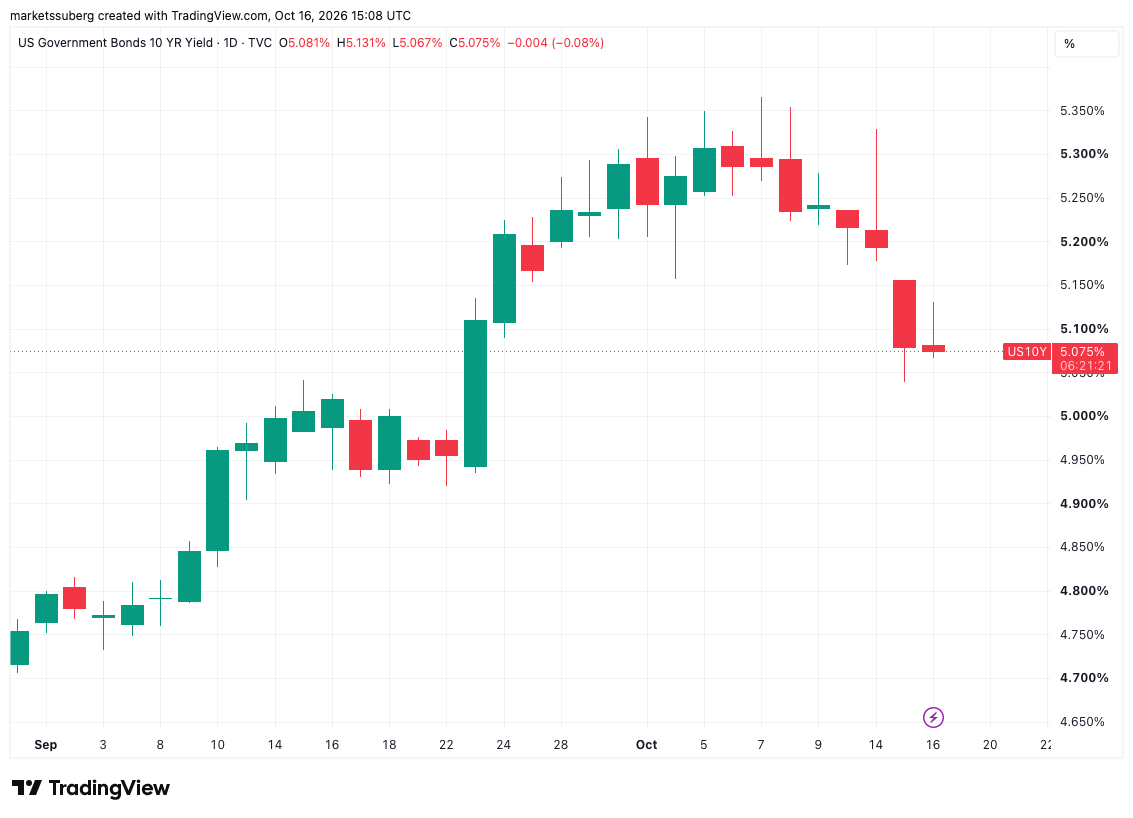
The benchmark US 10-year Treasury yield hovered around 5.07% on Friday, having earlier attempted a more aggressive upward surge that briefly pushed the yield to 5.13%. The persistent strength in long-term yields continues to pose a structural headwind for risk-on assets, as higher risk-free returns compete directly with equities and alternative assets like Bitcoin for institutional capital.
Market analysis published by prominent commentary firm The Kobeissi Letter highlighted that broader stock market weakness has essentially served as the primary source of relief for bond-yield corrections since August. In a detailed social media analysis, the commentary suggested that equities might currently be trapped within a paradoxical "bull-bear" market environment.
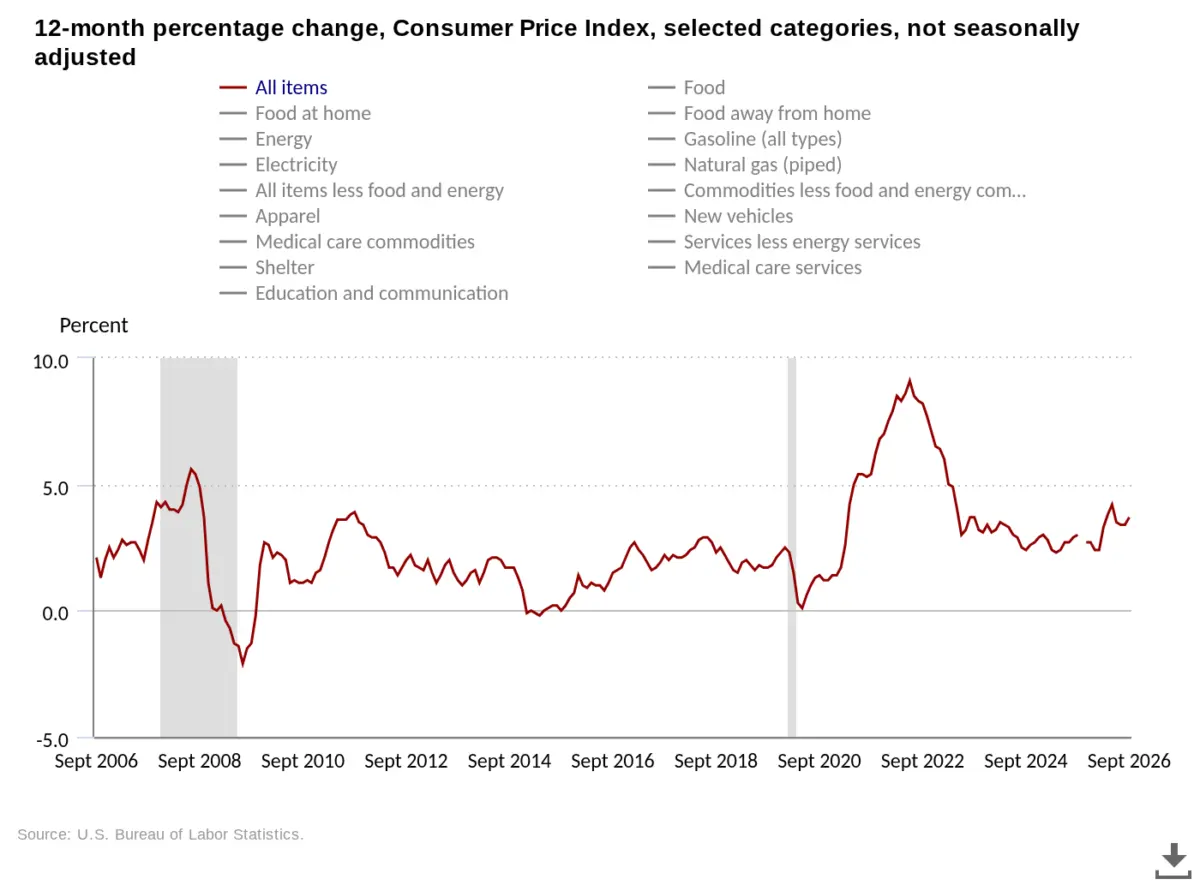
According to the analysis, global geopolitical tensions—specifically pointing to the ongoing US-Iran conflict—have suppressed equity valuations well below where they would naturally trade under normal conditions. Furthermore, persistent inflationary pressures, underscored by recent economic prints showing sticky price growth, have continued to drive organic investor demand toward hard assets and corporate equity exposure, even as central banks navigate complex policy cycles.
"Even as the S&P 500 hits year number five of its bull market, we believe a steep discount is currently priced into equities," The Kobeissi Letter noted. "This discount has functioned as a ‘stealth’ bear market, suppressing equity valuations in the world’s largest and fastest-growing companies."
The analysis concluded that this pent-up suppression could ultimately act as a coiled spring for traditional markets. "This backdrop has the ability to catalyze a violent rally in the S&P 500 if and when it is ultimately priced-out," the commentary added, pointing to historical comparisons of average bull-market performance trajectories.
As Bitcoin consolidates near the $82,000 threshold, market participants continue to monitor the intricate interplay between global central bank rhetoric, traditional fixed-income yields, and regional equity health. With the immediate threat of aggressive October rate hikes appearing to recede following Kevin Warsh’s recent commentary, cryptocurrency traders remain watchful for the next directional catalyst as the fourth quarter progresses.