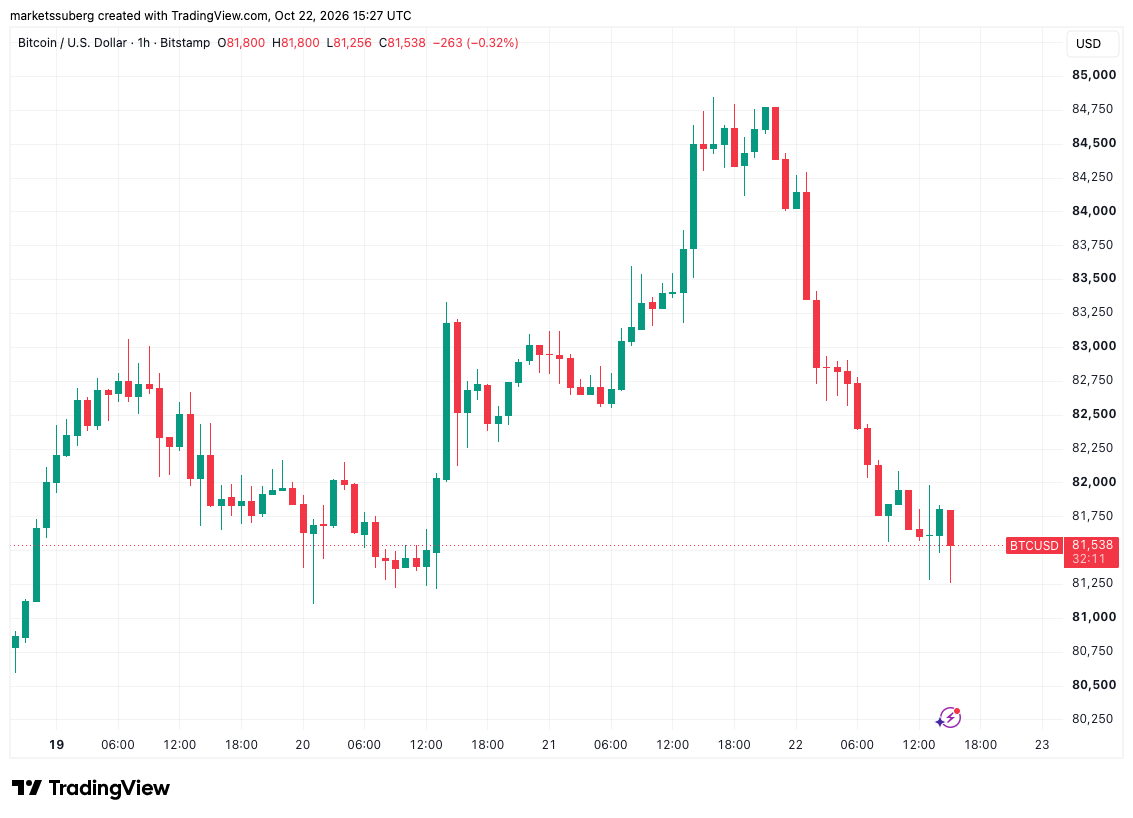
Bitcoin remained under pressure below the $82,000 threshold as Wall Street opened for trading, with renewed geopolitical tensions involving Iran spilling over into global financial markets and weighing heavily on risk-sensitive assets. The flagship cryptocurrency experienced a noticeable downturn, reflecting a broader macro-driven sell-off that gripped traditional equities, technology shares, and digital assets alike.
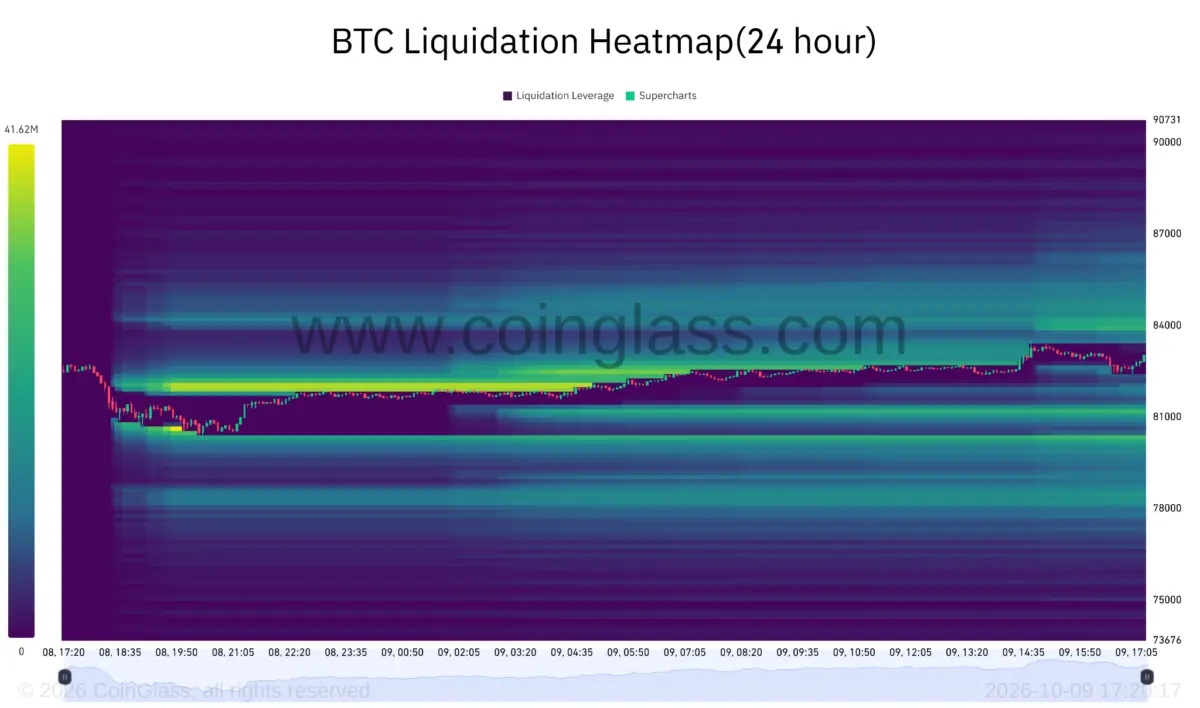
According to data from TradingView, the BTC/USD pair dipped to a local low of $81,256 on the Bitstamp exchange, marking a decline of approximately 2.9% over a 24-hour period. This price action comes on the heels of a period of relatively high volatility, during which Bitcoin had briefly attempted to mount a recovery toward the $85,000 mark before running into substantial macro headwinds and localized resistance zones identified by blockchain analytics firms.
Stocks Fall as Trump Says US "Not Negotiating" With Iran
The primary catalyst for the sudden shift in global risk sentiment stemmed from fresh geopolitical developments and statements regarding international diplomacy. Markets reacted nervously to comments made by political leaders, notably remarks from Donald Trump indicating that the United States was "not negotiating" with the Iranian side.
"We are going to have something one way or the other that will happen fairly soon. Most people seem to think it’s after the election and we’ll see what happens," Trump told reporters, referencing the upcoming U.S. midterm elections scheduled for November 3. The uncompromising stance immediately injected a layer of geopolitical uncertainty into global markets, sparking concerns over potential supply chain disruptions, energy market volatility, and wider regional conflict.
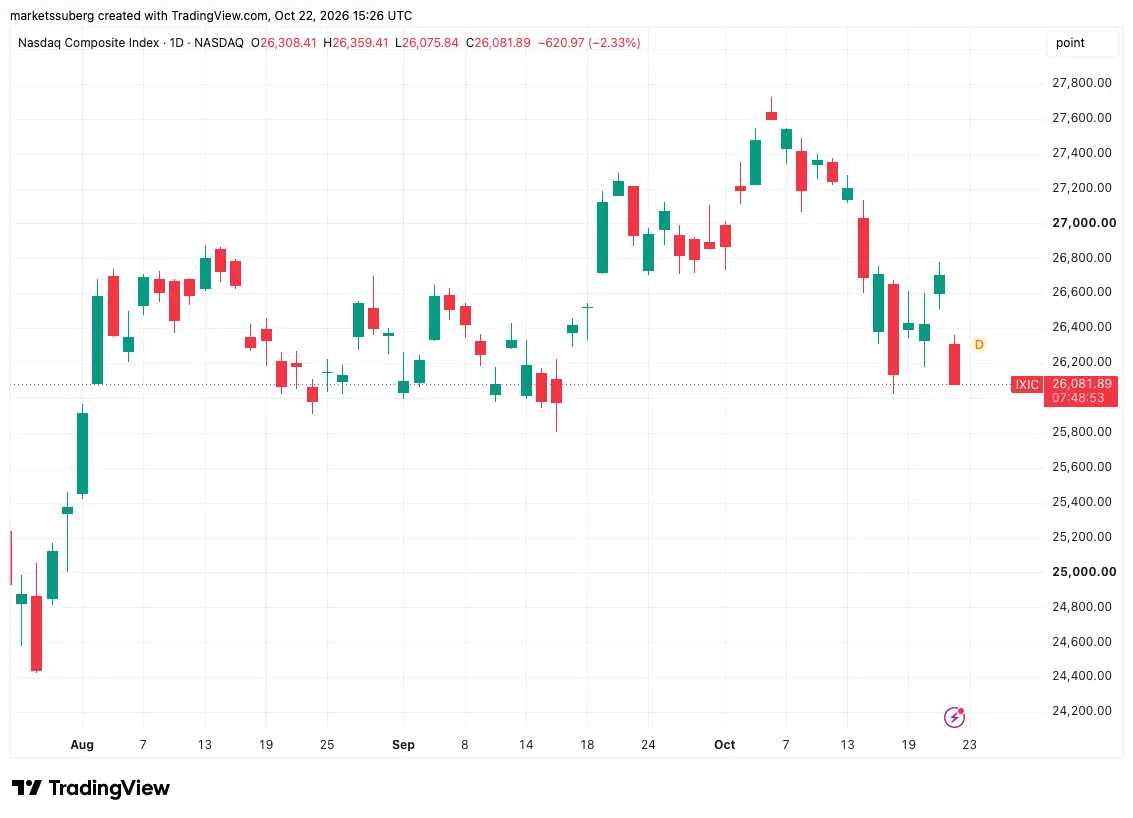
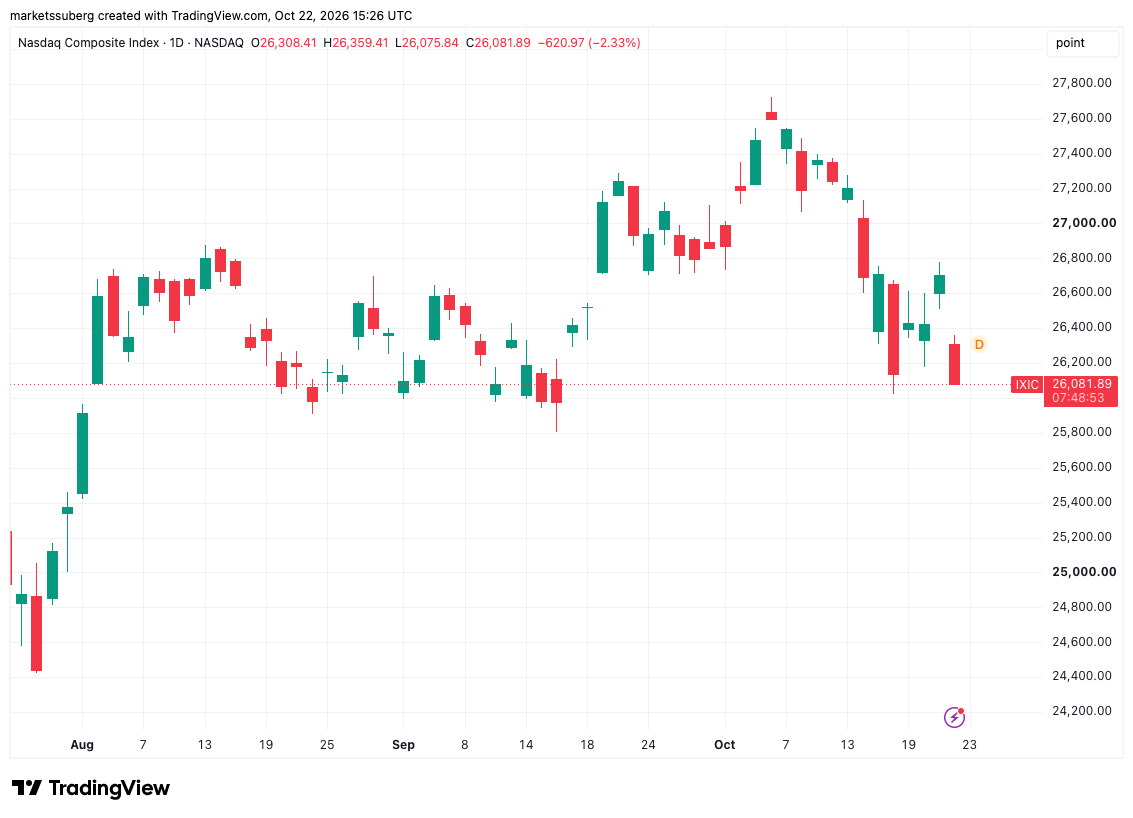
This geopolitical unease coincided with corporate earnings reports, including mixed market reactions to Tesla’s third-quarter results and capital expenditure figures. Combined with the broader risk-off mentality triggered by the escalating rhetoric surrounding Iran, major U.S. stock indices opened sharply lower. At the time of writing, the benchmark S&P 500 Index had fallen by 1.3%, while the technology-heavy Nasdaq Composite Index took a heavier blow, sliding 2.3% as investors pulled capital out of growth-oriented sectors.
Market analysts noted that the simultaneous pressures of geopolitical friction and corporate earnings uncertainty created a toxic environment for risk assets. Ian Lyngen, head of U.S. rates strategy at BMO Capital Markets, highlighted the breadth of the market shift in comments provided to Bloomberg.
"Tech stocks came under pressure amid renewed AI valuation fears. The rebound in energy prices contributed to the risk-off tone," Lyngen stated, adding that traditional safe-haven assets had quickly absorbed the fleeing capital. "Treasuries have emerged as a primary beneficiary as global risk sentiment has come under pressure."
As capital rushed into government debt, bond returns shifted, driving the U.S. 10-year Treasury yield toward the 5% mark before it ultimately slipped to its lowest level since September 23. This movement in the bond market underscored the defensive posture adopted by institutional investors, leaving risk-on asset classes such as equities and cryptocurrencies struggling to maintain their footing.
Expect BTC in Narrow Range Until Fed Meeting
Within the digital asset ecosystem, Bitcoin’s price action has increasingly mirrored the cost basis of institutional investment vehicles, specifically U.S. spot Bitcoin exchange-traded funds (ETFs), which hover around the $81,500 mark. This level has acted as a gravitational center for BTC following its rejection from higher price tiers.
Market analysts at Bitfinex Alpha, the research arm of the prominent cryptocurrency exchange Bitfinex, released a comprehensive market outlook detailing expectations for the near-term trajectory of the world’s largest cryptocurrency. According to their assessment, BTC/USD is anticipated to remain confined within a relatively narrow trading range, projected between $81,300 and $84,400, until the U.S. Federal Reserve rate policymakers convene for their upcoming meeting on October 28.
"Sustained ETF demand with stable leverage metrics would support a breakout above $84,400, while macro headwinds combined with a close below $81,300 would increase the risk of a move towards the October 15 low at $79,821," the Bitfinex analysts wrote in their weekly report.
This technical outlook highlights the delicate balance currently governing the market. On one hand, persistent institutional inflows through spot ETFs continue to provide a foundational floor for the asset, preventing deeper corrections despite adverse macroeconomic conditions. On the other hand, persistent macro headwinds, potential shifts in monetary policy expectations, and geopolitical shocks remain potent enough to cap upside momentum and threaten key support levels.
Longer-term sentiment among derivatives traders and speculative participants has also shown signs of caution. On prediction markets and specialized derivatives platforms such as Kalshi, market participants significantly discounted the probability of a major price recovery or a push toward new all-time highs by mid-January 2027. Trading activity on these platforms indicated that participants had trimmed the probability of BTC/USD hitting aggressive historical price targets down to a marginal 3%, signaling a more defensive and measured outlook for the medium-to-long term as the market digests the complex interplay of macroeconomic, political, and regulatory developments heading into the final stretch of the year.