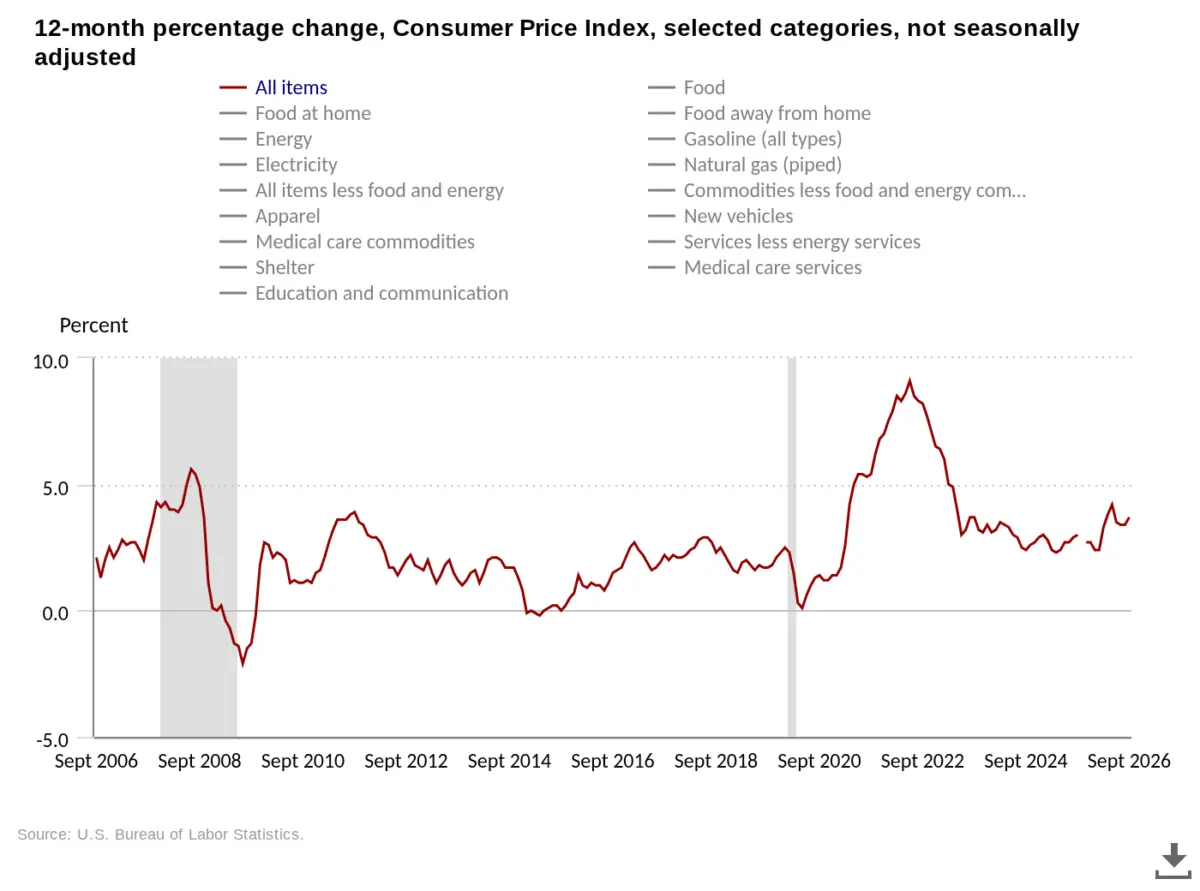
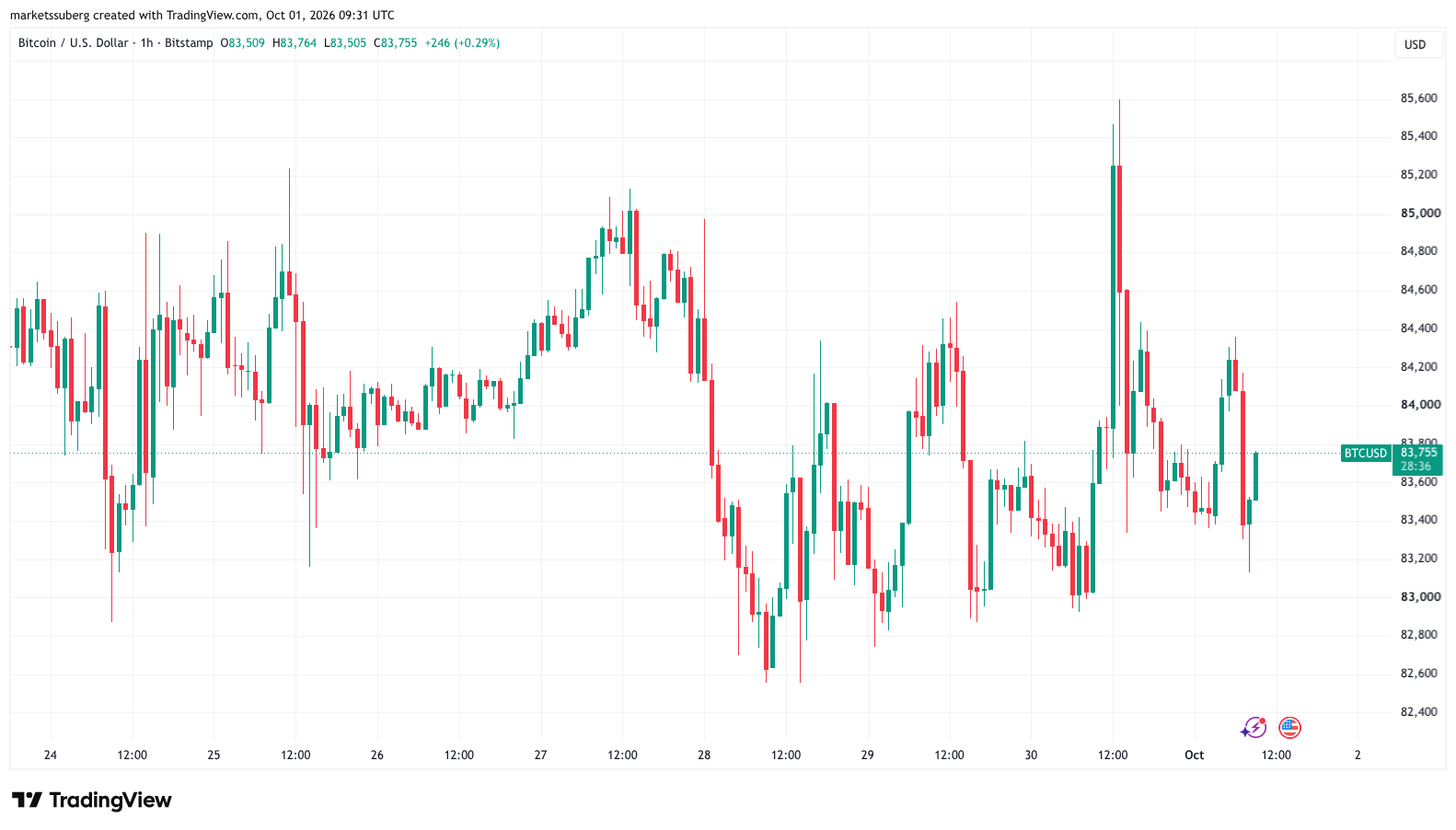
Bitcoin (BTC) managed to hold firm above the $83,000 threshold on Thursday, stabilizing after a brief wave of volatility triggered by lower-than-expected United States inflation data. The world’s leading cryptocurrency experienced a turbulent mid-week trading session as market participants reacted to shifting macroeconomic indicators, end-of-month portfolio adjustments, and the official close of both September and the third quarter.
Data from major exchanges, including Coinbase, indicated that the BTC/USD trading pair was largely flat on the day following a frantic push higher and subsequent pullback. The market action coincided with crucial macroeconomic data releases that heavily influenced broader financial markets, leaving risk assets navigating a complex landscape of cooling inflation pressures and evolving monetary policy expectations from the US Federal Reserve.

Bitcoin Gives Back Gains After PCE Release
The latest round of market volatility began mid-week when Bitcoin’s upward momentum temporarily stalled just shy of the $86,000 mark. BTC/USD reversed its trajectory abruptly at $85,600 on Wednesday, surrendering earlier gains that had been sparked by a cooler-than-expected inflation reading from the US Bureau of Economic Analysis (BEA).
The Personal Consumption Expenditures (PCE) price index, widely regarded as the Federal Reserve’s preferred metric for tracking domestic price stability, rose by 3.4% year-on-year in August. This figure came in below the consensus expectations of economists, who had anticipated an annual reading of 3.7%. Meanwhile, the core PCE price index—which strips out volatile food and energy components—increased by 3.0% over the preceding twelve months.
However, the headline numbers came with significant underlying methodological shifts that complicated market interpretations. The official BEA release incorporated updated calculations affecting several key sectors, including portfolio management and investment advisory services, computer software and accessories, and legal services. Market commentary publication The Kobeissi Letter noted on social media platform X that these methodological adjustments alone could reduce core PCE inflation calculations by as much as 20 basis points. Furthermore, July headline and core PCE figures were quietly revised downward by an additional 30 basis points.
Given these revisions and structural changes, analysts suggested that financial markets would heavily discount the nominal August reading. Across traditional markets, the impact was muted but negative. The S&P 500 closed Wednesday down 0.25% at 7,651 points, while the Dow Jones Industrial Average suffered a sharper decline, shedding 0.86% by the closing bell.
Concurrently, interest rate expectations shifted slightly. Data derived from the CME Group’s FedWatch Tool revealed that markets priced the probability of a quarter-percentage-point rate increase at the Federal Reserve’s upcoming October meeting at approximately 37% on Wednesday, showing little change day-over-day. Unlike sentiment observed earlier in the month, prevailing market consensus leaned toward keeping the federal funds target range unchanged at 3.75% to 4%.
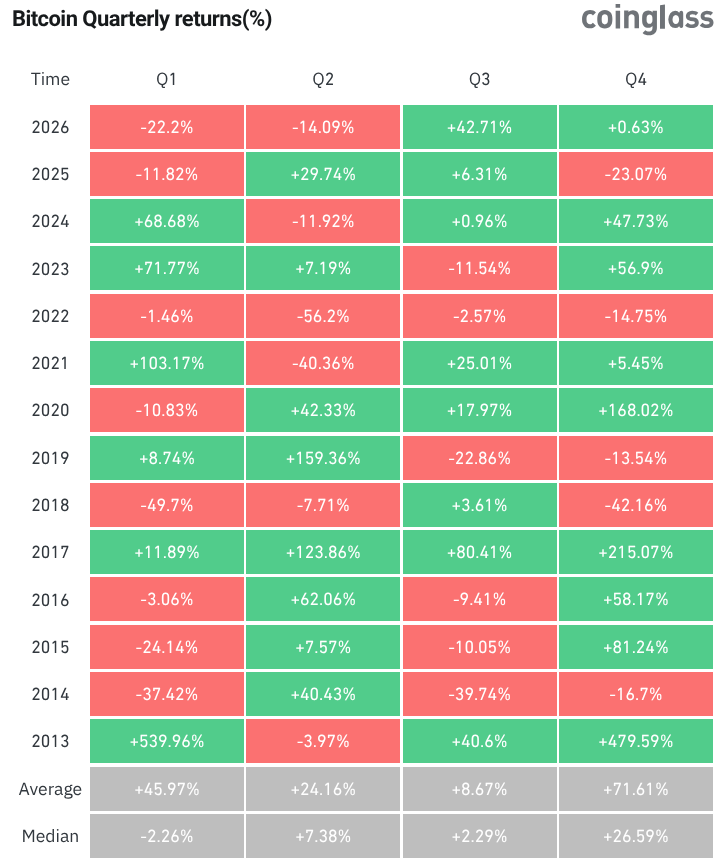
Despite the macroeconomic crosscurrents, Bitcoin successfully entered the fourth quarter—historically recognized as its strongest calendar period—trading at approximately $83,550. According to historical return data compiled by CoinGlass, Bitcoin closed the third quarter with impressive gains of 42.7%, marking its most robust Q3 performance since 2017.
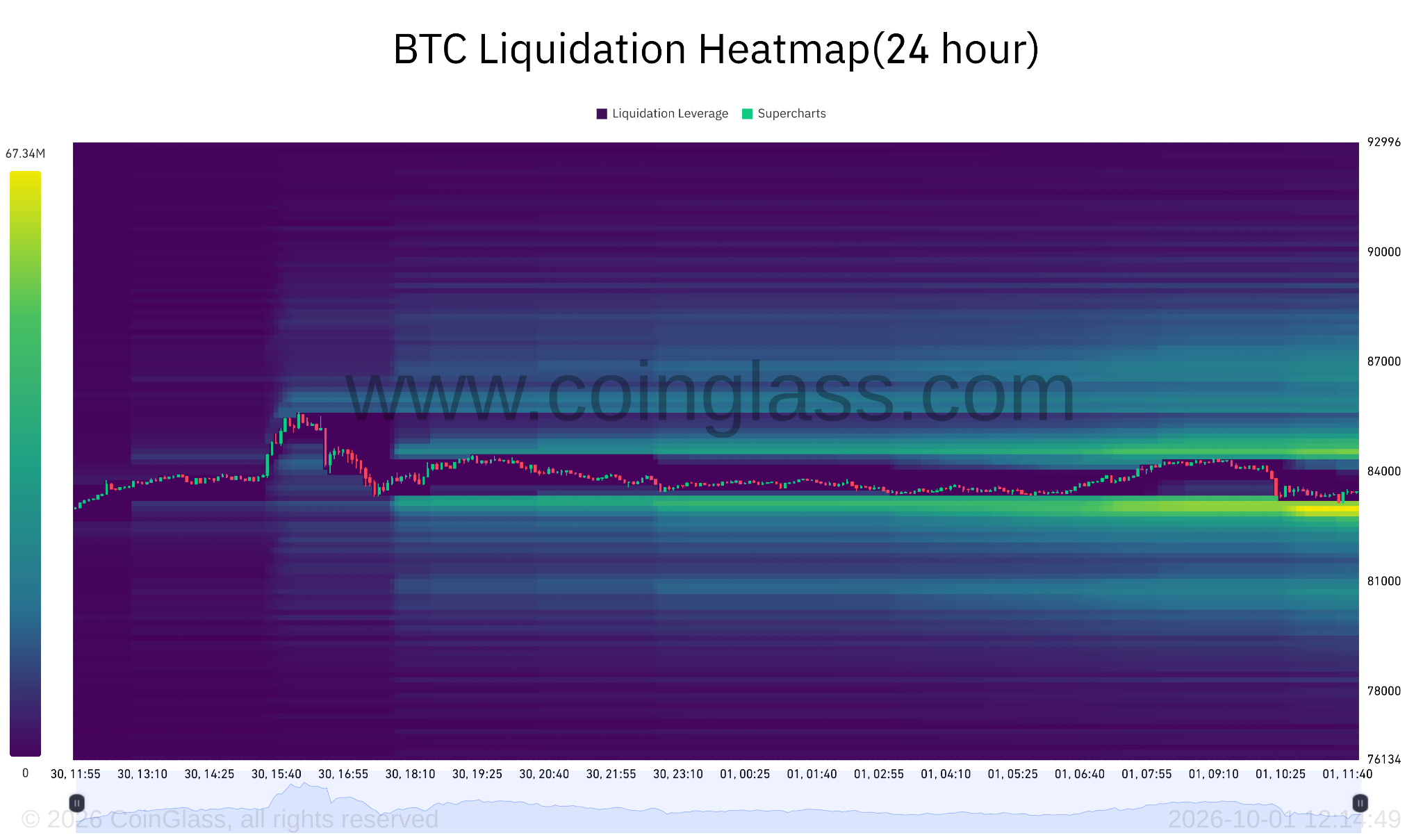
Market technicians monitoring order books and exchange metrics quickly turned their attention to liquidity clusters following the mid-week reversal. CoinGlass liquidation heatmaps mapped out substantial pockets of estimated liquidation exposure sitting both above and below the prevailing market price. On Thursday, a fresh $60 million cluster of liquidation exposure emerged right around the $83,000 mark. This concentration rested dangerously close to vital technical support situated at $82,500—a threshold that prior market analyses had identified as critical for sustaining Bitcoin’s broader recovery trajectory following multi-month lows reached back in June.
Open Interest Falls to Lowest Since March Despite Bitcoin Gains
While price action grabbed immediate headlines, underlying derivatives data revealed a healthier structural shift beneath the surface of the market. Onchain analytics platform Glassnode highlighted a notable divergence between Bitcoin’s rising spot price and coin-denominated open interest, a metric that tracks the total volume of outstanding futures contracts measured in Bitcoin terms rather than fiat currency.
Glassnode pointed out that while Bitcoin’s price had climbed roughly 35% from its August lows, coin-denominated open interest had actually declined by nearly 20%. This reduction in leveraged positioning brought overall open interest down to its lowest level since March. Market analysts suggested that this decoupling could prove beneficial for the sustainability of the ongoing rally, making the asset class significantly less susceptible to sudden, cascading leverage flushes and forced liquidations that typically accompany overextended bull runs.
Nevertheless, overhead resistance remained a formidable barrier for bulls attempting to push higher. Additional market reports highlighted a heavy concentration of sell orders clustered tightly around the $85,000 level. Furthermore, onchain distribution metrics showed that long-term holder supply had accumulated heavily within the $84,000 to $85,000 range. These structural supply walls continued to act as a ceiling, keeping multi-thousand-dollar breakouts out of immediate reach as traders evaluated macroeconomic headwinds, upcoming central bank policy decisions, and the evolving liquidity dynamics heading deeper into the final quarter of the year.