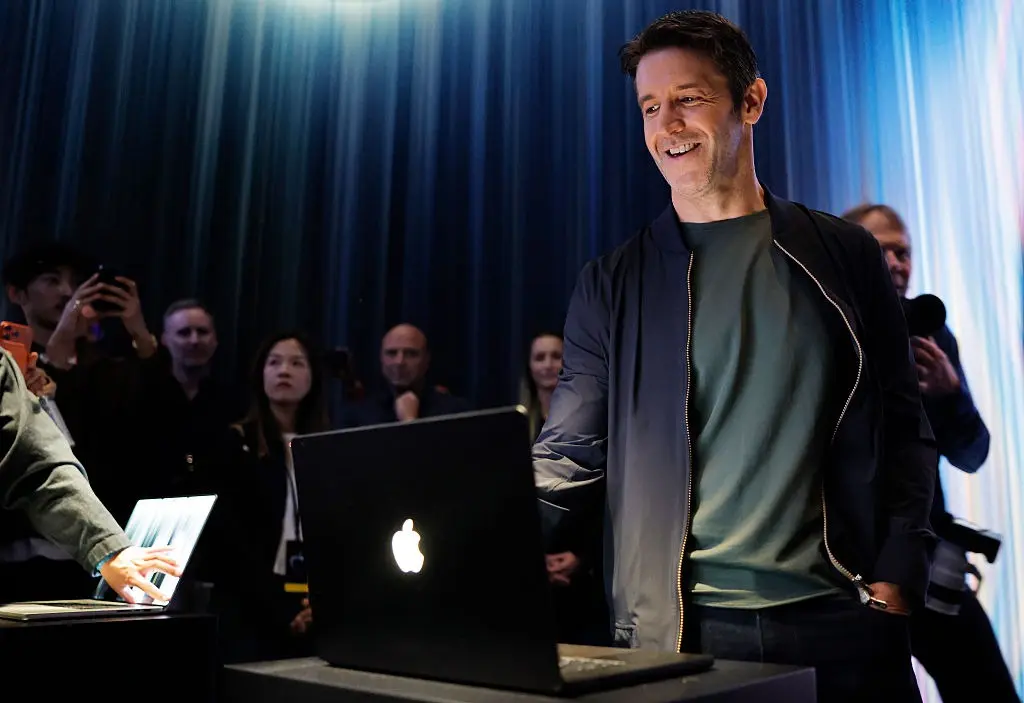
Apple Chief Executive Officer John Ternus is pushing back against persistent industry narratives that suggest the tech giant has fallen behind in the artificial intelligence race. In a wide-ranging and candid interview with veteran tech journalist Steven Levy for Wired, Ternus addressed the company’s deliberate, measured approach to integrating machine learning and advanced AI capabilities into its iconic hardware and software ecosystem.
The conversation comes at a pivotal transitional moment for Apple. Over the past couple of years, critics and market analysts have frequently characterized the Cupertino-based company as a laggard in the rapidly moving AI landscape. These perceptions intensified as Apple faced delays in releasing a significantly more powerful, context-aware version of its virtual assistant, Siri. That long-awaited upgrade ultimately rolled out to users this summer, offering a more deeply integrated conversational experience across Apple’s device lineup.
Despite the external scrutiny and mounting pressure from Wall Street and tech commentators, Ternus remains steadfastly unbothered. Having officially stepped into the role of CEO at the beginning of September following a high-profile executive transition, Ternus acknowledged the relentless public discourse surrounding the company’s roadmap.
“Everyone has an opinion,” Ternus remarked during his discussion with Levy, before offering a definitive assessment of Apple’s current standing. “I really like where we’re at.”
Ternus elaborated on Apple’s foundational philosophy regarding emerging technologies, emphasizing that the company refuses to rush features to market simply to chase industry hype cycles. While competitors have raced to flood the market with generative AI tools and standalone features, Apple’s strategy has consistently prioritized seamless integration over flashy, standalone novelties.
“We’re absolutely going to leverage AI in our new products,” Ternus explained. However, he drew a sharp line regarding the company’s internal standards for product development. “We don’t want to ship AI for AI’s sake. When we’re doing it right, people won’t have to think about whether it was AI that made this happen or more traditional software. What matters is, did we build something that they really love?”

This philosophy mirrors Apple’s historical approach to hardware and software innovation. Rather than being the absolute first to market with a brand-new technological paradigm, Apple has frequently waited until foundational technologies matured enough to be wrapped in a polished, user-centric, and privacy-focused experience. From graphical user interfaces and touchscreens to smartwatches and wireless headphones, the company’s playbook has typically involved letting early pioneers test the waters before perfecting the execution for a mainstream audience.
However, the rapid acceleration of generative AI and autonomous agent technology presents a fundamentally different challenge than previous hardware transitions. During the interview, Levy pressed Ternus on whether the rise of sophisticated AI agents could eventually disrupt Apple’s core business model. Specifically, Levy raised the provocative question of whether intelligent agents might eventually make traditional smartphone apps entirely unnecessary, fundamentally altering how consumers interact with their devices and navigate the digital economy.
If users can simply instruct an overarching AI agent to book a flight, order groceries, or manage their schedules without opening dedicated applications, the traditional app ecosystem—which has generated billions of dollars for both developers and Apple through App Store commissions—could face a seismic shift.
Ternus, however, remained calm in the face of such hypothetical disruption. While acknowledging the theoretical convenience of such a future, he pointed back to the foundational human elements that drive Apple’s corporate mission and product design philosophy.
“That could make life really easy, I suppose,” Ternus replied. “But the creation of products is a deeply human and personal thing, something that we love to do.”
The interview underscores the high-stakes balancing act facing Apple’s leadership team as they navigate the post-smartphone era and the dawn of ubiquitous machine intelligence. As Ternus settles into his tenure as CEO, the tech world will be watching closely to see whether Apple’s methodical, user-experience-first philosophy can successfully maintain the company’s competitive edge against rivals who are moving at breakneck speed. For now, Ternus has made it abundantly clear that Apple intends to chart its own course—one where artificial intelligence serves the user quietly and invisibly, rather than dominating the conversation.