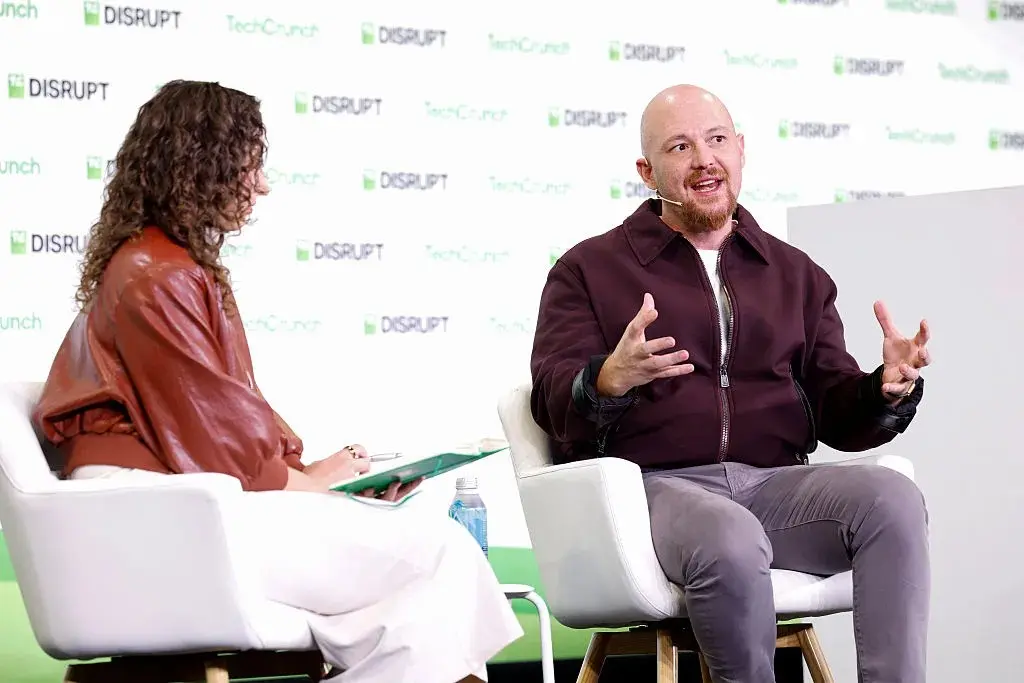
After spending eight years developing advanced artificial intelligence systems for Meta, Rohit Patel is stepping down from his role as a director at Meta Superintelligence Labs to strike out on his own. Patel has officially launched Ndoc, an early-stage startup that he is pitching as a radical, AI-native replacement for legacy productivity mainstays like the Microsoft Office suite and Google Workspace. His departure marks the latest in a wave of high-profile exits from Meta’s upper ranks, following the recent departures of Chief Global Affairs Officer Joel Kaplan, prominent AI researcher Andrew Tulloch, and Emily Dalton Smith, the head of product for AI-for-work transformation.
Patel’s new venture is born out of a fundamental frustration with how modern knowledge workers interact with software. Rather than treating artificial intelligence as a superficial chatbot overlay or a plugin designed to automate minor tasks within traditional applications, Patel designed Ndoc from the ground up to completely rethink how professional documents, data models, and presentations are created, reviewed, and shared.
For years, digital work has been defined by extreme fragmentation. Professionals regularly find themselves jumping across a dizzying array of standalone applications—such as Microsoft Excel, Word, and PowerPoint, alongside specialized analytical platforms like Tableau, coding environments like Replit, and the ubiquitous habit of copying and pasting outputs from standalone chatbots like ChatGPT. This siloed approach often leaves teams struggling to maintain a single source of truth, forcing colleagues to constantly stitch together disparate artifacts to build a cohesive narrative for leadership or clients.
Ndoc seeks to collapse this fractured workflow into a single, unified workspace that entire teams can access and interact with, even if individual collaborators have not signed up for the platform themselves. The interface is meticulously organized around three core components seamlessly integrated into one cohesive layout. The "Stage" tab acts as the visual front-end where dynamic presentations of key findings live, ranging from polished slide decks and executive dashboards to live simulations and interactive mini-apps. The "Narrative" tab handles the rigorous textual side of projects, housing deep-dive analyses, numbered citations, automatically generated figures, and the contextual "why" behind numerical data. Finally, the "Model" tab serves as the engine room beneath the surface, storing the underlying raw datasets and raw Python scripts that power the calculations.
This unique architectural layout directly reflects Patel’s professional background and research focus during his tenure at Meta. While at the tech giant, Patel specialized heavily in reinforcement learning—a sophisticated machine learning paradigm in which AI agents learn to optimize complex decision-making processes through trial and error to maximize predefined rewards. He also spent considerable time evaluating whether AI outputs can genuinely be trusted in high-stakes enterprise environments. Patel firmly believes that if generative artificial intelligence is going to author the spreadsheets and slide decks that corporations rely on for critical strategic decisions, human users must be able to audit and verify its work effortlessly.
To achieve this level of transparency, Ndoc ensures that users are never left in the dark about how a specific metric or forecast was generated. Anyone utilizing the platform can inspect the underlying Python code responsible for building a document or spreadsheet. Even users who possess little to no coding experience can leverage the platform’s conversational chat interface to ask straightforward questions about the technical mechanics of their files.
"Even if you don’t know any Python, you can ask the AI chat to explain, ‘Hey, what does this script do? Which line has my formula?’ And you can verify that formula," Patel explained during a recent discussion of the platform’s capabilities. "There’s nothing hidden behind the curtain here."
In practical daily use, the platform operates by allowing users to upload raw datasets and prompt Ndoc to execute comprehensive analytical procedures while simultaneously drafting a professional narrative detailing the discoveries. Furthermore, the system permits users to inject highly specific contextual parameters into their projects, including intended audience demographics, preferred corporate tone, and persistent institutional memory. According to Patel, the platform maintains a continuous memory framework that spans across individual users, specific documents, entire project teams, and the broader enterprise organization.
Under the hood, Ndoc is constructed and fine-tuned using a diverse mixture of open-source artificial intelligence models. Because the entire platform was architected from scratch without relying on bloated legacy infrastructure, Patel notes that it costs considerably less to run than competing solutions built on top of expensive frontier AI models. Initially, he anticipated that extreme operational efficiency would be the primary selling point that drew early users to the platform. However, initial trials revealed a different reality.
"I thought that’s what people would be excited about, but people don’t care about that," Patel said, reflecting on feedback from his earliest trial users. "What people are excited about is that they love seeing all their end-to-end in one place."
Patel’s broader, long-term ambition extends far beyond building a better alternative to traditional word processors and spreadsheets; he ultimately aims to reinvent the very concept of the digital file. Under his vision, Ndoc documents can be exported as a single file format ending in the ".ndoc.html" extension. These specialized files can be opened natively within any standard web browser. Moreover, Patel plans to open-source this proprietary file format so that independent software developers can build their own compatible applications, liberating creators from the walled gardens and software lock-in that have bound users to Microsoft and Google ecosystems for decades.
This deep commitment to open-source principles was a significant motivating factor in Patel’s decision to leave Meta and launch his own independent venture. Within the bureaucratic corridors of a massive technology conglomerate, attempting to secure organizational alignment on a universal open-source file standard would inevitably require navigating the opinions and approvals of hundreds of internal stakeholders. Patel simply preferred to move at a much faster cadence.
"Humans can only move at human pace, whereas I can move at the pace of what AI can do," he noted.
Attempting to establish a dominant enterprise platform represents a monumental gamble for a founder operating with an initial team of three people and zero external venture funding, particularly given that well-resourced technology giants and leading AI labs are aggressively targeting the exact same market. Over the past year, major industry players including OpenAI, Anthropic, Meta, SpaceXAI, and Google have all rolled out advanced enterprise integrations. These tools are explicitly designed to connect artificial intelligence models directly into existing corporate ecosystems like Google Workspace and Microsoft 365. Furthermore, OpenAI recently introduced Space, a collaborative workspace integrated directly inside ChatGPT that poses a much more direct structural threat to traditional office suites.
While Patel readily acknowledges that offerings like OpenAI’s Space represent a legitimate competitive threat, he maintains that major artificial intelligence labs are approaching the problem with a fundamentally flawed philosophy.
"Companies are basically attaching AI to spreadsheets and it fills your cells for you," Patel said, criticizing the prevailing industry trend. "It just sort of kills my soul. This is like if you just figured out electricity, and then you decided the best use case is to put lights on my bulls that till my soil. No. Get a tractor."
Despite his skepticism toward incremental AI wrappers, Patel acknowledges the practical hurdles of disrupting entrenched corporate habits. Convincing global enterprises to abandon decades-old workflows is notoriously difficult, which is why Ndoc includes robust connectors that enable customers to seamlessly import historical data and existing documents from the legacy software tools they already use daily.
For Patel, personal utility serves as the ultimate litmus test for product development. "My bar was that I’m not going to release anything I don’t love using," he stated. "I have very optimized AI workflows for everything I do. If I start using this tool, and I keep going back to my workflows, I haven’t built a good enough tool… I have a graveyard of tools that did not meet that bar."
Patel applies a similarly stringent benchmark to securing customer validation before pursuing institutional venture capital. "I didn’t want to take money until I had some proof that people love the product," he explained.
As of this week, Ndoc has initiated its first enterprise-level pilot program while simultaneously opening an alpha testing phase for a select group of applicants from its waiting list. While signing up for the platform is free, customers will operate on a usage-based pricing model tied to token consumption. Patel anticipates rolling out a broader beta version in the coming weeks, followed by a full commercial launch targeted for next year. For a founder racing against a rapidly evolving technological landscape, speed of execution remains paramount over the pursuit of theoretical perfection.
"Execution is extremely cheap… so go execute on a suboptimal plan and worry about it later," Patel concluded. "By the time you make the best plan, the execution will be done by somebody else."