Altcoin exchange deposits have surged to their highest transaction count since October 2025, according to data from onchain analytics platform CryptoQuant, raising concerns that digital asset holders may be preparing to execute widespread sell-offs.
The significant uptick in exchange inflows arrives at a delicate crossroads for the broader cryptocurrency market. As market participants navigate shifting liquidity conditions and fluctuating momentum across major tokens, analysts are closely monitoring whale movements, retail participation rates, and shifting capital dynamics between Bitcoin and alternative digital assets. The recent behavioral changes observed on-chain suggest that investors who capitalized on recent market gains may be looking to lock in profits or rebalance their portfolios heading into the final stretch of the year.
Altcoin Exchange Inflows Hit Highest Levels Since October 2025

In its latest weekly market report released on Tuesday, CryptoQuant flagged a dramatic surge in exchange deposits involving alternative cryptocurrencies. The analytics platform noted that this wave of activity reflects a pronounced shift in holder behavior across the board.
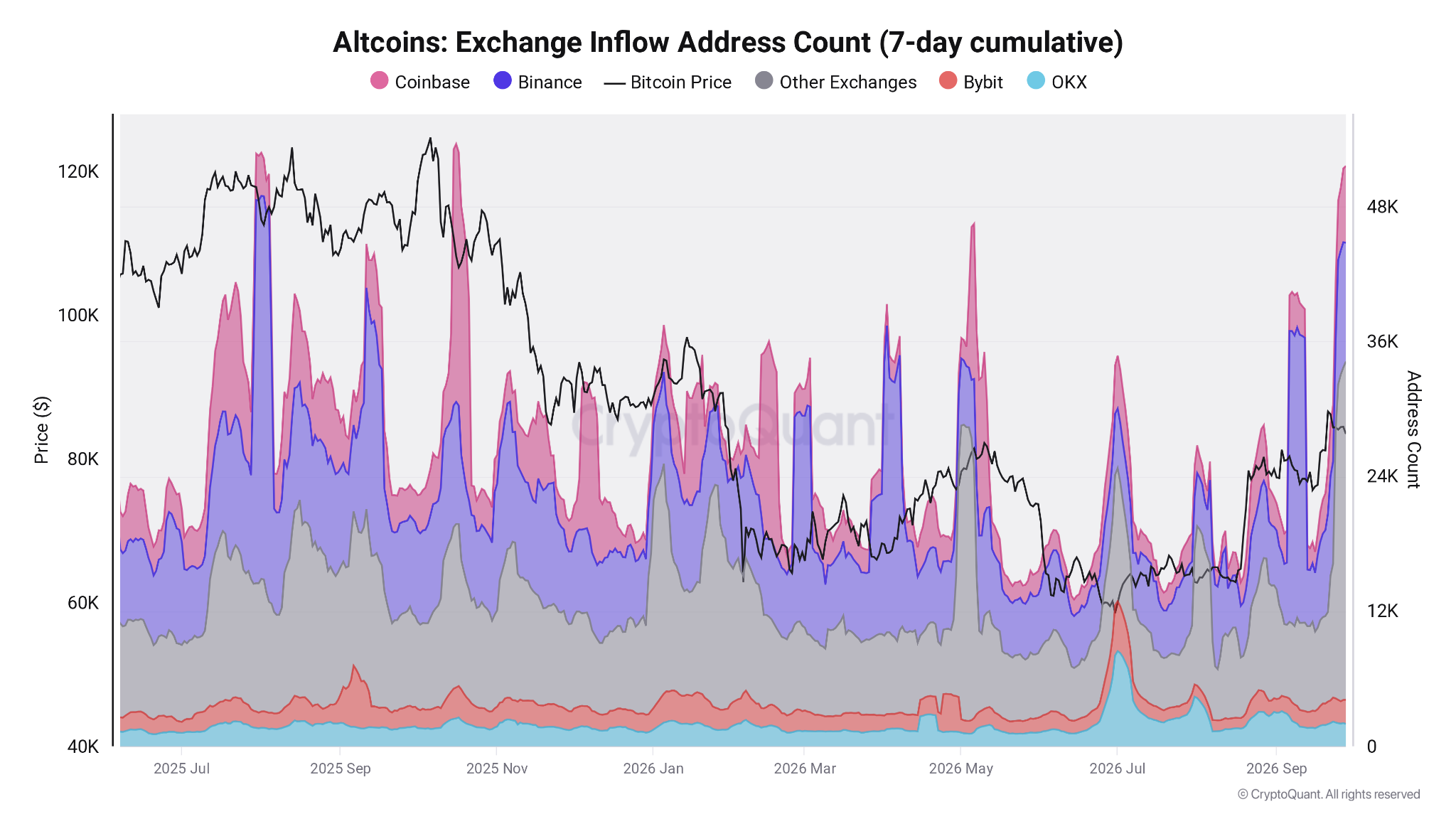
The seven-day count of altcoin deposit transactions on exchanges tracked by the platform reached 78,000 on September 28. This figure represents an aggressive increase of approximately 160% compared to just two weeks prior, when the seven-day transaction count sat at roughly 29,800 on September 14.
"Altcoin exchange inflows have exploded to their highest levels since Bitcoin’s last all-time high," CryptoQuant noted in its research briefing, emphasizing the scale of the sudden capital movement.
The expansion in transaction volume was mirrored by a sharp rise in active network participation. Between September 14 and September 28, the number of unique blockchain addresses depositing altcoins to centralized exchanges almost tripled, climbing from around 17,600 to 51,600.
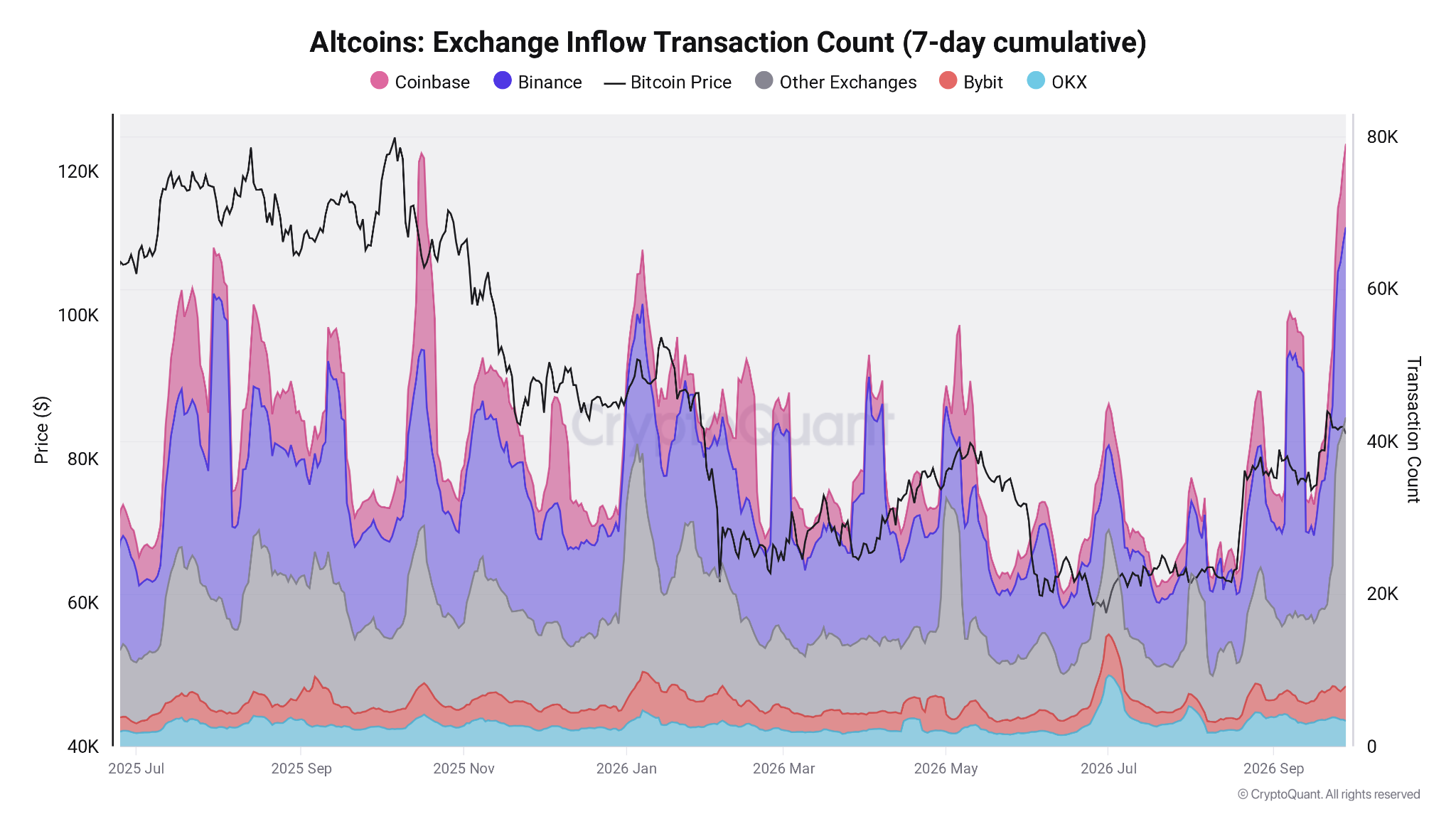
CryptoQuant confirmed that this address count also reached its highest level recorded since October 2025, describing the increase in exchange inflows as broad-based rather than isolated to a handful of large wallets or specific tokens.
"When holders move coins to exchanges, they usually intend to sell," the analytics platform added, highlighting the classic market interpretation that exchange inflows typically precede liquidations and potential downward price pressure.
The influx of altcoins onto trading platforms coincides with a broader cooling-off period for the crypto market leader. Bitcoin has pulled back significantly since briefly topping the $87,000 threshold last week for the first time since January. Market observers and industry analysts have pointed to a combination of factors influencing Bitcoin’s recent price action. Shifts in exchange order-book liquidity, alongside lingering supply walls maintained by long-term holders, have been repeatedly cited as primary obstacles preventing bulls from sustaining momentum or pushing toward yearly opening highs in the short term.
Smaller Altcoins’ Market Share Hits Highest Level Since February
The sudden spike in exchange deposits does not happen in a vacuum; it follows a sustained period of relative outperformance by altcoins against Bitcoin, which had begun to stir optimism regarding a potential wider altcoin season.
Earlier in the week, dedicated metric tracking tools such as Glassnode’s Altcoin Cycle Signal flashed readings favoring altcoins over Bitcoin. The specialized metric evaluates aggregate price data performance across the 250 largest altcoins by market capitalization, explicitly filtering out stablecoins to provide a clearer picture of speculative capital rotation within the digital asset ecosystem.
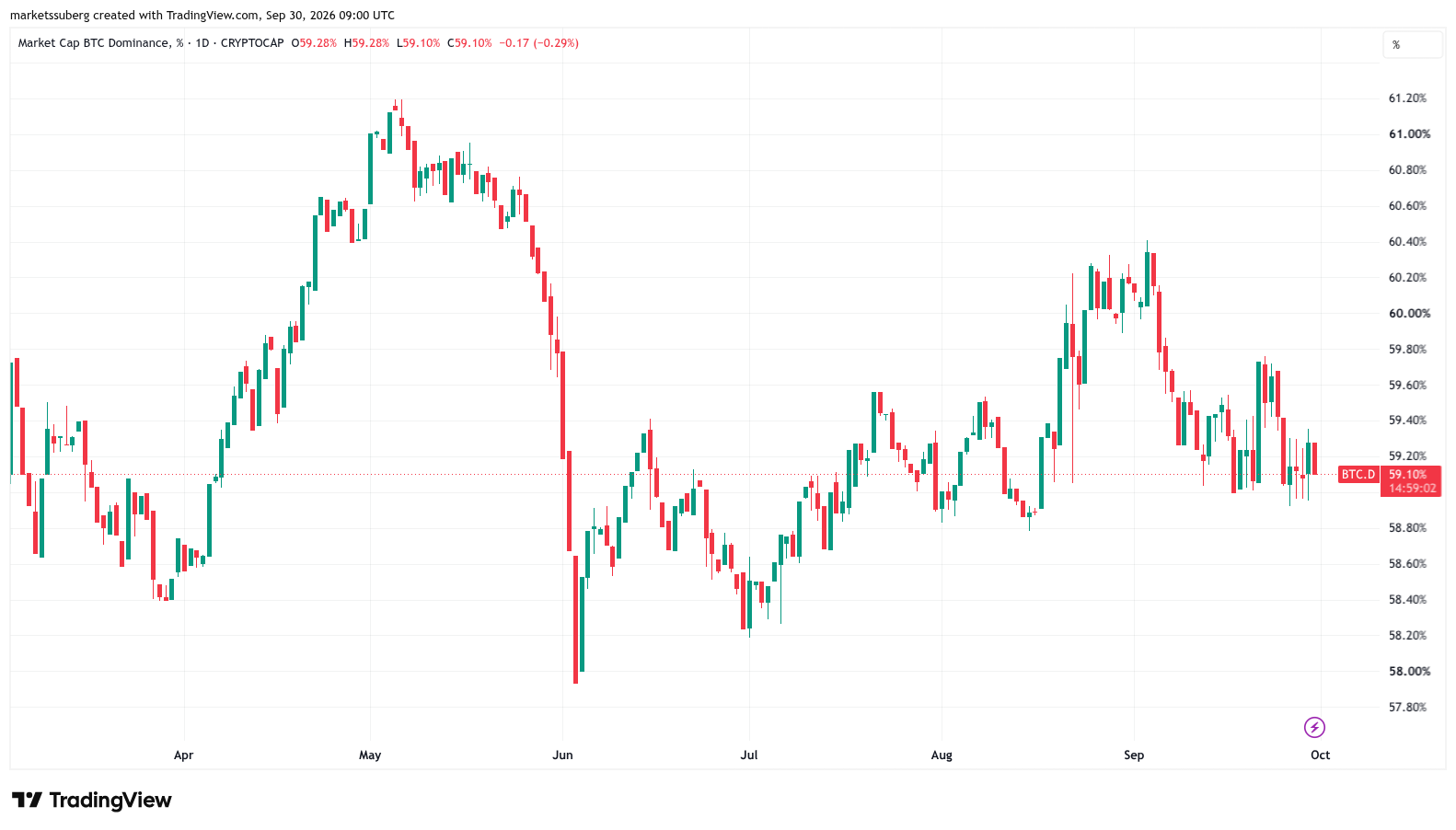
Meanwhile, Bitcoin’s overall share of the total cryptocurrency market capitalization has remained subdued below the psychological 60% threshold. Data from TradingView indicates that Bitcoin dominance has hovered in a relatively tight trading range between 58% and 60.4% since late May, giving smaller-cap assets breathing room to capture speculative interest and capital inflows from traders seeking higher beta exposure.
This shifting capital distribution was further underscored by performance metrics among lower-cap digital assets. Crypto assets positioned outside the top ten by market capitalization captured 9% of the total cryptocurrency market share by September 27. This marked their highest individual market-cap dominance share since February of this year, signaling that retail and institutional participants alike had been actively exploring opportunities further down the risk curve.
However, the intersection of expanding market share for smaller tokens and the explosive surge in exchange inflows tracked by CryptoQuant paints a complex picture for traders. While smaller altcoins have successfully expanded their footprint in terms of market capitalization dominance over recent weeks, the sudden rush of tokens moving onto centralized exchanges suggests that a significant portion of holders may view the recent strength as an optimal window to realize profits.
As exchange order books absorb these incoming deposits, market participants across the ecosystem will be watching closely to see whether spot demand can adequately absorb the newly available supply or if the mounting inflow metrics will trigger a broader wave of profit-taking across the altcoin sector.